


Meta Description
Comprehensive NCERT Class 11 Biology chapter Structural Organisation in Animals notes, summary, diagrams, keywords, MCQs, and exam questions for quick revision and high exam scores.
Introduction of the Chapter
The chapter Structural Organisation in Animals explains how animal bodies are organized at different levels to perform life processes efficiently. Multicellular animals show increasing complexity from cells to tissues, organs, and organ systems. Understanding this organization helps students learn how body parts function together to maintain life.
This chapter focuses on:
•Animal tissues and their types
•Structure and functions of organs
•Morphology and anatomy of cockroach, frog, and earthworm
•Integration of body systems
Studying Structural Organisation in Animals is essential for understanding physiology and higher biological concepts.
Short Notes (Quick Revision)
•Multicellular organisms show division of labour.
•Four basic animal tissues: epithelial, connective, muscular, nervous.
•Organs combine to form organ systems.
•Earthworm exhibits segmented body organization.
•Cockroach shows jointed appendages and open circulatory system.
•Frog is an amphibian showing adaptation to land and water.
•Epithelial tissue protects and lines surfaces.
•Connective tissue supports and binds organs.
•Muscle tissue enables movement.
•Nervous tissue conducts impulses.
Detailed Summary (800–1000 words)
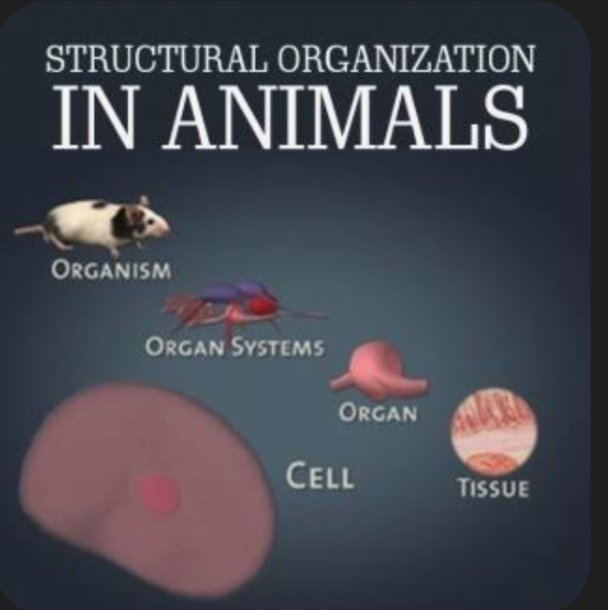
The chapter Structural Organisation in Animals describes how animal bodies are structurally arranged to perform vital functions. Multicellular organisms display hierarchical organization: cells form tissues, tissues form organs, and organs combine to form organ systems.
Levels of Organisation
In animals, similar cells group together to perform specific functions, forming tissues. Tissues combine to form organs such as the heart or stomach. Multiple organs work together as organ systems like digestive or circulatory systems. This division of labour improves efficiency.
Animal Tissues
Animals possess four fundamental tissue types.
•Epithelial Tissue
This tissue covers body surfaces and lines cavities. It protects organs, absorbs nutrients, and secretes substances. Types include squamous, cuboidal, columnar, ciliated, and glandular epithelium.
•Connective Tissue
Connective tissue provides support and connects body parts. It includes loose connective tissue (areolar, adipose), dense connective tissue (tendons, ligaments), skeletal tissue (bone, cartilage), and fluid connective tissue (blood, lymph).
•Muscular Tissue
Muscle tissue enables movement through contraction. Types include skeletal (voluntary), smooth (involuntary), and cardiac muscle (heart muscle).
•Nervous Tissue
Nervous tissue conducts electrical impulses and controls body activities. It consists of neurons and neuroglial cells.
Earthworm: Morphology and Anatomy
The earthworm is a cylindrical, segmented organism adapted for burrowing.
External features:
•Segmented body
•Clitellum present
•Setae for locomotion
Internal systems:
•Digestive system: straight alimentary canal
•Circulatory system: closed type
•Excretory system: nephridia
•Nervous system: ventral nerve cord
Cockroach: Morphology and Anatomy
Cockroach is a terrestrial insect showing bilateral symmetry.
->External features:
•Body divided into head, thorax, abdomen
•Three pairs of legs
•Two pairs of wings
->Internal systems:
•Digestive system with foregut, midgut, hindgut
•Open circulatory system
•Tracheal respiratory system
•Malpighian tubules for excretion
•Compound eyes and antennae for sensory functions
Frog: Morphology and Anatomy
Frog is an amphibian adapted for life on land and water.
->External features:
•Moist skin for respiration
•Strong hind limbs for jumping
•Webbed feet for swimming
->Internal systems:
•Digestive system with specialized organs
•Three-chambered heart
•Lungs and skin for respiration
•Kidneys for excretion
•Well-developed nervous system
Importance of Structural Organisation
Understanding Structural Organisation in Animals helps explain how organ systems coordinate to maintain homeostasis. Each tissue and organ performs specialized functions, ensuring survival and adaptation.
Flowchart / Mind Map
->Structural Organisation in Animals
→ Levels of Organisation
→ Cells
→ Tissues
→ Organs
→ Organ Systems
→ Animal Tissues
→ Epithelial
→ Connective
→ Muscular
→ Nervous
→ Study Organisms
→ Earthworm
→ Cockroach
→ Frog
→ Organ Systems
→ Digestive
→ Circulatory
→ Respiratory
→ Nervous
→ Excretory
Important Keywords with Meanings
•Tissue – group of similar cells performing a function
•Organ – structure made of different tissues
•Epithelium – protective covering tissue
•Cartilage – flexible connective tissue
•Neuron – nerve cell transmitting impulses
•Areolar tissue – packing connective tissue
•Nephridia – excretory organs of earthworm
•Clitellum – reproductive structure in earthworm
•Malpighian tubules – excretory organs in cockroach
•Trachea – air tubes in insects
•Amphibian – animal living on land and water
•Setae – locomotory bristles in earthworm
•Open circulation – blood not confined to vessels
•Closed circulation – blood confined within vessels
•Homeostasis – maintenance of internal balance
•Ligament – connects bone to bone
•Tendon – connects muscle to bone
•Cardiac muscle – heart muscle
•Columnar epithelium – tall epithelial cells
•Metamerism – segmented body arrangement
✅ Short Answer Questions (2–3 Marks)
1. What is a tissue?
A tissue is a group of similar cells having a common origin that work together to perform a specific function.
2. Name the four basic animal tissues.
The four basic animal tissues are:
- Epithelial tissue
- Connective tissue
- Musclar tissue
- Nervous tissue
3. What are the functions of epithelial tissue?
Epithelial tissue performs:
- Protection of body surfaces
- Absorption of nutrients
- Secretion of substances
- Filtration and diffusion
4. What are nephridia?
Nephridia are excretory organs in earthworms that remove metabolic wastes and maintain water balance.
5. Define metamerism.
Metamerism is the segmentation of the body into repeated structural units, seen in earthworms.
6. What type of circulatory system is present in cockroach?
Cockroach has an open circulatory system where blood flows freely in body cavities.
7. Why is frog called an amphibian?
Frog is called an amphibian because it can live both on land and in water.
8. What is cartilage?
Cartilage is a flexible connective tissue that provides support and smooth surfaces at joints.
9. What is a neuron?
A neuron is a nerve cell that transmits electrical impulses throughout the body.
10. What is the clitellum?
Clitellum is a thick glandular band in earthworms that plays a role in reproduction and cocoon formation.
✅ Long Answer Questions (5 Marks)
1. Describe the four types of animal tissues.
Animals have four fundamental tissues:
Epithelial Tissue
- Covers body surfaces and lines cavities.
- Functions in protection, absorption, secretion.
- Types: squamous, cuboidal, columnar, ciliated, glandular.
Connective Tissue
- Supports and binds organs.
- Includes bone, cartilage, blood, adipose tissue, tendons, ligaments.
Muscular Tissue
- Responsible for movement.
- Types: skeletal (voluntary), smooth (involuntary), cardiac (heart muscle).
Nervous Tissue
- Conducts nerve impulses.
- Made of neurons and neuroglia.
- Controls and coordinates body functions.
2. Explain the morphology and anatomy of earthworm.
Morphology
- Long cylindrical segmented body.
- Bilateral symmetry.
- Clitellum present.
- Setae help in locomotion.
Anatomy
- Digestive system: straight alimentary canal.
- Circulatory system: closed type with blood vessels.
- Excretory system: nephridia.
- Nervous system: ventral nerve cord.
Earthworms help in soil aeration and fertility.
3. Describe the digestive and respiratory systems of cockroach.
Digestive System
- Divided into foregut, midgut, hindgut.
- Mouthparts chew food.
- Crop stores food; gizzard grinds it.
- Digestion and absorption occur in midgut.
Respiratory System
- Respiration through tracheal system.
- Air enters through spiracles.
- Tracheae distribute oxygen directly to tissues.
4. Explain the circulatory and respiratory systems of frog.
Circulatory System
- Three-chambered heart (two atria, one ventricle).
- Double circulation (pulmonary & systemic).
- Blood transports oxygen and nutrients.
Respiratory System
- Respiration by lungs, skin, and buccal cavity.
- Skin respiration occurs in water.
- Lungs function on land.
5. Discuss levels of organisation in animals.
Animals show hierarchical organization:
- Cellular level – cells perform basic functions.
- Tissue level – similar cells form tissues.
- Organ level – tissues form organs like heart and stomach.
- Organ system level – organs work together (digestive, circulatory systems).
This organization allows division of labour and efficient functioning.
✅ MCQs (Structural Organisation in Animals)
1. The study of tissues is called:
A. Histology
B. Cytology
C. Anatomy
D. Physiology
Answer: A
2. Which tissue covers body surfaces?
A. Connective
B. Muscular
C. Epithelial
D. Nervous
Answer: C
3. Bone and cartilage belong to:
A. Epithelial tissue
B. Connective tissue
C. Muscular tissue
D. Nervous tissue
Answer: B
4. Which muscle type is voluntary?
A. Cardiac
B. Smooth
C. Skeletal
D. Visceral
Answer: C
5. Functional unit of nervous tissue is:
A. Nephron
B. Neuron
C. Osteon
D. Sarcomere
Answer: B
6. Areolar tissue is a type of:
A. Dense connective tissue
B. Loose connective tissue
C. Musclar tissue
D. Nervous tissue
Answer: B
7. Which connective tissue stores fat?
A. Blood
B. Cartilage
C. Adipo se tissue
D. Tendon
Answer: C
8. Clitellum is present in:
A. Cockroach
B. Frog
C. Earthworm
D. Fish
Answer: C
9. Locomotion in earthworm occurs with help of:
A. Parapodia
B. Setae
C. Cilia
D. Fins
Answer: B
10. Earthworm belongs to phylum:
A. Arthropoda
B. Mollusca
C. Annelida
D. Chordata
Answer: C
11. Cockroach has how many pairs of legs?
A. Two
B. Three
C. Four
D. Five
Answer: B
12. Respiratory organs in cockroach are:
A. Lungs
B. Gills
C. Tracheae
D. Skin
Answer: C
13. Excretory organs in cockroach are:
A. Nephridia
B. Kidneys
C. Malpighian tubules
D. Flame cells
Answer: C
14. Circulatory system in cockroach is:
A. Closed
B. Double
C. Open
D. Portal
Answer: C
15. Frog belongs to class:
A. Reptilia
B. Amphibia
C. Mammalia
D. Pisces
Answer: B
16. Frog heart has:
A. 2 chambers
B. 3 chambers
C. 4 chambers
D. 5 chambers
Answer: B
17. Skin of frog helps in:
A. Digestion
B. Respiration
C. Excretion
D. Circulation
Answer: B
18. Tendons connect:
A. Bone to bone
B. Muscle to bone
C. Muscle to muscle
D. Nerve to muscle
Answer: B
19. Ligaments connect:
A. Bone to bone
B. Muscle to bone
C. Bone to muscle
D. Nerve to bone
Answer: A
20. Which tissue transports substances in the body?
A. Nervous tissue
B. Blood
C. Muscle tissue
D. Epithelial tissue
Answer: B
Exam Tips & Value-Based Questions:
Exam Tips:
•Learn tissue functions with examples.
•Practice diagrams of frog heart and •cockroach digestive system.
•Understand differences between open and closed circulation.
•Revise key terms and definitions.
•Focus on NCERT diagrams and labeling.
Value-Based Questions
1.Why is division of labour important in animals?
Answer: It increases efficiency and survival.
2.How does skin respiration help frogs survive?
Answer: Enables breathing underwater.
3.Why is connective tissue essential?
Answer: Provides support and protection.
4.How do earthworms benefit soil fertility?
Answer: Improve aeration and nutrient mixing.
5.Why should we study animal structure?
Answer: To understand health and body functioning.
Conclusion
The chapter Structural Organisation in Animals forms a foundational pillar in Class 11 Biology because it explains how complex animal bodies are built and how their parts work together to ensure survival. From the cellular level to tissues, organs, and organ systems, this chapter helps students understand the hierarchy of biological organization and the principle of division of labour.
Animals are multicellular organisms with specialized cells grouped into tissues. These tissues perform specific functions such as protection, movement, transport, and coordination. The four basic animal tissues — epithelial, connective, muscular, and nervous — play vital roles in maintaining body structure and function. Epithelial tissue protects and lines surfaces, connective tissue provides support and transport, muscular tissue enables movement, and nervous tissue ensures coordination and control.
The study of representative organisms such as earthworm, cockroach, and frog in Structural Organisation in Animals provides insight into how organ systems function in different environments and evolutionary stages. Earthworms demonstrate segmented organization and efficient soil-burrowing adaptations. Cockroaches illustrate arthropod features such as jointed appendages, open circulation, and tracheal respiration. Frogs represent amphibians with dual adaptations for terrestrial and aquatic life, including lungs, moist skin, and powerful hind limbs.
Understanding organ systems like digestive, circulatory, respiratory, nervous, and excretory systems is essential for recognizing how animals maintain internal balance. Coordination between these systems ensures proper nutrition, oxygen supply, waste removal, movement, and response to stimuli. This functional integration is vital for homeostasis and survival.
From an examination perspective, Structural Organisation in Animals is highly important because it includes frequently asked questions, diagrams, definitions, and comparisons. Students should focus on tissue types and functions, structural features of earthworm, cockroach, and frog, and differences between open and closed circulatory systems. Diagram practice and understanding key terms can significantly improve exam performance.
Beyond examinations, the knowledge gained from this chapter helps students appreciate biological complexity and the interconnectedness of body systems. It also builds the conceptual foundation necessary for advanced topics such as human physiology, histology, zoology, and medical sciences.
In summary, Structural Organisation in Animals explains how structural design supports function in living organisms. By understanding tissue types, organ systems, and representative animal anatomy, students develop a deeper understanding of biology and life processes. Mastery of this chapter strengthens conceptual clarity, enhances analytical thinking, and prepares learners for competitive examinations and higher studies in biological sciences.
Sample Question Paper
Class 11 Biology
Chapter: Structural Organisation in Animals
Time: 1 Hour
Maximum Marks: 25
Section A: MCQs (1 × 10 = 10 Marks)
Choose the correct answer:
- The tissue responsible for movement is:
a) Epithelial
b) Nervous
c) Muscular
d) Connective - Which tissue connects muscles to bones?
a) Ligament
b) Tendon
c) Cartilage
d) Blood - Earthworm excretion occurs through:
a) Kidneys
b) Nephridia
c) Malpighian tubules
d) Flame cells - Cockroach respiration takes place through:
a) Lungs
b) Gills
c) Tracheae
d) Skin - Frog belongs to class:
a) Mammalia
b) Amphibia
c) Reptilia
d) Pisces - Which connective tissue stores fat?
a) Bone
b) Blood
c) Adipose
d) Cartilage - The functional unit of nervous tissue is:
a) Neuron
b) Osteocyte
c) Sarcomere
d) Nephron - Open circulatory system is present in:
a) Frog
b) Earthworm
c) Cockroach
d) Human - Setae help earthworm in:
a) Digestion
b) Reproduction
c) Movement
d) Respiration - Frog heart has:
a) Two chambers
b) Three chambers
c) Four chambers
d) One chamber
Section B: Very Short Answer (2 × 5 = 10 Marks)
- Define tissue.
- Name the four types of animal tissues.
- What is metamerism?
- What are Malpighian tubules?
- Why is frog called an amphibian?
Section C: Short Answer (5 Marks)
Attempt any ONE:
- Describe the structure and functions of epithelial tissue.
OR
- Explain the morphology of earthworm with labelled features.
Section D: Long Answer (5 Marks)
Attempt any ONE:
- Describe the circulatory and respiratory systems of frog.
OR
- Explain the digestive system of cockroach with its parts and functions.
Answer Key (For Teachers & Self-Assessment)
Section A Answers
- c
- b
- b
- c
- b
- c
- a
- c
- c
- b
Section B Answers (Points)
- Group of similar cells performing a specific function.
- Epithelial, connective, muscular, nervous.
- Body segmentation into repeated units.
- Excretory organs in cockroach.
- Lives both on land and in water.
Section C (Key Points)
Epithelial Tissue
- Covers body surfaces
- Protection & absorption
- Types: squamous, cuboidal, columnar
OR
Earthworm Morphology
- Segmented cylindrical body
- Clitellum present
- Setae for movement
Section D (Key Points)
Frog Systems
- 3-chambered heart
- Double circulation
- Lungs & skin respiration
OR
Cockroach Digestive System
- Foregut, midgut, hindgut
- Crop stores food
- Gizzard grinds food
- Absorption in midgut
Solution of the Sample paper
✅ Section A: MCQs Solutions
- Muscular tissue is responsible for movement.
Answer: (c) - Tendons connect muscles to bones.
Answer: (b) - Earthworm excretes through nephridia.
Answer: (b) - Cockroach breathes through tracheae.
Answer: (c) - Frog belongs to class Amphibia.
Answer: (b) - Adipose tissue stores fat.
Answer: (c) - Functional unit of nervous tissue is neuron.
Answer: (a) - Open circulatory system occurs in cockroach.
Answer: (c) - Setae help earthworm in movement.
Answer: (c) - Frog heart has three chambers.
Answer: (b)
✅ Section B: Very Short Answers
11. Define tissue.
A tissue is a group of similar cells with a common origin that work together to perform a specific function.
12. Name the four types of animal tissues.
- Epithelial tissue
- Connective tissue
- Muscular tissue
- Nervous tissue
13. What is metamerism?
Metamerism is the division of the body into repeated segments, as seen in earthworms.
14. What are Malpighian tubules?
Malpighian tubules are excretory organs in cockroach that remove nitrogenous wastes from the body.
15. Why is frog called an amphibian?
Frog is called an amphibian because it lives both on land and in water.
✅ Section C: Short Answer
16. Describe the structure and functions of epithelial tissue.
Structure:
- Made of tightly packed cells.
- Cells rest on a basement membrane.
- Very little intercellular space.
Functions:
- Protection of body surfaces.
- Absorption (intestine).
- Secretion (glands).
- Filtration and diffusion (kidney alveoli).
Types: squamous, cuboidal, columnar, ciliated, glandular.
OR
17. Explain the morphology of earthworm.
- Body is long, cylindrical, and segmented.
- Bilaterally symmetrical.
- Body divided into segments called metameres.
- Clitellum present in reproductive phase.
- Setae present for locomotion.
- Moist skin helps respiration.
✅ Section D: Long Answer
18. Describe the circulatory and respiratory systems of frog.
Circulatory System
- Frog has a three-chambered heart: two atria and one ventricle.
- Shows double circulation:
- Pulmonary circulation (heart → lungs → heart)
- Systemic circulation (heart → body → heart)
- Blood transports oxygen, nutrients, and wastes.
Respiratory System
Frog breathes through:
- Lungs – primary respiration on land.
- Skin (cutaneous respiration) – important in water.
- Buccopharyngeal cavity – gas exchange through moist lining.
This allows survival in both aquatic and terrestrial environments.
OR
19. Explain the digestive system of cockroach.
The digestive system is divided into three parts:
Foregut
- Mouth, pharynx, oesophagus
- Crop stores food.
- Gizzard grinds food.
Midgut
- Digestion and absorption occur here.
- Hepatic caeca secrete digestive enzymes.
Hindgut
- Ileum, colon, rectum
- Water absorption and feces formation.
Function: Converts food into absorbable nutrients and eliminates waste.




Leave a Reply