


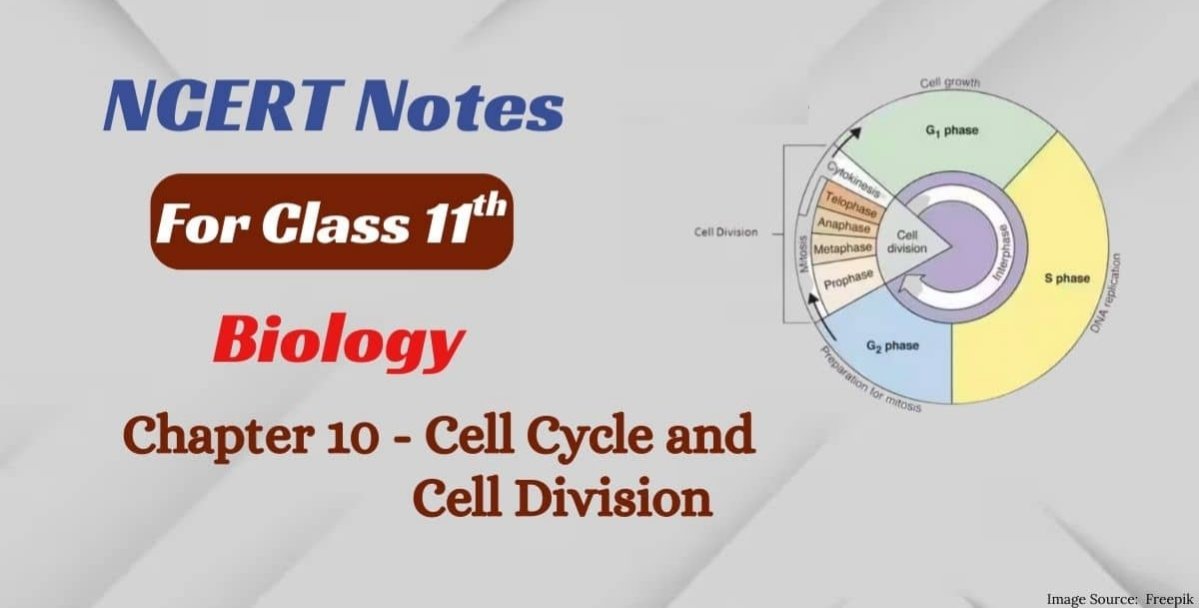
Cell Cycle and Cell Division Class 11 Biology Notes, Summary, MCQs & Important Questions
Meta Description:
Comprehensive notes on Cell Cycle and Cell Division Class 11 Biology including summary, stages, mitosis, meiosis, flowcharts, MCQs, important questions, exam tips, and keywords for quick revision.
Introduction of the Chapter
The chapter Cell Cycle and Cell Division explains how cells grow, replicate, and divide to produce new cells. It is essential for growth, repair, reproduction, and maintenance of living organisms. Every organism begins as a single cell, and through repeated cell divisions, it develops into a complex body.
The cell cycle describes the sequence of events that occur from one cell division to the next. During this cycle, a cell grows, duplicates its DNA, and divides into two daughter cells. Cell division ensures genetic continuity and maintains chromosome number across generations.
This chapter is crucial for understanding genetics, growth, tissue repair, and reproduction, making it highly important for exams and competitive tests.
Short Notes
- The cell cycle is the sequence of growth and division in a cell.
- It consists of Interphase and M phase (Mitotic phase).
- Interphase includes G₁, S, and G₂ phases.
- DNA replication occurs during the S phase.
- Mitosis produces two identical daughter cells.
- Meiosis produces four haploid cells for sexual reproduction.
- Cytokinesis divides the cytoplasm after nuclear division.
- Checkpoints regulate the cell cycle.
- Uncontrolled cell division may lead to cancer.
Detailed Summary (Cell Cycle and Cell Division)
The Cell Cycle and Cell Division chapter explains how cells reproduce and ensure continuity of life. The cell cycle is a highly regulated process through which a cell grows, duplicates its genetic material, and divides.
Phases of the Cell Cycle
The cell cycle is divided into two major phases:
1. Interphase (Preparation Phase)
Interphase is the longest phase, where the cell prepares for division.
G₁ Phase (Gap 1):
- Cell grows in size.
- Proteins and organelles are synthesized.
- Cell performs metabolic activities.
S Phase (Synthesis Phase):
- DNA replication occurs.
- Each chromosome forms two sister chromatids.
- Centriole duplication begins in animal cells.
G₂ Phase (Gap 2):
- Cell prepares for mitosis.
- Protein synthesis continues.
- Spindles begin to form.
Some cells enter a G₀ phase, a resting stage where cells stop dividing (e.g., nerve cells).
2. M Phase (Mitotic Phase)
The M phase includes karyokinesis (nuclear division) and cytokinesis (cytoplasmic division).
Mitosis (Equational Division)
Mitosis produces two genetically identical daughter cells. It is important for growth and tissue repair.
Stages of Mitosis
Prophase
- Chromatin condenses into chromosomes.
- Nuclear membrane disappears.
- Spindle fibres form.
Metaphase
- Chromsomes align at the equatorial plate.
- Spindle fibres attach to centromeres.
- Chromosomes are maximally condensed.
Anaphase
- Centromeres split.
- Sister chromatids move to opposite poles.
Telophase
- Nuclear membrane reappears.
- Chromosomes decondense.
- Two nuclei form.
Cytokinesis
- Cytoplasm divides.
- Animal cells form a cleavage furrow.
- Plant cells form a cell plate.
Significance of Mitosis
- Growth and development
- Cell replacement and repair
- Maintains chromosome number
- Asexual reproduction in some organisms
Meiosis (Reduction Division)
Meiosis produces four haploid daughter cells and occurs in reproductive cells.
Meiosis I (Reduction Division)
Prophase I (Longest Stage)
Substages:
- Leptotene
- Zygotene (synapsis occurs)
- Pachytene (crossing over occurs)
- Diplotene
- Diakinesis
Metaphase I
- Homologous chromosomes align at equator.
Anaphase I
- Homologous chromosomes separate.
Telophase I
- Two haploid cells form.
Meiosis II (Similar to Mitosis)
- Sister chromatids separate.
- Produces four haploid cells.
Significance of Meiosis
- Maintains chromosome number in species.
- Produces genetic variation.
- Essential for sexual reproduction.
Flowchart / Mind Map
Cell Cycle
→ Interphase
→ G₁ Phase (Growth)
→ S Phase (DNA replication)
→ G₂ Phase (Preparation)
→ M Phase
→ Mitosis
→ Prophase
→ Metaphase
→ Anaphase
→ Telophase
→ Cytokinesis
→ Meiosis
→ Meiosis I (Reduction division)
→ Meiosis II
Important Keywords with Meanings
- Cell Cycle – Sequence of growth and division.
- Interphase – Preparation stage before division.
- Mitosis – Division producing identical cells.
- Meiosis – Division producing haploid cells.
- Chromatid – One half of duplicated chromosome.
- Centromere – Region joining sister chromatids.
- Spindle Fibres – Structures that move chromosomes.
- Crossing Over – Exchange of genetic material.
- Synapsis – Pairing of homologous chromosomes.
- Cytokinesis – Division of cytoplasm.
- Checkpoints – Control mechanisms of cycle.
Important Questions & Answers
Short Questions
- What is the cell cycle?
The sequence of events by which a cell grows and divides. - Name the phases of interphase.
G₁, S, and G₂ phases. - Where does DNA replication occur?
S phase. - What is mitosis?
Division producing two identical cells. - Define cytokinesis.
Division of cytoplasm. - What is the G₀ phase?
Resting stage of non-dividing cells. - What occurs during metaphase?
Chromosomes align at equator. - What is synapsis?
Pairing of homologous chromosomes. - What is crossing over?
Exchange of genetic material. - Why is meiosis important?
It produces haploid gametes and variation.
Long Question Answer
1. Explain the Phases of the Cell Cycle.
The cell cycle is the sequence of events through which a cell grows and divides into two daughter cells. It consists of two major phases:
A. Interphase (Preparatory Phase)
This is the longest phase where the cell prepares for division.
1. G₁ Phase (Gap 1)
- Cell grows in size.
- RNA, proteins, and organelles are synthesized.
- Cell performs normal metabolic activities.
2. S Phase (Synthesis Phase)
- DNA replication occurs.
- Each chromosome duplicates to form sister chromatids.
- Centrioles duplicate in animal cells.
3. G₂ Phase (Gap 2)
- Proteins required for mitosis are synthesized.
- Cell prepares for division.
- Spindles begin to form.
Some cells enter G₀ phase, a resting stage where they stop dividing (e.g., nerve cells).
B. M Phase (Mitotic Phase)
This phase includes nuclear division and cytoplasmic division.
- Karyokinesis → division of nucleus
- Cytokinesis → division of cytoplasm
2. Describe the Stages of Mitosis.
Mitosis is an equational division producing two genetically identical daughter cells.
1. Prophase
- Chromatin condenses into chromosomes.
- Nuclear membrane disappears.
- Spindles begin to form.
2. Metaphase
- Chromosomes align at the equatorial plate.
- Spindle fibres attach to centromeres.
- Chromosomes become maximally condensed.
3. Anaphase
- Centromeres split.
- Sister chromatids separate.
- Chromatids move toward opposite poles.
4. Telophase
- Nuclear membrane reappears.
- Chromosomes decondense.
- Two daughter nuclei form.
Cytokinesis
- Cytoplasm divides.
- Cleavage furrow forms in animal cells.
- Cell plate forms in plant cells.
Significance of Mitosis
- Growth and development
- Tissue repair
- Replacement of dead cells
- Maintains chromosome number
3. Explain Meiosis I in Detail.
Meiosis I is called reduction division because the chromosome number is halved.
Prophase I (Longest Stage)
Substages:
Leptotene
- Chromosomes become visible.
Zygotene
- Homolgous chromosomes pair (synapsis).
- Bivalent formation.
Pachytene
- Crossing over occurs.
- Exchange of genetic material.
Diplotene
- Homologous chromosomes begin to separate.
- Chiasmata become visible.
Diakinesis
- Chromosomes condense further.
- Nuclear membrane disappears.
Metaphase I
- Homologous chromosomes align at equator.
Anaphase I
- Homologous chromosomes separate.
- Chromosome number reduces to haploid.
Telophase I
- Two haploid cells form.
Importance
- Maintains chromosome number.
- Introduces genetic variation.
4. Differentiate Between Mitosis and Meiosis.
| Feature | Mitosis | Meiosis |
|---|---|---|
| Type of division | Equational | Reduction |
| Number of divisions | One | Two |
| Daughter cells | 2 | 4 |
| Chromosome number | Same as parent | Half of parent |
| Genetic makeup | Identical | Genetically different |
| Occurs in | Somatic cells | Reproductive cells |
| Synapsis | Absent | Present |
| Crossing over | Absent | Present |
| Function | Growth & repair | Gamete formation |
5. Explain the Significance of Cell Division.
Cell division is essential for survival and continuity of life.
Importance of Mitosis
- Growth and development of organisms.
- Replacement of worn-out cells.
- Healing of wounds.
- Maintains chromosome number.
- Asexual reproduction in some organisms.
Importance of Meiosis
- Produces haploid gametes.
- Maintains chromosome number across generations.
- Introduces genetic variation.
- Supports evolution and adaptation.
Overall Importance
- Ensures genetic continuity.
- Helps organisms grow and repair tissues.
- Maintains balance between cell death and formation.
MCQs with Answers
- DNA replication occurs in:
a) G₁
b) S phase
c) G₂
d) M phase
Answer: b - Mitosis produces:
a) Four haploid cells
b) Two identical cells
c) Gametes
d) Spores
Answer: b - Crossing over occurs in:
a) Metaphase I
b) Pachytene
c) Anaphase II
d) Telophase
Answer: b - Chromosomes align at equator during:
a) Prophase
b) Metaphase
c) Anaphase
d) Telophase
Answer: b - Synapsis occurs in:
a) Zygotene
b) Leptotene
c) Diplotene
d) Diakinesis
Answer: a - Centromere splits during:
a) Prophase
b) Metaphase
c) Anaphase
d) Telophase
Answer: c - Meiosis results in:
a) Diploid cells
b) Haploid cells
c) Identical cells
d) No division
Answer: b - The longest phase of cell cycle is:
a) M phase
b) Interphase
c) G₁
d) S
Answer: b - Cell plate forms in:
a) Animal cells
b) Plant cells
c) Bacteria
d) Fungi
Answer: b - Spindle fibres function to:
a) Replicate DNA
b) Move chromosomes
c) Form cell wall
d) Produce energy
Answer: b
11–30. (For exam practice)
- Cytokinesis divides the: Cytoplasm
- Sister chromatids separate in: Anaphase
- Reduction division occurs in: Meiosis I
- Chromatin condenses in: Prophase
- Nuclear membrane reforms in: Telophase
- Haploid number is denoted by: n
- Diploid number is: 2n
- Crossing over increases: Variation
- Checkpoints control: Cell cycle
- Cancer results from: Uncontrolled division
- Karyokinesis means: Nuclear division
- Prophase I is longest in: Meiosis
- Spindle forms from: Centrosome
- Chromosomes duplicate in: S phase
- Equational division is: Mitosis
- Reduction division is: Meiosis
- Two haploid cells form after: Telophase I
- Four haploid cells form after: Meiosis II
- Growth occurs in: G₁ phase
- DNA content doubles in: S phase
Exam Tips / Value-Based Questions
Exam Tips
- Remember order: Prophase → Metaphase → Anaphase → Telophase.
- Crossing over occurs in Pachytene.
- Meiosis I is reduction division.
- Practice diagrams of mitosis and meiosis.
- Learn differences between plant and animal cytokinesis.
Value-Based Questions
- Why is controlled cell division essential for health?
It prevents cancer and maintains normal growth. - How does meiosis contribute to biodiversity?
It creates genetic variation. - Why is tissue repair important for survival?
It helps heal injuries and maintain body function. - How does cell division support growth?
It increases cell number for development. - Why should students learn about cell cycle regulation?
It helps understand diseases and medical science.
Conclusion
The chapter Cell Cycle and Cell Division is fundamental to understanding how living organisms grow, reproduce, and maintain their bodies. Every multicellular organism develops from a single cell, and this development is made possible through continuous cycles of cell growth and division. By studying the Cell Cycle and Cell Division, students gain insight into one of the most essential biological processes that sustain life.
The cell cycle ensures that cells duplicate their genetic material accurately and distribute it equally to daughter cells. Interphase prepares the cell for division through growth and DNA replication, while the M phase ensures proper separation of genetic material. This precise regulation ensures genetic stability and normal functioning of organisms.
Mitosis plays a crucial role in growth, tissue repair, and asexual reproduction. It produces genetically identical daughter cells, maintaining the chromosome number and ensuring continuity in body cells. Without mitosis, growth and healing would not be possible.
Meiosis, on the other hand, is essential for sexual reproduction. By reducing the chromosome number to haploid, it ensures that fertilization restores the diploid number in offspring. Additionally, crossing over and independent assortment introduce genetic variation, which is vital for evolution and adaptation.
Understanding Cell Cycle and Cell Division also helps explain serious health conditions. When cell cycle regulation fails, uncontrolled cell division can occur, leading to cancer. Knowledge of checkpoints and regulatory mechanisms helps scientists develop treatments and therapies.
This chapter is highly important for examinations and competitive tests because it builds the foundation for advanced topics in genetics, biotechnology, and medical science. Mastery of concepts such as mitosis, meiosis, checkpoints, and chromosome behavior helps students answer both theoretical and diagram-based questions effectively.
In everyday life, the principles of cell division operate continuously in our bodies — from healing wounds to replacing worn-out cells. Farmers rely on plant cell division for crop growth, and medical professionals rely on this knowledge for treatments and regenerative medicine.
To excel in exams, students should focus on diagrams, stage-wise differences, keywords, and conceptual clarity. Regular revision of the Cell Cycle and Cell Division summary, notes, and MCQs will strengthen understanding and improve performance.
In conclusion, Cell Cycle and Cell Division explains the continuity of life at the cellular level. It connects growth, reproduction, heredity, and evolution, making it one of the most important chapters in Class 11 Biology. A clear understanding of this chapter not only ensures academic success but also builds a strong foundation for future studies in biological sciences.
Assertion–Reason Questions
Directions:
For each question, choose the correct option:
A. Both Assertion (A) and Reason (R) are true, and R is the correct explanation of A.
B. Both A and R are true, but R is not the correct explanation of A.
C. A is true, but R is false.
D. A is false, but R is true.
1.
Assertion (A): DNA replication occurs during the S phase of interphase.
Reason (R): The cell prepares genetic material for equal distribution to daughter cells.
Answer: A
Explanation: DNA duplication ensures each daughter cell receives identical genetic material.
2.
Assertion (A): Mitosis is called equational division.
Reason (R): Daughter cells have the same chromosome number as the parent cell.
Answer: A
Explanation: Chromosome number remains unchanged after mitosis.
3.
Assertion (A): Crossing over occurs during Prophase I of meiosis.
Reason (R): It leads to genetic recombination and variation.
Answer: A
Explanation: Crossing over in pachytene stage produces genetic variation.
4.
Assertion (A): Meiosis I is called reduction division.
Reason (R): Homologous chromosomes separate during Anaphase I.
Answer: A
Explanation: Separation reduces chromosome number from diploid to haploid.
5.
Assertion (A): Cytokinesis occurs after karyokinesis.
Reason (R): Division of cytoplasm follows nuclear division.
Answer: A
Explanation: First nucleus divides, then cytoplasm separates.
6.
Assertion (A): Synapsis occurs during zygotene stage.
Reason (R): Homologous chromosomes pair to form bivalents.
Answer: A
Explanation: Synapsis is the pairing process forming bivalents.
7.
Assertion (A): Cancer can result from uncontrolled cell division.
Reason (R): Cell cycle checkpoints regulate cell division.
Answer: B
Explanation: Both statements are true, but checkpoints prevent cancer; their failure leads to it.
8.
Assertion (A): Spindle fibres are important during metaphase.
Reason (R): They help chromosomes align at the equatorial plate.
Answer: A
Explanation: Spindle fibres position chromosomes properly.
9.
Assertion (A): Meiosis produces four haploid cells.
Reason (R): Two successive divisions occur after one DNA replication.
Answer: A
Explanation: One replication followed by two divisions produces four haploid cells.
10.
Assertion (A): G₀ phase is a resting phase.
Reason (R): Cells in this phase stop dividing and perform specialized functions.
Answer: A
Explanation: Cells like neurons remain metabolically active but do not divide.
Sample Question Paper
Chapter: Cell Cycle and Cell Division
Time: 1 Hour
Maximum Marks: 25
Section A: Multiple Choice Questions (1 × 5 = 5 Marks)
Choose the correct option:
- DNA replication occurs during:
a) G₁ phase
b) S phase
c) G₂ phase
d) M phase - Mitosis produces:
a) Four haploid cells
b) Two identical daughter cells
c) Gametes
d) Spores - Crossing over occurs during:
a) Zygotene
b) Pachytene
c) Diplotene
d) Metaphase I - Chromosomes align at the equatorial plate during:
a) Prophase
b) Metaphase
c) Anaphase
d) Telophase - Reduction division occurs in:
a) Mitosis
b) Meiosis I
c) Meiosis II
d) Cytokinesis
Section B: Very Short Answer (2 × 5 = 10 Marks)
Answer in 1–2 sentences.
- Define cell cycle.
- What is cytokinesis?
- What is synapsis?
- Name the phases of interphase.
- What is the function of spindle fibres?
Section C: Short Answer Questions (3 × 2 = 6 Marks)
Answer briefly.
- Differentiate between mitosis and meiosis (any three points).
- What happens during anaphase of mitosis?
Section D: Long Answer Question (4 × 1 = 4 Marks)
- Describe the stages of mitosis with suitable headings.
OR
Explain meiosis I and state its significance.
Internal Choice / HOTS Question
- Why is meiosis important for maintaining chromosome number in sexually reproducing organisms?
Instructions for Students
- Attempt all questions.
- Draw neat diagrams where required.
- Write scientific terms correctly.
- Keep answers concise and to the point.
Solution of Sample Question Paper
Chapter: Cell Cycle and Cell Division
Section A: Multiple Choice Questions
- DNA replication occurs during:
Answer: b) S phase - Mitosis produces:
Answer: b) Two identical daughter cells - Crossing over occurs during:
Answer: b) Pachytene - Chromosomes align at the equatorial plate during:
Answer: b) Metaphase - Reduction division occurs in:
Answer: b) Meiosis I
Section B: Very Short Answers
6. Define cell cycle.
The cell cycle is the sequence of events through which a cell grows, replicates its DNA, and divides into daughter cells.
7. What is cytokinesis?
Cytokinesis is the division of the cytoplasm to form two daughter cells after nuclear division.
8. What is synapsis?
Synapsis is the pairing of homologous chromosomes during zygotene stage of meiosis I.
9. Name the phases of interphase.
G₁ phase, S phase, and G₂ phase.
10. What is the function of spindle fibres?
Spindle fibres help in the movement and separation of chromosomes during cell division.
Section C: Short Answer Questions
11. Differentiate between mitosis and meiosis (any three points).
| Feature | Mitosis | Meiosis |
|---|---|---|
| Number of divisions | One | Two |
| Daughter cells | Two | Four |
| Chromosome number | Same as parent | Half of parent |
| Genetic makeup | Identical | Different |
| Occurs in | Somatic cells | Reproductive cells |
12. What happens during anaphase of mitosis?
- Centromeres split.
- Sister chromatids separate.
- Chromatids move towards opposite poles with the help of spindle fibres.
Section D: Long Answer Question
13. Describe the stages of mitosis.
Mitosis is an equational division producing two identical daughter cells.
Prophase
- Chromatin condenses into chromosomes.
- Nuclear membrane disappears.
- Spindle fibres begin to form.
Metaphase
- Chromosomes align at the equatorial plate.
- Spindle fibres attach to centromeres.
Anaphase
- Centromeres divide.
- Sister chromatids move to opposite poles.
Telophase
- Nuclear membrane reforms.
- Chromosomes decondense.
- Two nuclei form.
Cytokinesis
- Cytoplasm divides.
- Cleavage furrow forms in animal cells.
- Cell plate forms in plant cells.
OR
Meiosis I and its Significance
Meiosis I is reduction division where homologous chromosomes separate, producing two haploid cells.
Significance:
- Maintains chromosome number across generations.
- Produces genetic variation.
- Essential for sexual reproduction.
HOTS Question
14. Why is meiosis important for maintaining chromosome number?
Meiosis reduces the chromosome number from diploid (2n) to haploid (n) in gametes. During fertilization, fusion of male and female gametes restores the diploid number, maintaining chromosome stability in the species.




Leave a Reply