


Nutrition and Balanced Diet (Detailed Explanation)
1. Introduction
Nutrition is one of the most essential aspects of human life because it directly affects growth, development, health, and overall well-being. Every living organism requires food for survival, but humans need more than just food for energy — they require the right type and quantity of nutrients to maintain proper body functioning. Nutrition refers to the process by which the body takes in food, digests it, absorbs nutrients, and uses them for energy, growth, repair, and maintenance of tissues.
A balanced diet is the foundation of good nutrition. It provides all essential nutrients in correct proportions to meet the body’s daily requirements. Without proper nutrition, individuals may suffer from weakness, diseases, poor immunity, and slow development. In modern times, despite increased food availability, nutritional problems still exist due to unhealthy eating habits, processed foods, and lack of awareness.
Understanding nutrition and balanced diet is therefore important not only for preventing diseases but also for leading a healthy, active, and productive life.
2. Meaning of Nutrition
Nutrition can be defined as the science that studies food and how the body uses it for growth, energy, and maintenance. It includes several processes:
- Ingestion – Taking food into the body.
- Digestion – Breaking food into simpler substances.
- Absorption – Nutrients entering the bloodstream.
- Assimilation – Utilization of nutrients by body cells.
- Excretion – Removal of waste products.
Proper nutrition ensures that body organs function efficiently and the immune system remains strong.
3. Meaning of a Balanced Diet
A balanced diet is a diet that contains all essential nutrients in adequate amounts and proper proportions according to age, gender, activity level, and health condition.
A balanced diet includes:
- Carbohydrates
- Proteins
- Fats
- Vitamins
- Minerals
- Water
- Dietary fiber (roughage)
Each nutrient performs a specific function, and deficiency or excess of any nutrient can disturb body balance.
4. Importance of Nutrition and Balanced Diet
A balanced diet is necessary for many reasons:
4.1 Growth and Development
Children and adolescents require adequate nutrients for physical and mental development. Proper nutrition helps in bone growth, muscle development, and brain functioning.
4.2 Energy Production
Food provides energy needed for daily activities such as walking, studying, working, and exercising.
4.3 Disease Prevention
Nutritious food strengthens immunity and protects against infections and chronic diseases.
4.4 Tissue Repair
Proteins help repair damaged tissues and build new cells.
4.5 Mental Health
Certain nutrients support brain health and emotional stability.
4.6 Healthy Aging
Balanced nutrition slows aging effects and maintains organ health.
5. Components of a Balanced Diet
5.1 Carbohydrates
Carbohydrates are the primary source of energy for the body.
Functions:
- Provide instant energy
- Support brain function
- Prevent protein breakdown for energy
Sources:
- Rice
- Wheat
- Bread
- Potatoes
- Fruits
- Sugar and honey
Types:
- Simple carbohydrates (quick energy)
- Complex carbohydrates (long-lasting energy)
Excess carbohydrate intake can lead to obesity and diabetes.
5.2 Proteins
Proteins are known as body-building nutrients.
Functions:
- Growth and repair of tissues
- Formation of enzymes and hormones
- Strengthening immunity
Sources:
- Pulses and legumes
- Milk and dairy products
- Eggs
- Meat and fish
- Soybeans
- Nuts
Protein deficiency may cause stunted growth and muscle weakness.
5.3 Fats
Fats are concentrated sources of energy.
Functions:
- Provide energy
- Protect internal organs
- Help absorb fat-soluble vitamins (A, D, E, K)
- Maintain body temperature
Sources:
- Oils
- Butter
- Ghee
- Nuts and seeds
- Avocado
Healthy fats should be preferred over trans fats and excessive fried foods.
5.4 Vitamins
Vitamins are protective nutrients required in small amounts.
Types and Functions:
- Vitamin A: Good vision and skin health
Sources: carrots, spinach, mango - Vitamin B Complex: Energy metabolism
Sources: whole grains, eggs - Vitamin C: Immunity and wound healing
Sources: citrus fruits, amla - Vitamin D: Bone strength
Sources: sunlight, milk - Vitamin E: Cell protection
Sources: nuts, seeds - Vitamin K: Blood clotting
Sources: green vegetables
Deficiency causes diseases like night blindness, scurvy, and rickets.
5.5 Minerals
Minerals help regulate body processes.
Important Minerals:
- Calcium: bones and teeth
- Iron: hemoglobin formation
- Iodine: thyroid function
- Potassium: muscle function
- Zinc: immunity
Sources: vegetables, fruits, dairy, nuts, meat.
Iron deficiency causes anemia, a common health problem.
5.6 Water
Water is essential for life.
Functions:
- Regulates body temperature
- Helps digestion
- Transports nutrients
- Removes waste
Adults should drink 2–3 liters daily depending on activity and climate.
5.7 Dietary Fiber (Roughage)
Fiber aids digestion and prevents constipation.
Sources:
- Whole grains
- Fruits
- Vegetables
- Salads
Fiber also reduces cholesterol and helps control blood sugar.
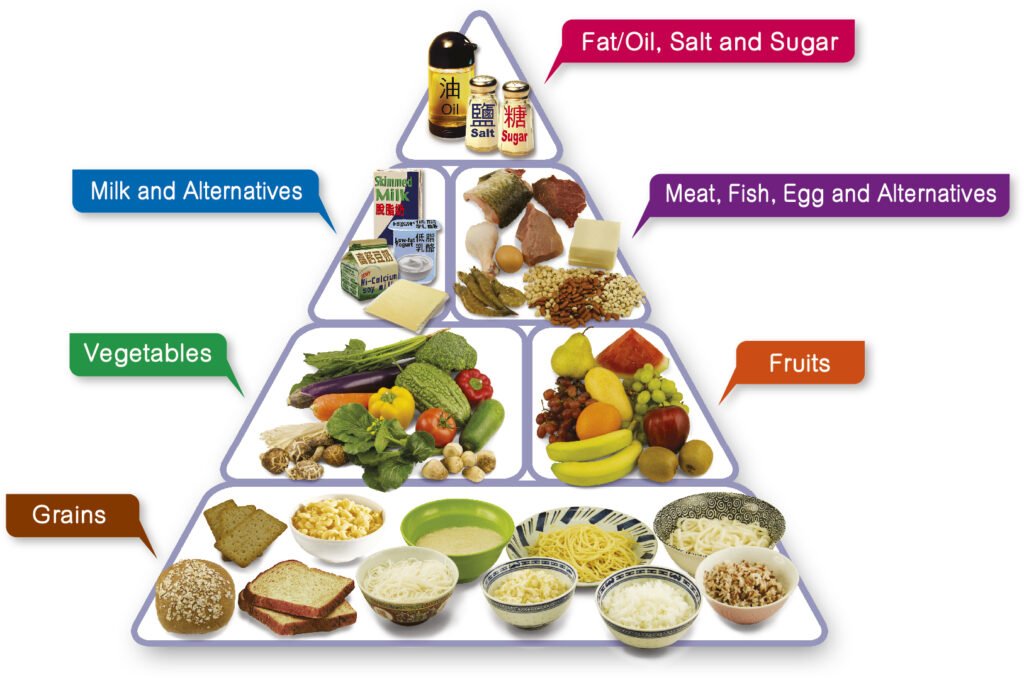
6. Food Groups in a Balanced Diet
A balanced diet includes foods from different groups:
- Energy-giving foods – cereals, fats
- Body-building foods – proteins
- Protective foods – fruits and vegetables
Combining all groups ensures proper nutrition.
7. Factors Affecting Nutritional Requirements
Nutritional needs vary due to:
7.1 Age
Children require more nutrients for growth.
7.2 Gender
Men and women have different energy needs.
7.3 Physical Activity
Athletes need more calories and protein.
7.4 Health Condition
Illness or pregnancy increases nutrient needs.
7.5 Climate
Cold climates require more energy intake.
8. Balanced Diet for Different Age Groups
8.1 Infants
Breast milk provides complete nutrition.
8.2 Children
Need protein, calcium, and vitamins for development.
8.3 Adolescents
Require extra nutrients due to rapid growth.
8.4 Adults
Need balanced calories to maintain weight.
8.5 Elderly
Require lighter meals rich in fiber and vitamins.
9. Malnutrition
Malnutrition occurs when nutrient intake is insufficient or excessive.
Types:
- Undernutrition: lack of nutrients
- Overnutrition: excess calorie intake
Causes:
- Poverty
- Lack of awareness
- Poor diet habits
- Illness
Effects:
- Weak immunity
- Growth failure
- Fatigue
10. Deficiency Diseases
Examples include:
- Anemia: Iron deficiency
- Rickets: Vitamin D deficiency
- Scurvy: Vitamin C deficiency
- Goiter: Iodine deficiency
- Night blindness: Vitamin A deficiency
Balanced diet prevents these diseases.
11. Healthy Eating Habits
Good nutrition also depends on eating behavior:
- Eat meals at regular times
- Include fruits and vegetables daily
- Avoid excessive junk food
- Drink enough water
- Limit sugar and salt
- Eat fresh and home-cooked meals
12. Importance of Breakfast
Breakfast is the most important meal because:
- It provides morning energy
- Improves concentration
- Prevents overeating later
Healthy breakfast options include fruits, milk, eggs, and whole grains.
13. Role of Nutrition in Disease Prevention
Balanced nutrition helps prevent:
- Heart disease
- Diabetes
- Obesity
- Hypertension
- Certain cancers
Antioxidant-rich foods protect body cells from damage.
14. Modern Dietary Challenges
Modern lifestyles create nutritional problems:
- Fast food consumption
- Sedentary habits
- Processed foods
- Stress eating
Awareness and education are essential to maintain healthy diets.
15. Importance of Food Hygiene
Nutrition is effective only when food is safe.
Key practices:
- Wash hands before cooking
- Clean vegetables properly
- Store food safely
- Avoid stale food
Food hygiene prevents food poisoning.
16. Sustainable and Balanced Eating
Balanced diets should also consider environmental sustainability:
- Reduce food waste
- Prefer seasonal foods
- Include plant-based foods
- Avoid excessive processed foods
Healthy eating supports both human and environmental health.
17. Role of Education and Awareness
Schools and communities play an important role in promoting nutrition education. Awareness programs encourage healthy choices and reduce lifestyle diseases.
18. Conclusion
Nutrition and balanced diet are essential pillars of a healthy life. Proper nutrition provides energy, supports growth, strengthens immunity, and protects against diseases. A balanced diet ensures that the body receives all necessary nutrients in the right amounts, enabling efficient functioning of organs and systems.
In today’s fast-paced world, maintaining balanced nutrition has become both more challenging and more important. Unhealthy eating habits, processed foods, and sedentary lifestyles have increased health problems globally. Therefore, individuals must make conscious food choices, prioritize natural and nutritious foods, and adopt healthy eating habits.
Good nutrition begins with awareness and continues through daily practice. By consuming a variety of foods from all food groups, maintaining food hygiene, and following healthy lifestyle habits, individuals can achieve optimal health and well-being. Ultimately, nutrition is not just about eating to survive—it is about eating wisely to live a long, energetic, and disease-free life.
In conclusion, nutrition and a balanced diet form the foundation of human health, development, and overall well-being. Food is not merely a means to satisfy hunger; it is the primary source of energy, growth, protection, and maintenance of the human body. The quality of life that an individual experiences is largely determined by the type of nutrition they receive throughout different stages of life. A balanced diet ensures that the body functions efficiently, the mind remains active, and the immune system stays strong enough to fight diseases. Therefore, understanding and practicing proper nutrition is essential for individuals, families, and societies as a whole.
Nutrition is a continuous biological process through which the body obtains nutrients from food and uses them for energy production, tissue repair, growth, and regulation of body functions. Every cell, organ, and system in the human body depends on nutrients to perform properly. When the body receives adequate and appropriate nutrients, it maintains internal balance and supports healthy functioning. However, when nutrition is poor or imbalanced, the body becomes vulnerable to illness, fatigue, and developmental problems. Thus, nutrition is not only a scientific concept but also a practical necessity for sustaining life.
A balanced diet plays a central role in maintaining this nutritional balance. It includes all essential nutrients—carbohydrates, proteins, fats, vitamins, minerals, water, and dietary fiber—in the correct proportions required by the body. Each nutrient has a specific role, and none can fully replace another. Carbohydrates provide energy, proteins build and repair tissues, fats supply concentrated energy and support vitamin absorption, vitamins and minerals regulate body processes, and water maintains hydration and metabolic activities. When these nutrients are consumed together in balanced quantities, they create harmony within the body systems, enabling optimal health.
One of the most significant contributions of balanced nutrition is its role in growth and development. From infancy to old age, nutritional needs change according to physical and mental requirements. During childhood and adolescence, proper nutrition supports rapid growth, bone development, and brain functioning. Adequate intake of proteins, calcium, iron, and vitamins ensures proper height, weight, and cognitive development. Poor nutrition during these critical stages can lead to stunted growth, learning difficulties, and long-term health complications. Therefore, balanced diets are especially important during early life stages to build a strong foundation for future health.
Nutrition also has a profound impact on energy levels and productivity. The human body requires continuous energy to perform daily activities such as studying, working, exercising, and even resting. A balanced diet provides sustained energy through complex carbohydrates and healthy fats while preventing sudden fatigue caused by unhealthy eating habits. Individuals who consume nutritious meals are generally more active, focused, and efficient in their daily tasks. In contrast, diets high in processed foods and sugars often lead to energy crashes, reduced concentration, and decreased productivity.
Another essential aspect of nutrition is its role in strengthening the immune system. The immune system protects the body against infections, viruses, and harmful microorganisms. Nutrients such as vitamin C, vitamin A, zinc, iron, and protein play crucial roles in building immunity. A balanced diet enhances the body’s natural defense mechanisms, reducing the risk of infections and speeding up recovery from illness. This became especially evident during global health crises, where individuals with stronger nutritional status often showed better resistance to diseases. Thus, nutrition acts as a preventive shield that safeguards health.
In addition to preventing infectious diseases, balanced nutrition also helps reduce the risk of non-communicable diseases such as diabetes, heart disease, obesity, hypertension, and certain cancers. Modern lifestyles characterized by sedentary behavior, excessive fast-food consumption, and stress have increased the prevalence of lifestyle-related illnesses. A diet rich in fruits, vegetables, whole grains, lean proteins, and healthy fats helps regulate blood sugar levels, maintain healthy cholesterol levels, and support cardiovascular health. By adopting balanced eating habits, individuals can significantly lower their chances of developing chronic diseases and improve longevity.
Mental health and emotional well-being are also closely linked with nutrition. The brain requires a constant supply of nutrients to function effectively. Vitamins, minerals, healthy fats, and amino acids contribute to neurotransmitter production, which regulates mood, memory, and concentration. Poor nutrition can lead to irritability, fatigue, anxiety, and reduced cognitive performance. On the other hand, balanced nutrition promotes mental clarity, emotional stability, and improved learning ability. This highlights that nutrition influences not only physical health but also psychological well-being.
Furthermore, nutrition plays an important role in maintaining healthy body weight. Obesity and undernutrition are both forms of malnutrition resulting from imbalanced dietary intake. Excess consumption of calorie-dense but nutrient-poor foods leads to weight gain and associated health problems, while insufficient nutrient intake causes weakness and nutrient deficiencies. A balanced diet ensures that the body receives adequate calories along with essential nutrients, helping maintain an ideal body weight and preventing metabolic disorders.
The importance of dietary fiber and hydration also becomes clear when discussing balanced nutrition. Fiber supports digestive health, prevents constipation, regulates blood sugar levels, and reduces cholesterol. Similarly, water is essential for transporting nutrients, removing waste products, and maintaining body temperature. Many health problems arise not from lack of food but from lack of proper hydration and fiber intake. Therefore, balanced nutrition includes both solid foods and sufficient fluid consumption.
Food hygiene and safe eating practices further enhance the benefits of nutrition. Even nutritious food can become harmful if contaminated or improperly handled. Clean cooking environments, proper storage, washing of fruits and vegetables, and safe food preparation prevent foodborne diseases. Hygiene ensures that nutrients are absorbed safely without introducing harmful bacteria into the body. Thus, nutrition and hygiene work together to promote overall health.
Another important dimension of balanced nutrition is its social and economic significance. Healthy individuals contribute more effectively to society through increased productivity and reduced healthcare costs. Communities with better nutritional awareness experience lower disease rates and improved quality of life. Proper nutrition supports educational achievement among children, economic growth among adults, and healthier aging among the elderly. Therefore, nutrition is not only a personal responsibility but also a public health priority.
Cultural traditions and food habits also influence dietary patterns. Many traditional diets naturally include balanced combinations of grains, vegetables, pulses, and dairy products. However, modernization has introduced processed foods high in sugar, salt, and unhealthy fats, leading to nutritional imbalances. Preserving healthy traditional eating habits while incorporating modern nutritional knowledge can help maintain balanced diets. Education and awareness are essential to encourage individuals to make informed food choices.
Environmental sustainability is another emerging aspect connected with nutrition. Balanced diets that emphasize plant-based foods, seasonal produce, and reduced food waste contribute to environmental conservation. Sustainable eating practices protect natural resources while ensuring food security for future generations. Thus, nutrition is linked not only to human health but also to planetary health.
Education plays a crucial role in promoting proper nutrition. Schools, families, and healthcare institutions must work together to spread awareness about balanced diets, healthy cooking methods, and responsible food consumption. Teaching children healthy eating habits from an early age helps establish lifelong behaviors. Nutritional education empowers individuals to read food labels, choose healthier options, and avoid misleading dietary trends.
Despite advancements in food production, malnutrition remains a global challenge. Poverty, lack of awareness, unequal food distribution, and unhealthy lifestyles contribute to nutritional problems. Addressing these challenges requires coordinated efforts from governments, communities, and individuals. Public health programs, nutrition campaigns, and improved access to healthy foods can significantly improve population health outcomes.
As people age, nutritional needs continue to evolve. Elderly individuals require diets rich in vitamins, minerals, and fiber but lower in excessive calories. Balanced nutrition helps prevent age-related diseases, maintain bone density, and preserve cognitive function. Proper dietary practices therefore support healthy aging and independence in later life.
In the modern era, where convenience foods and busy schedules dominate daily life, maintaining a balanced diet requires conscious effort and discipline. Planning meals, choosing fresh foods, limiting processed items, and maintaining regular eating patterns are essential habits. Nutrition should not be viewed as a temporary diet plan but as a lifelong commitment to health and well-being.
Ultimately, nutrition and balanced diet represent a holistic approach to health that integrates physical, mental, social, and environmental well-being. Good nutrition strengthens the body, sharpens the mind, enhances emotional balance, and improves quality of life. It reduces disease burden, increases life expectancy, and promotes overall happiness and productivity.
In summary, a balanced diet is the cornerstone of a healthy life. It provides the essential nutrients needed for growth, energy, immunity, and disease prevention. Proper nutrition supports individuals at every stage of life, from infancy through old age, ensuring optimal development and longevity. By adopting balanced eating habits, practicing food hygiene, and making informed dietary choices, individuals can achieve sustainable health and well-being.
Therefore, nutrition should be recognized not merely as the consumption of food but as a vital lifestyle practice that shapes human health and future generations. A society that values balanced nutrition invests in healthier individuals, stronger communities, and a more sustainable world. Maintaining proper nutrition is ultimately a shared responsibility—one that begins with individual awareness and extends to families, communities, and global health systems. Through continuous education, mindful eating, and commitment to healthy living, humanity can ensure a future where good health is accessible, achievable, and sustainable for all.




Leave a Reply