


Digital India and National Transformation
Introduction
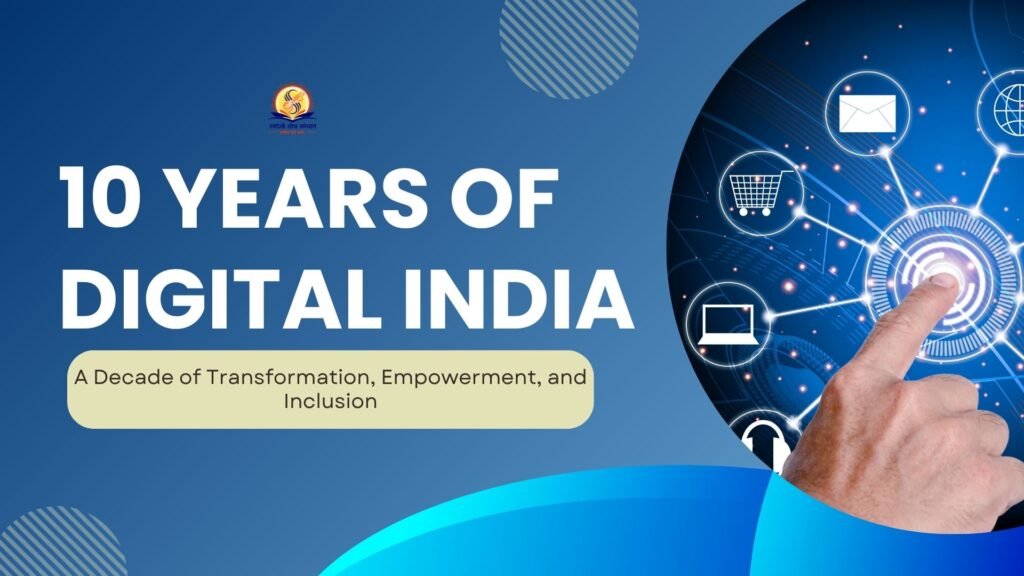
The twenty-first century is widely recognized as the era of digital revolution, where technology has become the driving force behind economic growth, governance, education, communication, and social interaction. Nations across the world are increasingly adopting digital technologies to modernize their systems and improve the quality of life of their citizens. In this context, India, one of the world’s largest democracies with a vast and diverse population, has embarked on an ambitious journey of digital transformation through the Digital India initiative. Launched in 2015, this program aims to transform India into a digitally empowered society and knowledge-based economy.
Digital transformation refers to the integration of digital technologies into all aspects of governance, economy, and daily life, fundamentally changing how services are delivered and how citizens interact with institutions. For a country like India, with challenges such as population size, geographical diversity, rural-urban disparities, and administrative complexity, digitalization offers an efficient and transparent solution to bridge gaps and promote inclusive development.
Historically, access to government services in India was often hindered by bureaucratic delays, lack of transparency, corruption, and physical distance between citizens and administrative centers. Rural populations faced difficulties accessing education, healthcare, banking, and employment opportunities. The digital revolution has provided a pathway to overcome these structural challenges by enabling online services, mobile connectivity, and digital platforms that connect citizens directly with governance systems.
The Digital India initiative rests on three fundamental visions: digital infrastructure as a core utility for every citizen, governance and services on demand, and digital empowerment of citizens. These pillars aim not only to modernize administrative systems but also to ensure that technology becomes accessible to all sections of society, including rural communities, women, youth, and marginalized groups.
National transformation occurs when technological advancement leads to economic growth, social inclusion, institutional efficiency, and improved human development indicators. Digital India has significantly contributed to this transformation by promoting financial inclusion, enhancing transparency, encouraging innovation, and strengthening citizen participation. Digital platforms have reshaped the delivery of welfare schemes, reduced corruption through direct benefit transfers, and increased accountability in governance.
Moreover, digitalization has accelerated India’s integration into the global economy. Startups, e-commerce platforms, fintech innovation, and digital entrepreneurship have expanded employment opportunities and fostered economic dynamism. India’s rapid growth in internet users and smartphone penetration has created one of the world’s largest digital markets, enabling businesses and individuals to connect beyond traditional limitations.
The COVID-19 pandemic further highlighted the importance of digital infrastructure. Online education, telemedicine, digital payments, and remote work became essential tools for continuity during lockdowns. This demonstrated how digital systems can enhance national resilience during crises.
However, digital transformation is not merely about technology; it is about societal change. It reshapes governance models, economic structures, and citizen behavior. The success of Digital India depends not only on technological infrastructure but also on digital literacy, cybersecurity, inclusive policies, and ethical use of technology.
Thus, Digital India represents more than a technological initiative—it symbolizes a comprehensive national transformation aimed at empowering citizens, strengthening democracy, improving governance, and positioning India as a global digital leader.
Objectives of Digital India
The major objectives include:
- Providing high-speed internet connectivity across the country.
- Delivering government services digitally.
- Promoting digital literacy among citizens.
- Encouraging electronic manufacturing.
- Ensuring transparency and accountability in governance.
- Creating employment through digital economy growth.
Key Pillars of Digital India
1. Digital Infrastructure as a Utility
Digital infrastructure includes broadband highways, mobile connectivity, digital identity, and secure cloud storage. Aadhaar-based identification and widespread internet access allow citizens to access services anytime and anywhere.
2. Governance and Services on Demand
Digital platforms enable online applications, e-governance services, and paperless administration. Citizens can access documents, certificates, and welfare schemes online without visiting government offices.
3. Digital Empowerment of Citizens
Digital literacy programs help citizens understand and use technology effectively, reducing the digital divide between urban and rural populations.
Digital India and Economic Transformation
Growth of Digital Economy
Digitalization has boosted sectors such as fintech, e-commerce, online services, and startups. Digital payments systems have reduced cash dependency and increased financial transparency.
Financial Inclusion
Mobile banking and digital payment platforms allow even rural citizens to access banking services. Direct Benefit Transfer systems ensure subsidies reach beneficiaries directly.
Employment Generation
The digital economy has created jobs in IT services, app development, digital marketing, data analytics, and online entrepreneurship.
Support for Startups
Digital India promotes innovation ecosystems and startup culture, encouraging young entrepreneurs to develop technology-based solutions.
Transformation of Governance
E-Governance
Government services are increasingly provided online, reducing paperwork and administrative delays.
Transparency and Accountability
Digital records reduce corruption by minimizing human interference and ensuring traceability.
Efficient Public Service Delivery
Online portals allow citizens to track applications, payments, and grievances, improving administrative efficiency.
Citizen Participation
Digital platforms allow feedback, online consultations, and engagement between citizens and government.
Digital India and Social Transformation
Education Revolution
Online learning platforms, digital classrooms, and e-resources have expanded educational access, especially in remote areas.
Healthcare Transformation
Telemedicine services enable remote diagnosis and consultations, improving healthcare accessibility.
Women Empowerment
Digital literacy and online entrepreneurship provide new economic opportunities for women.
Rural Development
Digital connectivity helps farmers access weather information, market prices, and government schemes.
Impact on Financial Systems
Digital payments such as UPI have revolutionized transactions by making payments instant, secure, and accessible. Small businesses benefit from cashless transactions, increasing transparency and efficiency.
Digital India and National Security
Digital technologies strengthen surveillance, cybersecurity systems, and disaster management mechanisms. Data-driven governance helps predict risks and improve response strategies.
Role of Technology in Governance Innovation
- Artificial Intelligence improves policymaking.
- Big data analytics supports planning and development.
- Cloud computing ensures efficient data management.
Challenges in Digital Transformation
Digital Divide
Not all citizens have equal internet access or digital skills.
Cybersecurity Threats
Data breaches and cybercrime pose risks.
Digital Literacy Gap
Many citizens lack awareness of digital tools.
Infrastructure Limitations
Rural connectivity still needs improvement.
Privacy Concerns
Protection of personal data is essential.
Government Measures to Overcome Challenges
- Expansion of rural broadband networks.
- Digital literacy campaigns.
- Cybersecurity frameworks.
- Promotion of affordable smartphones and internet services.
Digital India and Sustainable Development
Digital technologies reduce paper use, improve energy efficiency, and enable smart cities. Smart governance contributes to environmental sustainability and efficient resource management.
Future Prospects of Digital India
India is moving toward:
- Artificial intelligence integration
- Smart infrastructure
- Digital healthcare ecosystems
- Online education expansion
- Global digital leadership
Digital India is expected to play a crucial role in achieving economic growth and inclusive development.
Role of Citizens in Digital Transformation
Citizens contribute by:
- Using digital services responsibly
- Promoting digital literacy
- Avoiding misinformation
- Practicing cybersecurity awareness
- Supporting digital innovation
Active citizen participation ensures the success of digital transformation.
Conclusion
Digital India represents a transformative vision that connects technology with national development. It has reshaped governance, expanded economic opportunities, enhanced transparency, and empowered citizens by bringing services closer to people. By bridging geographical and social barriers, digitalization has created new pathways for inclusive growth and social justice.
The initiative has demonstrated that technology can act as a powerful equalizer, enabling access to education, healthcare, finance, and governance regardless of location or socioeconomic background. Digital platforms have strengthened democratic participation, improved administrative efficiency, and reduced corruption by ensuring transparency.
However, the journey toward complete digital transformation requires continuous effort. Bridging the digital divide, ensuring cybersecurity, protecting privacy, and improving digital literacy remain essential priorities. Technology must remain people-centric, ensuring that no citizen is left behind in the digital revolution.
As India advances toward becoming a global digital powerhouse, the success of Digital India will depend on collaboration among government, private sector, and citizens. Responsible use of technology, innovation, and inclusive policies will determine the long-term sustainability of digital progress.
Ultimately, Digital India is not just about modernization; it is about national transformation. It represents a shift toward efficiency, empowerment, and equality, enabling India to move confidently toward a future driven by knowledge, innovation, and digital empowerment. A digitally empowered society strengthens democracy, accelerates economic growth, and builds a resilient nation prepared to meet the challenges of the modern world.
In conclusion, the vision of a digitally empowered nation represents one of the most significant transformations in modern India’s developmental journey. The digital revolution has moved beyond being merely a technological upgrade; it has become a powerful instrument of social, economic, and political change. Through the Digital India initiative, India has taken decisive steps toward reshaping governance, empowering citizens, and creating inclusive growth opportunities that reach even the most remote corners of the country.
National transformation occurs when development benefits every section of society, and digitalization has played a crucial role in making governance more accessible, transparent, and efficient. Earlier, citizens often faced long administrative procedures, physical barriers, and lack of information while accessing government services. Digital platforms have minimized these obstacles by enabling online applications, digital documentation, and real-time service delivery. This shift has not only improved efficiency but has also strengthened public trust in institutions by reducing corruption and enhancing accountability.
One of the most remarkable achievements of digital transformation is the democratization of access. Technology has acted as a great equalizer by bridging geographical and social divides. Rural populations, marginalized communities, and economically weaker sections now have greater access to banking, education, healthcare, and government welfare schemes through digital platforms. Financial inclusion through digital payments and direct benefit transfers has ensured that subsidies and benefits reach intended beneficiaries without intermediaries. This has strengthened economic justice and promoted inclusive national development.
Digital India has also significantly contributed to economic transformation by creating a vibrant digital economy. The rapid expansion of digital payments, e-commerce, online services, and technology-driven startups has generated employment opportunities and encouraged entrepreneurship among youth. Small businesses and local entrepreneurs now have access to national and global markets through digital platforms, reducing dependency on traditional economic structures. This shift toward a digital economy has enhanced productivity, innovation, and competitiveness, positioning India as a major participant in the global technological landscape.
Another important dimension of national transformation is the improvement in governance systems. E-governance initiatives have reduced paperwork, minimized bureaucratic delays, and improved service delivery mechanisms. Data-driven policymaking allows governments to design targeted welfare programs and respond effectively to citizens’ needs. Digital grievance redressal systems and online feedback platforms have strengthened participatory democracy by giving citizens a direct voice in governance processes.
The social impact of digital transformation has been equally profound. In education, digital learning platforms have expanded access to knowledge beyond classroom boundaries, enabling students from rural and underserved areas to benefit from quality educational resources. In healthcare, telemedicine and digital health services have improved medical accessibility, particularly in regions lacking adequate healthcare infrastructure. Women empowerment has also gained momentum through digital literacy and online entrepreneurship opportunities, allowing women to participate more actively in economic and social life.
Furthermore, the digital transformation has strengthened national resilience during crises. The COVID-19 pandemic demonstrated how digital infrastructure could sustain essential services during emergencies. Online education, digital payments, teleconsultations, and remote working ensured continuity of economic and social activities despite physical restrictions. This highlighted the importance of technology as a tool for national preparedness and crisis management.
However, the journey toward complete digital transformation is not without challenges. The digital divide remains a significant concern, as unequal access to internet connectivity and digital literacy can create new forms of inequality. Ensuring affordable internet access, improving digital infrastructure in rural areas, and promoting digital education are essential to ensure that technological progress remains inclusive. Additionally, cybersecurity threats and concerns related to data privacy require strong regulatory frameworks and public awareness to maintain trust in digital systems.
Equally important is the ethical use of technology. As digital platforms become central to daily life, citizens must adopt responsible digital behavior by avoiding misinformation, respecting online privacy, and promoting constructive communication. National transformation through technology is sustainable only when digital progress is guided by ethical values and social responsibility.
The future of Digital India holds immense promise. Emerging technologies such as artificial intelligence, big data analytics, cloud computing, and smart infrastructure are expected to further enhance governance efficiency and economic innovation. Smart cities, digital healthcare ecosystems, and advanced educational technologies will continue to reshape the nation’s developmental trajectory. If implemented inclusively, these advancements can accelerate India’s transition into a knowledge-based economy.
Importantly, digital transformation is not solely the responsibility of the government or technological institutions; it is a collective effort involving citizens, private enterprises, educational institutions, and civil society. Citizens play a crucial role by embracing digital literacy, using online services responsibly, and supporting innovation. Public participation ensures that technology serves human needs rather than creating social divisions.
Ultimately, Digital India represents a vision of empowerment — empowerment of individuals through access to information, empowerment of communities through connectivity, and empowerment of the nation through innovation and efficiency. It reflects a shift from traditional governance models to citizen-centric administration where services are accessible, transparent, and inclusive.
As India moves forward in the digital age, the success of national transformation will depend on maintaining a balance between technological advancement and human values. Technology must remain a means to achieve social justice, equality, and sustainable development rather than an end in itself. Continuous investment in education, infrastructure, cybersecurity, and inclusive policies will ensure that the benefits of digitalization reach every citizen.
In essence, Digital India symbolizes the transformation of India into a modern, efficient, and inclusive nation prepared for the challenges and opportunities of the future. By integrating technology into governance, economy, and society, India is building a foundation for long-term progress and global leadership. A digitally empowered society strengthens democracy, accelerates economic growth, enhances social welfare, and creates a resilient nation capable of adapting to rapid global change.
Therefore, Digital India is not merely a technological initiative; it is a national movement toward progress, equality, and empowerment. Its true success lies in ensuring that every citizen becomes an active participant in the digital revolution, contributing to a stronger, smarter, and more prosperous nation for generations to come.
✅ DIGITAL INDIA & NATIONAL TRANSFORMATION – 100 QUESTIONS & ANSWERS
⭐ BASIC CONCEPT QUESTIONS (1–20)
1. What is Digital India?
Answer: Digital India is a government initiative launched to transform India into a digitally empowered society and knowledge-based economy.
2. When was Digital India launched?
Answer: In 2015.
3. What is the main aim of Digital India?
Answer: To provide digital infrastructure, online governance, and digital empowerment to citizens.
4. What does digital transformation mean?
Answer: Integration of digital technology into governance, economy, and daily life.
5. Why is Digital India important?
Answer: It improves governance, transparency, and access to services.
6. Name one major benefit of Digital India.
Answer: Easy access to government services online.
7. What is digital infrastructure?
Answer: Internet connectivity, digital identity, and online platforms.
8. What is e-governance?
Answer: Delivery of government services through digital platforms.
9. What is digital literacy?
Answer: Ability to use digital devices and online services effectively.
10. Who benefits from Digital India?
Answer: All citizens, especially rural and marginalized communities.
11. What role does technology play in governance?
Answer: It improves efficiency and transparency.
12. What is paperless governance?
Answer: Use of digital documents instead of physical paperwork.
13. What is online service delivery?
Answer: Providing services through internet portals.
14. What is digital empowerment?
Answer: Enabling citizens to access and use technology confidently.
15. What is broadband connectivity?
Answer: High-speed internet access.
16. What is digital inclusion?
Answer: Equal access to technology for all citizens.
17. What is a digital economy?
Answer: Economy based on digital technologies and online transactions.
18. What is cashless payment?
Answer: Payment made digitally without physical money.
19. What is online governance?
Answer: Administration conducted through digital systems.
20. What is national transformation?
Answer: Overall improvement in economic, social, and governance systems.
⭐ GOVERNANCE & DEMOCRACY (21–40)
21. How does Digital India improve governance?
Answer: By making services faster and transparent.
22. What is transparency in governance?
Answer: Open and accountable administration.
23. How does digitalization reduce corruption?
Answer: By minimizing human interference.
24. What is online grievance redressal?
Answer: Digital system for citizen complaints.
25. How does digital identity help citizens?
Answer: It simplifies verification for services.
26. What is citizen participation?
Answer: Public involvement in governance.
27. How do digital platforms strengthen democracy?
Answer: They allow communication between government and citizens.
28. What is real-time service delivery?
Answer: Immediate processing of services online.
29. What is digital documentation?
Answer: Storing documents electronically.
30. How does e-governance save time?
Answer: Citizens avoid visiting offices physically.
31. What is accountability?
Answer: Responsibility for actions and decisions.
32. How does technology improve administration?
Answer: Through automation and data management.
33. What is smart governance?
Answer: Efficient governance using technology.
34. How do citizens access services digitally?
Answer: Through government portals and mobile apps.
35. What is online verification?
Answer: Digital authentication of documents.
36. Why is transparency important?
Answer: It builds public trust.
37. What is digital record keeping?
Answer: Maintaining records electronically.
38. What is efficient governance?
Answer: Quick and effective service delivery.
39. What is participatory democracy?
Answer: Citizens actively participating in governance.
40. How does Digital India empower citizens politically?
Answer: By providing access to information and services.
⭐ ECONOMIC TRANSFORMATION (41–60)
41. How does Digital India boost the economy?
Answer: By promoting digital businesses and innovation.
42. What is fintech?
Answer: Technology-based financial services.
43. What is digital payment?
Answer: Electronic transfer of money.
44. How does digital payment help businesses?
Answer: It makes transactions faster and safer.
45. What is entrepreneurship?
Answer: Starting and managing new businesses.
46. How do startups benefit from digitalization?
Answer: Easy market access and innovation opportunities.
47. What is e-commerce?
Answer: Buying and selling goods online.
48. How does digitalization create jobs?
Answer: Through IT and online service sectors.
49. What is financial inclusion?
Answer: Access to banking services for all.
50. What is Direct Benefit Transfer?
Answer: Government benefits sent directly to bank accounts.
51. How does digital banking help rural areas?
Answer: Provides banking without physical branches.
52. What is online entrepreneurship?
Answer: Business conducted through internet platforms.
53. What is economic productivity?
Answer: Efficient production of goods and services.
54. How does technology increase productivity?
Answer: By automating processes.
55. What is digital marketplace?
Answer: Online platform for buying and selling.
56. How does digital economy promote growth?
Answer: Through innovation and efficiency.
57. What is online freelancing?
Answer: Remote digital work opportunities.
58. What is startup ecosystem?
Answer: Environment supporting innovation businesses.
59. Why are digital payments popular?
Answer: Convenience and speed.
60. How does Digital India support small businesses?
Answer: Through online visibility and payment systems.
⭐ SOCIAL TRANSFORMATION (61–80)
61. How has Digital India improved education?
Answer: Through online learning platforms.
62. What is digital education?
Answer: Learning through online tools.
63. What is telemedicine?
Answer: Medical consultation through digital technology.
64. How does digital healthcare help rural areas?
Answer: Provides remote medical services.
65. How does digitalization empower women?
Answer: By creating online job opportunities.
66. What is online skill development?
Answer: Learning skills through digital platforms.
67. How does digital connectivity reduce inequality?
Answer: Equal access to information.
68. What is social inclusion?
Answer: Participation of all groups in development.
69. How do farmers benefit from digital tools?
Answer: Access to weather and market information.
70. What is online awareness?
Answer: Access to information via internet.
71. How does technology improve communication?
Answer: Instant connectivity worldwide.
72. What is remote working?
Answer: Working from home using technology.
73. What is digital awareness?
Answer: Understanding online tools and risks.
74. How does Digital India promote equality?
Answer: Equal access to services.
75. What is virtual learning?
Answer: Online classroom education.
76. How does digital media spread knowledge?
Answer: Through online content sharing.
77. What is digital empowerment of youth?
Answer: Skill and employment opportunities online.
78. What is online public service?
Answer: Services provided digitally.
79. How does technology improve lifestyle?
Answer: Convenience and accessibility.
80. How does Digital India support rural development?
Answer: By improving connectivity and services.
⭐ CHALLENGES & FUTURE (81–100)
81. What is digital divide?
Answer: Gap between people with and without internet access.
82. Why is digital literacy important?
Answer: To use technology safely and effectively.
83. What is cybersecurity?
Answer: Protection against digital threats.
84. What is data privacy?
Answer: Protection of personal information.
85. What is cybercrime?
Answer: Crime committed using computers or internet.
86. What is misinformation?
Answer: False information spread online.
87. Why is cybersecurity necessary?
Answer: To protect users and data.
88. What is technological inequality?
Answer: Unequal access to digital tools.
89. How can digital divide be reduced?
Answer: Expanding internet access and education.
90. What is responsible digital behavior?
Answer: Ethical use of technology.
91. What is AI’s role in governance?
Answer: Better decision-making through data analysis.
92. What are smart cities?
Answer: Cities using technology for efficient management.
93. What is cloud computing?
Answer: Online data storage and processing.
94. What is digital future?
Answer: Society driven by technology.
95. How does Digital India strengthen the nation?
Answer: By improving economy, governance, and social inclusion.
96. What is sustainable digital development?
Answer: Technology supporting long-term growth.
97. Who is responsible for digital success?
Answer: Government and citizens together.
98. What is innovation?
Answer: Creation of new technological solutions.
99. What is digital citizenship?
Answer: Responsible use of technology by citizens.
100. What is the ultimate goal of Digital India?
Answer: A digitally empowered and inclusive nation.
✅ PART 1 — 50 IMPORTANT MCQs (with Answers)
1. Digital India was launched in which year?
A) 2012
B) 2014
C) 2015
D) 2017
✅ Answer: C
2. The main aim of Digital India is:
A) Industrial growth only
B) Digital empowerment of citizens
C) Military development
D) Tourism promotion
✅ Answer: B
3. E-governance refers to:
A) Paper administration
B) Digital delivery of government services
C) Political campaigning
D) Private business services
✅ Answer: B
4. Digital payments promote:
A) Corruption
B) Transparency
C) Delay
D) Cash dependency
✅ Answer: B
5. Digital India mainly focuses on:
A) Urban areas only
B) Rural areas only
C) Entire population
D) Businesses only
✅ Answer: C
6. Online education is an example of:
A) Social transformation
B) Industrialization
C) Agriculture reform
D) Trade policy
✅ Answer: A
7. Digital literacy means:
A) Reading books
B) Ability to use digital technology
C) Coding only
D) Writing skills
✅ Answer: B
8. Direct Benefit Transfer helps to:
A) Increase paperwork
B) Reduce corruption
C) Delay payments
D) Increase taxes
✅ Answer: B
9. Telemedicine is related to:
A) Education
B) Agriculture
C) Healthcare
D) Banking
✅ Answer: C
10. Digital economy is based on:
A) Manual systems
B) Online technology
C) Traditional markets
D) Agriculture only
✅ Answer: B
11. Cybersecurity protects against:
A) Floods
B) Cyber attacks
C) Inflation
D) Pollution
✅ Answer: B
12. Digital divide means:
A) Political division
B) Gap in digital access
C) Economic inequality only
D) Cultural difference
✅ Answer: B
13. Online grievance systems improve:
A) Transparency
B) Delay
C) Corruption
D) Confusion
✅ Answer: A
14. Cashless transactions are:
A) Offline payments
B) Digital payments
C) Barter system
D) Manual payments
✅ Answer: B
15. Smart governance uses:
A) Traditional methods
B) Technology and data
C) Paper files
D) Manual records
✅ Answer: B
16. Digital India promotes:
A) Innovation
B) Isolation
C) Unemployment
D) Bureaucracy
✅ Answer: A
17. Online banking supports:
A) Financial inclusion
B) Inflation
C) Poverty
D) Illiteracy
✅ Answer: A
18. E-commerce refers to:
A) Offline shopping
B) Online buying and selling
C) Export trade only
D) Banking services
✅ Answer: B
19. Digital platforms increase:
A) Administrative delays
B) Efficiency
C) Corruption
D) Paperwork
✅ Answer: B
20. Digital identity helps in:
A) Verification
B) Entertainment
C) Advertising
D) Gaming
✅ Answer: A
21–50 (Quick Answer Key Section)
- Digital empowerment improves → Access to services ✅
- Technology-driven governance → E-governance ✅
- Digital payments reduce → Cash dependency ✅
- Online education increases → Learning access ✅
- Digital India supports → Startup culture ✅
- Cybercrime occurs through → Internet misuse ✅
- Cloud computing means → Online data storage ✅
- Digital awareness prevents → Misinformation ✅
- Rural connectivity improves → Inclusion ✅
- Innovation leads to → Economic growth ✅
- Online portals provide → Government services ✅
- Teleworking means → Remote work ✅
- Digital governance increases → Accountability ✅
- AI helps in → Data-based decisions ✅
- Digital India strengthens → Democracy ✅
- Online systems reduce → Human interference ✅
- Digital marketplace helps → Small businesses ✅
- Digital transformation improves → Efficiency ✅
- Smart cities use → Technology ✅
- Digital literacy reduces → Digital divide ✅
- Data privacy protects → Personal information ✅
- Online platforms promote → Participation ✅
- Fintech relates to → Financial technology ✅
- Digital economy creates → Jobs ✅
- E-services mean → Electronic services ✅
- Automation increases → Productivity ✅
- Digital India encourages → Innovation ✅
- Internet connectivity enables → Communication ✅
- Responsible digital use ensures → Safety ✅
- Digital India’s goal → Empowered society ✅
✅ PART 2 — ASSERTION & REASON QUESTIONS (Very Important)
Choose: A) Both true & Reason correct explanation
B) Both true but Reason not explanation
C) Assertion true, Reason false
D) Assertion false, Reason true
1
Assertion: Digital India improves governance efficiency.
Reason: Services are delivered online.
✅ Answer: A
2
Assertion: Digital payments reduce corruption.
Reason: Transactions are traceable.
✅ Answer: A
3
Assertion: Digital divide creates inequality.
Reason: Not everyone has internet access.
✅ Answer: A
4
Assertion: Cybersecurity is unnecessary in digital systems.
Reason: Online systems are completely safe.
✅ Answer: D
5
Assertion: Digital literacy empowers citizens.
Reason: Citizens can access services independently.
✅ Answer: A
6
Assertion: Telemedicine improves healthcare access.
Reason: Doctors can consult patients remotely.
✅ Answer: A
7
Assertion: Digital India supports entrepreneurship.
Reason: Online platforms expand market reach.
✅ Answer: A
8
Assertion: E-governance increases paperwork.
Reason: Digital systems replace manual processes.
✅ Answer: D
9
Assertion: Smart cities depend on technology.
Reason: Data helps manage resources efficiently.
✅ Answer: A
10
Assertion: Digital transformation affects only the economy.
Reason: It also impacts education and society.
✅ Answer: D
11–20 (Answer Key)
- Digital education expands learning — A ✅
- Online services save time — A ✅
- Data privacy protects citizens — A ✅
- Technology reduces transparency — D ✅
- Digital economy creates jobs — A ✅
- Internet access promotes inclusion — A ✅
- Digital governance strengthens democracy — A ✅
- Cybercrime increases without security — A ✅
- Innovation drives transformation — A ✅
- Responsible citizens ensure digital success — A ✅




Leave a Reply