


Development: Meaning, Dimensions, Indicators, and Challenges
Development is a broad and dynamic concept that refers to the improvement in the quality of human life. Traditionally, development was associated only with economic growth, such as increased production, industrial expansion, and higher national income. However, modern understanding recognizes that true development goes beyond money and material wealth. It includes social progress, human well-being, environmental protection, equality, and sustainability.
Development aims to create conditions in which people can live healthy, dignified, secure, and meaningful lives. It focuses on expanding opportunities, improving access to resources, and ensuring that growth benefits all sections of society.
Meaning of Development
Development refers to positive change that improves living standards and enhances human welfare. It includes:
- Better income and employment opportunities
- Access to quality education and healthcare
- Improved housing and sanitation
- Equality and social justice
- Freedom and security
- Clean and safe environment
Development is different from mere growth. Growth refers to quantitative increase (such as GDP rise), while development involves qualitative improvements in life.
Objectives of Development
The main goals of development include:
- Improving living standards by providing basic needs like food, shelter, and clothing.
- Reducing poverty and unemployment through job creation and economic opportunities.
- Ensuring social equality by reducing discrimination and promoting inclusion.
- Enhancing access to education and healthcare for all citizens.
- Protecting the environment for future generations.
- Promoting freedom and dignity for individuals.
Dimensions of Development
Development is multi-dimensional and includes several key aspects:
1. Economic Development
Economic development focuses on increasing income, production, and employment.
Key features:
- Industrial growth
- Expansion of agriculture and services
- Infrastructure development (roads, transport, electricity)
- Increase in national and per capita income
Economic growth provides resources that support social and human development.
2. Human Development
Human development focuses on improving people’s well-being rather than just income.
It includes:
- Education and knowledge
- Health and nutrition
- Standard of living
- Life expectancy
Human development emphasizes expanding people’s choices and opportunities.
3. Social Development
Social development aims to improve social conditions and promote equality.
It includes:
- Gender equality
- Social justice
- Elimination of discrimination
- Access to public services
- Community welfare
Social development ensures that benefits of progress reach every section of society.
4. Political Development
Political development refers to democratic governance and citizen participation.
It includes:
- Rule of law
- Protection of human rights
- Transparency and accountability
- Public participation in decision-making
Political stability and good governance support sustainable development.
5. Environmental Development
Environmental development focuses on protecting natural resources and ecosystems.
It includes:
- Pollution control
- Conservation of forests and wildlife
- Sustainable use of natural resources
- Climate protection measures
Environmental protection ensures long-term survival and ecological balance.
Indicators of Development
To measure development, several indicators are used:
1. Per Capita Income
It is the average income earned per person in a country. A higher per capita income generally indicates better living standards.
2. Human Development Index (HDI)
HDI measures development based on:
- Health (life expectancy)
- Education (years of schooling)
- Standard of living (income)
Countries with higher HDI are considered more developed.
3. Literacy Rate
It indicates the percentage of educated people in a country. Higher literacy improves employment opportunities and social awareness.
4. Life Expectancy
The average number of years a person is expected to live. Higher life expectancy indicates better healthcare and living conditions.
5. Infant Mortality Rate (IMR)
It shows the number of infant deaths per 1000 live births. Lower IMR indicates better healthcare facilities.
6. Access to Basic Services
Availability of clean water, sanitation, electricity, housing, and healthcare is a key indicator of development.
Developed and Developing Countries
Countries are classified based on their level of development.
Developed Countries
- High income levels
- Advanced technology
- Strong healthcare and education systems
- High life expectancy
- Examples: United States, Germany, Japan
Developing Countries
- Lower income levels
- Limited industrial growth
- Inadequate healthcare and education
- Higher poverty levels
- Examples: India, Nigeria, Bangladesh
Sustainable Development
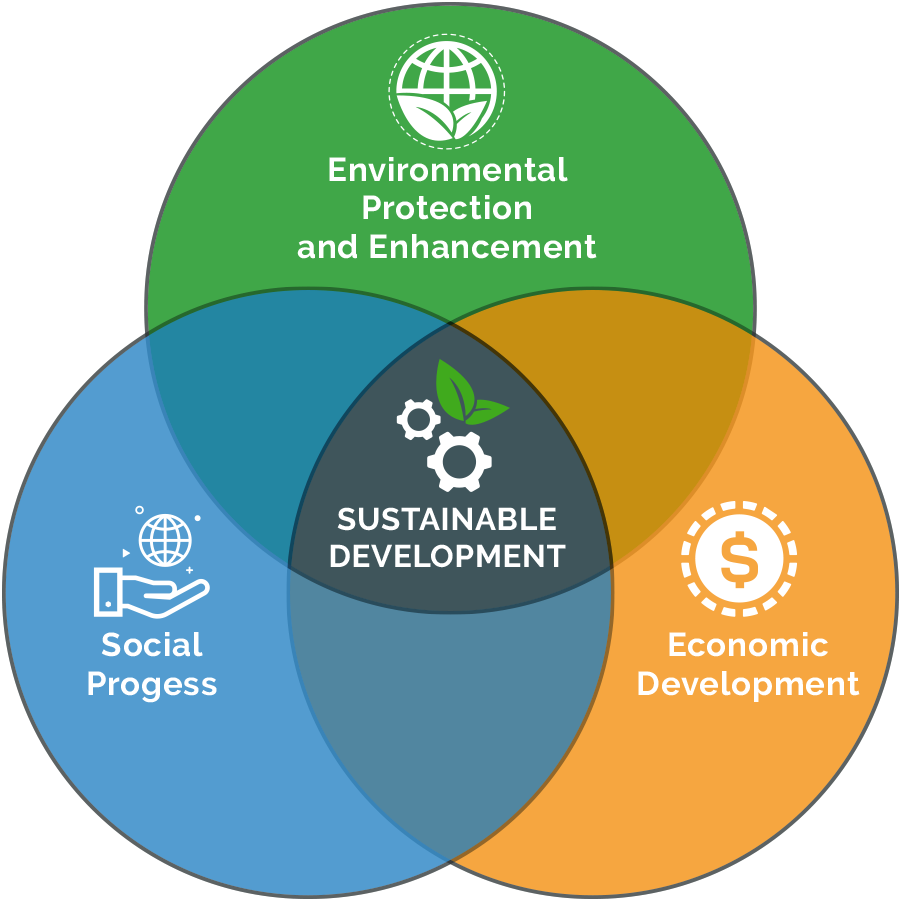
Sustainable development means meeting present needs without compromising the ability of future generations to meet their needs.
Key principles:
- Conservation of natural resources
- Use of renewable energy
- Reduction of pollution
- Climate change mitigation
- Responsible consumption
Sustainable development balances economic growth, environmental protection, and social well-being.
Importance of Development
Development plays a crucial role in improving human life:
- Reduces poverty and hunger
- Improves health and education
- Creates employment opportunities
- Promotes equality and social justice
- Enhances national strength and progress
- Ensures environmental protection
A developed society provides dignity, security, and opportunities for all.
Challenges to Development
Despite progress, many challenges hinder development:
1. Poverty
Millions of people lack basic necessities like food, shelter, and healthcare.
2. Unemployment
Lack of job opportunities leads to economic insecurity.
3. Inequality
Wealth and resources are unevenly distributed.
4. Population Growth
Rapid population growth puts pressure on resources and infrastructure.
5. Environmental Degradation
Pollution, deforestation, and climate change threaten sustainability.
6. Lack of Education and Healthcare
Limited access reduces human potential and productivity.
7. Political Instability and Corruption
Poor governance slows development progress.
Role of Government in Development
Governments play a vital role in promoting development through:
- Building infrastructure
- Providing education and healthcare
- Implementing poverty reduction programs
- Promoting industrial growth
- Protecting the environment
- Ensuring social justice and equality
Effective policies and transparent governance accelerate development.
Role of Technology in Development
Technology contributes significantly to development:
- Improves communication and connectivity
- Enhances agricultural productivity
- Promotes digital education and healthcare
- Creates new employment opportunities
- Supports innovation and economic growth
Digital transformation is shaping modern development worldwide.
Conclusion
Development is a comprehensive process aimed at improving the quality of human life. It is not limited to economic growth but includes social equality, human well-being, environmental protection, and political stability. True development ensures that every individual has access to education, healthcare, employment, security, and a clean environment.
A balanced approach that integrates economic progress with human welfare and environmental sustainability is essential for long-term prosperity. While many nations have achieved remarkable progress, challenges such as poverty, inequality, unemployment, and environmental degradation still persist. Addressing these challenges requires collective efforts from governments, communities, and individuals.
Sustainable development offers a path forward by promoting responsible use of resources and ensuring that future generations inherit a healthy planet. With inclusive policies, technological innovation, and social awareness, societies can achieve equitable and lasting development.
Ultimately, development is about expanding human capabilities, creating opportunities, and building a just and sustainable world where everyone can live with dignity, security, and hope for the future.
Importance of Development
Development is a vital process that improves the quality of life of individuals and societies. It refers to positive changes that enhance economic prosperity, social well-being, environmental sustainability, and human dignity. Development is not limited to financial growth; it includes improvements in education, healthcare, infrastructure, equality, and opportunities. A developed society ensures that people can live healthy, secure, and meaningful lives.
The importance of development lies in its ability to reduce poverty, create opportunities, strengthen nations, and promote overall human progress. Without development, societies struggle with unemployment, poor living conditions, inequality, and limited access to essential services.
Improving Standard of Living
One of the most important benefits of development is the improvement in living standards. Development ensures access to basic needs such as food, clean water, shelter, clothing, and sanitation. It also improves housing conditions, transportation systems, and access to electricity.
As development progresses, people gain access to modern facilities such as safe drinking water, better roads, public transport, and digital connectivity. Improved living standards contribute to healthier and more comfortable lives.
Reduction of Poverty
Development plays a major role in reducing poverty. Economic growth creates job opportunities and increases income levels, allowing people to meet their basic needs. Development programs often focus on providing employment, skill training, and financial support to vulnerable populations.
When people have stable incomes and access to resources, they can afford better education, healthcare, and housing, which further reduces poverty and improves overall well-being.
Creation of Employment Opportunities
Development promotes industrialization, technological advancement, and expansion of the service sector. These factors create employment opportunities across different sectors such as agriculture, manufacturing, healthcare, education, and information technology.
Employment is essential for economic security and personal dignity. When people have jobs, they contribute to economic growth and improve their living standards. Employment also reduces social problems such as crime and poverty.
Improvement in Education
Education is a key component of development. A developed society ensures access to quality education for all citizens, regardless of gender, income, or social background. Education improves literacy rates, enhances knowledge, and develops skills needed for employment.
An educated population contributes to innovation, economic growth, and social progress. Education also promotes awareness about health, hygiene, environment, and rights, helping individuals make informed decisions.
Better Healthcare and Increased Life Expectancy
Development improves healthcare systems, leading to better medical facilities, trained professionals, and access to medicines. Vaccination programs, improved sanitation, and awareness about hygiene reduce diseases and mortality rates.
As healthcare improves, life expectancy increases and infant mortality rates decrease. Healthy citizens are more productive and contribute positively to society.
Promotion of Equality and Social Justice
Development promotes equality by reducing discrimination based on gender, caste, religion, or economic status. It ensures equal access to education, healthcare, employment, and legal rights.
Gender equality is an important aspect of development. When women receive education and employment opportunities, families and communities become more stable and prosperous.
Social justice ensures that marginalized and disadvantaged groups receive support and opportunities for growth.
Strengthening Infrastructure
Infrastructure development is essential for national progress. Development leads to better roads, transportation networks, electricity supply, internet connectivity, irrigation systems, and communication facilities.
Strong infrastructure improves trade, communication, and mobility. It helps farmers transport crops, businesses expand markets, and people access education and healthcare services.
Modern infrastructure also supports economic growth and attracts investment.
Economic Growth and National Progress
Development strengthens a nation’s economy by increasing productivity, trade, and industrial growth. Economic development generates government revenue through taxes, which can be used to fund public services and welfare programs.
A strong economy improves national stability, reduces dependence on foreign aid, and enhances global competitiveness. Developed economies are better equipped to respond to crises and provide social security to citizens.
Environmental Protection and Sustainability
Modern development emphasizes environmental sustainability. Sustainable development ensures that natural resources are used responsibly without harming future generations.
Development encourages:
- Use of renewable energy sources like solar and wind power
- Conservation of forests and wildlife
- Pollution control measures
- Waste management and recycling
Environmental protection ensures ecological balance and protects human health.
Technological Advancement and Innovation
Development promotes technological progress, which improves productivity, communication, healthcare, education, and transportation.
Examples include:
- Digital education platforms
- Telemedicine and online healthcare services
- Modern agricultural techniques
- Smart transportation systems
- E-commerce and digital banking
Technology makes life easier, improves efficiency, and creates new opportunities.
Enhancement of Human Dignity and Freedom
Development enhances human dignity by ensuring access to basic needs, rights, and opportunities. It promotes freedom of expression, participation in decision-making, and protection of human rights.
People in developed societies enjoy social security, legal protection, and freedom to pursue their goals. Development empowers individuals to improve their lives and contribute to society.
Reduction of Social Problems
Development helps reduce social issues such as crime, child labor, illiteracy, hunger, and poor health. When people have access to education, employment, and healthcare, social stability improves.
Development programs focusing on youth empowerment, women’s welfare, and community development create safer and more harmonious societies.
Strengthening National Unity and Stability
Development promotes social harmony and national unity by reducing inequality and providing equal opportunities. When citizens feel included and supported, social conflicts decrease.
Economic stability and social justice contribute to political stability and democratic governance. A stable nation can focus on long-term progress and global cooperation.
Global Competitiveness and International Relations
Development enhances a country’s global standing. Developed nations attract foreign investment, promote trade, and contribute to global innovation.
Countries with strong economies, advanced technology, and skilled human resources play significant roles in international organizations and decision-making.
Development also encourages cooperation in areas such as climate change, healthcare, and economic partnerships.
Role in Rural Development
Development is essential for improving rural areas, where a large portion of the population often resides. Rural development includes:
- Irrigation and modern farming methods
- Access to education and healthcare
- Rural roads and electricity
- Employment opportunities
Rural development reduces migration to cities and promotes balanced regional growth.
Empowerment of Future Generations
Development ensures that future generations inherit a better world. Investments in education, healthcare, environmental protection, and infrastructure create long-term benefits.
Sustainable practices ensure that natural resources remain available for future use. Educated and healthy youth become responsible citizens and leaders.
Conclusion
The importance of development lies in its ability to transform societies and improve human life. Development reduces poverty, enhances education and healthcare, promotes equality, and strengthens economies. It creates employment opportunities, improves infrastructure, and encourages technological innovation.
Development is essential for building a just, prosperous, and sustainable society. It ensures that people live with dignity, security, and freedom while protecting the environment for future generations. A balanced approach that integrates economic growth, social welfare, and environmental protection is necessary for long-term progress.
Ultimately, development is the foundation of human advancement. It empowers individuals, strengthens nations, and creates a better world where everyone has the opportunity to grow, succeed, and live a fulfilling life.
Disadvantages of Development
Although development brings progress and improves living standards, it can also create several challenges and negative impacts if not planned and managed properly. Rapid and unbalanced development may harm the environment, increase inequality, and disrupt social and cultural systems. Understanding these disadvantages helps societies pursue sustainable and inclusive growth.
1. Environmental Degradation
One of the biggest disadvantages of development is damage to the environment.
Effects include:
- Deforestation due to urban expansion and industries
- Air and water pollution from factories and vehicles
- Loss of biodiversity and wildlife habitats
- Soil degradation and desertification
Industrial growth and excessive use of natural resources can disturb ecological balance and contribute to climate change.
2. Resource Depletion
Development often leads to overuse of natural resources such as water, forests, fossil fuels, and minerals.
Consequences:
- Water shortages
- Exhaustion of non-renewable energy sources
- Loss of fertile land
- Energy crises in the future
Unsustainable consumption threatens the availability of resources for future generations.
3. Increased Pollution
Urbanization and industrialization increase pollution levels.
Types of pollution:
- Air pollution from vehicles and industries
- Water pollution from chemical waste and sewage
- Noise pollution in urban areas
- Plastic and solid waste accumulation
Pollution harms human health and contributes to global warming.
4. Social Inequality
Development does not always benefit everyone equally.
Problems include:
- Rich becoming richer while poor remain poor
- Unequal access to education and healthcare
- Regional imbalances between urban and rural areas
- Limited opportunities for marginalized groups
Unequal distribution of wealth can increase social tensions.
5. Displacement of People
Large development projects such as dams, highways, and urban expansion can displace communities.
Impacts:
- Loss of homes and livelihoods
- Cultural disruption of indigenous communities
- Economic hardship for displaced families
Resettlement programs often fail to restore the original quality of life.
6. Urban Overcrowding
Development attracts people to cities in search of better opportunities.
Results include:
- Overcrowded housing and slums
- Pressure on public services
- Traffic congestion
- Increased waste and sanitation problems
Unplanned urban growth reduces quality of life.
7. Cultural Loss and Lifestyle Changes
Modern development can lead to loss of traditional culture and values.
Examples:
- Decline of traditional crafts and occupations
- Replacement of local customs by global culture
- Changes in family structures and lifestyles
While modernization brings convenience, it may weaken cultural identity.
8. Health Problems
Development can also contribute to health issues.
Examples:
- Respiratory diseases due to air pollution
- Lifestyle diseases such as obesity and diabetes
- Stress and mental health problems from fast-paced urban life
- Exposure to chemical pollutants
Modern lifestyles sometimes reduce physical activity and increase health risks.
9. Economic Instability
Rapid development without proper planning may create economic problems.
Examples:
- Inflation due to rising demand
- Job losses due to automation and mechanization
- Dependence on industries that may collapse
- Uneven economic growth
Technological advancement may replace human labor, leading to unemployment.
10. Climate Change
Industrial development contributes to climate change through greenhouse gas emissions.
Effects include:
- Rising global temperatures
- Extreme weather events
- Melting glaciers and rising sea levels
- Threats to agriculture and food security
Climate change poses long-term risks to human survival.
11. Loss of Agricultural Land
Urban expansion and industrial development often convert fertile farmland into buildings and factories.
Consequences:
- Reduced food production
- Increased food prices
- Loss of farmers’ livelihoods
Protecting agricultural land is essential for food security.
12. Increased Cost of Living
Development and urbanization often raise the cost of living.
Effects include:
- Higher housing prices
- Expensive healthcare and education
- Increased transportation costs
- Rising daily expenses
This can make life difficult for low-income families.
13. Technological Dependency
Modern development increases reliance on technology.
Risks include:
- Loss of traditional skills
- Reduced physical activity
- Cybercrime and data security threats
- Overdependence on digital systems
Technology improves efficiency but may create vulnerabilities.
14. Waste Management Problems
Rapid development increases production and consumption, leading to waste generation.
Issues include:
- Plastic waste pollution
- Electronic waste hazards
- Landfills and toxic waste
- Marine pollution
Improper waste management harms ecosystems and human health.
Overview
While development is essential for improving human life, it also brings several disadvantages when it is unplanned or unsustainable. Environmental degradation, resource depletion, pollution, inequality, displacement, and cultural loss are major concerns associated with rapid development. Urban overcrowding, health problems, and climate change further highlight the negative impacts of uncontrolled growth.
Therefore, it is important to pursue sustainable and inclusive development that balances economic progress with environmental protection and social justice. Governments, communities, and individuals must work together to ensure responsible use of resources, equitable distribution of benefits, and preservation of cultural and natural heritage.
True development is not just about growth but about creating a healthy, fair, and sustainable world for present and future generations.
Here are 15 important questions on the topic “Development” that are useful for school exams, board exams, and competitive exams.
Important Questions on Development
1. What is development? Explain its main objectives.
2. Differentiate between economic growth and development.
3. Explain the meaning of human development.
4. What are the main dimensions of development?
5. Why is per capita income considered an important indicator of development?
6. What is the Human Development Index (HDI)? Explain its components.
7. Describe the role of education in development.
8. How does healthcare contribute to development?
9. Explain the differences between developed and developing countries.
10. What is sustainable development? Why is it important?
11. Discuss the impact of development on the environment.
12. How does development help in reducing poverty and unemployment?
13. Explain the problems caused by unequal distribution of development.
14. What role does technology play in development?
15. How can development be made sustainable and inclusive?
Answer 💫
1. What is development? Explain its main objectives.
Development refers to the process of improving the quality of life and well-being of people. It includes economic progress, social equality, access to education and healthcare, environmental protection, and human dignity.
Main Objectives:
- Improve living standards
- Reduce poverty and unemployment
- Provide education and healthcare
- Ensure equality and social justice
- Protect the environment
- Promote human dignity and freedom
Development aims to create a society where people can live healthy, secure, and meaningful lives.
2. Differentiate between economic growth and development.
| Economic Growth | Development |
|---|---|
| Increase in national income | Improvement in quality of life |
| Quantitative change | Qualitative and quantitative change |
| Focuses on production and income | Includes health, education, equality |
| Measured by GDP | Measured by HDI and social indicators |
Economic growth is a part of development, but development is broader and people-centered.
3. Explain the meaning of human development.
Human development focuses on improving people’s well-being and expanding their choices. It emphasizes health, education, and standard of living.
Key Elements:
- Access to education
- Good health and nutrition
- Decent standard of living
- Freedom and opportunities
Human development ensures people can lead productive and fulfilling lives.
4. What are the main dimensions of development?
Development is multi-dimensional and includes:
Economic Dimension
Income growth, employment, industrial development.
Social Dimension
Education, healthcare, gender equality, social justice.
Political Dimension
Democracy, human rights, participation in governance.
Environmental Dimension
Conservation of natural resources and pollution control.
These dimensions work together for balanced progress.
5. Why is per capita income considered an important indicator of development?
Per capita income is the average income earned per person in a country.
Importance:
- Shows standard of living
- Helps compare countries
- Indicates economic performance
- Reflects purchasing power
However, it does not show income distribution or quality of life.
6. What is the Human Development Index (HDI)? Explain its components.
The Human Development Index (HDI) measures overall development by combining social and economic indicators.
Components:
- Health – Life expectancy at birth
- Education – Years of schooling
- Income – Standard of living
Countries with higher HDI values are considered more developed.
7. Describe the role of education in development.
Education plays a crucial role in development by improving knowledge, skills, and awareness.
Importance:
- Increases employment opportunities
- Reduces poverty
- Promotes gender equality
- Improves health awareness
- Encourages innovation and progress
An educated population strengthens the economy and society.
8. How does healthcare contribute to development?
Healthcare improves the physical and mental well-being of people.
Contributions:
- Reduces mortality rates
- Increases life expectancy
- Improves productivity
- Prevents diseases
- Promotes healthy lifestyles
Healthy citizens contribute more effectively to national progress.
9. Explain the differences between developed and developing countries.
| Developed Countries | Developing Countries |
|---|---|
| High income | Low/medium income |
| Advanced technology | Limited technology |
| High literacy rate | Lower literacy rate |
| Better healthcare | Limited healthcare |
| High standard of living | Lower living standards |
Developed countries provide better quality of life compared to developing nations.
10. What is sustainable development? Why is it important?
Sustainable development means meeting present needs without harming future generations’ ability to meet theirs.
Importance:
- Protects natural resources
- Reduces pollution
- Maintains ecological balance
- Ensures long-term economic growth
- Prevents climate change
It balances economic progress with environmental protection.
11. Discuss the impact of development on the environment.
Development can harm the environment if not managed properly.
Negative Impacts:
- Deforestation
- Pollution
- Loss of biodiversity
- Climate change
Positive Impacts:
- Renewable energy use
- Conservation programs
- Environmental awareness
Sustainable practices are essential to reduce environmental damage.
12. How does development help in reducing poverty and unemployment?
Development promotes industries, infrastructure, and services, creating employment opportunities.
Effects:
- Job creation
- Skill development programs
- Increased income levels
- Improved living standards
Economic growth and social programs help reduce poverty.
13. Explain the problems caused by unequal distribution of development.
When development benefits only a few, it leads to inequality.
Problems:
- Rich become richer; poor remain poor
- Social unrest and conflict
- Limited opportunities for marginalized groups
- Regional imbalance
Inclusive development is necessary to ensure fairness.
14. What role does technology play in development?
Technology accelerates development by improving efficiency and connectivity.
Examples:
- Digital education and online learning
- Telemedicine and healthcare access
- Modern agricultural techniques
- E-commerce and digital banking
Technology improves productivity and quality of life.
15. How can development be made sustainable and inclusive?
Development can be sustainable and inclusive through:
- Using renewable energy
- Protecting natural resources
- Providing equal opportunities
- Improving rural development
- Supporting education and healthcare for all
- Encouraging responsible consumption
Balanced development ensures long-term progress and equality.
20 MCQs on Development
1. What is the primary goal of development?
A) Increase GDP only
B) Improve quality of life and well-being of people ✅
C) Build more industries
D) Increase population
2. Which of the following is NOT a dimension of development?
A) Economic
B) Social
C) Cultural ✅
D) Environmental
3. What does HDI stand for?
A) Human Development Index ✅
B) Health and Development Indicator
C) Human Diversity Index
D) High Development Index
4. Which of the following is a social indicator of development?
A) GDP growth
B) Literacy rate ✅
C) Industrial output
D) Foreign investment
5. Which factor is a measure of human development?
A) Life expectancy ✅
B) Stock market index
C) Total export value
D) Number of cars
6. What is sustainable development?
A) Development that ignores environmental issues
B) Development that meets present needs without compromising future generations ✅
C) Development that focuses on technology only
D) Development that increases urbanization
7. Which of the following countries is considered developed?
A) India
B) Nigeria
C) Japan ✅
D) Bangladesh
8. Which of the following is an economic indicator of development?
A) Per capita income ✅
B) Infant mortality rate
C) Literacy rate
D) Life expectancy
9. What is the main difference between economic growth and development?
A) Growth is qualitative, development is quantitative
B) Growth measures income, development measures well-being ✅
C) Growth includes health and education
D) Development ignores income
10. How does education contribute to development?
A) Reduces knowledge
B) Increases employment and awareness ✅
C) Reduces economic growth
D) Promotes inequality
11. Which of the following is a negative effect of unplanned development?
A) Improved healthcare
B) Urban overcrowding ✅
C) Better transportation
D) Increased literacy
12. Per capita income measures:
A) Total national income
B) Average income per person ✅
C) Government spending
D) Poverty rate
13. Why is technology important for development?
A) Reduces productivity
B) Increases efficiency and innovation ✅
C) Eliminates jobs only
D) Prevents education
14. Which of the following is a problem of unequal development?
A) Regional imbalances ✅
B) Increased literacy
C) Environmental protection
D) Renewable energy use
15. Which of the following ensures environmental sustainability?
A) Excessive industrialization
B) Use of renewable energy ✅
C) Urban expansion
D) Resource overuse
16. What does development primarily aim to reduce?
A) Population growth
B) Poverty and inequality ✅
C) Technology use
D) Literacy rate
17. Which sector creates most employment during development?
A) Manufacturing and services ✅
B) Space technology
C) Nuclear energy
D) Mining only
18. Infant mortality rate is:
A) Number of infants per 1000 who survive
B) Number of infant deaths per 1000 live births ✅
C) Average life expectancy
D) Child literacy rate
19. Inclusive development ensures:
A) Benefits reach only rich people
B) Benefits reach all sections of society ✅
C) Focus on urban areas only
D) Focus on technology only
20. Which of the following is NOT a feature of human development?
A) Health and nutrition
B) Education
C) Standard of living
D) Population growth ✅
- (A) Both Assertion and Reason are true, and Reason is the correct explanation of Assertion
- (B) Both Assertion and Reason are true, but Reason is NOT the correct explanation
- (C) Assertion is true, Reason is false
- (D) Assertion is false, Reason is true
10 Assertion-Reason Questions on Development
1.
Assertion (A): Human development is more important than mere economic growth.
Reason (R): Human development focuses on health, education, and quality of life.
Answer: A ✅
2.
Assertion (A): Per capita income alone can measure a country’s development.
Reason (R): Per capita income indicates only average income, not social well-being.
Answer: C ✅
3.
Assertion (A): Sustainable development ensures resources for future generations.
Reason (R): It encourages excessive industrialization and urbanization.
Answer: D ✅
4.
Assertion (A): Literacy rate is a social indicator of development.
Reason (R): Literacy improves employment opportunities and awareness.
Answer: A ✅
5.
Assertion (A): Development always leads to environmental protection.
Reason (R): Industrialization and urbanization can increase pollution.
Answer: C ✅
6.
Assertion (A): HDI measures development using income, education, and health.
Reason (R): HDI provides a comprehensive picture of human well-being.
Answer: A ✅
7.
Assertion (A): Rural development is not important for a country’s overall development.
Reason (R): Most of the population in developing countries lives in rural areas.
Answer: D ✅
8.
Assertion (A): Technology contributes to economic and social development.
Reason (R): Technology increases productivity, communication, and access to services.
Answer: A ✅
9.
Assertion (A): Unequal development can lead to social unrest.
Reason (R): Wealth and opportunities are often concentrated in certain regions or groups.
Answer: A ✅
10.
Assertion (A): Life expectancy is an economic indicator of development.
Reason (R): It reflects the health and well-being of a population.
Answer: C ✅




Leave a Reply