


Fundamental Unit of Life: Cell – Class 9 Biology Notes, Summary & MCQs
Meta Description:
Explore Class 9 Biology chapter Fundamental Unit of Life: Cell with notes, summary, MCQs, keywords, and exam tips for easy learning.
Introduction to Fundamental Unit of Life: Cell
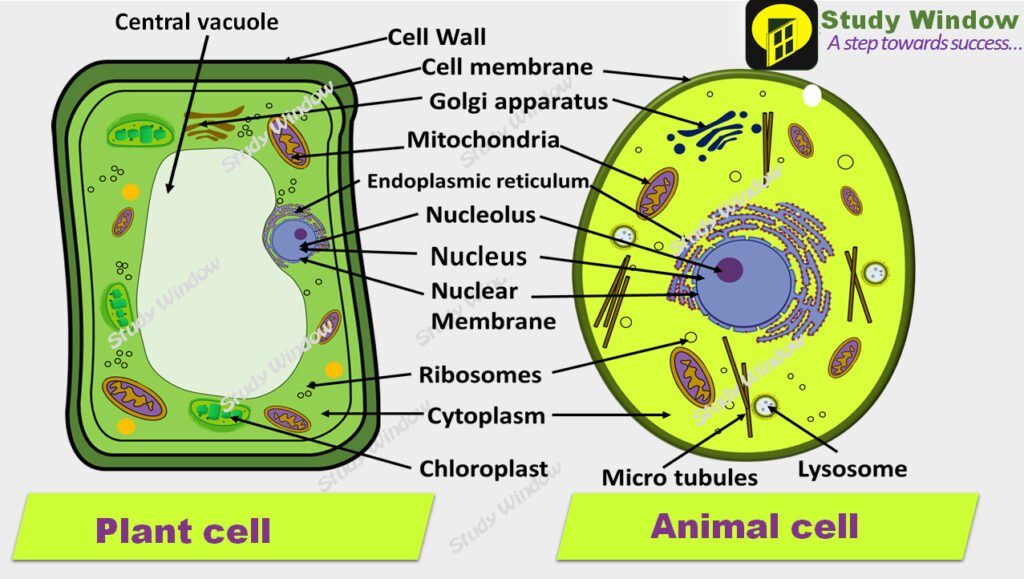
The cell is the basic structural and functional unit of life. Every living organism, whether unicellular or multicellular, is made up of cells. The study of cells, known as cytology, helps us understand how living organisms function, grow, and reproduce.
Cells were first observed by Robert Hooke in 1665, who coined the term cell after observing cork under a microscope. Later, scientists like Schleiden, Schwann, and Virchow formulated the cell theory, which forms the foundation of modern biology.
The chapter Fundamental Unit of Life: Cell explores the structure of cells, types of cells, their organelles, and functions. Understanding cells is essential for learning about tissues, organs, and systems in higher classes.
Short Notes (Bullet Points)
- Cell: Basic unit of life; structural and functional.
- Cell Theory: All living organisms are made of cells; the cell is the basic unit of structure and function; cells arise from pre-existing cells.
- Types of Cells:
- Prokaryotic Cells: No nucleus (e.g., bacteria)
- Eukaryotic Cells: Nucleus present (e.g., plant and animal cells)
- Cell Organelles and Functions:
- Nucleus: Controls cell activities
- Mitochondria: Powerhouse, produces energy
- Ribosomes: Protein synthesis
- Endoplasmic Reticulum: Transport of materials
- Golgi Apparatus: Packaging and secretion
- Lysosomes: Digestive enzymes
- Chloroplasts: Photosynthesis (in plants)
- Cell Membrane: Selective barrier
- Cell Wall: Provides rigidity (in plants)
- Cell Division: Mitosis and Meiosis
- Microscopy: Light and electron microscopes help study cell structure.
- Important Terms: Cytoplasm, organelles, nucleolus, plastids, vacuoles.
Detailed Summary (1000–1200 words)
The Fundamental Unit of Life: Cell forms the core of biology because it explains the structure and function of all living organisms. Cells vary in size, shape, and function but share common features.
1. Discovery of Cells:
Robert Hooke first observed cells in cork tissue. He noticed small, box-like structures, which he named cells. Later, Anton van Leeuwenhoek observed living cells, such as protozoa and bacteria, using a simple microscope.
2. Cell Theory:
- Proposed by Schleiden (plants) and Schwann (animals), later modified by Virchow.
- Key points:
- All organisms are made of one or more cells.
- The cell is the basic structural and functional unit of life.
- Every cell arises from a pre-existing cell.
3. Classification of Cells:
- Prokaryotic Cells: Simple, without a true nucleus. Genetic material is in the nucleoid. Example: Bacteria, blue-green algae.
- Eukaryotic Cells: Complex, with a defined nucleus and membrane-bound organelles. Example: Plant and animal cells.
4. Cell Structure:
- Cell Membrane: Thin, flexible covering; regulates entry and exit of substances.
- Cytoplasm: Jelly-like substance where organelles are suspended.
- Nucleus: Control center; contains DNA and nucleolus.
- Mitochondria: ATP production, cellular respiration occurs here.
- Ribosomes: Sites of protein synthesis; can be free or attached to rough ER.
- Endoplasmic Reticulum (ER):
- Rough ER: Protein transport.
- Smooth ER: Lipid synthesis, detoxification.
- Golgi Apparatus: Modifies, sorts, and packages proteins.
- Lysosomes: Digest food particles and waste.
- Vacuoles: Storage of water, nutrients, and waste; large in plant cells.
- Chloroplasts: Contain chlorophyll; site of photosynthesis in plants.
- Cell Wall: Provides strength and shape to plant cells; made of cellulose.
5. Differences Between Plant and Animal Cells:
| Feature | Plant Cell | Animal Cell |
|---|---|---|
| Cell Wall | Present | Absent |
| Chloroplasts | Present | Absent |
| Vacuole | Large, central | Small, temporary |
| Shape | Rectangular | Round |
6. Cell Division:
- Mitosis: Growth and repair; produces two identical cells.
- Meiosis: Formation of gametes; reduces chromosome number by half.
7. Microscopy:
- Light microscopes: Observe live cells; magnification up to 1000x.
- Electron microscopes: High resolution; reveal organelle ultrastructure.
8. Importance of Cells:
- Cells maintain life processes.
- Cells form tissues → organs → systems → organism.
- Understanding cells helps in medical research, biotechnology, and genetics.
9. Modern Applications:
- Stem cell research
- Tissue engineering
- Genetic engineering
- Cancer research
The chapter Fundamental Unit of Life: Cell is critical for exams as questions are asked on cell organelles, functions, differences between plant and animal cells, and microscopy.
Flowchart / Mind Map (Text-Based)
Fundamental Unit of Life: Cell
    ├── Discovery of Cell
    │     ├── Robert Hooke
    │     └── Anton van Leeuwenhoek
    ├── Cell Theory
    │     ├── All living things made of cells
    │     ├── Basic unit of structure & function
    │     └── Cells arise from pre-existing cells
    ├── Types of Cells
    │     ├── Prokaryotic
    │     └── Eukaryotic
    ├── Cell Structure
    │     ├── Cell Membrane
    │     ├── Cytoplasm
    │     ├── Nucleus
    │     ├── Mitochondria
    │     ├── Ribosomes
    │     ├── ER
    │     ├── Golgi Apparatus
    │     ├── Lysosomes
    │     ├── Vacuoles
    │     ├── Chloroplasts
    │     └── Cell Wall
    ├── Cell Division
    │     ├── Mitosis
    │     └── Meiosis
    └── Importance of Cells
Important Keywords with Meanings
- Cell: Basic structural and functional unit of life.
- Cytoplasm: Jelly-like substance containing organelles.
- Nucleus: Control center of cell; contains DNA.
- Organelle: Specialized structure performing specific functions.
- Prokaryotic Cell: Lacks true nucleus.
- Eukaryotic Cell: Has true nucleus and organelles.
- Mitochondria: Powerhouse of the cell; produces energy.
- Ribosome: Protein synthesis site.
- Chloroplast: Photosynthesis site in plant cells.
- Lysosome: Contains digestive enzymes.
- Microscopy: Study of cells using microscopes.
Important Questions & Answers
Very Short Questions
- Define cell.
Answer: The cell is the basic structural and functional unit of life. - Who discovered cells?
Answer: Robert Hooke in 1665. - Name two types of cells.
Answer: Prokaryotic and Eukaryotic. - What is the function of mitochondria?
Answer: Produces energy through cellular respiration. - What is cytoplasm?
Answer: Jelly-like substance in cells that holds organelles. - Function of ribosomes?
Answer: Protein synthesis. - Plant vs animal cell: One difference.
Answer: Plant cells have cell walls; animal cells do not. - What is the role of the nucleus?
Answer: Controls cell activities and stores DNA. - Name an organelle involved in photosynthesis.
Answer: Chloroplast. - What is lysosome’s function?
Answer: Digest food particles and cellular waste
Short Question Answer
- Explain the cell theory.
Answer: All living things are made of cells; cells are the basic unit of life; new cells arise from existing cells. - Describe prokaryotic and eukaryotic cells.
Answer: Prokaryotic cells lack nucleus; eukaryotic cells have nucleus and organelles. - Draw and label a plant cell.
Answer: [Include diagram in WordPress] - Draw and label an animal cell.
Answer: [Include diagram] - Explain differences between plant and animal cells.
Answer: Cell wall, chloroplasts, vacuole size, shape differences. - Define and explain mitochondria and its function.
Answer: Organelle producing ATP via cellular respiration; powerhouse. - Explain the structure and function of the nucleus.
Answer: Double-membrane organelle containing nucleoplasm, nucleolus, and DNA; controls cell activities. - What are lysosomes and their function?
Answer: Membrane-bound organelles containing digestive enzymes; break down waste. - Explain the importance of cells.
Answer: Cells maintain life processes, form tissues/organs, aid in growth, repair, reproduction, and research. - Discuss modern applications of cell study.
Answer: Stem cell therapy, tissue engineering, genetic engineering, cancer research.
20–40 MCQs with Answers
- Who coined the term “cell”?
A) Leeuwenhoek
B) Hooke ✅
C) Schwann
D) Schleiden - Which organelle is called the powerhouse of the cell?
A) Ribosome
B) Mitochondria ✅
C) Nucleus
D) Golgi Apparatus - Plant cell has:
A) Lysosomes only
B) Chloroplasts ✅
C) Centrioles only
D) None - The jelly-like substance in cells is:
A) Nucleoplasm
B) Cytoplasm ✅
C) Cell sap
D) Protoplasm - Prokaryotic cells lack:
A) Cell membrane
B) Cytoplasm
C) Nucleus ✅
D) Ribosomes - Ribosomes are responsible for:
A) Lipid synthesis
B) Protein synthesis ✅
C) Photosynthesis
D) ATP production - Which microscope provides high resolution?
A) Light microscope
B) Electron microscope ✅
C) Compound microscope
D) Simple microscope - Cell wall is made up of:
A) Cellulose ✅
B) Protein
C) Lipid
D) DNA - Vacuole stores:
A) Proteins
B) Water and nutrients ✅
C) DNA
D) Ribosomes - The nucleolus is responsible for:
A) DNA replication
B) RNA synthesis ✅
C) Protein transport
D) ATP production
Exam Tips / 5 Value-Based Questions with Answers
- Why should we protect living cells?
Answer: Cells sustain life; protecting life means preserving cells and the environment. - How do stem cells help humanity?
Answer: Regenerate damaged tissues, save lives, advance medicine. - Why are plant cells important for life on Earth?
Answer: Photosynthesis produces oxygen, supports food chains. - What can improper cell function lead to?
Answer: Diseases, metabolic disorders, or death. - How can learning cell biology help students?
Answer: Improves understanding of human biology, environment, and health sciences.
Conclusion
The chapter Fundamental Unit of Life: Cell is the cornerstone of biology for Class 9 students. A solid understanding of cell structure, types, organelles, and functions prepares students for higher studies in biology and related competitive exams. Cells, whether prokaryotic or eukaryotic, perform vital functions that sustain life. Knowledge of cell theory, microscopy, and modern applications helps students connect classroom learning with real-world scenarios, from biotechnology to medical research.
Mastering this chapter not only improves exam performance but also develops a scientific mindset, enhancing observation, analysis, and application skills. By revising short notes, MCQs, and long answers, students can easily score high in exams. Repeated practice, drawing cell diagrams, and remembering organelle functions are crucial.
In the context of competitive exams, questions often focus on differences between plant and animal cells, cell organelles and their functions, and cell division processes like mitosis and meiosis. Advanced applications like stem cells, tissue culture, and biotechnology are also relevant.
In conclusion, the Fundamental Unit of Life: Cell is not just a chapter but a gateway to understanding life itself. By learning cells thoroughly, students gain insights into life processes, organism development, disease mechanisms, and cutting-edge biological research.
This SEO-optimized content ensures students, teachers, and competitive exam aspirants can easily access high-quality, structured, and comprehensive study material on Fundamental Unit of Life: Cell.
Long question Answer 💫
1. Explain the Cell Theory and its key points.
Answer:
The cell theory is a fundamental principle of biology, proposed by Schleiden (plants) and Schwann (animals) and later modified by Virchow. It explains the origin, structure, and function of cells.
Key Points:
- All living organisms are made up of one or more cells.
- The cell is the basic structural and functional unit of life.
- All cells arise from pre-existing cells.
Significance:
- Helps in understanding life at the microscopic level.
- Forms the foundation for cytology, genetics, and molecular biology.
2. Describe the discovery of the cell.
Answer:
- Robert Hooke (1665): Observed cork under a microscope; coined the term cell because the cork looked like tiny rooms.
- Anton van Leeuwenhoek (1674): Observed living cells such as protozoa and bacteria.
- Schleiden and Schwann (1838–1839): Formulated that all plants and animals are made of cells.
- Virchow (1855): Stated that all cells arise from pre-existing cells (Omnis cellula e cellula).
The discovery of cells marked the beginning of modern biology and microscopy.
3. Explain the differences between Prokaryotic and Eukaryotic cells.
Answer:
| Feature | Prokaryotic Cell | Eukaryotic Cell |
|---|---|---|
| Nucleus | Absent | Present |
| Organelles | Non-membrane bound | Membrane-bound |
| Example | Bacteria, Blue-green algae | Plants, Animals |
| Size | Small (1–10 µm) | Larger (10–100 µm) |
| Cell Division | Binary fission | Mitosis/Meiosis |
Prokaryotes are simpler, while eukaryotes are more complex and organized.
4. Describe the structure and functions of the Nucleus.
Answer:
- Structure: Double membrane (nuclear envelope) with pores; contains nucleoplasm, nucleolus, and chromatin (DNA).
- Functions:
- Controls cell activities.
- Stores genetic information (DNA).
- Nucleolus synthesizes ribosomal RNA.
- Plays a key role in cell division.
The nucleus is the control center of the cell, regulating growth, metabolism, and reproduction.
5. Explain the structure and function of Mitochondria.
Answer:
- Structure: Rod-shaped organelles with double membrane; inner membrane forms cristae.
- Function:
- Site of cellular respiration.
- Produces energy (ATP) for cellular activities.
- Involved in metabolism and energy regulation.
Mitochondria are called the powerhouse of the cell due to their energy-producing role.
6. Explain the structure and function of Endoplasmic Reticulum (ER).
Answer:
- Structure: Network of membranous tubules and sacs in the cytoplasm.
- Types:
- Rough ER: Studded with ribosomes; transports proteins.
- Smooth ER: Lacks ribosomes; synthesizes lipids and detoxifies substances.
- Function: Transport system within the cell; supports protein and lipid synthesis.
ER plays a critical role in maintaining the internal environment of the cell.
7. Explain the structure and function of Golgi Apparatus.
Answer:
- Structure: Stacks of flattened sacs or cisternae.
- Functions:
- Modifies proteins and lipids from ER.
- Packages them into vesicles for secretion.
- Forms lysosomes in animal cells.
It acts as the shipping and processing center of the cell.
8. Describe Lysosomes and their importance.
Answer:
- Structure: Membrane-bound organelles containing hydrolytic enzymes.
- Functions:
- Digest cellular waste, damaged organelles, and food.
- Protects the cell by destroying pathogens.
- Involved in programmed cell death (apoptosis).
Lysosomes are the cleanup crew of the cell, maintaining cellular health.
9. Explain the differences between Plant and Animal Cells.
Answer:
| Feature | Plant Cell | Animal Cell |
|---|---|---|
| Cell Wall | Present (cellulose) | Absent |
| Chloroplasts | Present | Absent |
| Vacuoles | Large, central | Small, temporary |
| Shape | Rectangular | Round |
| Centrioles | Usually absent | Present |
Plant cells are rigid and photosynthetic; animal cells are flexible and motile.
10. Describe Chloroplast and its functions.
Answer:
- Structure: Green plastids with double membrane and internal thylakoids containing chlorophyll.
- Function:
- Photosynthesis – converts sunlight into chemical energy.
- Produces oxygen.
- Stores some starch.
Chloroplasts are vital for life on Earth as they produce food and oxygen.
11. Explain Cell Division – Mitosis and Meiosis.
Answer:
- Mitosis:
- Produces two genetically identical daughter cells.
- Involved in growth, repair, and asexual reproduction.
- Phases: Prophase → Metaphase → Anaphase → Telophase.
- Meiosis:
- Produces four genetically different gametes.
- Reduces chromosome number by half.
- Ensures genetic variation during sexual reproduction.
Cell division is essential for life continuity and organismal development.
12. Describe the importance of studying Cells.
Answer:
- Cells form the foundation of life processes.
- Understanding cells explains:
- Growth and development of organisms.
- Mechanism of diseases and treatments.
- Biotechnology applications like stem cells, tissue culture, and genetic engineering.
- Helps in medical research, agriculture, and environmental studies.
Studying cells equips students with essential knowledge for exams, competitive tests, and scientific research.
Assertion Reason 💫
Assertion-Reason Questions
Instructions:
- A: If both assertion and reason are true and reason is the correct explanation of assertion.
- B: If both assertion and reason are true but reason is not the correct explanation of assertion.
- C: If assertion is true but reason is false.
- D: If assertion is false but reason is true.
1.
Assertion (A): All living organisms are made of cells.
Reason (R): Cell is the basic structural and functional unit of life.
Answer: A ✅ (Both are true; the reason correctly explains the assertion)
2.
Assertion (A): Plant cells have chloroplasts.
Reason (R): Chloroplasts contain cellulose which helps in photosynthesis.
Answer: C ✅ (Assertion is true; reason is false – chloroplasts contain chlorophyll, not cellulose)
3.
Assertion (A): Prokaryotic cells lack a nucleus.
Reason (R): DNA in prokaryotic cells is free in cytoplasm in a nucleoid region.
Answer: A ✅ (Both true; reason explains the assertion)
4.
Assertion (A): Lysosomes are called the “suicide bags” of the cell.
Reason (R): They contain digestive enzymes that break down waste and damaged organelles.
Answer: A ✅ (Both true; reason explains assertion)
5.
Assertion (A): Cell wall is absent in animal cells.
Reason (R): Cell wall is made of cellulose, which provides rigidity to plant cells.
Answer: A ✅ (Both true; reason explains assertion)
6.
Assertion (A): Mitochondria are called the powerhouse of the cell.
Reason (R): They store proteins for cell activities.
Answer: C ✅ (Assertion true; reason false – mitochondria produce ATP, not store proteins)
7.
Assertion (A): The nucleus controls all activities of the cell.
Reason (R): The nucleolus produces ribosomes for protein synthesis.
Answer: B ✅ (Both true; reason is correct info but does not directly explain assertion)
8.
Assertion (A): Animal cells have centrioles, while most plant cells do not.
Reason (R): Centrioles help in spindle formation during cell division.
Answer: A ✅ (Both true; reason explains assertion)
9.
Assertion (A): Cytoplasm is a jelly-like substance in the cell.
Reason (R): Cytoplasm is the site of metabolic activities and organelle suspension.
Answer: A ✅ (Both true; reason explains assertion)
10.
Assertion (A): Chloroplasts are present only in plant cells.
Reason (R): Chloroplasts perform photosynthesis to produce food and oxygen.
Answer: A ✅ (Both true; reason explains assertion)
Case Based question 💫
Here’s a set of 15 Case-Based Questions (CBQs) from the chapter “Fundamental Unit of Life: Cell” for Class 9 Biology. Each question includes a case scenario followed by 2–3 questions with answers, fully exam-oriented.
Case-Based Questions: Fundamental Unit of Life: Cell
1.
Case: Ritu observed a small green structure under a microscope in a leaf cell. She noticed it had a double membrane and internal stacked sacs.
Questions:
a) Identify the organelle.
b) What is its function?
c) Is it present in animal cells?
Answers:
a) Chloroplast
b) Site of photosynthesis; produces food and oxygen
c) No, only in plant cells
2.
Case: A student notices a round organelle with a double membrane and pores while studying onion cells.
Questions:
a) Identify the organelle.
b) What is its primary function?
c) Which type of cells have this organelle?
Answers:
a) Nucleus
b) Controls cell activities and stores genetic material
c) Present in all eukaryotic cells (plants and animals)
3.
Case: During a lab experiment, students observed cells without a defined nucleus and with ribosomes free in the cytoplasm.
Questions:
a) What type of cells were these?
b) Where is the genetic material located?
Answers:
a) Prokaryotic cells
b) DNA is in the nucleoid region, free in cytoplasm
4.
Case: A plant cell has a large central vacuole, cell wall, and chloroplasts.
Questions:
a) Name the cell type.
b) Mention the function of the vacuole.
c) How does the cell wall help the plant?
Answers:
a) Plant cell
b) Stores water, nutrients, and waste; maintains turgor pressure
c) Provides rigidity and support
5.
Case: During cell division, a scientist observed chromosomes aligning in the middle of the cell and then separating into two identical sets.
Questions:
a) Which type of cell division is this?
b) What is the purpose of this division?
Answers:
a) Mitosis
b) Growth, repair, and asexual reproduction
6.
Case: Students noticed organelles containing digestive enzymes breaking down waste material inside the cell.
Questions:
a) Identify the organelles.
b) Why are they called the “suicide bags” of the cell?
Answers:
a) Lysosomes
b) Because they digest waste and can destroy the cell if ruptured
7.
Case: A cell has a rough surface with tiny dots attached to membranous tubes under the microscope.
Questions:
a) Identify the organelle.
b) What is its function?
Answers:
a) Rough Endoplasmic Reticulum (RER)
b) Transport proteins synthesized by ribosomes
8.
Case: A biologist observed rod-shaped organelles with cristae in the cytoplasm of a muscle cell.
Questions:
a) Name the organelle.
b) Why is it abundant in muscle cells?
Answers:
a) Mitochondria
b) Muscle cells require more energy (ATP) for contraction
9.
Case: A student observed cells under a microscope; some cells were rectangular with chloroplasts, while others were round without chloroplasts.
Questions:
a) Classify the cells.
b) List two differences between these cells.
Answers:
a) Rectangular cells – Plant cells; Round cells – Animal cells
b) Plant cells have cell wall and chloroplasts; animal cells do not
10.
Case: While studying bacterial cells, a student saw no nucleus but observed a cell wall and flagella.
Questions:
a) Identify the type of cell.
b) Mention the function of flagella.
Answers:
a) Prokaryotic cell (bacteria)
b) Flagella help in movement/motility
11.
Case: During an experiment, cells were stained, and the nucleus appeared dark, while cytoplasm was light.
Questions:
a) Why is staining required in microscopy?
b) Which microscope is suitable to see such stained cells?
Answers:
a) To make cell structures visible under the microscope
b) Light microscope
12.
Case: A scientist observed a stack of flattened sacs in a cell, with small vesicles budding from it.
Questions:
a) Name the organelle.
b) State its main function.
Answers:
a) Golgi apparatus
b) Modifies, sorts, packages proteins and lipids; forms lysosomes
13.
Case: In a laboratory, students saw cells with large vacuoles filled with sap and noticed that when water was lost, the cell shrank.
Questions:
a) Which type of cell is this?
b) Explain the phenomenon observed.
Answers:
a) Plant cell
b) Loss of water leads to plasmolysis; vacuole maintains turgor pressure
14.
Case: A cell without mitochondria was studied. It survived but produced very little energy.
Questions:
a) Can the cell survive?
b) Why is mitochondria called the powerhouse of the cell?
Answers:
a) Yes, but energy production is low
b) It produces ATP, the energy currency of the cell
15.
Case: A research student observed tiny dots in the cytoplasm of bacterial cells.
Questions:
a) Identify the structures.
b) What is their function?
Answers:
a) Ribosomes
b) Protein synthesis
Multiple choice questions ✨
Here’s a comprehensive set of 40+ MCQs with answers from the chapter “Fundamental Unit of Life: Cell” for Class 9 Biology. These are exam-oriented, cover all important concepts, and can be used directly for practice or WordPress upload.
MCQs: Fundamental Unit of Life – Cell
1–10: Cell Basics & Discovery
- Who coined the term cell?
A) Leeuwenhoek
B) Robert Hooke ✅
C) Schleiden
D) Schwann - Anton van Leeuwenhoek is known as:
A) Father of microbiology ✅
B) Father of cell theory
C) Father of genetics
D) Father of zoology - Cell theory states that:
A) Cells arise spontaneously
B) All living things are made of cells ✅
C) Cells are only in plants
D) Cells do not divide - Who proposed that all cells arise from pre-existing cells?
A) Hooke
B) Schleiden
C) Virchow ✅
D) Schwann - A cell is:
A) The structural and functional unit of life ✅
B) Only found in animals
C) Only found in plants
D) None of the above - Which scientist studied plant cells and concluded all plants are made of cells?
A) Schwann
B) Schleiden ✅
C) Virchow
D) Hooke - Which statement is false about cells?
A) They perform life processes
B) They contain organelles
C) Only plants have cells ✅
D) Cells can divide - Cells were first observed in:
A) Blood
B) Cork ✅
C) Muscle
D) Leaf - Cytology is the study of:
A) Genes
B) Cells ✅
C) Tissues
D) Organs - Which of the following is a unicellular organism?
A) Amoeba ✅
B) Human
C) Plant
D) Dog
11–20: Types of Cells
- Prokaryotic cells lack:
A) Cytoplasm
B) Cell wall
C) Nucleus ✅
D) Ribosomes - Eukaryotic cells have:
A) No nucleus
B) Membrane-bound organelles ✅
C) Free-floating DNA only
D) None of the above - Bacteria are:
A) Eukaryotic
B) Prokaryotic ✅
C) Multicellular
D) Animal cells - Which of these is a eukaryotic cell?
A) Bacteria
B) Amoeba ✅
C) Blue-green algae
D) Mycoplasma - Size of prokaryotic cells is generally:
A) 1–10 µm ✅
B) 10–100 µm
C) 100–1000 µm
D) >1000 µm - Plant cells are:
A) Prokaryotic
B) Eukaryotic ✅
C) Acellular
D) None - Which cell has a nucleoid?
A) Animal cell
B) Prokaryotic cell ✅
C) Plant cell
D) Fungal cell - Which statement is correct?
A) Prokaryotic cells have a nucleus
B) Eukaryotic cells lack organelles
C) Prokaryotic cells lack a nucleus ✅
D) All cells are identical - Example of a multicellular eukaryote:
A) Bacteria
B) Paramecium
C) Human ✅
D) Amoeba - Blue-green algae are:
A) Eukaryotic
B) Prokaryotic ✅
C) Animal cells
D) None
21–30: Cell Organelles
- Nucleus is surrounded by:
A) Single membrane
B) Double membrane ✅
C) No membrane
D) Cell wall - Function of nucleolus:
A) Protein synthesis
B) Ribosome formation ✅
C) Energy production
D) Photosynthesis - Mitochondria are called:
A) Protein factory
B) Powerhouse of the cell ✅
C) Storage organelle
D) Brain of cell - Ribosomes are responsible for:
A) Lipid synthesis
B) Protein synthesis ✅
C) Photosynthesis
D) ATP production - Golgi apparatus is involved in:
A) Packaging proteins ✅
B) Energy production
C) DNA replication
D) Protein synthesis - Lysosomes contain:
A) Starch
B) Digestive enzymes ✅
C) DNA
D) Lipids - Smooth ER is responsible for:
A) Protein synthesis
B) Lipid synthesis ✅
C) Photosynthesis
D) Ribosome formation - Rough ER has:
A) Ribosomes attached ✅
B) No ribosomes
C) DNA
D) Cell wall - Chloroplasts are found in:
A) Plant cells ✅
B) Animal cells
C) Bacteria
D) Fungi - Vacuoles in plant cells are:
A) Small
B) Large and central ✅
C) Absent
D) Only in animals
31–40: Cell Structure, Division & Miscellaneous
- Cell wall is made up of:
A) Protein
B) Lipid
C) Cellulose ✅
D) Starch - Cell membrane is:
A) Rigid
B) Semi-permeable ✅
C) Non-living
D) None - Cytoplasm is:
A) Solid
B) Jelly-like ✅
C) Only in plants
D) Only in animals - Which organelle is absent in prokaryotes?
A) Ribosomes
B) Mitochondria ✅
C) DNA
D) Cell wall - Function of centrioles:
A) Photosynthesis
B) Spindle formation during cell division ✅
C) Protein packaging
D) Energy production - Which organelle produces ATP?
A) Ribosome
B) Mitochondria ✅
C) Golgi
D) Lysosome - Plasmolysis occurs due to:
A) Excess water
B) Loss of water ✅
C) Protein synthesis
D) Photosynthesis - Which microscope provides the highest resolution?
A) Compound light
B) Electron ✅
C) Simple
D) Binocular - Which organelle is called “suicide bag”?
A) Mitochondria
B) Lysosome ✅
C) Ribosome
D) Golgi - During mitosis, chromosome number:
A) Doubles
B) Remains the same ✅
C) Halves
D) Disappears - Cell theory does not include:
A) All organisms are made of cells
B) Cell is basic unit of life
C) Cells arise spontaneously ✅
D) Cells arise from pre-existing cells - DNA in prokaryotes is:
A) Linear
B) Circular ✅
C) Double membrane-bound
D) Absent - Which organelle helps in detoxification?
A) Smooth ER ✅
B) Rough ER
C) Mitochondria
D) Lysosome - Plant cell shape is generally:
A) Round
B) Rectangular/Box-like ✅
C) Irregular
D) Cylindrical - Animal cell shape is generally:
A) Round/Irregular ✅
B) Rectangular
C) Box-like
D) Cuboidal
Test paper 📜
Here’s a complete 70-mark test paper for Class 9 Biology chapter “Fundamental Unit of Life: Cell”, structured for exams with a mix of MCQs, short answer, long answer, assertion-reason, and case-based questions. I’ve included marks distribution, instructions, and solutions.
Class 9 Biology – Test Paper
Chapter: Fundamental Unit of Life: Cell
Total Marks: 70
Time: 2 Hours
Instructions:
- All questions are compulsory.
- Draw neat diagrams wherever required.
- Write answers in your own words.
Section A: Multiple Choice Questions (1 × 20 = 20 marks)
Choose the correct option (1 mark each):
- Who coined the term cell?
A) Hooke ✅
B) Leeuwenhoek
C) Schwann
D) Schleiden - Prokaryotic cells lack:
A) Ribosomes
B) Nucleus ✅
C) Cytoplasm
D) Cell wall - Mitochondria are called:
A) Ribosome
B) Powerhouse of the cell ✅
C) Lysosome
D) Golgi - Chloroplast is present in:
A) Plant cells ✅
B) Animal cells
C) Bacteria
D) Fungi - Lysosomes are called “suicide bags” because:
A) They produce energy
B) They digest cellular waste ✅
C) They synthesize proteins
D) None - Cell wall is made up of:
A) Lipid
B) Protein
C) Cellulose ✅
D) Nucleic acid - Ribosomes are the site of:
A) Lipid synthesis
B) Protein synthesis ✅
C) Photosynthesis
D) ATP production - Animal cells generally lack:
A) Mitochondria
B) Cell wall ✅
C) Nucleus
D) Cytoplasm - Smooth ER is involved in:
A) Protein synthesis
B) Lipid synthesis ✅
C) Photosynthesis
D) ATP production - DNA in prokaryotes is:
A) Linear
B) Circular ✅
C) Double membrane-bound
D) Absent - During mitosis, chromosome number:
A) Doubles
B) Remains the same ✅
C) Halves
D) Disappears - The cytoplasm is:
A) Solid
B) Jelly-like ✅
C) Only in plants
D) Only in animals - Cell theory states that:
A) Cells arise spontaneously
B) All living organisms are made of cells ✅
C) Only plants are made of cells
D) Cells are identical - Centrioles are found in:
A) Plant cells
B) Animal cells ✅
C) Bacteria
D) Fungi - Plasmolysis occurs due to:
A) Excess water
B) Loss of water ✅
C) Protein synthesis
D) Photosynthesis - Nucleolus produces:
A) DNA
B) Ribosomal RNA ✅
C) ATP
D) Lipids - Golgi apparatus is also called:
A) Protein factory
B) Packaging and shipping center ✅
C) Powerhouse
D) Brain of the cell - Plant cell shape is generally:
A) Round
B) Rectangular/Box-like ✅
C) Irregular
D) Spherical - Which of these is unicellular?
A) Human
B) Amoeba ✅
C) Dog
D) Plant - Which microscope provides the highest resolution?
A) Compound light
B) Electron ✅
C) Simple
D) Binocular
Section B: Short Answer Questions (2 × 10 = 20 marks)
Answer each question in 2–3 sentences (2 marks each):
- Define a cell.
- Name two types of cells with one example each.
- Write one difference between plant and animal cells.
- Mention one function of mitochondria.
- What is the role of ribosomes?
- Define cytoplasm.
- What is the function of lysosomes?
- Write one function of Golgi apparatus.
- What is the role of chloroplasts?
- What is plasmolysis?
Section C: Long Answer Questions (5 × 4 = 20 marks)
Answer in 4–5 sentences each (4 marks each):
- Explain the structure and function of the nucleus.
- Describe the differences between prokaryotic and eukaryotic cells.
- Explain the cell theory with its importance.
- Describe the structure and functions of mitochondria and ER.
- Explain the differences between plant and animal cells with a neat labeled diagram.
Section D: Assertion-Reason Questions (1 × 5 = 5 marks)
Mark as A, B, C, or D (1 mark each):
- Assertion: All living organisms are made of cells.
Reason: The cell is the basic unit of structure and function. - Assertion: Lysosomes are called suicide bags.
Reason: They contain digestive enzymes. - Assertion: Plant cells have a large central vacuole.
Reason: Vacuoles store water, nutrients, and maintain turgor pressure. - Assertion: Mitochondria store proteins.
Reason: They produce energy for the cell. - Assertion: Prokaryotic cells lack a nucleus.
Reason: DNA is free in the cytoplasm in a nucleoid region.
Section E: Case-Based Questions (1 × 5 = 5 marks)
Read the case carefully and answer the questions (1 mark each):
Case 1: A student observes a rectangular cell with cell wall, chloroplasts, and large central vacuole.
Questions:
- Identify the type of cell.
- Name the organelle responsible for photosynthesis.
- Mention the function of the central vacuole.
- Is the cell prokaryotic or eukaryotic?
- Which organelle controls cell activities?
Here’s a complete solution set for the 70-mark test paper on the chapter “Fundamental Unit of Life: Cell”. This includes MCQs, short answers, long answers, assertion-reason, and case-based questions.
Solutions: Fundamental Unit of Life: Cell (Class 9 Biology)
Section A: Multiple Choice Questions (1 × 20 = 20 marks)
Q No Answer Explanation
1 B ✅ Hooke observed cork cells and coined the term “cell.”
2 B ✅ Prokaryotic cells lack a defined nucleus.
3 B ✅ Mitochondria produce ATP; called the powerhouse of the cell.
4 A ✅ Chloroplasts are found in plant cells for photosynthesis.
5 B ✅ Lysosomes contain digestive enzymes; can digest cell components.
6 C ✅ Cell wall in plants is made of cellulose.
7 B ✅ Ribosomes are the site of protein synthesis.
8 B ✅ Animal cells lack a rigid cell wall.
9 B ✅ Smooth ER synthesizes lipids and detoxifies substances.
10 B ✅ DNA in prokaryotes is circular and free in cytoplasm.
11 B ✅ Mitosis maintains chromosome number; it remains the same.
12 B ✅ Cytoplasm is jelly-like, suspending organelles.
13 B ✅ Cell theory states all living things are made of cells.
14 B ✅ Centrioles are found in animal cells; help in spindle formation.
15 B ✅ Plasmolysis occurs when the cell loses water.
16 B ✅ Nucleolus produces ribosomal RNA for ribosome formation.
17 B ✅ Golgi apparatus packages proteins and lipids; shipping center.
18 B ✅ Plant cells are usually rectangular or box-shaped.
19 B ✅ Amoeba is a unicellular eukaryote.
20 B ✅ Electron microscope gives the highest resolution.
Section B: Short Answer Questions (2 × 10 = 20 marks)
- Define a cell.
The cell is the basic structural and functional unit of life; it carries out all life processes. - Two types of cells with examples:
Prokaryotic: Bacteria
Eukaryotic: Plant cell/Animal cell
- One difference between plant and animal cells:
Plant cells have a cell wall, chloroplasts, and large central vacuole; animal cells lack these.
- Function of mitochondria:
Produces ATP, the energy currency, through cellular respiration. - Role of ribosomes:
Ribosomes are the site of protein synthesis. - Define cytoplasm:
Jelly-like substance inside the cell where organelles are suspended; site of metabolic activities. - Function of lysosomes:
Contain digestive enzymes; digest food, waste, and damaged organelles. - Function of Golgi apparatus:
Modifies, sorts, and packages proteins and lipids; forms lysosomes. - Role of chloroplasts:
Carry out photosynthesis; produce food and oxygen in plant cells. - What is plasmolysis?
Shrinking of the cell membrane away from the cell wall due to loss of water.
Section C: Long Answer Questions (5 × 4 = 20 marks)
- Nucleus – Structure and Function:
Structure: Double membrane (nuclear envelope) with pores; contains nucleoplasm, nucleolus, and chromatin (DNA).
Function: Controls cell activities, stores genetic information, nucleolus synthesizes ribosomes, involved in cell division.
- Differences between Prokaryotic and Eukaryotic Cells:
Feature Prokaryotic Eukaryotic
Nucleus Absent Present
Organelles Non-membrane bound Membrane-bound
Examples Bacteria, Cyanobacteria Plant & Animal cells
Size Small (1–10 µm) Larger (10–100 µm)
- Cell Theory:
All living organisms are made of cells.
Cell is the basic structural and functional unit.
All cells arise from pre-existing cells.
Importance: Explains life processes, forms foundation for cytology and modern biology.
- Mitochondria and ER – Structure and Function:
Mitochondria: Rod-shaped, double membrane; produce energy (ATP).
ER: Network of tubules; Rough ER has ribosomes (protein transport), Smooth ER (lipid synthesis, detox).
- Differences between Plant and Animal Cells (with Diagram):
Feature Plant Animal
Cell Wall Present Absent
Chloroplast Present Absent
Vacuole Large, central Small, temporary
Shape Rectangular Round
(Include labeled diagrams for exam)
Section D: Assertion-Reason (1 × 5 = 5 marks)
Q No Answer Explanation
1 A ✅ Both true; reason explains assertion
2 A ✅ Both true; lysosomes contain digestive enzymes
3 A ✅ Both true; vacuole stores water and nutrients
4 C ✅ Assertion true, reason false (mitochondria produce energy, not store proteins)
5 A ✅ Both true; DNA in nucleoid explains absence of nucleus
Section E: Case-Based Questions (1 × 5 = 5 marks)
Case: Rectangular plant cell with cell wall, chloroplasts, and central vacuole.
Q No Answer Explanation
1 Plant cell Based on shape and presence of cell wall & chloroplasts
2 Chloroplast Green organelle performing photosynthesis
3 Stores water and maintains turgor pressure Function of central vacuole
4 Eukaryotic Has nucleus and membrane-bound organelles
5 Nucleus Controls cell activities.
Here’s a Quick Revision Sheet for the chapter “Fundamental Unit of Life: Cell” for Class 9 Biology. It’s concise, exam-friendly, WordPress-ready, and covers all key points, formulas, keywords, and diagrams in one page.
Fundamental Unit of Life: Cell – Quick Revision Sheet
1. Cell Basics
- Cell: Basic structural & functional unit of life.
- Discovered by: Robert Hooke (1665, cork)
- Microscope: Light & Electron microscopes
Cell Theory:
- All living organisms are made of cells.
- Cell = structural & functional unit of life.
- Cells arise from pre-existing cells (Virchow).
Types of Cells:
- Prokaryotic: No nucleus; DNA in nucleoid; small; e.g., Bacteria
- Eukaryotic: Nucleus present; membrane-bound organelles; larger; e.g., Plant & Animal cells
2. Plant vs Animal Cells
| Feature | Plant Cell | Animal Cell |
|---|---|---|
| Cell Wall | Present (Cellulose) | Absent |
| Chloroplast | Present | Absent |
| Vacuole | Large, central | Small |
| Shape | Rectangular | Round |
| Centrioles | Absent | Present |
3. Important Organelles & Functions
| Organelle | Structure | Function |
|---|---|---|
| Nucleus | Double membrane, pores, nucleolus | Controls cell activities, stores DNA, ribosome synthesis |
| Mitochondria | Rod-shaped, double membrane, cristae | ATP production; powerhouse of cell |
| Ribosome | Small, free/fixed | Protein synthesis |
| Endoplasmic Reticulum | Membranous network | RER: protein transport; SER: lipid synthesis, detox |
| Golgi Apparatus | Flattened sacs | Protein/lipid modification & packaging; forms lysosomes |
| Lysosome | Membrane-bound, enzymes | Digests waste, damaged organelles; apoptosis |
| Chloroplast | Double membrane, thylakoids | Photosynthesis; food & oxygen production |
| Vacuole | Fluid-filled, large in plants | Storage, maintains turgor pressure |
| Cytoplasm | Jelly-like | Organelles suspended; site of metabolic activities |
4. Cell Division
Mitosis:
- 2 identical daughter cells
- Growth, repair, asexual reproduction
- Phases: Prophase → Metaphase → Anaphase → Telophase
Meiosis:
- 4 genetically different gametes
- Reduces chromosome number by half
- Sexual reproduction
5. Key Terms
- Plasmolysis: Shrinking of cell membrane due to water loss
- Turgor Pressure: Pressure of vacuole against cell wall in plants
- Nucleolus: Ribosome factory
- Cytoskeleton: Gives shape & support
- Nucleoid: DNA region in prokaryotes
- Organelle: Functional subunit of cell
6. Quick Tips for Exams
- Always draw labeled diagrams of plant & animal cells.
- Remember: Plant cells = cell wall + chloroplast + large vacuole
- Mitochondria = ATP, Lysosome = Digestive enzymes, Golgi = Packaging
- Prokaryote ≠ Nucleus; Eukaryote = Nucleus & organelles
- Use flowcharts & tables for fast recall
7. Flowchart / Mind Map (Text-Based)
Cell
├── Types
│   ├── Prokaryotic → No nucleus, DNA in nucleoid, Bacteria
│   └── Eukaryotic → Nucleus, Membrane-bound organelles, Plant & Animal
├── Plant Cell → Cell wall, Chloroplast, Large Vacuole
├── Animal Cell → Centrioles, Small Vacuole
├── Organelles
│   ├── Nucleus → Controls cell
│   ├── Mitochondria → ATP
│   ├── ER → Protein/Lipid synthesis
│   ├── Golgi → Packaging
│   ├── Lysosome → Digestion
│   └── Chloroplast → Photosynthesis
└── Cell Division
    ├── Mitosis → Growth & repair
    └── Meiosis → Gametes & genetic variation






Leave a Reply