


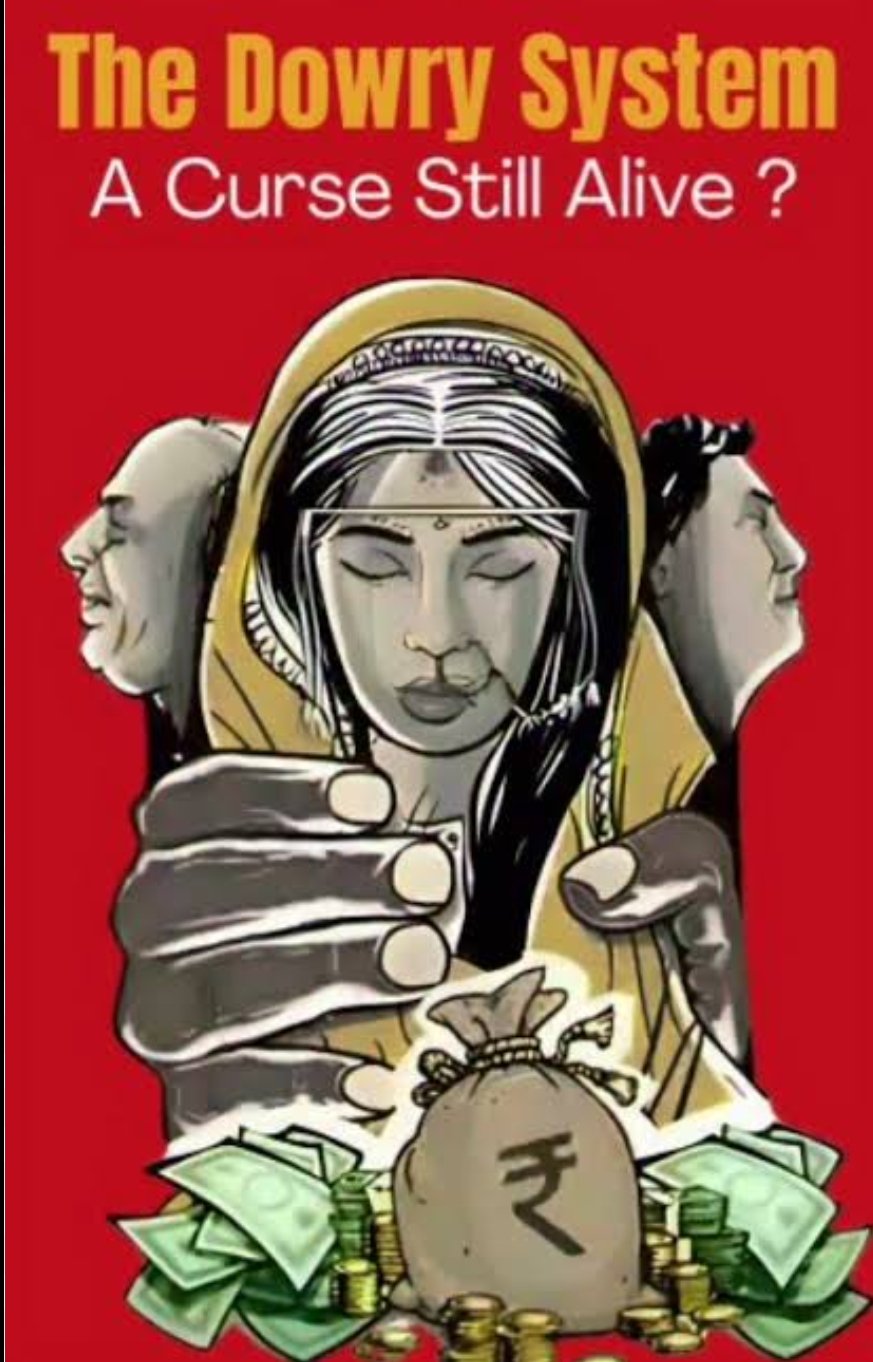
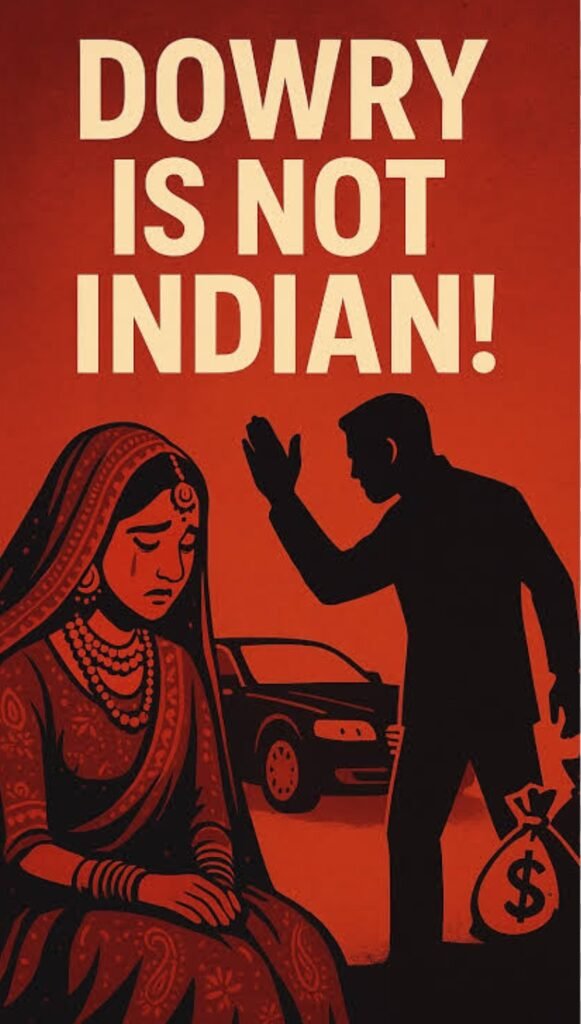
The Dowry System: A Social Evil
Introduction
The dowry system is one of the most pervasive social evils in India and several other South Asian countries. It is a practice in which the bride’s family provides money, property, or other valuable gifts to the groom or his family at the time of marriage. Historically, the practice was intended to support the bride in her new home, but over the centuries, it has evolved into a social problem, often leading to harassment, violence, and even death. The dowry system reflects the deeply rooted patriarchal structure of society, where women are viewed as financial burdens rather than equal members of society. Despite legal measures to curb this practice, it remains prevalent, especially in rural and semi-urban areas.
Historical Background of Dowry
The dowry system has existed for centuries, with roots in various cultural and religious practices:
- Ancient Times:
In ancient India, dowry, known as Stridhan, referred to gifts given to a bride by her family. It included money, jewelry, land, and other valuables to help her start her married life. Stridhan was considered the woman’s personal property, which she could use freely. It was meant as a form of financial security, ensuring the bride had resources in case of widowhood or family disputes. - Medieval Period:
During medieval times, dowry became associated with social status. Wealthier families gave larger dowries to show their prosperity, while marriages were arranged to strengthen social, political, and economic alliances. The practice became less about supporting the bride and more about prestige and power. - Colonial Era:
Under British rule in India, records indicate that dowry practices intensified. British administrators noted that dowry had become a source of economic exploitation. Poor families were often forced to provide extravagant dowries to marry daughters into socially higher families. This period entrenched the perception of dowry as a necessary “price” for marriage. - Modern Times:
Today, dowry is less about tradition and more about coercion. It is often demanded explicitly by the groom’s family, and failure to provide it can result in emotional, physical, or financial abuse. The transformation from a voluntary gift to a forced transaction has made dowry a significant social and legal problem.
Forms of Dowry
Dowry in modern times takes several forms:
- Cash Payments: Direct monetary transfers from the bride’s family to the groom or his family.
- Property and Land: Real estate, plots, or land deeds given to secure a marriage.
- Jewelry: Gold, silver, and precious stones are commonly demanded.
- Household Items: Electronics, furniture, vehicles, and appliances to equip the couple’s home.
- Education and Career Benefits: Sometimes, the bride’s family provides money to pay off debts, support businesses, or secure jobs for the groom.
Causes of the Dowry System
The persistence of the dowry system can be attributed to several social, economic, and cultural factors:
- Patriarchy:
In patriarchal societies, women are often viewed as dependents. Families see daughters as financial burdens, and dowry is considered compensation to the groom’s family for “accepting” a daughter. - Social Pressure:
Families feel societal pressure to give large dowries to secure a prestigious match. In some communities, dowry has become a measure of social status and honor. - Materialism and Greed:
In many cases, dowry is demanded not for tradition but for material gain. Greedy families may use marriage as a way to acquire wealth, often exploiting the bride’s family. - Desire for Sons:
Due to the preference for male children, families sometimes view daughters as financial liabilities. This preference contributes to a continued dowry culture. - Weak Law Enforcement:
Although dowry is illegal, enforcement of laws is often weak. Social acceptance and fear of stigma prevent families from reporting dowry demands.
Impact of the Dowry System
The dowry system has severe social, economic, and psychological effects:
1. On Women
- Dowry Deaths:
One of the gravest consequences of the dowry system is the phenomenon of dowry deaths. If the bride’s family cannot meet the dowry demands, women may be subjected to physical abuse, torture, or even murder. According to the National Crime Records Bureau (NCRB), thousands of women die every year due to dowry-related harassment. - Domestic Violence:
Continuous harassment for dowry leads to emotional and physical abuse. Brides are often tortured, beaten, or forced to leave their marital home. - Mental Health Issues:
Anxiety, depression, and trauma are common among women who are victims of dowry harassment. The social stigma attached to dowry disputes can further worsen their mental health.
2. On Families
- Economic Burden:
Families, especially in rural areas, face extreme financial strain to meet dowry demands. They may take loans, sell property, or go into debt, affecting their long-term financial stability. - Social Inequality:
The dowry system reinforces class distinctions and social hierarchies. Wealthier families often demand more, perpetuating inequality and exploitation.
3. On Society
- Gender Discrimination:
Dowry is a major factor behind gender bias, contributing to a preference for sons over daughters. This has led to skewed sex ratios and declining female populations in some regions. - Erosion of Moral Values:
Marriage is treated as a financial transaction rather than a union based on love and companionship. This undermines the ethical and emotional foundations of society.
Legal Framework Against Dowry in India
The Indian government has recognized the harmful effects of dowry and enacted several laws:
- Dowry Prohibition Act, 1961:
- Prohibits giving or taking dowry.
- Punishment includes imprisonment up to 5 years and a fine of up to ₹15,000 or more.
- Indian Penal Code (IPC) Provisions:
- Section 304B: Punishment for dowry-related deaths.
- Section 498A: Punishment for cruelty by husband or in-laws.
- Sections 406 & 420: Punishment for cheating or criminal breach of trust related to dowry.
- Protection Measures:
- Protection Officers and NGOs help women register complaints.
- Women can approach courts directly to file cases against dowry harassment.
Despite these laws, enforcement remains challenging due to social pressures, corruption, and lack of awareness, especially in rural areas.
Modern Trends and Changes
- Urbanization and Education:
Urban families and educated couples increasingly resist dowry demands. Awareness campaigns and education have reduced dowry prevalence in cities. - Dowry-Free Marriages:
Social movements, NGOs, and media campaigns promote dowry-free weddings. Many families publicly pledge not to give or accept dowry to encourage social change. - Changing Mindsets:
With the rise of gender equality movements, younger generations are questioning the ethics of dowry, seeing it as a symbol of exploitation and inequality.
Challenges in Eradicating Dowry
- Cultural Acceptance:
In many regions, dowry is socially normalized. Families may continue the practice to avoid stigma or ridicule. - Lack of Awareness:
Many people are unaware of the legal consequences of giving or demanding dowry. - Fear of Social Repercussions:
Reporting dowry harassment can bring shame or dishonor to the bride’s family, deterring action. - Economic Pressures:
Poverty-stricken families may feel compelled to give dowry to secure a marriage, perpetuating the cycle.
Solutions to Eradicate Dowry
1. Education and Awareness
- Educate both boys and girls about gender equality and legal rights.
- Conduct awareness campaigns in schools, colleges, and rural areas to discourage dowry practices.
2. Legal Enforcement
- Strict enforcement of the Dowry Prohibition Act and related IPC provisions.
- Ensure swift investigation and punishment of dowry-related crimes.
- Encourage families to report dowry harassment without fear of social backlash.
3. Empowering Women
- Promote financial independence through education, employment, and entrepreneurship.
- Encourage women to assert their rights in marriage negotiations.
- Support self-help groups and microfinance programs for women.
4. Community and Cultural Change
- Honor families that conduct dowry-free marriages to set positive examples.
- Reduce societal pressure by celebrating simple weddings and discouraging extravagant dowries.
- Encourage religious and community leaders to speak against dowry.
5. Role of Media
- Television, films, and social media campaigns should portray dowry as a social evil.
- Positive storytelling and role models can help change perceptions and attitudes.
Conclusion
The dowry system is a deeply rooted social evil that has shifted from a protective custom to a cause of harassment, inequality, and crimes against women. Its persistence is fueled by patriarchy, greed, social pressure, and lack of legal enforcement. Dowry not only harms women and their families but also erodes moral values and perpetuates gender discrimination in society.
Eradicating dowry requires comprehensive action, including education, strict law enforcement, social reform, and women’s empowerment. By promoting dowry-free marriages, changing mindsets, and empowering women financially and socially, society can gradually eliminate this harmful practice. A dowry-free society would be fairer, more equal, and more just, where marriages are based on love, respect, and mutual understanding rather than money and material possessions.
The fight against dowry is not just the responsibility of the government or law enforcement but of every individual, family, and community. Social change begins with awareness, courage, and collective action. Only then can India truly move towards a society that respects women as equals and ends the financial exploitation inherent in the dowry system.
Sure! Since you want a 1500-word conclusion on the dowry system, I’ll provide a very detailed, comprehensive, and reflective conclusion that not only summarizes the problem but also analyzes its social, cultural, legal, and psychological aspects, and suggests long-term solutions. Here’s the full conclusion:
The dowry system, which has been prevalent in India and several South Asian countries for centuries, stands today as one of the most pernicious social evils. Originally conceived as a practice to support a bride in her new marital home, dowry has, over time, transformed into a means of exploitation, harassment, and discrimination. The practice reflects deep-seated patriarchy in society, where women are often considered economic burdens rather than equal participants in social, cultural, and familial life. While historical records suggest that the giving of gifts to the bride was intended for her security, the modern interpretation of dowry has become a coercive demand by the groom or his family, often turning marriages into commercial transactions rather than sacred unions of love, companionship, and mutual respect.
The persistence of the dowry system is rooted in multiple social, economic, and cultural factors. Patriarchy remains the central pillar that sustains dowry practices. In patriarchal societies, men are often considered the primary heirs, decision-makers, and providers, whereas women are viewed as dependents whose primary roles are to marry and manage household responsibilities. Consequently, families perceive daughters as liabilities who require compensation to be married into other families. This perception has been a driving force behind the dowry system for centuries. The desire to maintain or enhance social status also fuels the practice. Families, especially in middle and upper classes, often feel compelled to offer lavish dowries to marry daughters into “good families” that are socially and economically superior. These material expectations can place enormous financial pressure on the bride’s family, sometimes leading to long-term indebtedness or the sale of property and assets.
The economic dimension of the dowry system cannot be overstated. Dowry demands often extend beyond mere tokens of goodwill; they have become an instrument of wealth accumulation for the groom’s family. Jewelry, cash, land, property, and household items are often demanded under the guise of marriage, turning the bride into a source of financial gain rather than a partner in a mutual relationship. The financial strain this imposes on families is particularly severe in rural and semi-urban areas, where the capacity to meet high dowry expectations is limited. Poor families, in a desperate bid to secure a marriage for their daughters, sometimes resort to taking loans, mortgaging property, or incurring debts, perpetuating cycles of economic hardship. This economic exploitation further reinforces social inequality and class divisions, as wealthier families can impose greater dowry demands on less affluent families.
One of the most alarming consequences of the dowry system is its impact on women’s lives. Dowry-related harassment has become one of the leading causes of domestic violence in India. Women often face emotional, psychological, and physical abuse from their husbands and in-laws if dowry expectations are not met. In extreme cases, this harassment culminates in dowry deaths, where brides are murdered, often under circumstances disguised as accidents or suicides. National data reveals that thousands of women die each year due to dowry-related violence, underscoring the lethal consequences of this entrenched social practice. Beyond physical abuse, dowry demands also severely impact women’s mental health. The anxiety of constant harassment, the stigma associated with dowry disputes, and the lack of agency in marital decision-making can lead to depression, trauma, and a sense of helplessness. Even when women survive, the psychological scars often last a lifetime, affecting their self-esteem, confidence, and capacity to assert their rights.
Dowry also has profound implications for societal values and norms. Marriage, which ideally should be a union based on love, understanding, and mutual respect, is frequently reduced to a financial transaction. The emphasis on material wealth and the commodification of women erodes moral and ethical foundations, promoting greed, social competition, and exploitation. Moreover, the dowry system contributes directly to gender discrimination, fostering a societal preference for sons over daughters. This preference has resulted in skewed sex ratios in several regions of India, highlighting the demographic consequences of dowry practices. It also affects broader social development, as the marginalization of women in family and society limits their participation in education, employment, and leadership, undermining national progress.
Recognizing the dangers of dowry, the Indian government has enacted several laws to combat this social evil. The Dowry Prohibition Act of 1961 criminalizes the giving and receiving of dowry, with penalties including imprisonment and fines. Additionally, provisions in the Indian Penal Code, such as Section 498A for cruelty, Section 304B for dowry deaths, and Sections 406 and 420 for cheating and criminal breach of trust, provide legal avenues for victims to seek justice. These legal measures are complemented by the appointment of Protection Officers and the establishment of women’s helplines and NGOs that assist victims in reporting and fighting dowry-related abuse. Despite these laws, enforcement remains a major challenge. Social norms, fear of stigma, corruption, and lack of awareness often prevent families from reporting dowry harassment. As a result, the dowry system continues to thrive, highlighting the gap between legislation and societal practice.
Modern trends indicate a gradual, though uneven, shift in attitudes toward dowry. Urbanization, education, and exposure to gender equality campaigns have contributed to a decline in dowry practices in some areas. Many young couples and families now resist dowry demands, opting instead for dowry-free marriages. Media campaigns, social movements, and the work of NGOs have also promoted awareness and highlighted the dangers of dowry, encouraging families to reject this harmful practice. Religious and community leaders in certain regions have begun publicly advocating against dowry, emphasizing its ethical and moral implications. Despite these positive developments, the dowry system remains pervasive in rural and semi-urban areas, indicating that cultural change is gradual and requires sustained effort.
The eradication of the dowry system demands a multi-dimensional approach. Education is critical. Both boys and girls need to be educated about gender equality, human rights, and the legal consequences of dowry. Awareness campaigns in schools, colleges, and rural communities can help challenge traditional mindsets and encourage families to adopt dowry-free practices. Legal enforcement must be strengthened. Authorities need to ensure swift and impartial investigation of dowry-related cases, and families should be encouraged to report harassment without fear of social backlash. Empowering women economically and socially is equally important. Financial independence, through education, employment, and entrepreneurship, gives women the agency to resist dowry demands and make informed decisions about marriage.
Cultural and community change is also vital. Celebrating dowry-free marriages, recognizing families that reject dowry, and promoting the ethical importance of marriage as a union based on love and mutual respect can gradually shift societal norms. Media plays a crucial role in shaping perceptions. Films, television, social media campaigns, and public service announcements should highlight the dangers of dowry and promote examples of successful dowry-free marriages. Over time, such initiatives can help erode the social legitimacy of dowry practices and promote a culture of equality and respect for women.
The dowry system is not merely a legal or economic problem; it is fundamentally a social and cultural challenge. It reflects underlying inequalities, gender bias, and the commodification of women, all of which have profound implications for the well-being of individuals, families, and society. Tackling dowry requires more than legislation; it requires a comprehensive transformation in societal attitudes, values, and practices. Families must internalize the principle that daughters are equal members of society and not commodities to be exchanged for wealth. Communities must collectively reject the notion that marriage is a financial transaction, and society at large must cultivate respect for women’s rights, dignity, and autonomy.
In conclusion, the dowry system represents a severe social injustice that undermines gender equality, perpetuates violence against women, and distorts societal values. Its persistence highlights the interplay of patriarchy, greed, social pressure, and weak enforcement of law. However, it is not an immutable problem. Through education, legal enforcement, economic empowerment of women, cultural reform, and media advocacy, the dowry system can be gradually eradicated. The ultimate goal should be a society where marriages are based on love, mutual respect, and shared responsibility, and where women are valued for their abilities, character, and humanity rather than their capacity to bring wealth into a marital home. Eradicating dowry is not only a moral and ethical imperative but also essential for building a just, equitable, and progressive society. Every individual, family, and community has a role to play in this struggle, and sustained collective effort can ensure that future generations live in a society free from this harmful practice.
The vision of a dowry-free society is one where gender equality is not an aspiration but a lived reality, where daughters are celebrated as equal participants in family and social life, and where marriages are truly partnerships of love and respect rather than transactions of wealth. Only with persistent effort, awareness, and societal courage can the dowry system, a centuries-old social evil, be consigned to history.
Absolutely! Here’s a detailed overview of case studies on the dowry system, highlighting real-life examples, their causes, consequences, and social implications. I’ll include a mix of historical, legal, and contemporary cases for clarity.
Case Studies of the Dowry System
The dowry system is not just a social issue—it has real-life consequences that have been widely reported in media, legal records, and social studies. Case studies help us understand how deeply rooted and harmful this practice can be.
1. The Case of Shanti (1980s, India)
- Background:
Shanti, a young woman from a rural village, was married to a man from a relatively wealthier family. Her parents provided cash, jewelry, and household items as part of the dowry. - Incident:
Despite giving a substantial dowry, the groom’s family continued to demand more. When her parents could not provide additional gifts, Shanti was physically abused. After months of harassment, she tragically lost her life. - Outcome:
The case was later documented as a dowry death under Section 304B of the Indian Penal Code. The groom and his family were prosecuted. - Implications:
This case highlights the lethal consequences of unmet dowry demands and shows how women’s lives can be jeopardized even after large dowries are given.
2. The Case of Sangeeta Sharma (1999, Delhi, India)
- Background:
Sangeeta Sharma was a young graduate who married a man from a middle-class family. Her parents paid a considerable dowry in cash and gold. - Incident:
Soon after marriage, Sangeeta’s in-laws started constant harassment, demanding more money and expensive gifts. Sangeeta was isolated and forced to leave her marital home several times. - Outcome:
Sangeeta filed a complaint under Section 498A (cruelty) of the Indian Penal Code. The court ruled in her favor, and her husband and in-laws were sentenced to imprisonment and fines. - Implications:
This case demonstrates the importance of legal intervention and awareness. It also shows that even educated women in urban areas can face dowry harassment.
3. The Case of “Bride Burning” in Haryana (2010s)
- Background:
In several reports from Haryana, India, young brides were set on fire due to dowry disputes. - Incident:
One particular case involved a young woman named Priya, whose parents could not meet the exorbitant demands of her husband’s family. After repeated harassment, she was doused in kerosene and set on fire. She succumbed to her injuries in the hospital. - Outcome:
The case was filed as a dowry-related murder, and the accused were arrested under Sections 304B and 498A IPC. - Implications:
This case is an extreme example of dowry deaths, which are still prevalent in parts of rural India. It shows how patriarchal mindset and greed can lead to extreme violence.
4. Legal Case Study: Dowry Prohibition Act, 1961 Enforcement
- Background:
A couple in Mumbai faced continuous harassment due to dowry. The husband’s family demanded cash, a car, and household electronics. The bride’s family was unable to meet these demands. - Incident:
The bride filed a complaint under the Dowry Prohibition Act. The case went to court. - Outcome:
The court ruled that dowry demands, whether explicit or implicit, were illegal. The husband and in-laws were fined, and imprisonment was enforced for repeated harassment. - Implications:
This legal case demonstrates that laws exist to protect women, but they require active enforcement. It also sets a precedent for similar dowry harassment cases.
5. Socio-Economic Study Case: Rural Bihar and Uttar Pradesh
- Background:
Sociologists studied multiple families in rural Bihar and Uttar Pradesh where dowry practices were prevalent. - Findings:
- Most families of daughters reported financial strain, selling land or taking loans to meet dowry demands.
- A significant number of women reported verbal and physical harassment after marriage.
- In some cases, dowry pressure led to early widowhood or abandonment of the bride.
- Implications:
This case study highlights that poverty exacerbates dowry-related problems. Rural areas, in particular, see higher rates of harassment, abuse, and dowry deaths.
6. Case Study: Positive Example – Dowry-Free Marriage
- Background:
In Kerala, a family decided to arrange a dowry-free wedding for their daughter, Meera. Instead of giving gifts to the groom, the family invested in the couple’s joint future, providing educational and career support. - Outcome:
The marriage was celebrated in the community as a model dowry-free wedding. The couple reported better equality and mutual respect in the household. - Implications:
This case demonstrates that social awareness, education, and moral courage can successfully challenge dowry practices. Dowry-free marriages encourage equality and reduce financial pressure on families.
Analysis of the Case Studies
From these case studies, several patterns emerge:
- Dowry Demands Persist Across Classes:
- Both urban and rural families, rich and poor, experience dowry pressures.
- Education alone does not eliminate dowry demands.
- Harassment Is Often Systemic:
- Many cases show repeated harassment from the husband and in-laws.
- Dowry disputes can escalate into physical abuse, torture, or even death.
- Legal Intervention Is Crucial:
- Cases where women filed complaints show the importance of laws like Section 498A, 304B, and the Dowry Prohibition Act.
- Timely reporting and prosecution can save lives and deliver justice.
- Economic Strain on Families:
- Case studies in Bihar, UP, and rural Haryana demonstrate that dowry demands can lead to loans, debt, and long-term financial difficulties for families.
- Cultural Change Shows Hope:
- Dowry-free weddings, like in Kerala, show that community awareness and social courage can challenge centuries-old practices.
- Positive social recognition for dowry-free marriages encourages others to follow.
Lessons from Case Studies
- Dowry is Dangerous and Lethal:
The most tragic cases, such as bride burning and dowry deaths, highlight the life-threatening consequences of the practice. - Social Reform is Needed:
Legal frameworks are not enough; changing social attitudes and patriarchal mindsets is critical. - Empowerment of Women is Key:
Economic and social empowerment of women reduces dependency on the husband’s family and helps resist dowry pressures. - Community Support Helps:
Dowry-free marriages, public recognition, and positive reinforcement can create a ripple effect for social change.
Case studies of the dowry system reveal its deep-rooted, multi-dimensional impact. Dowry is not merely a financial transaction—it is a tool for reinforcing patriarchy, social inequality, and gender-based violence. The tragic cases of harassment, abuse, and death demonstrate the urgent need for legal enforcement, social awareness, and cultural reform. At the same time, positive examples of dowry-free marriages offer hope that traditions can be reformed and society can evolve towards equality, respect, and justice.
By studying these cases, society can understand the real human cost of dowry and work collectively to eradicate it. Legal frameworks, awareness campaigns, economic empowerment of women, and public recognition of dowry-free practices are essential steps towards eliminating this social evil. Ultimately, the goal is to make marriage a union of love, respect, and partnership, not a transaction dictated by wealth and social pressure.
Stopping the dowry system requires a multi-pronged approach, combining legal enforcement, social awareness, cultural change, and women’s empowerment. Here’s a detailed, step-by-step guide on how we can stop the dowry system:
1. Strengthen and Enforce Laws
Laws exist to prohibit dowry, but enforcement is often weak. Strengthening legal measures is essential.
- Strict Implementation of the Dowry Prohibition Act (1961):
The law prohibits giving or taking dowry. Authorities must investigate and punish offenders swiftly. - Use IPC Sections Effectively:
- Section 498A – Cruelty by husband or in-laws
- Section 304B – Dowry deaths
- Sections 406 & 420 – Cheating and breach of trust related to dowry
- Encourage Reporting:
Many families fear stigma. Awareness campaigns must assure victims that complaints are confidential and protected. - Fast-Track Courts:
Cases related to dowry should be handled in special courts to deliver timely justice and deter harassment.
2. Educate People About the Social Evil of Dowry
Education is the key to changing mindsets.
- School and College Programs:
Teach students about gender equality, women’s rights, and legal consequences of dowry. - Community Awareness Campaigns:
Organize workshops in villages and towns to educate people about the harmful effects of dowry. - Media Campaigns:
Television, radio, newspapers, and social media can promote dowry-free marriages and show the consequences of dowry harassment.
3. Promote Dowry-Free Marriages
Creating a social trend of dowry-free marriages can reduce the practice.
- Recognize and Reward Dowry-Free Families:
Publicly honor families who reject dowry. Social recognition can encourage others to follow. - Simplify Marriage Expenses:
Encourage simple weddings without extravagant demands. This reduces pressure on the bride’s family. - Religious and Community Support:
Involve leaders to support dowry-free practices, emphasizing moral and ethical values.
4. Empower Women Economically
Financial independence reduces vulnerability to dowry demands.
- Education:
Educated women are more likely to assert their rights and resist harassment. - Employment Opportunities:
Jobs, entrepreneurship, and skill development make women self-reliant. - Financial Awareness:
Encourage women to have access to bank accounts, property, and investments, giving them bargaining power in marriage negotiations.
5. Change Social Mindsets
Dowry is a cultural problem. Social reform is necessary.
- Fight Patriarchy:
Challenge the notion that men are superior and women are a financial burden. - Promote Gender Equality:
Equal participation of women in education, jobs, and decision-making reduces the perception that dowry is necessary. - Community Pressure:
Communities should discourage families from demanding dowry and create social disapproval for those who continue the practice.
6. Encourage Reporting and Support Systems
Women must feel safe to report dowry harassment.
- Helplines and NGOs:
Provide counseling, legal advice, and shelter for women facing dowry abuse. - Whistleblower Protection:
Protect families and individuals who report dowry demands from social backlash or threats. - Support Networks:
Create community groups or associations that assist women in fighting dowry-related issues.
7. Use Technology and Social Media
Technology can help spread awareness and track abuses.
- Apps for Reporting:
Mobile apps can help women report harassment quickly to authorities. - Social Media Campaigns:
Share success stories of dowry-free marriages and highlight dowry-related crimes to mobilize public opinion against the practice. - Educational Content Online:
Videos, blogs, and webinars can educate the youth about the harms of dowry.
8. Involve Men and Boys
Ending dowry requires changing male behavior and attitudes.
- Educate Boys About Gender Equality:
Teach boys that women are equal partners, not financial burdens. - Encourage Dowry-Free Groom Practices:
Boys and grooms can pledge to marry without expecting dowry, creating a positive social example. - Promote Ethical Responsibility:
Men must take responsibility to refuse dowry and report family demands.
9. Celebrate Successful Social Campaigns
Some communities have successfully reduced dowry practices. Examples include:
- Kerala and Punjab: Many families now organize dowry-free marriages with public awareness campaigns.
- NGO Initiatives: Organizations like Jagori and Swayam Shikshan Prayog actively educate rural areas about dowry harms.
These examples show that consistent community effort can bring real change.
10. Long-Term Cultural Change
Stopping dowry completely requires generational change.
- Promote the idea that marriage is a partnership, not a financial transaction.
- Encourage families to invest in daughters’ education and careers rather than giving dowry.
- Normalize dowry-free weddings as a trend of honor and pride, making it socially desirable.
Stopping the dowry system is not just a legal issue—it is a social, cultural, and moral challenge. Laws alone cannot eradicate it; society must reject the notion of dowry, empower women, educate men, and create community support for dowry-free marriages. Through education, enforcement, awareness campaigns, economic empowerment, and social reform, it is possible to end this harmful practice.
A society free from dowry would be just, equal, and safe for women, where marriages are based on love, respect, and partnership—not wealth or material transactions. The eradication of dowry is not only the responsibility of the government but of every family, individual, and community member. Change begins at home, in schools, and within neighborhoods—and with persistent effort, the dowry system can be completely eliminated.
Multiple Choice Questions (MCQs) on Dowry System
1–10: Basic Understanding
- What is dowry?
a) Gifts given to the bride by the groom
b) Money, property, or gifts given to the groom by the bride’s family
c) Religious offering
d) Marriage ceremony expenses
Answer: b - Which Indian law prohibits dowry?
a) Indian Marriage Act
b) Dowry Prohibition Act, 1961
c) Hindu Succession Act
d) Protection of Women from Domestic Violence Act
Answer: b - What does Section 304B of IPC deal with?
a) Domestic violence
b) Dowry deaths
c) Child marriage
d) Fraudulent marriage
Answer: b - Which of these is NOT a common form of dowry?
a) Jewelry
b) Cash
c) Property
d) Legal advice
Answer: d - Which of these is a major cause of dowry?
a) Gender equality
b) Patriarchy and social pressure
c) Female empowerment
d) Dowry-free campaigns
Answer: b - What is the main purpose of dowry in ancient times?
a) To exploit the bride
b) To financially support the bride in her new home
c) To bribe the groom’s family
d) To show family wealth
Answer: b - Which section of IPC deals with cruelty by husband or in-laws?
a) 498A
b) 302
c) 376
d) 420
Answer: a - Dowry-related harassment can lead to:
a) Domestic violence
b) Dowry death
c) Mental health issues
d) All of the above
Answer: d - The Dowry Prohibition Act was enacted in:
a) 1951
b) 1961
c) 1971
d) 1981
Answer: b - The modern dowry system is mostly:
a) Voluntary
b) Coercive and demanded
c) Only in urban areas
d) Optional under law
Answer: b
11–20: Social and Economic Effects
- Dowry system contributes to:
a) Gender equality
b) Skewed sex ratio
c) Women’s empowerment
d) Financial independence of women
Answer: b - Dowry deaths are often recorded under:
a) Section 375 IPC
b) Section 304B IPC
c) Section 109 IPC
d) Section 498A IPC
Answer: b - Which is a social consequence of dowry?
a) Promotes equality
b) Reduces economic burden
c) Leads to domestic violence
d) Encourages love marriages
Answer: c - High dowry demands can lead families to:
a) Save money
b) Take loans or sell property
c) Ignore the marriage
d) Promote women’s careers
Answer: b - Dowry perpetuates:
a) Gender bias and discrimination
b) Women empowerment
c) Social justice
d) Legal awareness
Answer: a - In rural areas, dowry-related problems are often:
a) Less severe
b) Non-existent
c) More prevalent due to poverty
d) Only symbolic
Answer: c - Dowry system erodes which social value?
a) Love and mutual respect in marriage
b) Education
c) Health awareness
d) Religious knowledge
Answer: a - Women’s mental health issues due to dowry include:
a) Depression
b) Anxiety
c) Trauma
d) All of the above
Answer: d - Dowry-related harassment is mostly faced by:
a) Young married women
b) Elderly men
c) Children under 10
d) None of the above
Answer: a - Dowry system increases:
a) Gender equality
b) Social injustice
c) Family happiness
d) Economic stability
Answer: b
Advanced MCQs on Dowry System (20 Questions)
1–10: Case-Based MCQs
- Case: Priya’s in-laws demand ₹5 lakh as dowry. Her parents cannot afford it. Priya is harassed daily and eventually files a complaint.
Question: Under which law can Priya seek protection?
a) Dowry Prohibition Act, 1961
b) Section 498A IPC
c) Section 304B IPC
d) All of the above
Answer: d - Case: A woman was physically abused after failing to meet dowry demands and later died in suspicious circumstances.
Question: What IPC section applies?
a) Section 302
b) Section 304B
c) Section 376
d) Section 420
Answer: b - Case: Sangeeta married without giving any dowry. Her husband praises her independence and treats her equally.
Question: This example highlights:
a) Positive impact of dowry
b) Benefits of dowry-free marriage
c) Dowry-related harassment
d) Dowry demands by family
Answer: b - Case: Ravi’s father demands a car from his bride’s family. The bride’s family refuses, leading to harassment.
Question: Which social factor is most responsible for this incident?
a) Patriarchy
b) Female education
c) Dowry-free movement
d) Legal enforcement
Answer: a - Case: A family in rural Bihar sells land to meet dowry demands.
Question: What effect of dowry does this illustrate?
a) Social empowerment
b) Economic burden on bride’s family
c) Gender equality
d) Legal compliance
Answer: b - Case: Meera’s parents organized a simple wedding with zero dowry. The community praised them.
Question: Which strategy does this reflect to combat dowry?
a) Media campaigns
b) Legal action
c) Promotion of dowry-free marriages
d) Dowry harassment
Answer: c - Case: A bride is harassed for additional dowry after marriage. She calls a women’s helpline for assistance.
Question: What type of support is being used?
a) Legal
b) Emotional
c) Community
d) All of the above
Answer: d - Case: A groom refuses to accept any gifts or dowry from the bride’s family.
Question: Which approach does this demonstrate?
a) Passive compliance
b) Cultural change through individual action
c) Legal prosecution
d) Dowry coercion
Answer: b - Case: In some villages, families feel socially compelled to offer dowry to marry daughters into reputed families.
Question: What is the main cause here?
a) Legal enforcement
b) Social pressure and prestige
c) Dowry-free campaigns
d) Women empowerment
Answer: b - Case: A bride reports to police that her in-laws demanded gold and cash repeatedly. Police take immediate action.
Question: What is the importance of this action?
a) Legal deterrence
b) Community awareness
c) Media reporting
d) Dowry acceptance
Answer: a
11–20: Assertion-Reason Type MCQs
- Assertion (A): Dowry system leads to domestic violence against women.
Reason (R): Women are often harassed when dowry demands are not met.
a) Both A and R are true, and R is the correct explanation of A
b) Both A and R are true, but R is not the correct explanation of A
c) A is true, R is false
d) A is false, R is true
Answer: a - Assertion (A): Economic empowerment of women reduces dowry harassment.
Reason (R): Financially independent women can refuse dowry and negotiate marriages.
a) Both A and R are true, R explains A
b) Both A and R are true, R does not explain A
c) A is true, R is false
d) A is false, R is true
Answer: a - Assertion (A): The Dowry Prohibition Act, 1961, alone can eradicate dowry.
Reason (R): Legal enforcement without social awareness is insufficient.
a) Both A and R are true, R explains A
b) Both A and R are true, R does not explain A
c) A is true, R is false
d) A is false, R is true
Answer: d - Assertion (A): Community recognition of dowry-free weddings can reduce dowry practices.
Reason (R): Positive social reinforcement encourages families to reject dowry.
a) Both A and R are true, R explains A
b) Both A and R are true, R does not explain A
c) A is true, R is false
d) A is false, R is true
Answer: a - Assertion (A): Patriarchy is a major cause of the dowry system.
Reason (R): Men are often considered primary decision-makers, while women are treated as dependents.
a) Both A and R are true, R explains A
b) Both A and R are true, R does not explain A
c) A is true, R is false
d) A is false, R is true
Answer: a - Assertion (A): Urban areas are free from dowry practices.
Reason (R): Education and awareness have eliminated all dowry practices in cities.
a) Both A and R are true, R explains A
b) Both A and R are true, R does not explain A
c) A is false, R is true
d) A is true, R is false
Answer: c - Assertion (A): Dowry contributes to skewed sex ratios.
Reason (R): Families prefer sons over daughters due to financial liability of dowry.
a) Both A and R are true, R explains A
b) Both A and R are true, R does not explain A
c) A is true, R is false
d) A is false, R is true
Answer: a - Assertion (A): Awareness campaigns alone can completely stop dowry.
Reason (R): Social norms and traditional beliefs require legal support as well.
a) Both A and R are true, R explains A
b) Both A and R are true, R does not explain A
c) A is false, R is true
d) A is true, R is false
Answer: c - Assertion (A): Women’s financial independence reduces the likelihood of dowry deaths.
Reason (R): Empowered women can refuse exploitation and report harassment.
a) Both A and R are true, R explains A
b) Both A and R are true, R does not explain A
c) A is true, R is false
d) A is false, R is true
Answer: a - Assertion (A): Media plays a role in stopping dowry.
Reason (R): Television, social media, and campaigns highlight the harmful effects of dowry and promote dowry-free marriages.
a) Both A and R are true, R explains A
b) Both A and R are true, R does not explain A
c) A is true, R is false
d) A is false, R is true
Answer: a




Leave a Reply