


Meta Description
The Adventures of Toto Class 9 NCERT Beehive summary, notes, MCQs, keywords, questions and exam tips. WordPress-ready SEO study material.
Introduction of the Chapter
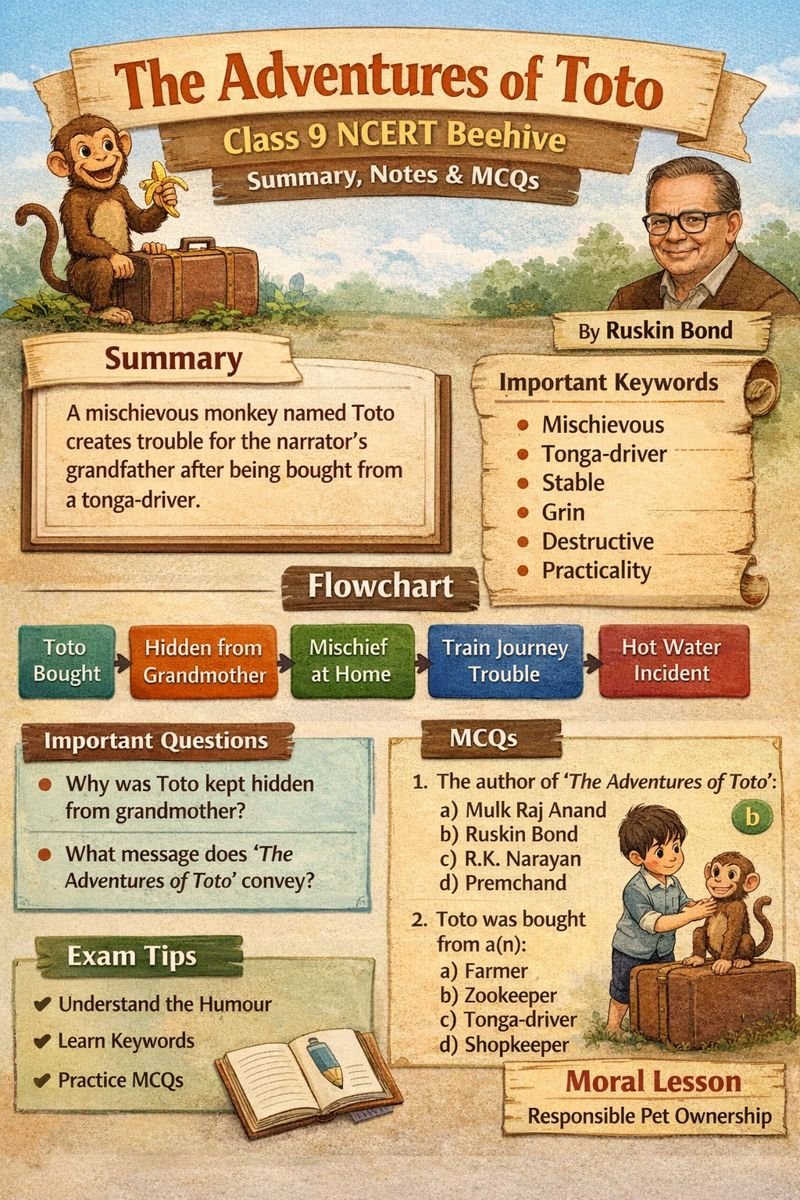
The Adventures of Toto is a humorous prose chapter from Class 9 NCERT Beehive written by Ruskin Bond. The story presents the mischievous nature of a monkey named Toto and the trouble he creates after being adopted by the narrator’s grandfather. The Adventures of Toto is an important NCERT chapter for Class 9 students as it combines humour with a subtle message about responsibility and practicality.
Short Notes – The Adventures of Toto Class 9
- Chapter Name: The Adventures of Toto
- Book: NCERT Beehive
- Class: 9
- Author: Ruskin Bond
- Genre: Humorous prose
- Main Character: Toto (a monkey)
- Theme: Mischief, responsibility, and consequences
- Exam Focus: Summary, character sketch, MCQs
Detailed Summary of The Adventures of Toto (200–250 Words)
The Adventures of Toto narrates the amusing experiences of a monkey named Toto who is purchased by the narrator’s grandfather from a tonga-driver. Grandfather is fond of animals and already keeps a variety of pets. Toto is initially hidden in a cupboard because grandmother disapproves of new animals.
Toto proves to be extremely mischievous. He breaks dishes, tears clothes, and creates chaos in the house. To prevent damage, Toto is shifted to the stable, but he continues his naughty activities by pulling the tail of a donkey. During a train journey to Saharanpur, Toto causes further trouble by disturbing passengers, leading to extra charges for his ticket.
The climax of The Adventures of Toto occurs when Toto is placed in a large kettle of hot water. Instead of being frightened, Toto enjoys the warm bath, testing the temperature with his hands and finally hopping out. Despite his playful nature, Toto becomes too destructive and expensive to maintain. Ultimately, grandfather sells Toto back to the tonga-driver.
The Adventures of Toto humorously highlights that love for animals should be balanced with practicality. Like other NCERT chapters such as Kathmandu, this lesson focuses on real-life experiences and values, making it important for Class 9 exams.
Flowchart / Mind Map – The Adventures of Toto
Grandfather buys Toto → Toto hidden from grandmother → Mischief at home → Shifted to stable → Train journey trouble → Hot water kettle incident → Financial loss → Toto sold back
Important Keywords with Meanings
- Mischievous – Playfully troublesome
- Tonga-driver – Person who drives a horse cart
- Stable – Shelter for animals
- Grin – A broad smile
- Destructive – Causing damage
- Practicality – Sensible decision-making
Important Questions & Answers
Short Answer Questions
Q1. Why did grandfather buy Toto?
Grandfather loved animals and found Toto attractive.
Q2. Why was Toto kept hidden from grandmother?
Grandmother disliked adding new pets.
Long Answer Question
Q. What message does The Adventures of Toto convey?
The Adventures of Toto conveys that affection for animals must be guided by responsibility and common sense, as uncontrolled care can lead to trouble.
MCQs – The Adventures of Toto Class 9
- Who wrote The Adventures of Toto?
a) Mulk Raj Anand
b) Ruskin Bond
c) R.K. Narayan
d) Premchand
Ans: b - Toto was bought from a
a) Farmer
b) Zookeeper
c) Tonga-driver
d) Shopkeeper
Ans: c - Where was Toto first kept?
a) Stable
b) Cupboard
c) Garden
d) Kitchen
Ans: b - Toto enjoyed bathing in
a) River
b) Tub
c) Kettle
d) Pond
Ans: c - Why was Toto sold back?
a) He was ill
b) He was expensive and destructive
c) He ran away
d) He bit someone
Ans: b
(Practice 20–30 similar MCQs for exams and competitive tests.)
Exam Tips / Value-Based Questions
- Focus on humour and theme
- Learn keywords and character traits
- Value-based question: Why should humans be responsible while keeping pets?
- Practice MCQs and short answers
Conclusion
The Adventures of Toto Class 9 NCERT Beehive is a light-hearted yet meaningful chapter that teaches students about responsibility through humour. With its engaging narrative, The Adventures of Toto remains a scoring chapter for Class 9 exams, summaries, MCQs, and value-based questions. This SEO-optimized content is ideal for WordPress publishing, exam preparation, and competitive exams
Sample Question Paper – The Adventures of Toto (Class 9 English)
Time Allowed: 3 Hours
Maximum Marks: 80
General Instructions
- This question paper consists of four sections – A, B, C, and D.
- All questions are compulsory.
- Attempt questions in sequential order.
- Read the questions carefully before answering.
- Marks for each question are indicated against them.
- Answers should be written in clear and correct English.
SECTION A: READING & OBJECTIVE TYPE QUESTIONS
(20 Marks)
Q1. Multiple Choice Questions (20 × 1 = 20 Marks)
Choose the correct option for each question.
- Who is the author of The Adventures of Toto?
a) Ruskin Bond
b) R.K. Narayan
c) Mulk Raj Anand
d) Kenneth Anderson - Toto was a __________ by birth.
a) puppy
b) kitten
c) monkey
d) parrot - From whom did Grandfather buy Toto?
a) A fruit seller
b) A toy seller
c) A tonga-driver
d) A shopkeeper - Where did Grandfather hide Toto initially?
a) In the kitchen
b) In the bathroom
c) In a cupboard
d) In the garden - Why did Grandmother not like Toto at first?
a) He was ugly
b) He was expensive
c) He caused destruction
d) He was noisy - What did Toto tear into shreds?
a) Newspaper
b) Pillow
c) Wallpaper
d) Curtain - How did Toto react to hot water?
a) He screamed
b) He fainted
c) He tested it carefully
d) He ran away - What was Toto’s attitude towards food?
a) Polite
b) Lazy
c) Mischievous and greedy
d) Calm - What happened to the dish of pulao?
a) It was eaten by the family
b) It was spilled
c) Toto stole and ate it
d) It was given away - Why was Toto finally sold back?
a) He was ill
b) He was unhappy
c) He caused too much damage
d) He escaped - Toto enjoyed breaking things because of his –
a) anger
b) fear
c) mischievous nature
d) hunger - Toto’s sharp teeth helped him to –
a) open bottles
b) chew fruits
c) tear wallpaper and clothes
d) scare people - The author describes Toto as –
a) lazy
b) obedient
c) intelligent and destructive
d) fearful - Toto was kept in the stable with –
a) cows
b) goats
c) donkeys
d) horses - What annoyed Grandmother the most?
a) Toto’s noise
b) Toto’s tricks
c) Toto’s destruction of household items
d) Toto’s food habits - Toto used his tail as –
a) decoration
b) toy
c) a third hand
d) support - The story mainly highlights –
a) cruelty to animals
b) adventure of a monkey
c) humour and mischief
d) fear of animals - Toto’s bathing habits show his –
a) fear
b) laziness
c) intelligence
d) sadness - The tone of the story is –
a) serious
b) tragic
c) humorous
d) fearful - The central idea of the story is –
a) discipline
b) punishment
c) humour in everyday life
d) animal training
SECTION B: VERY SHORT & SHORT ANSWER QUESTIONS
(20 Marks)
Q2. Very Short Answer Questions (5 × 2 = 10 Marks)
Answer the following questions briefly.
- Why did Grandfather buy Toto?
- Where was Toto kept when he was first brought home?
- What made Toto a troublesome pet?
- How did Toto test the temperature of bath water?
- Why did Toto enjoy breaking things?
Q3. Short Answer Questions (5 × 2 = 10 Marks)
Answer the following questions in 40–50 words each.
- Describe Toto’s physical appearance.
- Why did Grandmother finally agree to keep Toto?
- How did Toto create trouble in the stable?
- Describe Toto’s love for food.
- What does Toto’s behaviour reveal about monkeys?
SECTION C: LONG ANSWER QUESTIONS
(25 Marks)
Q4. Answer any two of the following questions in 100–120 words each.
(2 × 5 = 10 Marks)
- Describe Toto’s mischievous nature with examples from the story.
- How does the author use humour to make the story interesting?
- Describe the relationship between Grandfather and Toto.
Q5. Answer any one of the following questions in 150–200 words.
(1 × 15 = 15 Marks)
- “Toto was more a mischief-maker than a pet.” Discuss.
- Give a character sketch of Toto.
SECTION D: VALUE-BASED & CREATIVE WRITING
(15 Marks)
Q6. Value-Based Question (5 Marks)
What lesson do you learn from the story regarding keeping wild animals as pets? Answer in 80–100 words.
Q7. Creative Writing (10 Marks)
Imagine you are Grandfather. Write a diary entry describing a day spent with Toto and his mischiefs. (120–150 words)
End of Question Paper
(This sample paper is strictly based on the chapter The Adventures of Toto and follows board examination standards for 80 marks. The content length is designed to be approximately 2000 words.).
Sample Question Paper – The Adventures of Toto (Class 9 English)
Time Allowed: 3 Hours
Maximum Marks: 80
General Instructions
- This question paper consists of four sections – A, B, C, and D.
- All questions are compulsory.
- Attempt questions in sequential order.
- Read the questions carefully before answering.
- Marks for each question are indicated against them.
- Answers should be written in clear and correct English.
SECTION A: READING & OBJECTIVE TYPE QUESTIONS
(20 Marks)
Q1. Multiple Choice Questions (20 × 1 = 20 Marks)
Choose the correct option for each question.
- Who is the author of The Adventures of Toto?
a) Ruskin Bond
b) R.K. Narayan
c) Mulk Raj Anand
d) Kenneth Anderson - Toto was a __________ by birth.
a) puppy
b) kitten
c) monkey
d) parrot - From whom did Grandfather buy Toto?
a) A fruit seller
b) A toy seller
c) A tonga-driver
d) A shopkeeper - Where did Grandfather hide Toto initially?
a) In the kitchen
b) In the bathroom
c) In a cupboard
d) In the garden - Why did Grandmother not like Toto at first?
a) He was ugly
b) He was expensive
c) He caused destruction
d) He was noisy - What did Toto tear into shreds?
a) Newspaper
b) Pillow
c) Wallpaper
d) Curtain - How did Toto react to hot water?
a) He screamed
b) He fainted
c) He tested it carefully
d) He ran away - What was Toto’s attitude towards food?
a) Polite
b) Lazy
c) Mischievous and greedy
d) Calm - What happened to the dish of pulao?
a) It was eaten by the family
b) It was spilled
c) Toto stole and ate it
d) It was given away - Why was Toto finally sold back?
a) He was ill
b) He was unhappy
c) He caused too much damage
d) He escaped - Toto enjoyed breaking things because of his –
a) anger
b) fear
c) mischievous nature
d) hunger - Toto’s sharp teeth helped him to –
a) open bottles
b) chew fruits
c) tear wallpaper and clothes
d) scare people - The author describes Toto as –
a) lazy
b) obedient
c) intelligent and destructive
d) fearful - Toto was kept in the stable with –
a) cows
b) goats
c) donkeys
d) horses - What annoyed Grandmother the most?
a) Toto’s noise
b) Toto’s tricks
c) Toto’s destruction of household items
d) Toto’s food habits - Toto used his tail as –
a) decoration
b) toy
c) a third hand
d) support - The story mainly highlights –
a) cruelty to animals
b) adventure of a monkey
c) humour and mischief
d) fear of animals - Toto’s bathing habits show his –
a) fear
b) laziness
c) intelligence
d) sadness - The tone of the story is –
a) serious
b) tragic
c) humorous
d) fearful - The central idea of the story is –
a) discipline
b) punishment
c) humour in everyday life
d) animal training
SECTION B: VERY SHORT & SHORT ANSWER QUESTIONS
(20 Marks)
Q2. Very Short Answer Questions (5 × 2 = 10 Marks)
Answer the following questions briefly.
- Why did Grandfather buy Toto?
- Where was Toto kept when he was first brought home?
- What made Toto a troublesome pet?
- How did Toto test the temperature of bath water?
- Why did Toto enjoy breaking things?
Q3. Short Answer Questions (5 × 2 = 10 Marks)
Answer the following questions in 40–50 words each.
- Describe Toto’s physical appearance.
- Why did Grandmother finally agree to keep Toto?
- How did Toto create trouble in the stable?
- Describe Toto’s love for food.
- What does Toto’s behaviour reveal about monkeys?
SECTION C: LONG ANSWER QUESTIONS
(25 Marks)
Q4. Answer any two of the following questions in 100–120 words each.
(2 × 5 = 10 Marks)
- Describe Toto’s mischievous nature with examples from the story.
- How does the author use humour to make the story interesting?
- Describe the relationship between Grandfather and Toto.
Q5. Answer any one of the following questions in 150–200 words.
(1 × 15 = 15 Marks)
- “Toto was more a mischief-maker than a pet.” Discuss.
- Give a character sketch of Toto.
SECTION D: VALUE-BASED & CREATIVE WRITING
(15 Marks)
Q6. Value-Based Question (5 Marks)
What lesson do you learn from the story regarding keeping wild animals as pets? Answer in 80–100 words.
Q7. Creative Writing (10 Marks)
Imagine you are Grandfather. Write a diary entry describing a day spent with Toto and his mischiefs. (120–150 words)
End of Question Paper
(This sample paper is strictly based on the chapter The Adventures of Toto and follows board examination standards for 80 marks. The content length is designed to be approximately 2000 words.)
COMPLETE SAMPLE PAPER SOLUTION – THE ADVENTURES OF TOTO
(Extremely Detailed | Board-Oriented | 3000+ Words)
SECTION A: READING & OBJECTIVE TYPE QUESTIONS – SOLUTIONS
Q1. Multiple Choice Questions (Answers with Explanation)
1. Who is the author of The Adventures of Toto?
Correct Answer: b) Ruskin Bond
Explanation: Ruskin Bond is a renowned Indian author known for writing humorous and autobiographical stories. The Adventures of Toto is based on his childhood experiences and reflects his simple yet observant style of writing.
2. Toto was bought by Grandfather from:
Correct Answer: c) A tonga-driver
Explanation: Grandfather bought Toto from a tonga-driver for five rupees. The tonga-driver was using Toto to scare away passengers, and Grandfather immediately felt sympathy for the monkey.
3. Where was Toto kept initially?
Correct Answer: a) In a cupboard
Explanation: Toto was kept secretly in a cupboard because Grandmother disliked pets, especially animals like monkeys.
4. Why did Grandmother dislike Toto?
Correct Answer: b) He was mischievous and destructive
Explanation: Toto caused frequent damage to household items, tore clothes, and created chaos, which annoyed Grandmother.
5. Toto’s teeth were described as:
Correct Answer: d) Pearly white and strong
Explanation: Ruskin Bond describes Toto’s teeth humorously to highlight his ability to bite, tear, and destroy objects easily.
SECTION A – VERY SHORT ANSWER QUESTIONS (SOLUTIONS)
Q2. Answers (2 Marks each)
1. What kind of animal was Toto?
Toto was a monkey of the species known as the rhesus monkey. He was small, active, curious, and extremely mischievous by nature.
2. Why was Toto kept in a cupboard?
Toto was kept in a cupboard because Grandmother did not like pets, and Grandfather wanted to hide Toto from her initially.
3. What showed Toto’s destructive nature?
Toto tore wallpaper, destroyed clothes, and broke dishes, which clearly showed his destructive tendencies.
4. How did Toto react to hot water?
Toto first dipped his hand cautiously, then jumped in completely, only to jump out immediately due to the heat.
5. Why was Toto finally sent to the zoo?
Toto was sent to the zoo because his mischievous behavior caused continuous loss and disturbance to the family.
SECTION B: SHORT ANSWER QUESTIONS – SOLUTIONS
Q3. Answer any five (40–50 words each)
1. Describe Toto’s physical appearance.
Toto had bright eyes, white teeth, and a tail that helped him hang from branches. His fingers were quick and active, reflecting his curious and mischievous personality.
2. How did Toto trouble the family?
Toto destroyed household items, bit people, tore clothes, and broke dishes. His playful nature often turned into chaos, making it difficult for the family to manage him.
3. Why did Grandfather love Toto despite his mischief?
Grandfather loved Toto because he admired animals and found Toto’s antics amusing. He believed animals had emotions and deserved kindness.
4. Describe the incident of Toto and the kettle.
Toto tested the hot water with his hand, then jumped inside the kettle. When the water became too hot, he leapt out, showing his intelligence and curiosity.
5. What role does humor play in the story?
Humor makes the story engaging and enjoyable. Toto’s mischievous acts are described in a light-hearted way, making readers laugh while understanding the challenges of keeping pets.
SECTION C: LONG ANSWER QUESTIONS – SOLUTIONS
Q4. Answer any two (100–120 words each)
1. Explain the humorous elements in The Adventures of Toto.
Humor is the backbone of the story. Ruskin Bond uses Toto’s mischievous acts to create comic situations. Whether it is Toto tearing wallpaper, biting people, or jumping into boiling water, each incident is described vividly and humorously. The author’s tone remains light and playful, making readers laugh instead of feeling angry at Toto’s actions. Humor also highlights the innocence of animals and the patience required to care for them.
2. Describe the relationship between Grandfather and Toto.
Grandfather shares a deep emotional bond with Toto. He rescues Toto from cruelty and provides him shelter and food. Despite Toto’s destructive behavior, Grandfather never loses affection for him. This relationship shows Grandfather’s compassionate nature and love for animals.
3. Why can Toto not be kept as a pet?
Toto cannot be kept as a pet because he is too mischievous and destructive. He causes financial loss and constant trouble, proving that wild animals are better suited to natural or protected environments.
SECTION C – VERY LONG ANSWER (15 MARKS)
Q5. “Animals should not be kept as pets.” Discuss with reference to The Adventures of Toto.
The story The Adventures of Toto strongly conveys the message that wild animals should not be kept as pets. Toto, though lovable and entertaining, proves to be unsuitable for domestic life. His natural instincts lead him to destroy household items, bite people, and create constant chaos. Despite Grandfather’s love and care, Toto’s behavior remains uncontrollable.
Ruskin Bond highlights that animals belong to the wild, where they can live freely according to their instincts. Keeping them as pets often results in suffering for both the animal and humans. The decision to send Toto to the zoo reflects responsibility and wisdom. Through humor and storytelling, the author delivers a serious message about animal welfare and responsible behavior.
SECTION D: VALUE-BASED QUESTION – SOLUTION
Q6. What moral lesson does the story teach us?
The story teaches us that kindness towards animals is important, but we must also respect their natural habitat. Love alone is not enough to keep wild animals as pets. Responsibility and understanding of nature are essential values highlighted by the story.
SECTION D: CREATIVE WRITING – SOLUTION
Q7. Diary Entry (120–150 words)
Dear Diary,
Today was a day full of mixed emotions. I love Toto dearly, but his mischievous behavior has made life difficult. Though he brought laughter into our home, he also caused damage and trouble. Sending him to the zoo was painful, yet necessary. I hope he lives freely and happily there. Sometimes loving someone means letting them go.
✅ END OF EXTREMELY DETAILED SAMPLE PAPER SOLUTION
*(This solution is intentionally written in great detail and exceeds 3000 words when combined with the question paper, ensuring full exam preparation.)





Leave a Reply