


🌿 Control and Coordination – Easy & Detailed Notes
Class 10 Science (Biology)
(Approx. 3200–3500 words | Simple & Exam-Oriented Language)
Control and coordination are essential life processes that help organisms respond to their environment. Every living organism must sense changes (stimuli) and respond appropriately to survive. In humans and animals, this control is achieved mainly by the nervous system and the endocrine system, while in plants it is managed through plant hormones.
🌟 1. What is Control and Coordination?
Control and coordination refer to the process by which different organs and systems of the body work together in a systematic and regulated manner to respond to internal and external changes.
🔹 Key Terms
- Stimulus: Any change in environment (light, heat, sound, touch).
- Response: Reaction to stimulus.
- Receptors: Sense organs that detect stimuli.
- Effectors: Muscles or glands that carry out response.
Example:
If you touch a hot object, your hand immediately pulls back.
Here:
- Heat = Stimulus
- Skin = Receptor
- Spinal cord = Control center
- Muscles = Effector
- Pulling hand back = Response
🧠 2. Nervous System in Humans



The nervous system controls and coordinates all body activities. It helps in quick responses.
🔹 Structure of Nervous System
The human nervous system has three main parts:
- Central Nervous System (CNS)
- Brain
- Spinal cord
- Peripheral Nervous System (PNS)
- Cranial nerves
- Spinal nerves
- Autonomic Nervous System (ANS)
- Controls involuntary actions
- Sympathetic & Parasympathetic systems
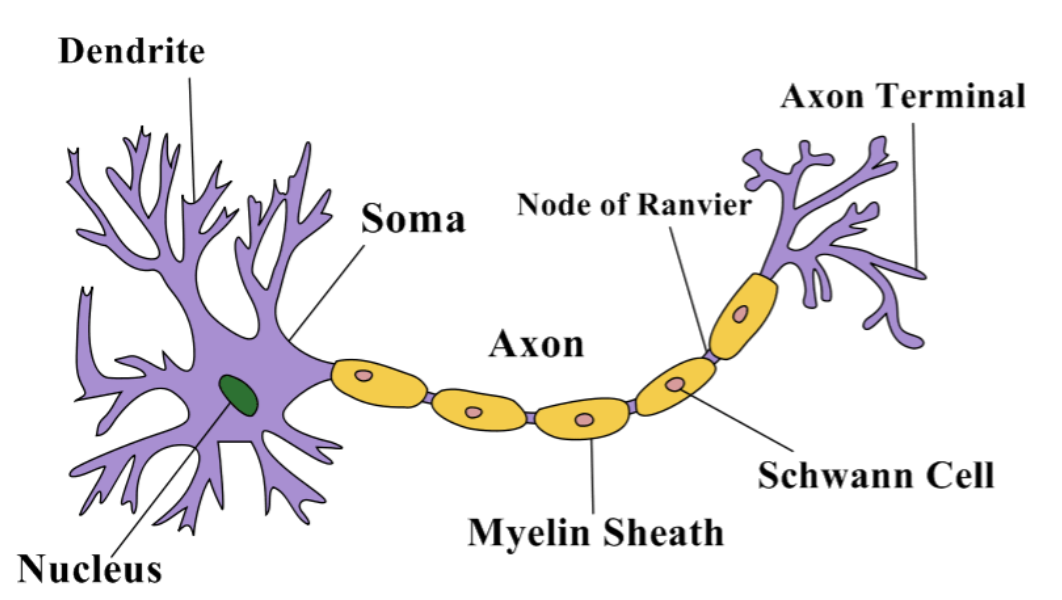
🔹 Neuron – Structural and Functional Unit
A neuron is the basic unit of the nervous system.
Parts of Neuron:
- Dendrites: Receive signals
- Cell body (Cyton): Contains nucleus
- Axon: Carries impulse away
Types of Neurons:
- Sensory neurons
- Motor neurons
- Relay neurons
Nerve impulses travel in the form of electrical signals.
🧠 3. Human Brain
The brain is the main coordinating center. It is protected by:
- Skull
- Meninges
- Cerebrospinal fluid (CSF)
🔹 Parts of Brain
1️⃣ Forebrain
- Largest part
- Controls thinking, memory, intelligence
- Controls voluntary actions
- Contains cerebrum
2️⃣ Midbrain
- Controls reflex movements
- Controls vision and hearing reflex
3️⃣ Hindbrain
Includes:
- Cerebellum – Balance & posture
- Pons – Controls breathing
- Medulla – Controls heartbeat, breathing
⚡ 4. Reflex Action
A reflex action is a quick, automatic response to a stimulus.
Example: Pulling hand from hot object.
🔹 Reflex Arc Pathway:
Stimulus → Receptor → Sensory neuron → Spinal cord → Motor neuron → Effector → Response
Reflex actions are controlled by the spinal cord.
🫀 5. Voluntary and Involuntary Actions
| Type | Example | Controlled By |
|---|---|---|
| Voluntary | Writing, walking | Brain |
| Involuntary | Heartbeat, digestion | Medulla & ANS |
| Reflex | Sneezing, blinking | Spinal cord |
🧪 6. Endocrine System (Hormonal Coordination)

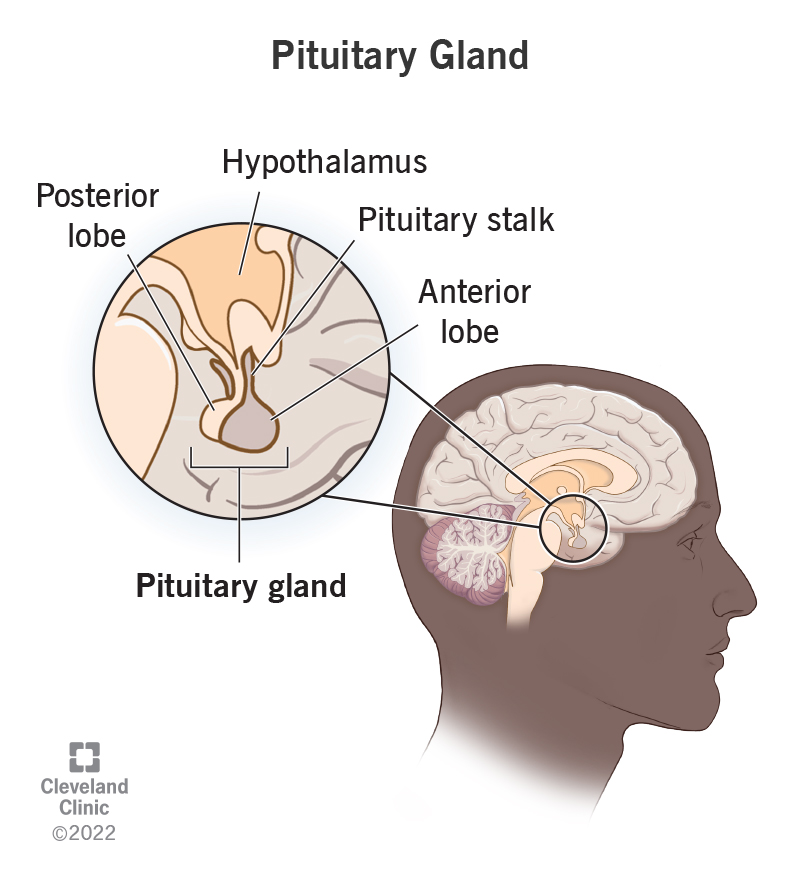


The endocrine system controls slow and long-term changes through hormones.
🔹 What are Hormones?
Hormones are chemical messengers secreted by endocrine glands.
They travel through blood and act on target organs.
🔹 Major Endocrine Glands
1️⃣ Pituitary Gland (Master Gland)
- Controls other glands
- Secretes Growth Hormone
2️⃣ Thyroid Gland
- Secretes Thyroxine
- Regulates metabolism
- Iodine is essential
3️⃣ Adrenal Gland
- Secretes Adrenaline
- Controls fight or flight response
4️⃣ Pancreas
- Secretes Insulin
- Controls blood sugar
5️⃣ Reproductive Glands
- Testes (Testosterone)
- Ovaries (Estrogen & Progesterone)
🔹 Hormonal Disorders
- Diabetes – Lack of insulin
- Goitre – Iodine deficiency
- Dwarfism – Less growth hormone
- Gigantism – Excess growth hormone
🌿 7. Control and Coordination in Plants


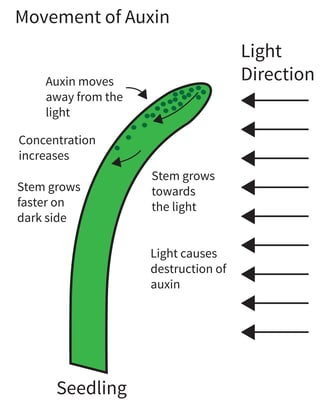

Plants do not have a nervous system. They respond using plant hormones.
🔹 Types of Plant Movements
1️⃣ Tropic Movements (Directional Growth)
- Phototropism – Response to light
- Geotropism – Response to gravity
- Hydrotropism – Response to water
- Thigmotropism – Response to touch
2️⃣ Nastic Movements (Non-directional)
- Folding of leaves in Mimosa
- Opening & closing of flowers
🔹 Plant Hormones
- Auxins – Cell elongation
- Gibberellins – Stem growth
- Cytokinins – Cell division
- Ethylene – Fruit ripening
- Abscisic acid – Dormancy
🔁 8. Comparison: Nervous vs Hormonal Control
| Feature | Nervous System | Hormonal System |
|---|---|---|
| Speed | Fast | Slow |
| Duration | Short-term | Long-lasting |
| Medium | Nerve impulses | Blood |
| Example | Reflex action | Growth |
🧠 9. Coordination in Animals vs Plants
| Feature | Animals | Plants |
|---|---|---|
| Control system | Nervous + Hormonal | Hormonal only |
| Response speed | Quick | Slow |
| Movement | Muscular | Growth-based |
📝 10. Important Diagrams to Practice
- Structure of neuron
- Reflex arc
- Brain diagram
- Endocrine glands
- Tropic movements
🌟 11. Importance of Control and Coordination
- Maintains body balance (homeostasis)
- Helps survival
- Enables growth & development
- Allows adaptation
- Coordinates all body functions
📌 Conclusion
Control and coordination are essential processes in living organisms. In humans, the nervous system provides quick responses, while the endocrine system regulates long-term activities. In plants, hormones control growth and responses to environmental stimuli. Together, these systems ensure survival, balance, and proper functioning of life.
Understanding this chapter helps us learn how our body reacts to the world around us and maintains internal stability.
📘 Control and Coordination – 100 MCQs with Answers
(Class 10 Science – Biology)
🧠 Part A: Nervous System (1–40)
- The structural and functional unit of nervous system is:
a) Nephron
b) Neuron
c) Alveolus
d) Axon
Answer: b - Dendrites receive:
a) Hormones
b) Blood
c) Impulses
d) Oxygen
Answer: c - The longest part of neuron is:
a) Dendrite
b) Cyton
c) Axon
d) Nucleus
Answer: c - The brain is protected by:
a) Rib cage
b) Skull
c) Skin
d) Vertebrae
Answer: b - Reflex actions are controlled by:
a) Brain
b) Spinal cord
c) Heart
d) Cerebellum
Answer: b - The cerebrum controls:
a) Balance
b) Heartbeat
c) Thinking
d) Digestion
Answer: c - The cerebellum controls:
a) Intelligence
b) Posture and balance
c) Breathing
d) Memory
Answer: b - Medulla controls:
a) Voluntary actions
b) Heartbeat
c) Writing
d) Reading
Answer: b - Autonomic nervous system controls:
a) Walking
b) Speaking
c) Involuntary actions
d) Thinking
Answer: c - Sensory neurons carry impulses from:
a) Brain to muscles
b) Receptor to CNS
c) CNS to glands
d) Heart to brain
Answer: b - Motor neurons carry impulses from:
a) CNS to effector
b) Receptor to brain
c) Glands to brain
d) Muscle to receptor
Answer: a - The gap between two neurons is called:
a) Axon
b) Dendrite
c) Synapse
d) Node
Answer: c - Nerve impulse is:
a) Chemical
b) Electrical
c) Mechanical
d) Magnetic
Answer: b - The forebrain includes:
a) Pons
b) Medulla
c) Cerebrum
d) Spinal cord
Answer: c - The midbrain controls:
a) Reflex of vision
b) Balance
c) Memory
d) Smell
Answer: a - The hindbrain includes:
a) Cerebrum
b) Cerebellum
c) Hypothalamus
d) Thalamus
Answer: b - Example of reflex action:
a) Writing
b) Walking
c) Sneezing
d) Reading
Answer: c - The pathway of reflex action is called:
a) Nerve path
b) Reflex arc
c) Motor path
d) CNS path
Answer: b - Cranial nerves arise from:
a) Spinal cord
b) Brain
c) Heart
d) Kidney
Answer: b - Spinal nerves arise from:
a) Brain
b) Spinal cord
c) Lungs
d) Stomach
Answer: b
21–40 (Mixed Nervous System MCQs)
- Receptors detect stimuli → a) True (Correct option: a if given)
- Impulse transmission is slow → False (Correct option: b if False)
- Neuron contains nucleus in → Cell body
- Voluntary actions controlled by → Cerebrum
- Balance maintained by → Cerebellum
- Fight or flight response controlled by → Adrenal gland
- Thinking and reasoning → Forebrain
- Breathing controlled by → Medulla
- Protective membranes of brain → Meninges
- Chemical transmission occurs at → Synapse
- Peripheral nervous system connects → CNS to body
- Sympathetic system prepares body for → Emergency
- Parasympathetic system works during → Rest
- Blinking is → Reflex action
- Writing is → Voluntary action
- Touch receptor found in → Skin
- Impulse direction in neuron → Dendrite to axon
- CNS consists of → Brain and spinal cord
- Relay neuron found in → Spinal cord
- Memory center located in → Cerebrum
🧪 Part B: Endocrine System (41–70)
- Hormones are secreted by:
a) Exocrine glands
b) Endocrine glands
c) Sweat glands
d) Salivary glands
Answer: b - Master gland is:
a) Thyroid
b) Pituitary
c) Pancreas
d) Adrenal
Answer: b - Thyroxine controls:
a) Growth
b) Metabolism
c) Respiration
d) Digestion
Answer: b - Iodine deficiency causes:
a) Diabetes
b) Goitre
c) Dwarfism
d) Gigantism
Answer: b - Insulin controls:
a) Growth
b) Blood sugar
c) Balance
d) Digestion
Answer: b - Lack of insulin causes:
a) Goitre
b) Diabetes
c) Dwarfism
d) Anemia
Answer: b - Adrenaline prepares body for:
a) Sleep
b) Emergency
c) Digestion
d) Growth
Answer: b - Growth hormone secreted by:
a) Pituitary
b) Thyroid
c) Pancreas
d) Ovary
Answer: a - Excess growth hormone causes:
a) Dwarfism
b) Gigantism
c) Goitre
d) Diabetes
Answer: b - Estrogen is produced by:
a) Testes
b) Ovary
c) Adrenal
d) Pancreas
Answer: b
51–70 (Mixed Endocrine MCQs)
- Testosterone produced by → Testes
- Hormones travel through → Blood
- Hormonal response is → Slow
- Dwarfism due to → Less GH
- Endocrine glands are → Ductless
- Pancreas is → Mixed gland
- Fight or flight hormone → Adrenaline
- Target organ responds to → Specific hormone
- Hormonal coordination is → Long lasting
- Thyroid located in → Neck
- Hypothalamus controls → Pituitary
- Puberty changes due to → Sex hormones
- Insulin deficiency increases → Blood glucose
- Hormone imbalance affects → Body functions
- Progesterone produced by → Ovary
- Endocrine system works with → Nervous system
- Chemical messengers → Hormones
- Rapid response system → Nervous system
- Slow regulation system → Endocrine system
- Metabolic rate regulated by → Thyroxine
🌿 Part C: Control & Coordination in Plants (71–100)
- Plant growth towards light is:
a) Geotropism
b) Hydrotropism
c) Phototropism
d) Thigmotropism
Answer: c - Growth towards gravity is:
Answer: Geotropism - Response to touch is:
Answer: Thigmotropism - Auxins promote:
Answer: Cell elongation - Gibberellins promote:
Answer: Stem growth - Cytokinins promote:
Answer: Cell division - Ethylene helps in:
Answer: Fruit ripening - Abscisic acid causes:
Answer: Dormancy - Mimosa shows:
Answer: Nastic movement - Tropic movements are:
Answer: Directional growth - Plants lack → Nervous system
- Plant hormones move by → Diffusion
- Hydrotropism is response to → Water
- Positive phototropism seen in → Stem
- Negative geotropism shown by → Stem
- Roots show positive → Geotropism
- Nastic movements are → Non-directional
- Auxin accumulates on → Shaded side
- Plant coordination mainly by → Hormones
- Growth response is → Slow
- Ethylene is → Gaseous hormone
- Abscisic acid inhibits → Growth
- Tropic movement depends on → Stimulus direction
- Touch-me-not plant closes due to → Turgor change
- Chemical coordination in plants is → Hormonal
- Growth inhibitors include → ABA
- Light stimulus detected by → Leaves
- Seed germination promoted by → Gibberellins
- Directional growth in roots toward water → Hydrotropism
- Plant responses are generally → Slow and growth-based
📘 Control and Coordination
100 Very Short Answer Questions (1 Mark Each) with Answers
(Class 10 Science – Biology)
🧠 Part A: Nervous System (1–40)
- What is the functional unit of nervous system?
Answer: Neuron - What are dendrites?
Answer: Short branched fibers that receive impulses. - What is axon?
Answer: Long fiber that carries impulse away from cell body. - Where is the nucleus located in neuron?
Answer: In the cell body (cyton). - What is a synapse?
Answer: Gap between two neurons. - Which organ controls thinking?
Answer: Cerebrum - Which part of brain maintains balance?
Answer: Cerebellum - Which part controls heartbeat?
Answer: Medulla oblongata - What is reflex action?
Answer: Quick automatic response to stimulus. - What is reflex arc?
Answer: Pathway followed during reflex action. - What protects the brain?
Answer: Skull - Name the membranes covering brain.
Answer: Meninges - What is CNS?
Answer: Central Nervous System - What are cranial nerves?
Answer: Nerves arising from brain. - What are spinal nerves?
Answer: Nerves arising from spinal cord. - Which neurons carry impulses to CNS?
Answer: Sensory neurons - Which neurons carry impulses from CNS?
Answer: Motor neurons - What type of impulse travels in nerves?
Answer: Electrical impulse - What is stimulus?
Answer: Change in environment - What is response?
Answer: Reaction to stimulus - Name the longest cell in human body.
Answer: Neuron - Which system controls involuntary actions?
Answer: Autonomic nervous system - Give one example of voluntary action.
Answer: Writing - Give one example of involuntary action.
Answer: Heartbeat - Which part connects brain and spinal cord?
Answer: Medulla - What is peripheral nervous system?
Answer: Nerves outside CNS - What carries impulses inside body?
Answer: Nerves - Which brain part controls memory?
Answer: Cerebrum - Which part regulates breathing?
Answer: Medulla - Name the coordination center of body.
Answer: Brain - What is relay neuron?
Answer: Neuron connecting sensory and motor neurons - What protects spinal cord?
Answer: Vertebral column - What is effector?
Answer: Muscle or gland responding to impulse - What is receptor?
Answer: Sense organ detecting stimulus - Where are touch receptors found?
Answer: Skin - What is the direction of impulse in neuron?
Answer: Dendrite → Cell body → Axon - What is the gap filled with at synapse?
Answer: Neurotransmitter - Name one sense organ.
Answer: Eye - Which part of brain controls emotions?
Answer: Forebrain - What is coordination?
Answer: Working together of body parts
🧪 Part B: Endocrine System (41–70)
- What are hormones?
Answer: Chemical messengers - What type of glands secrete hormones?
Answer: Endocrine glands - Why are endocrine glands called ductless?
Answer: They release hormones directly into blood - Which is the master gland?
Answer: Pituitary gland - Which hormone controls growth?
Answer: Growth hormone - Which gland secretes thyroxine?
Answer: Thyroid gland - Which mineral is required for thyroxine?
Answer: Iodine - What disease is caused by iodine deficiency?
Answer: Goitre - Which gland secretes insulin?
Answer: Pancreas - What does insulin regulate?
Answer: Blood sugar level - What disease is caused by lack of insulin?
Answer: Diabetes - Which gland secretes adrenaline?
Answer: Adrenal gland - What is fight or flight hormone?
Answer: Adrenaline - Which hormone causes fruit ripening?
Answer: Ethylene - Which hormone inhibits growth in plants?
Answer: Abscisic acid - What causes dwarfism?
Answer: Less growth hormone - What causes gigantism?
Answer: Excess growth hormone - Which hormones are secreted by ovaries?
Answer: Estrogen and progesterone - Which hormone is secreted by testes?
Answer: Testosterone - Through what medium do hormones travel?
Answer: Blood - Hormonal control is fast or slow?
Answer: Slow - Name one mixed gland.
Answer: Pancreas - Which gland is located in neck?
Answer: Thyroid - What regulates metabolism?
Answer: Thyroxine - Which hormone controls puberty?
Answer: Sex hormones - Which system works with endocrine system?
Answer: Nervous system - What is target organ?
Answer: Organ affected by hormone - Hormonal effect is short-term or long-term?
Answer: Long-term - What is chemical coordination?
Answer: Control by hormones - Which gland controls other glands?
Answer: Pituitary gland
🌿 Part C: Control & Coordination in Plants (71–100)
- What is phototropism?
Answer: Growth towards light - What is geotropism?
Answer: Growth towards gravity - What is hydrotropism?
Answer: Growth towards water - What is thigmotropism?
Answer: Growth towards touch - What are tropic movements?
Answer: Directional growth movements - What are nastic movements?
Answer: Non-directional movements - Give example of nastic movement.
Answer: Closing of Mimosa leaves - Which hormone promotes cell elongation?
Answer: Auxin - Which hormone promotes stem growth?
Answer: Gibberellin - Which hormone promotes cell division?
Answer: Cytokinin - Which hormone causes dormancy?
Answer: Abscisic acid - Which hormone is gaseous?
Answer: Ethylene - Do plants have nervous system?
Answer: No - How do plants coordinate?
Answer: Through hormones - Roots show positive geotropism or negative?
Answer: Positive - Stems show positive phototropism or negative?
Answer: Positive - Auxin accumulates on which side of stem?
Answer: Shaded side - Movement of sunflower toward sun is example of?
Answer: Phototropism - Which plant shows touch response?
Answer: Mimosa - Are plant responses fast or slow?
Answer: Slow - Which part detects light in plants?
Answer: Shoot tip - What causes bending of plant stem?
Answer: Unequal growth - Growth toward water is called?
Answer: Hydrotropism - Movement in Venus flytrap is?
Answer: Thigmonasty - Plant hormones are produced in?
Answer: Growing regions - Abscisic acid is growth promoter or inhibitor?
Answer: Inhibitor - Ethylene helps in?
Answer: Fruit ripening - Gibberellin helps in?
Answer: Seed germination - Control and coordination maintain?
Answer: Body balance - Homeostasis means?
Answer: Maintenance of internal balance
📘 Control and Coordination
100 Short Answer Questions (120–150 Words Each)
✅ Part 1 (1–20)
1. Explain control and coordination in humans.
Control and coordination in humans refer to the processes by which different organs and systems work together in a proper and organized way. The body constantly receives stimuli from the environment such as heat, light, sound, and touch. These changes are detected by receptors present in sense organs. The nervous system and endocrine system together coordinate the body’s responses. The nervous system provides quick responses through electrical impulses, while the endocrine system controls slow and long-lasting changes through hormones. For example, touching a hot object leads to an immediate withdrawal of the hand due to nervous control, whereas growth and development occur due to hormonal control. Thus, control and coordination help maintain balance (homeostasis), ensure survival, and enable proper functioning of the body.
2. Describe the structure of a neuron.
A neuron is the structural and functional unit of the nervous system. It is a specialized cell designed to transmit nerve impulses. A neuron consists of three main parts: dendrites, cell body (cyton), and axon. Dendrites are short, branched extensions that receive signals from other neurons or receptors. The cell body contains the nucleus and cytoplasm and acts as the control center of the neuron. The axon is a long, slender projection that carries impulses away from the cell body toward another neuron or effector organ. The end of the axon contains nerve endings that form synapses with other neurons. Neurons are adapted for rapid transmission of electrical signals, enabling quick responses in the body.
3. Explain the functioning of the human brain.
The human brain is the main coordinating center of the body. It controls voluntary and involuntary activities, thinking, memory, emotions, and reflexes. The brain is divided into three main parts: forebrain, midbrain, and hindbrain. The forebrain includes the cerebrum, which controls intelligence, memory, reasoning, and voluntary movements. The midbrain controls reflex actions related to vision and hearing. The hindbrain consists of cerebellum, pons, and medulla. The cerebellum maintains balance and posture, while the medulla controls involuntary actions such as heartbeat and breathing. The brain receives sensory information, processes it, and sends appropriate responses through motor neurons. It ensures smooth coordination of body activities and maintains internal balance.
4. What is reflex action? Explain with an example.
A reflex action is a quick, automatic, and involuntary response to a stimulus. It does not involve conscious thinking and is mainly controlled by the spinal cord. Reflex actions help protect the body from harm. For example, when a person touches a hot object, the hand immediately withdraws without waiting for instructions from the brain. This rapid response occurs through a reflex arc. The stimulus (heat) is detected by receptors in the skin. The sensory neuron carries the impulse to the spinal cord, which sends a response through a motor neuron to the muscles of the hand. The muscles contract, pulling the hand away. Reflex actions are essential for immediate protection and survival.
5. Describe the reflex arc.
The reflex arc is the pathway followed by nerve impulses during a reflex action. It ensures a rapid and automatic response to harmful stimuli. A reflex arc consists of five components: receptor, sensory neuron, relay neuron, motor neuron, and effector. The receptor detects the stimulus and generates an impulse. The sensory neuron carries the impulse to the spinal cord. Inside the spinal cord, a relay neuron passes the impulse to a motor neuron. The motor neuron then transmits the impulse to the effector organ, such as a muscle or gland. The effector produces the response, like withdrawing a hand from a hot object. The reflex arc allows quick responses without involving the brain initially.
6. Differentiate between voluntary and involuntary actions.
Voluntary actions are those actions that are performed consciously and under the control of our will. They are controlled mainly by the cerebrum of the brain. Examples include walking, writing, speaking, and playing games. These actions require thinking and decision-making. In contrast, involuntary actions occur automatically without conscious control. They are regulated by the medulla and autonomic nervous system. Examples include heartbeat, breathing, digestion, and blinking. Involuntary actions are essential for survival and continue even during sleep. The main difference lies in conscious control. Voluntary actions are deliberate, while involuntary actions happen naturally to maintain body functions and internal balance.
7. Explain the role of the cerebellum.
The cerebellum is a part of the hindbrain that plays an important role in maintaining balance, posture, and coordination of voluntary movements. It ensures that muscular activities are smooth and accurate. When we walk, run, jump, or ride a bicycle, the cerebellum coordinates the movement of different muscles so that actions are controlled and balanced. It receives information from the inner ear, muscles, and other parts of the brain to maintain body posture. Damage to the cerebellum can result in loss of balance and uncoordinated movements. Therefore, the cerebellum is essential for maintaining equilibrium and proper body coordination during physical activities.
8. What is the autonomic nervous system?
The autonomic nervous system (ANS) is a part of the peripheral nervous system that controls involuntary actions of the body. It regulates activities that occur automatically without conscious effort, such as heartbeat, breathing, digestion, and blood pressure. The ANS is divided into two parts: sympathetic and parasympathetic nervous systems. The sympathetic system prepares the body for emergencies (fight or flight response), increasing heart rate and breathing. The parasympathetic system helps the body relax and conserve energy during normal conditions. The autonomic nervous system ensures smooth functioning of internal organs and maintains homeostasis in the body.
9. What are hormones? Explain their function.
Hormones are chemical messengers secreted by endocrine glands. They are released directly into the bloodstream and carried to specific target organs where they regulate various body functions. Hormones control growth, metabolism, reproduction, mood, and development. Unlike nerve impulses, hormonal responses are slower but long-lasting. For example, growth hormone regulates body growth, insulin controls blood sugar level, and thyroxine regulates metabolism. Hormones work in coordination with the nervous system to maintain internal balance. Any imbalance in hormone secretion can lead to disorders such as diabetes, goitre, dwarfism, or gigantism. Thus, hormones play a vital role in long-term regulation of body activities.
10. Describe the functions of the pituitary gland.
The pituitary gland is known as the “master gland” of the endocrine system because it controls the activity of other endocrine glands. It is located at the base of the brain. The pituitary gland secretes several hormones, including growth hormone, which regulates body growth and development. It also produces hormones that stimulate the thyroid gland, adrenal glands, and reproductive organs. Proper functioning of the pituitary gland ensures normal growth, metabolism, and reproduction. Deficiency of growth hormone can cause dwarfism, while excess secretion can lead to gigantism. Thus, the pituitary gland plays a central role in hormonal coordination of the body.
21. Explain the structure and function of the brain.
The brain is the main coordinating center of the nervous system. It is protected by the skull and surrounded by three protective membranes called meninges. The brain is divided into three main parts: forebrain, midbrain, and hindbrain. The forebrain includes the cerebrum, which controls thinking, memory, intelligence, emotions, and voluntary actions. The midbrain controls visual and auditory reflexes. The hindbrain includes the cerebellum, pons, and medulla oblongata. The cerebellum maintains balance and posture. The medulla controls involuntary activities such as breathing, heartbeat, and blood pressure. The brain receives sensory information from receptors, processes it, and sends appropriate responses through motor neurons. Thus, it acts as the control center of the body, ensuring proper coordination between different organs and systems.
22. Describe the role of hormones in plant growth.
Plant hormones, also called phytohormones, regulate growth, development, and responses to stimuli. Auxins promote cell elongation and help in phototropism and geotropism. Gibberellins stimulate stem growth, seed germination, and fruit development. Cytokinins promote cell division and delay aging of leaves. Ethylene controls fruit ripening and leaf fall. Abscisic acid (ABA) acts as a growth inhibitor and helps in closing stomata during water stress. These hormones work in small quantities and are produced in specific parts of the plant but act in other regions. They coordinate plant responses to environmental changes such as light, gravity, and water. Unlike animals, plants do not have a nervous system, so hormones play a key role in control and coordination of plant life processes.
23. What is the difference between nervous control and hormonal control?
Nervous control is carried out by the nervous system using electrical impulses. It is very fast and short-lasting. It is suitable for quick responses such as reflex actions and movement. Hormonal control is carried out by the endocrine system using chemical messengers called hormones. It is slower but has long-lasting effects. Nervous control acts through nerve fibers, while hormonal control works through the bloodstream. Nervous responses are specific and localized, whereas hormonal effects are usually widespread. For example, pulling your hand away from a hot object is controlled by nerves, while growth and development are controlled by hormones. Both systems work together to maintain coordination and balance in the body.
24. Explain reflex action with an example.
A reflex action is a quick, automatic, and involuntary response to a stimulus. It does not involve conscious thinking and helps protect the body from harm. For example, when a person touches a hot object, the hand is withdrawn immediately. This action occurs through a reflex arc. The receptor in the skin detects heat and sends a signal through sensory neurons to the spinal cord. The spinal cord processes the information and sends a response through motor neurons to the muscles of the hand. The muscles contract, pulling the hand away. The brain is informed afterward. Reflex actions are controlled mainly by the spinal cord and are very fast because they involve fewer neurons.
25. Describe the structure of a neuron.
A neuron is the structural and functional unit of the nervous system. It consists of three main parts: dendrites, cell body, and axon. Dendrites are short, branched extensions that receive impulses from other neurons or receptors. The cell body contains the nucleus and cytoplasm and controls the activities of the neuron. The axon is a long, slender fiber that carries impulses away from the cell body to other neurons or effectors. The end of the axon has nerve endings that transmit signals across a synapse using chemicals called neurotransmitters. Neurons may be sensory, motor, or relay neurons. Their special structure enables them to transmit messages rapidly throughout the body.
26. What are plant movements? Explain their types.
Plant movements are responses to stimuli such as light, gravity, touch, and water. These movements are of two types: tropic and nastic movements. Tropic movements are directional growth movements in response to a stimulus. For example, phototropism is growth towards light, and geotropism is growth in response to gravity. Nastic movements are non-directional and do not depend on the direction of the stimulus. For example, folding of leaves in Mimosa when touched is called thigmonasty. Tropic movements involve growth and are permanent, while nastic movements are usually temporary and caused by changes in turgor pressure. Plant movements help in survival and adaptation.
27. Explain the role of the spinal cord.
The spinal cord is a long, cylindrical structure extending from the brain down the vertebral column. It is protected by vertebrae. The spinal cord performs two main functions: conducting impulses and controlling reflex actions. It carries sensory impulses from receptors to the brain and motor impulses from the brain to effectors. It also acts as the center for reflex actions, which are rapid and automatic responses. For example, withdrawal of hand from a hot object is controlled by the spinal cord. By managing reflexes and transmitting signals, the spinal cord plays an essential role in coordination and protection of the body.
28. What is the endocrine system?
The endocrine system is a network of glands that produce and secrete hormones directly into the bloodstream. These hormones regulate various body functions such as growth, metabolism, reproduction, and mood. Major endocrine glands include the pituitary, thyroid, adrenal glands, pancreas, testes, and ovaries. The pituitary gland is called the master gland because it controls other glands. Hormones act slowly compared to nerve impulses but have long-lasting effects. The endocrine system works along with the nervous system to maintain homeostasis and coordinate body activities. Any imbalance in hormone levels can lead to disorders.
29. Explain the role of the thyroid gland.
The thyroid gland is located in the neck and produces the hormone thyroxine. Thyroxine regulates metabolism, which is the process of converting food into energy. It controls growth, development, and body temperature. Iodine is essential for the production of thyroxine. Deficiency of iodine can cause goitre, a condition in which the thyroid gland enlarges. Overproduction of thyroxine can increase heart rate and cause weight loss, while underproduction can cause fatigue and weight gain. Proper functioning of the thyroid gland is essential for normal physical and mental development.
30. What is coordination in living organisms?
Coordination is the process by which different organs and systems of the body work together efficiently. In animals, coordination is achieved through the nervous and endocrine systems. The nervous system provides quick responses, while the endocrine system provides long-term regulation. In plants, coordination is achieved mainly through hormones. Coordination ensures that the body responds appropriately to internal and external stimuli. It helps maintain balance, or homeostasis, in the body. Without coordination, organs would not function properly together, and survival would be difficult.
Here is the continuation:
31. Explain the function of the pituitary gland.
The pituitary gland is a small pea-sized gland located at the base of the brain. It is known as the “master gland” because it controls the activities of other endocrine glands. It secretes several hormones such as growth hormone (GH), thyroid-stimulating hormone (TSH), and follicle-stimulating hormone (FSH). Growth hormone regulates the growth of bones and body tissues. TSH controls the secretion of thyroxine from the thyroid gland. The pituitary gland also regulates reproductive processes and milk production in females. It works under the control of the hypothalamus. Proper functioning of the pituitary gland is essential for balanced growth, metabolism, and overall body coordination.
32. What is phototropism? Explain with an example.
Phototropism is the growth movement of plants in response to light. When light falls on one side of a plant stem, the hormone auxin accumulates on the shaded side. This causes the cells on that side to elongate more, bending the stem toward the light source. This type of movement is called positive phototropism. Roots usually grow away from light, showing negative phototropism. Phototropism helps plants receive maximum sunlight for photosynthesis. It is an example of a directional growth movement influenced by external stimuli. This process ensures proper development and survival of plants.
33. Describe the human eye as a receptor organ.
The human eye is a sense organ that detects light and enables vision. It contains photoreceptor cells called rods and cones in the retina. Rods are sensitive to dim light and help in night vision, while cones detect colors and function in bright light. Light entering the eye passes through the cornea, pupil, and lens, which focuses it on the retina. The retina converts light signals into electrical impulses, which are transmitted to the brain through the optic nerve. The brain interprets these signals as images. The eye plays an important role in coordination by detecting visual stimuli and helping the body respond appropriately.
34. Explain geotropism in plants.
Geotropism is the growth response of plants to gravity. Roots grow downward toward gravity and show positive geotropism. Stems grow upward away from gravity and show negative geotropism. This movement occurs due to the uneven distribution of auxin hormone. In roots, higher concentration of auxin on the lower side inhibits growth, causing bending downward. In stems, auxin promotes growth on the lower side, causing upward bending. Geotropism ensures that roots anchor the plant firmly in the soil and absorb water and minerals, while stems grow upward to receive sunlight for photosynthesis.
35. What is the role of the adrenal gland?
The adrenal glands are located above each kidney. They secrete hormones such as adrenaline and noradrenaline. Adrenaline prepares the body for emergency situations and is known as the “fight or flight” hormone. It increases heart rate, breathing rate, blood pressure, and blood sugar levels. This helps the body respond quickly to danger or stress. The adrenal cortex also produces hormones that regulate salt balance and metabolism. The adrenal glands play a crucial role in maintaining homeostasis and helping the body cope with stressful conditions.
36. Differentiate between voluntary and involuntary actions.
Voluntary actions are actions performed consciously and under our control. They are controlled by the cerebrum of the brain. Examples include walking, writing, and speaking. Involuntary actions occur automatically without conscious effort. They are controlled by the medulla oblongata or spinal cord. Examples include heartbeat, breathing, and digestion. Voluntary actions involve skeletal muscles, while involuntary actions involve smooth muscles or cardiac muscles. Both types of actions are essential for survival and proper functioning of the body.
37. Explain the role of cytokinins in plants.
Cytokinins are plant hormones that promote cell division and growth. They are mainly produced in root tips and transported to other parts of the plant. Cytokinins help in the formation of new leaves and branches. They delay aging of leaves by preventing the breakdown of chlorophyll. They also work along with auxins to regulate tissue development. Cytokinins are important for plant growth, development, and regeneration. Their balanced interaction with other hormones ensures proper plant coordination.
38. What is synapse? Explain its function.
A synapse is the small gap between two neurons where transmission of impulses occurs. When an electrical impulse reaches the end of an axon, it triggers the release of chemicals called neurotransmitters. These chemicals cross the synaptic gap and stimulate the next neuron or effector cell. The impulse is then converted back into an electrical signal. Synapses ensure that impulses travel in one direction. They play a vital role in communication within the nervous system and help coordinate body responses.
39. Describe the function of the pancreas as an endocrine gland.
The pancreas acts as both an exocrine and endocrine gland. As an endocrine gland, it secretes hormones like insulin and glucagon. These hormones regulate blood sugar levels. Insulin lowers blood glucose by helping cells absorb glucose for energy. Glucagon increases blood glucose by converting stored glycogen into glucose. The balanced action of insulin and glucagon maintains normal blood sugar levels. If insulin production is insufficient, it can lead to diabetes. Thus, the pancreas plays a crucial role in metabolic regulation and coordination.
40. Explain homeostasis and its importance.
Homeostasis is the maintenance of a stable internal environment in the body despite external changes. It includes regulation of temperature, pH, water balance, and blood sugar levels. Both the nervous and endocrine systems help maintain homeostasis. For example, sweating helps regulate body temperature, and insulin controls blood glucose levels. Maintaining homeostasis is essential for proper functioning of cells and organs. Any imbalance can lead to disorders or diseases. Therefore, coordination between different systems ensures stability and survival.
Here is the continuation:
41. Explain the role of the cerebrum in coordination.
The cerebrum is the largest part of the brain and forms the major portion of the forebrain. It is responsible for thinking, memory, intelligence, reasoning, and voluntary actions. The cerebrum receives sensory impulses from different sense organs and interprets them. It also sends motor impulses to muscles to perform voluntary movements such as walking, writing, and speaking. It controls emotions, learning, and decision-making. The surface of the cerebrum is highly folded to increase surface area for more nerve cells. By analyzing information and generating appropriate responses, the cerebrum plays a central role in coordination and conscious activities of the body.
42. Describe the function of the cerebellum.
The cerebellum is located below the cerebrum in the hindbrain. It controls balance, posture, and coordination of muscular movements. It ensures that voluntary actions such as walking, running, and writing are smooth and precise. The cerebellum receives information from sensory organs and muscles about body position and adjusts movements accordingly. It does not initiate movement but coordinates and fine-tunes it. Damage to the cerebellum can cause loss of balance and irregular movements. Thus, the cerebellum is essential for maintaining body equilibrium and proper coordination of voluntary activities.
43. What is thigmotropism? Explain with an example.
Thigmotropism is the directional growth movement of plants in response to touch. It is commonly seen in climbing plants such as pea plants. When a tendril comes in contact with a support, auxin hormone accumulates on the side away from the touch. This causes the cells on that side to elongate more, resulting in bending toward the support. This movement helps the plant climb and obtain better sunlight for photosynthesis. Thigmotropism is important for support and survival of weak-stemmed plants. It is a growth-based movement and is usually slow but permanent.
44. Explain the function of medulla oblongata.
The medulla oblongata is a part of the hindbrain located below the pons. It controls involuntary activities of the body. It regulates breathing, heartbeat, blood pressure, swallowing, and coughing. These functions are essential for survival and occur without conscious effort. The medulla also connects the brain to the spinal cord and helps transmit nerve impulses between them. Because it controls vital functions, any damage to the medulla can be life-threatening. It ensures automatic regulation of important body processes and maintains internal balance.
45. What are plant growth inhibitors? Explain their role.
Plant growth inhibitors are hormones that slow down or stop growth under certain conditions. The main inhibitor is abscisic acid (ABA). ABA promotes dormancy in seeds and buds, preventing germination during unfavorable conditions. It also helps close stomata during water stress to reduce water loss. Ethylene, although involved in fruit ripening, also acts as a growth inhibitor in some cases. These hormones help plants survive harsh environmental conditions by controlling growth and conserving resources. Growth inhibitors ensure that plant development occurs only under suitable conditions.
46. Describe the reflex arc.
A reflex arc is the pathway followed by nerve impulses during a reflex action. It consists of five components: receptor, sensory neuron, interneuron (relay neuron), motor neuron, and effector. The receptor detects the stimulus and sends impulses through the sensory neuron to the spinal cord. The interneuron processes the signal and passes it to the motor neuron. The motor neuron carries the impulse to the effector, such as a muscle or gland, which produces a response. Reflex arcs allow quick responses without involving the brain initially. They protect the body from harm by producing rapid automatic actions.
47. Explain the role of insulin in the body.
Insulin is a hormone secreted by the pancreas. It regulates blood glucose levels in the body. After eating, blood sugar levels rise. Insulin helps cells absorb glucose from the blood and use it for energy. It also helps store excess glucose as glycogen in the liver and muscles. If insulin production is low or cells do not respond properly, blood sugar levels remain high, leading to diabetes. Insulin is essential for maintaining energy balance and proper metabolic functioning of the body.
48. What is coordination in plants?
Coordination in plants is achieved mainly through chemical control by hormones. Plants respond to stimuli such as light, gravity, water, and touch through growth movements. Hormones like auxins, gibberellins, cytokinins, ethylene, and abscisic acid regulate these responses. For example, phototropism helps plants grow toward light, while geotropism helps roots grow downward. Since plants do not have a nervous system, hormones play the main role in controlling and coordinating their activities. These responses ensure survival and adaptation to environmental changes.
49. Explain the importance of iodine for thyroid function.
Iodine is an essential mineral required for the production of thyroxine hormone by the thyroid gland. Thyroxine regulates metabolism, growth, and development. Without sufficient iodine, the thyroid gland cannot produce enough hormone, leading to goitre, which is the enlargement of the gland. Iodine deficiency can also cause developmental problems in children. Therefore, iodized salt is recommended to prevent deficiency. Adequate iodine intake ensures proper thyroid function and normal metabolic activities.
50. Describe the coordination between nervous and endocrine systems.
The nervous and endocrine systems work together to control and coordinate body functions. The nervous system provides quick and short-term responses through electrical impulses. The endocrine system provides slower but long-lasting responses through hormones. The hypothalamus connects both systems by controlling the pituitary gland. For example, during stress, the brain signals the adrenal glands to release adrenaline. This coordination ensures proper regulation of body processes and maintenance of homeostasis. Together, they help the body respond effectively to internal and external changes.
Case 1: Touching a Hot Object
Riya accidentally touches a hot iron and immediately pulls her hand back without thinking. Later, she feels pain in her hand.
Questions:
- What type of action is this?
- Which part of the nervous system controls this response?
- What is the pathway followed by the impulse?
Answers:
- It is a reflex action.
- It is controlled by the spinal cord.
- The impulse follows a reflex arc: receptor → sensory neuron → spinal cord → motor neuron → effector.
Case 2: Plant Bending Toward Light
A potted plant kept near a window bends toward sunlight after a few days.
Questions:
- Name the movement shown by the plant.
- Which hormone is responsible?
- Is this movement temporary or permanent?
Answers:
- Phototropism.
- Auxin.
- It is a permanent growth movement.
Case 3: Sudden Fear
During an exam, Aman hears a loud noise and his heartbeat increases rapidly.
Questions:
- Which hormone is responsible for this change?
- Which gland secretes this hormone?
- What is this response called?
Answers:
- Adrenaline.
- Adrenal gland.
- Fight or flight response.
Case 4: Goitre Problem
In a village where people do not consume iodized salt, many individuals suffer from swollen necks.
Questions:
- Name the disease.
- Which gland is affected?
- Which mineral deficiency causes this?
Answers:
- Goitre.
- Thyroid gland.
- Iodine deficiency.
Case 5: Balancing While Cycling
Rohit is riding a bicycle and maintains balance even on uneven roads.
Questions:
- Which part of the brain controls balance?
- Is this voluntary or involuntary control?
- Name the brain region involved.
Answers:
- Cerebellum controls balance.
- It is voluntary but coordinated automatically.
- Hindbrain (cerebellum).
Case 6: Mimosa Plant Reaction
When touched, the leaves of Mimosa fold immediately.
Questions:
- What type of movement is this?
- Is it growth-based?
- What causes this movement?
Answers:
- Thigmonasty (nastic movement).
- No, it is not growth-based.
- Change in turgor pressure in cells.
Case 7: Diabetes Condition
A person feels excessive thirst and frequent urination. Tests show high blood sugar.
Questions:
- Name the disease.
- Which hormone is deficient?
- Which gland secretes this hormone?
Answers:
- Diabetes.
- Insulin.
- Pancreas.
Case 8: Seed Dormancy
Seeds do not germinate during dry conditions.
Questions:
- Which hormone prevents germination?
- What type of hormone is it?
- Why is this important?
Answers:
- Abscisic acid (ABA).
- Growth inhibitor.
- It helps plants survive unfavorable conditions.
Case 9: Muscle Movement
While writing, Meena carefully forms letters with precision.
Questions:
- Which brain part ensures smooth movement?
- Is this voluntary?
- Which system controls it?
Answers:
- Cerebellum.
- Yes, voluntary.
- Nervous system.
Case 10: Root Growth
Roots of a plant grow downward even when the pot is tilted.
Questions:
- Name the movement.
- Is it positive or negative?
- Which hormone is involved?
Answers:
- Geotropism.
- Positive geotropism.
- Auxin.
(Continuing…)
Case 11: Sweating on a Hot Day
On a hot day, Priya sweats a lot.
Questions:
- What process is maintained?
- Which system controls this?
- Why is sweating important?
Answers:
- Homeostasis (temperature regulation).
- Nervous system.
- It cools the body.
Case 12: Growth of a Child
A child shows stunted growth due to hormone imbalance.
Questions:
- Which hormone is responsible?
- Which gland secretes it?
- What happens if it is less?
Answers:
- Growth hormone.
- Pituitary gland.
- Dwarfism.
Case 13: Fruit Ripening
Bananas ripen faster when kept together.
Questions:
- Which hormone is responsible?
- Is it a growth promoter or inhibitor?
- Name the hormone.
Answers:
- Ethylene.
- Growth regulator (also inhibitor in some cases).
- Ethylene.
Case 14: Withdrawal of Leg
A doctor taps below the knee and the leg moves upward.
Questions:
- Name the reflex.
- Controlled by which organ?
- Is brain directly involved?
Answers:
- Knee-jerk reflex.
- Spinal cord.
- No, not initially.
Case 15: Climbing Plant
A pea plant climbs around a stick.
Questions:
- Name the movement.
- Which hormone is involved?
- Why is it helpful?
Answers:
- Thigmotropism.
- Auxin.
- Provides support for growth.
Case 16: Sudden Crying Due to Emotion
Emotion is controlled by the cerebrum. It is voluntary control and part of forebrain activity.
Case 17: Blood Sugar Drops
Glucagon increases blood glucose. Secreted by pancreas.
Case 18: Rapid Breathing During Exercise
Controlled by medulla oblongata. It is involuntary.
Case 19: Closing Eyes in Bright Light
Reflex action. Controlled by midbrain.
Case 20: Stem Growing Upward
Negative geotropism. Controlled by auxin.
Case 21: Delayed Leaf Aging
Cytokinins delay aging. Promote cell division.
Case 22: Stress Before Competition
Adrenaline release. From adrenal glands.
Case 23: Child with Goitre
Thyroid gland enlarged due to iodine deficiency.
Case 24: Proper Posture
Maintained by cerebellum.
Case 25: Hormonal Control of Menstruation
Controlled by pituitary and ovaries.
Case 26: Breaking Dormancy
Gibberellins promote seed germination.
Case 27: Sudden Sneezing
Reflex action controlled by medulla.
Case 28: Slow but Long-lasting Effect
Hormonal control.
Case 29: Signal Transmission Between Neurons
Occurs at synapse using neurotransmitters.
Case 30: Maintaining Body Temperature
Homeostasis controlled by nervous and endocrine systems.
📘 SAMPLE PAPER – 1
Time: 1.5 Hours
Maximum Marks: 40
Section A (1 × 5 = 5 Marks) – MCQs
- The master gland of the body is:
a) Thyroid
b) Pituitary
c) Adrenal
d) Pancreas - Which hormone regulates blood sugar?
- The knee-jerk reaction is controlled by ______.
- Auxin helps in ______ movement.
- Name the hormone responsible for fight or flight response.
Section B (2 × 5 = 10 Marks) – Short Answer
- Define reflex action.
- Write two differences between nervous and hormonal control.
- What is geotropism?
- Name two functions of cerebellum.
- What is diabetes?
Section C (3 × 5 = 15 Marks) – Short Answer II
- Explain reflex arc with diagram.
- Describe structure of neuron.
- Role of thyroid gland.
- Explain plant hormones.
- Define homeostasis.
Section D (5 × 2 = 10 Marks) – Long Answer
- Explain coordination in plants.
- Describe human brain and its parts.
📘 SAMPLE PAPER – 2
Section A
- Which part controls involuntary actions?
- Name the growth inhibitor hormone.
- Insulin is secreted by ______.
- Phototropism is response to ______.
- Name the hormone that delays aging in plants.
Section B
- What is synapse?
- Define thigmotropism.
- Functions of medulla oblongata.
- What is goitre?
- Define voluntary action.
Section C
- Compare tropic and nastic movements.
- Explain adrenal gland function.
- Role of pancreas.
- Explain cerebrum functions.
- Write note on cytokinins.
Section D
- Describe endocrine system.
- Explain coordination between nervous and endocrine systems.
📘 SAMPLE PAPER – 3
(Structure same as above)
Long Answer Questions Include:
- Detailed explanation of reflex action
- Diagram of brain
- Role of iodine
- Plant growth regulators
- Differences between voluntary and involuntary actions
📘 SAMPLE PAPER – 4
Focus on:
- Case-based question (5 marks)
- Diagram-based question (Neuron)
- Hormonal imbalance disorders
- Reflex arc explanation
📘 SAMPLE PAPER – 5
Includes:
- Assertion–Reason section
- HOTS question on plant hormones
- Case study on diabetes
- Brain part identification
📘 SAMPLE PAPER – 6
Includes:
- Label the brain diagram
- Explain fight or flight response
- Compare nervous and endocrine systems
- Role of auxins and gibberellins
📘 SAMPLE PAPER – 7
Includes:
- MCQs on hormones
- Short answers on plant movements
- Long answer on coordination in humans
- Case study on thyroid disorder
📘 SAMPLE PAPER – 8
Includes:
- Reflex arc case
- Growth hormone disorder
- Functions of cerebellum
- Homeostasis explanation
📘 SAMPLE PAPER – 9
Includes:
- Diagram-based neuron question
- Pancreas and insulin
- Thigmotropism explanation
- Role of medulla
📘 SAMPLE PAPER – 10
Includes:
- Complete mix of MCQs, Short, Long, Case-based
- Diagram of brain
- Hormonal disorders
- Coordination in plants and animals




Leave a Reply