


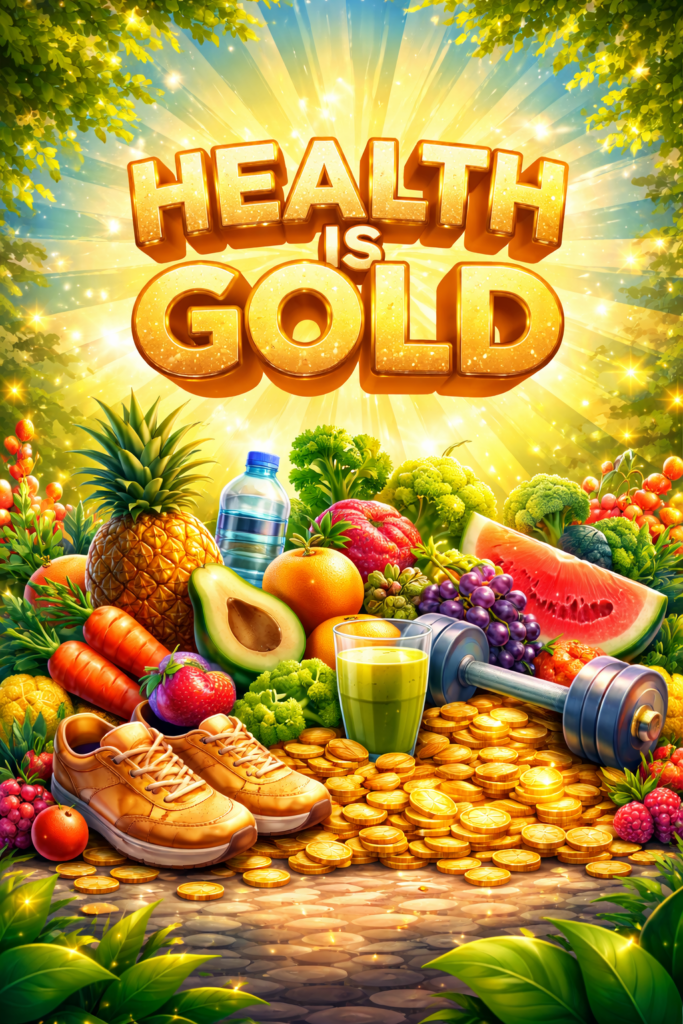
Health is Gold
Health is the most precious gift of life. People often say, “Health is wealth,” but it is even more valuable than wealth — it is gold. Gold is rare, precious, and highly valued across the world. Similarly, good health is priceless. Without health, even the richest person cannot enjoy life. A healthy person can work, think clearly, feel happy, and achieve goals. Therefore, health truly is gold.
Meaning of “Health is Gold”
The phrase “Health is Gold” means that health is extremely valuable. Gold is something people protect carefully. In the same way, we must protect our health. Money can be earned again if lost. Property can be rebuilt. But once health is damaged, it may not fully return. Good health gives us strength, energy, peace of mind, and the ability to live happily.
Health does not only mean the absence of disease. According to the World Health Organization (WHO), health is a state of complete physical, mental, and social well-being. This means being healthy includes having a strong body, a calm mind, and good relationships with others.
Importance of Physical Health
Physical health refers to the condition of our body. It includes proper functioning of organs, muscles, bones, and systems like digestion, breathing, and circulation. When we are physically healthy, we feel energetic and active.
Physical health helps us:
- Perform daily tasks easily
- Study or work efficiently
- Participate in sports and physical activities
- Prevent many diseases
- Maintain a strong immune system
To maintain physical health, we must eat nutritious food, exercise regularly, sleep well, and maintain personal hygiene.
Balanced Diet
A balanced diet is one that contains all necessary nutrients in the right amount. These nutrients include carbohydrates, proteins, fats, vitamins, minerals, fiber, and water.
- Carbohydrates provide energy.
- Proteins help build muscles.
- Fats provide energy and support body functions.
- Vitamins and minerals protect us from diseases.
- Water keeps our body hydrated.
Eating fresh fruits, vegetables, whole grains, milk, pulses, and nuts keeps the body strong. Avoiding junk food, oily food, and sugary drinks helps prevent obesity, diabetes, and heart disease.
Importance of Mental Health
Mental health is equally important as physical health. It refers to our emotional, psychological, and social well-being. A mentally healthy person can handle stress, make good decisions, and maintain positive relationships.
Poor mental health may lead to:
- Stress
- Anxiety
- Depression
- Lack of concentration
- Anger and mood swings
In today’s fast-moving world, mental health problems are increasing due to academic pressure, work stress, social media influence, and unhealthy lifestyles.
Ways to Maintain Mental Health
- Practice meditation or yoga
- Talk openly about feelings
- Spend time with family and friends
- Avoid overthinking
- Get proper sleep
- Limit screen time
When the mind is peaceful, the body also stays healthy. Therefore, mental health is golden.
Importance of Social Health
Social health means the ability to form healthy relationships and interact positively with others. Humans are social beings. We need love, care, and support.
Good social health helps us:
- Feel supported
- Build confidence
- Reduce loneliness
- Improve communication skills
Maintaining respect, kindness, and empathy in relationships improves overall well-being.
Role of Exercise in Maintaining Health
Exercise is essential for maintaining health. Regular physical activity improves heart function, strengthens muscles, controls weight, and boosts mood.
Types of exercise include:
- Walking
- Running
- Cycling
- Swimming
- Yoga
- Sports
Even 30 minutes of daily exercise can improve health significantly. Exercise releases hormones called endorphins, which reduce stress and make us feel happy.
Importance of Sleep
Sleep is the natural healing process of the body. During sleep, the body repairs tissues and refreshes the brain.
Lack of sleep can cause:
- Weak immunity
- Poor concentration
- Irritability
- Obesity
- Heart problems
Students should sleep 7–9 hours daily. Proper sleep keeps both body and mind strong.
Personal Hygiene and Health
Maintaining cleanliness is very important for health. Simple habits like washing hands, brushing teeth, bathing daily, and wearing clean clothes prevent infections.
In villages and cities alike, lack of hygiene can cause diseases such as:
- Diarrhea
- Cholera
- Skin infections
- Respiratory diseases
Clean surroundings lead to a healthy life.
Health and Wealth Comparison
Many people spend their youth earning money and later spend their money trying to regain health. This shows how important health is. Wealth without health has no value.
Imagine a rich person who cannot eat his favorite food due to illness. Or a person with money who cannot travel because of poor health. On the other hand, a healthy person with limited money can still enjoy simple pleasures like walking in nature or playing with children.
Thus, health is greater than wealth.
Lifestyle Diseases
Modern lifestyle has led to many diseases such as:
- Diabetes
- High blood pressure
- Obesity
- Heart disease
These diseases are often caused by:
- Junk food
- Lack of exercise
- Stress
- Smoking and alcohol
Changing lifestyle habits can prevent these diseases.
Health in Students’ Life
For students, health is especially important. Good health helps in:
- Better concentration
- Improved memory
- Higher academic performance
- Active participation in activities
Students should avoid excessive mobile use and focus on outdoor activities.
Health and Environment
A clean environment supports good health. Pollution of air, water, and soil affects our health.
Air pollution causes breathing problems. Water pollution spreads diseases. Noise pollution causes stress.
Protecting the environment means protecting health.
Role of Government and Society
Government plays an important role in providing healthcare facilities, vaccination programs, clean water, and sanitation.
Society also has responsibility:
- Spreading awareness
- Supporting healthy habits
- Helping needy patients
Community health programs improve overall well-being.
Importance of Regular Health Checkups
Regular medical checkups help detect diseases early. Early detection increases chances of successful treatment.
Vaccinations protect against serious diseases.
Prevention is better than cure.
Emotional Health and Happiness
Happiness is connected with health. Positive thinking, gratitude, and kindness improve emotional well-being.
People who smile more often live longer and healthier lives.
Impact of Technology on Health
Technology has both positive and negative effects.
Positive:
- Medical advancements
- Health apps
- Online consultations
Negative:
- Increased screen time
- Sedentary lifestyle
- Social media stress
Balanced use of technology is necessary.
Traditional Health Practices
In India, traditional practices like yoga and Ayurveda promote natural health.
Yoga improves flexibility and mental peace. Healthy home-cooked food supports digestion and immunity.
Combining modern medicine and traditional practices can provide balanced health.
Importance of Water
Water is life. Our body is mostly water. Drinking enough water:
- Regulates temperature
- Aids digestion
- Removes toxins
Dehydration can cause weakness and headaches.
Health During Old Age
As people age, health becomes more sensitive. Proper nutrition, light exercise, and emotional support are necessary for elderly people.
Family care is essential for their well-being.
Conclusion
Health is the foundation of a happy life. Without health, achievements lose meaning. Good health gives us strength to work, study, dream, and enjoy life.
We must:
- Eat balanced food
- Exercise regularly
- Sleep properly
- Stay positive
- Maintain hygiene
Gold can be bought with money, but health cannot. Therefore, we must protect our health like treasure.
In the end, health truly is gold — precious, powerful, and priceless.





Leave a Reply