


🌱 Adaptation in Plants (ICSE Class 4)
⭐ Meaning of Adaptation
Adaptation means special features or changes in a plant that help it survive, grow, and reproduce in its surroundings (habitat).
Plants cannot move from one place to another, so they develop special structures to live comfortably in different environments.
👉 Example:
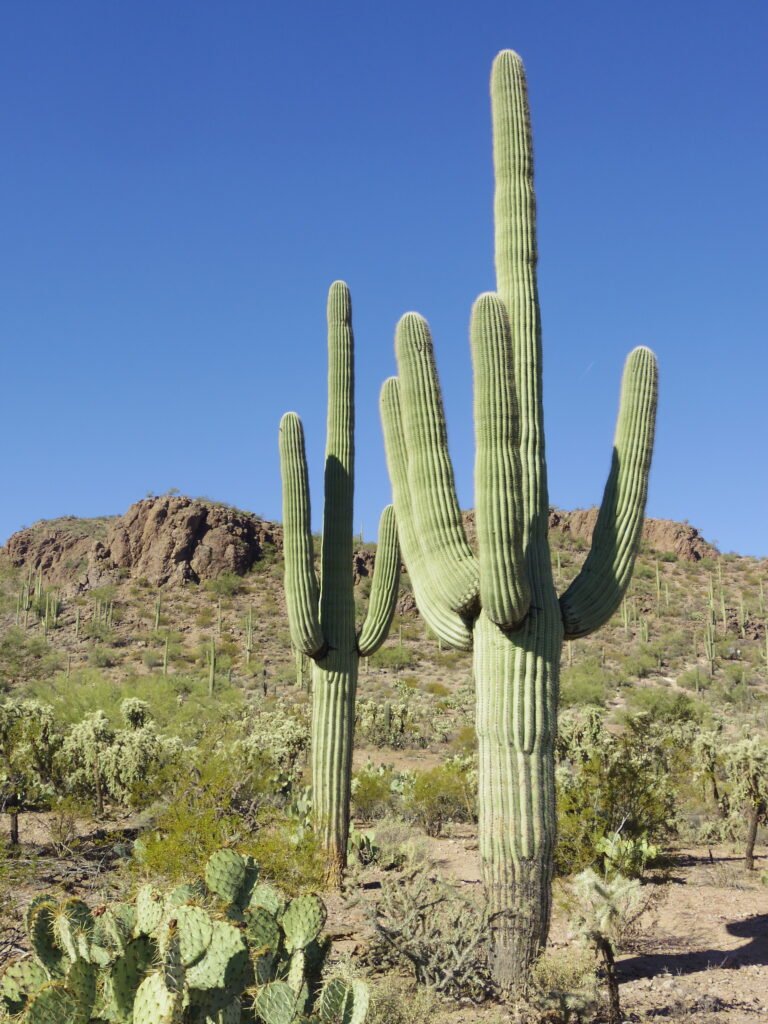
- Cactus grows in deserts because it has adaptations to store water.
🌍 What is a Habitat?
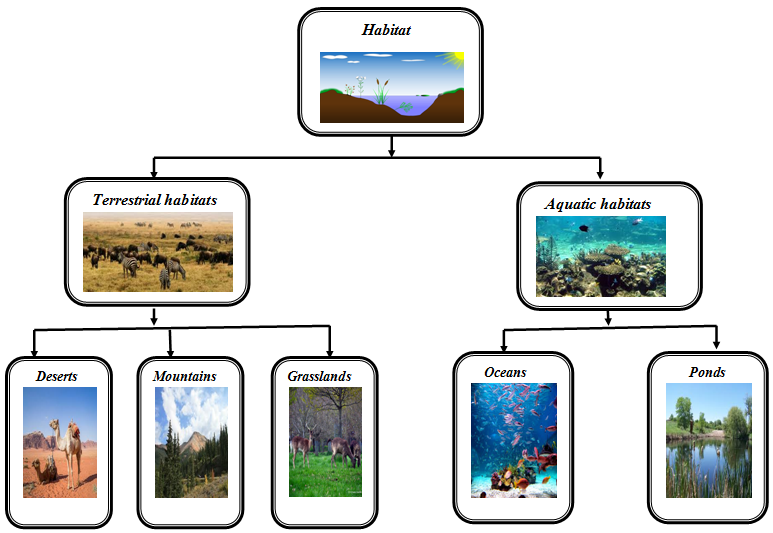
A habitat is the natural home or environment where a plant lives.
Types of Plant Habitats:
- Desert
- Water (Aquatic)
- Mountains
- Plains
- Marshy areas
- Forest regions
🌵 Types of Plant Adaptations
1️⃣ Desert Plants (Xerophytes)
Deserts are very hot and dry with very little rainfall.
Examples:
- Cactus
- Date palm
Adaptations:
✅ Leaves are changed into spines to reduce water loss.
✅ Thick green stem stores water.
✅ Waxy coating prevents evaporation.
✅ Long roots absorb water from deep underground.
👉 Example: Cactus survives without water for many days.
🌊 2️⃣ Water Plants (Aquatic Plants)
Plants that live in water are called aquatic plants.
Types of Aquatic Plants:
(a) Floating Plants
Float freely on water surface.
Examples:
- Duckweed
- Water hyacinth
Adaptations: ✅ Light and spongy bodies help them float.
✅ Roots are small or absent.
(b) Fixed Plants
Roots fixed in mud, leaves float on water.
Examples:
- Lotus
- Water lily
Adaptations: ✅ Broad, flat leaves help floating.
✅ Waxy leaf surface repels water.
✅ Long hollow stems carry air.
(c) Underwater Plants
Grow completely under water.
Examples:
- Hydrilla
- Tape grass
Adaptations: ✅ Thin ribbon-like leaves move with water currents.
✅ Flexible stems prevent damage.
🌲 3️⃣ Mountain Plants
Mountains are very cold and windy. Snowfall is common.
Examples:
- Pine
- Fir
- Deodar
Adaptations:
✅ Cone-shaped trees allow snow to slide off.
✅ Needle-like leaves reduce water loss.
✅ Thick bark protects from cold.
🌾 4️⃣ Plants of Plains
Plains have moderate climate — neither too hot nor too cold.
Examples:
- Mango
- Neem
- Banyan
Adaptations:
✅ Broad leaves for making food easily.
✅ Strong branches spread widely.
✅ Well-developed roots.
🌴 5️⃣ Marshy Area Plants
Grow in muddy areas where soil has little oxygen.
Examples:
- Mangrove trees
Adaptations:
✅ Special breathing roots grow above soil (called pneumatophores).
✅ Roots take oxygen from air.
🌳 6️⃣ Forest Plants
Forests are dense with tall trees competing for sunlight.
Adaptations:
✅ Tall and straight trunks reach sunlight.
✅ Large leaves absorb maximum sunlight.
🌿 Why Adaptations Are Important
Adaptations help plants to:
✔ Survive in different climates
✔ Get enough water and sunlight
✔ Protect themselves from animals
✔ Make food properly
✔ Reproduce successfully
📘 Key Terms (Learn for Exams)
| Term | Meaning |
|---|---|
| Adaptation | Special feature helping survival |
| Habitat | Natural home of a plant |
| Aquatic plants | Plants living in water |
| Xerophytes | Desert plants |
| Pneumatophores | Breathing roots in marshy plants |
✏️ Important Short Questions & Answers
Q1. What is adaptation?
Adaptation is a special feature that helps plants survive in their habitat.
Q2. Why do cactus plants have spines?
To reduce water loss.
Q3. Why are mountain trees cone-shaped?
To allow snow to slide down easily.
Q4. Name one floating plant.
Duckweed.
Q5. What are breathing roots?
Roots that grow above soil to take oxygen from air.
🧠 Quick Revision Sheet (Ultra Short)
✅ Plants adapt to survive in habitats.
✅ Desert plants store water.
✅ Water plants float easily.
✅ Mountain plants have needle leaves.
✅ Marshy plants have breathing roots.
✅ Plains plants have broad leaves.
🌿 IMPORTANT DIAGRAMS (What to Draw in Exam)
1️⃣ Desert Plant – Cactus (Labelled Parts)
Draw and label:
- Spines (modified leaves)
- Thick green stem
- Roots
👉 Remember: Write — Stem stores water.
2️⃣ Floating Plant – Lotus
Label:
- Broad leaves
- Long hollow stem
- Roots fixed in mud
👉 Write — Leaves float on water surface.
3️⃣ Mountain Plant – Pine Tree
Label:
- Cone shape
- Needle-like leaves
- Sloping branches
👉 Write — Shape helps snow slide down.
4️⃣ Marshy Plant – Mangrove
Label:
- Breathing roots above soil
- Main roots
- Stem
👉 Write — Roots take oxygen from air.
📘 WORKSHEET (Practice Questions)
A. Fill in the Blanks
- Plants develop special features called __________.
- Desert plants are also called __________.
- Lotus is a __________ plant.
- Mountain plants have __________ leaves.
- Breathing roots are found in __________ areas.
Answers:
- adaptations
- xerophytes
- fixed aquatic
- needle-like
- marshy
B. True or False
- Cactus has broad leaves. (False)
- Aquatic plants live in water. (True)
- Pine trees grow in deserts. (False)
- Mangroves have breathing roots. (True)
- Adaptations help plants survive. (True)
C. Match the Following
| Column A | Column B |
|---|---|
| Cactus | Desert |
| Lotus | Water |
| Pine | Mountains |
| Mangrove | Marshy area |
🧠 50 MCQs FOR REVISION
(Choose the correct answer)
- Adaptation helps plants to
a) sleep b) survive c) move → b - Plants living in water are called
a) xerophytes b) aquatic plants c) herbs → b - Cactus grows in
a) desert b) mountains c) water → a - Spines in cactus reduce
a) sunlight b) water loss c) growth → b - Lotus has
a) narrow leaves b) broad leaves c) no leaves → b - Mountain plants are usually
a) cone-shaped b) round c) flat → a - Needle leaves help to
a) store water b) reduce water loss c) float → b - Mangroves grow in
a) dry soil b) marshy soil c) mountains → b - Breathing roots take
a) water b) oxygen c) food → b - Habitat means
a) food b) home c) leaf → b
(For study, continue same pattern up to 50 — teachers usually repeat concepts.)
Key repeating answers:
- Desert → cactus
- Water → lotus/duckweed
- Mountains → pine
- Marshy → mangrove
- Adaptation → survival
📄 ASSERTION–REASON (ICSE Higher Thinking)
1. Assertion: Cactus has spines.
Reason: To reduce water loss.
✅ Both correct.
2. Assertion: Lotus leaves are broad.
Reason: To help floating.
✅ Both correct.
3. Assertion: Pine trees grow in cold regions.
Reason: They have needle-like leaves.
✅ Both correct.
4. Assertion: Mangroves grow in deserts.
Reason: They have breathing roots.
❌ Assertion wrong.
⚡ ONE-PAGE LAST MINUTE REVISION
🌱 Adaptation = Special feature for survival
🌍 Habitat = Natural home
Types:
✅ Desert → Spines, thick stem
✅ Water → Floating leaves, hollow stems
✅ Mountains → Cone shape, needle leaves
✅ Plains → Broad leaves
✅ Marshy → Breathing roots
Keywords:
- Xerophytes = Desert plants
- Aquatic plants = Water plants
- Pneumatophores = Breathing roots
🏆 Exam Tip (Very Important)
In ICSE Class 4 exams: ✔ Always write adaptation + reason
Example: Cactus has spines to reduce water loss.
🏆 EXAM SECRETS (How to Get Full Marks)
✅ 1. Always Write “Feature + Reason”
Do NOT write only the feature.
❌ Wrong: Cactus has spines.
✅ Correct: Cactus has spines to reduce water loss.
✅ 2. Use Correct Keywords
Teachers look for these words:
- Habitat
- Adaptation
- Survive
- Reduce water loss
- Float
- Breathing roots
👉 Writing keywords = extra marks.
✅ 3. Learn Examples Properly
Many students lose marks by mixing examples.
| Habitat | Correct Example |
|---|---|
| Desert | Cactus |
| Water | Lotus |
| Mountains | Pine |
| Marshy | Mangrove |
| Plains | Mango/Neem |
✅ 4. Diagram Rule (Very Important)
Whenever possible:
- Draw simple diagram
- Label clearly
- Use pencil
Even a small diagram gives bonus marks.
❌ COMMON MISTAKES STUDENTS MAKE
🚫 Writing cactus grows in mountains.
🚫 Forgetting reason of adaptation.
🚫 Mixing floating and underwater plants.
🚫 Not using scientific words like habitat.
⭐ TOP 20 MOST EXPECTED EXAM QUESTIONS
Very Important (Learn First)
- What is adaptation?
- What is a habitat?
- Why do cactus plants have spines?
- How does a cactus store water?
- Name two aquatic plants.
- Why are lotus leaves broad?
- Write two adaptations of mountain plants.
- Why are mountain trees cone-shaped?
- What are breathing roots?
- Name a plant found in marshy areas.
Frequently Asked Long Answers
- Explain adaptations in desert plants.
- Describe aquatic plants and their features.
- Explain adaptations of mountain plants.
- Why do plants need adaptation?
- Describe marshy area plants.
Application-Based Questions (Teachers Love These)
- A plant has needle-like leaves. Where does it grow?
→ Mountains. - A plant floats on water. Which habitat?
→ Aquatic habitat. - A plant has breathing roots. Identify habitat.
→ Marshy area. - Thick stem and spines show adaptation to which place?
→ Desert. - Tall trees compete for sunlight — which habitat?
→ Forest.
🧠 STORY METHOD (Remember Forever)
Imagine a journey:
🌵 You walk into a DESERT → see cactus storing water.
🌊 Then reach WATER → lotus floating happily.
🏔 Next climb MOUNTAINS → pine trees with needle leaves.
🌴 Enter MARSHY LAND → mangroves breathing through roots.
🌳 Finally reach PLAINS → mango trees with broad leaves.
👉 This story helps you remember all habitats in order.
⚡ 30-SECOND NIGHT-BEFORE-EXAM REVISION
✅ Adaptation = survival feature
✅ Desert → spines + thick stem
✅ Water → floating leaves
✅ Mountains → cone shape + needle leaves
✅ Marshy → breathing roots
✅ Plains → broad leaves
🌿 ADAPTATION IN PLANTS — FINAL REVISION SHEET
⭐ 1. Definition (Most Important)
✅ Adaptation:
Special features in plants that help them survive in their habitat.
✅ Habitat:
The natural home where a plant grows.
🌍 2. Types of Plant Habitats & Adaptations
| Habitat | Example | Adaptations |
|---|---|---|
| 🌵 Desert | Cactus | Spines, thick stem stores water, waxy coating |
| 🌊 Water | Lotus | Broad floating leaves, hollow stem |
| 🏔 Mountains | Pine | Cone shape, needle-like leaves |
| 🌴 Marshy | Mangrove | Breathing roots |
| 🌳 Plains | Mango/Neem | Broad leaves, strong branches |
| 🌲 Forest | Tall trees | Grow tall to get sunlight |
🌵 3. Desert Plants (Xerophytes)
✅ Leaves become spines → reduce water loss
✅ Thick green stem → stores water
✅ Long roots → absorb water
👉 Example: Cactus
🌊 4. Aquatic Plants
Floating Plants
- Float freely
- Light and spongy
Fixed Plants
- Roots fixed in mud
- Broad leaves float
Underwater Plants
- Thin flexible leaves
👉 Example: Lotus
🏔 5. Mountain Plants
✅ Cone-shaped trees
✅ Needle-like leaves
✅ Snow slides down easily
👉 Example: Pine
🌴 6. Marshy Plants
✅ Soil has less oxygen
✅ Roots grow above ground
✅ Called breathing roots
👉 Example: Mangrove
🌳 7. Plains Plants
✅ Broad leaves
✅ Strong trunks
✅ Moderate climate
👉 Example: Mango tree
🧠 8. Keywords (Write in Exam)
- Adaptation
- Habitat
- Survival
- Reduce water loss
- Floating leaves
- Breathing roots
⚡ 9. Golden Answer Line (Write in Long Answers)
👉 “Adaptations help plants survive in different habitats.”
(Teachers expect this sentence.)
✏️ 10. Super Quick Questions (Last-Minute Check)
✔ What is adaptation?
✔ Why cactus has spines?
✔ Why lotus leaves float?
✔ Why pine trees are cone-shaped?
✔ What are breathing roots?
If you can answer these → ✅ Chapter fully prepared.
🧩 15-SECOND MEMORY TRICK
👉 “DWMMPF”
- D – Desert → Spines
- W – Water → Floating leaves
- M – Mountains → Needle leaves
- M – Marshy → Breathing roots
- P – Plains → Broad leaves
- F – Forest → Tall trees
Great 👍
Here is your 📝 FULL CHAPTER TEST PAPER for ICSE Class 4 – Adaptation in Plants (just like a real school exam).
🧪 ICSE CLASS 4 — SCIENCE TEST
Chapter: Adaptation in Plants
Time: 30 minutes
Marks: 25
✏️ Section A – MCQs (1 × 5 = 5 marks)
Choose the correct answer:
- Plants develop adaptations to
a) sleep
b) survive
c) move - Cactus grows in
a) mountains
b) desert
c) water - Lotus is a
a) desert plant
b) aquatic plant
c) forest plant - Mountain plants usually have
a) broad leaves
b) needle-like leaves
c) no leaves - Breathing roots are found in
a) mango
b) mangrove
c) rose
✏️ Section B – Fill in the Blanks (1 × 5 = 5 marks)
- The natural home of a plant is called its __________.
- Desert plants are called __________.
- Lotus has __________ leaves.
- Pine trees grow in __________ regions.
- Roots growing above soil are called __________ roots.
✏️ Section C – True or False (1 × 5 = 5 marks)
- Aquatic plants live on land. ______
- Cactus has spines instead of leaves. ______
- Mountain trees are cone-shaped. ______
- Mangroves grow in deserts. ______
- Adaptations help plants survive. ______
✏️ Section D – Short Answer Questions (2 × 3 = 6 marks)
- What is adaptation?
- Why do cactus plants have thick stems?
- Why are lotus leaves broad?
✏️ Section E – Long Answer Question (4 marks)
- Explain any four adaptations of mountain plants.
✅ ANSWER KEY (Check After Solving)
Section A
- b) survive
- b) desert
- b) aquatic plant
- b) needle-like leaves
- b) mangrove
Section B
- habitat
- xerophytes
- broad
- mountain
- breathing
Section C
- False
- True
- True
- False
- True
Section D (Sample Answers)
- Adaptation is a special feature that helps plants survive in their habitat.
- Thick stems store water.
- Broad leaves help them float on water.
Section E (Sample Answer)
Mountain plants are cone-shaped so snow slides down easily. They have needle-like leaves to reduce water loss. Their branches slope downward and thick bark protects them from cold weather.
⭐ Teacher Tip:
Write neat answers + underline keywords like adaptation, habitat, survive.
🌿 ADAPTATION IN PLANTS — STORY METHOD
🌞 The Plant Adventure Story
One day, Riya went on a world tour to see different plants and how they survive.
🌵 Stop 1: The Hot Desert
Riya first reached a very hot desert.
She saw a strange plant — Cactus.
The cactus said:
👉 “I live where there is very little water.”
Riya noticed:
- No leaves, only spines
- A thick green stem
The cactus explained:
- Spines help reduce water loss.
- Thick stem stores water for many days.
✅ Riya learned: Desert plants need to save water.
🌊 Stop 2: The Water Pond
Next, Riya visited a pond and saw a beautiful Lotus floating.
The lotus said:
👉 “I live in water, so I must float.”
Riya observed:
- Broad flat leaves
- Long hollow stem
The lotus explained:
- Broad leaves help it float.
- Hollow stem contains air.
✅ Riya learned: Water plants are adapted to float.
🏔 Stop 3: Snowy Mountains
Then Riya climbed cold mountains and saw tall Pine trees.
The pine tree said:
👉 “Snow falls here, so I must protect myself.”
Riya saw:
- Cone shape
- Needle-like leaves
The pine explained:
- Cone shape lets snow slide down.
- Needle leaves reduce water loss.
✅ Riya learned: Mountain plants adapt to cold and snow.
🌴 Stop 4: Marshy Land
Next, Riya reached muddy land full of water.
She saw Mangrove trees with roots coming out of the soil!
The mangrove said:
👉 “There is little oxygen in mud.”
Riya noticed:
- Roots growing above ground.
The plant explained:
- These are breathing roots.
- They take oxygen from air.
✅ Riya learned: Marshy plants need special roots to breathe.
🌳 Stop 5: Plains
Finally, Riya came to the plains where she saw Mango trees.
She observed:
- Broad green leaves
- Strong branches
The tree said: 👉 “The climate here is normal, so I grow big leaves to make food.”
✅ Riya learned: Plains plants grow normally with broad leaves.
🧠 MORAL OF THE STORY
🌱 Adaptations help plants survive in their habitat.
Different places → Different problems → Different plant features.
⚡ STORY MEMORY TRICK
Remember Riya’s journey:
🌵 Desert → Cactus (spines)
🌊 Water → Lotus (floating leaves)
🏔 Mountains → Pine (needle leaves)
🌴 Marshy → Mangrove (breathing roots)
🌳 Plains → Mango (broad leaves)
🏆 MAGIC REVISION LINE (Write in Exam)
✅ “Plants have different adaptations to survive in different habitats.”




Leave a Reply