


Introduction: Impact of Social Media on Religious Practices
Religion has always been a central part of human civilization, shaping moral values, cultural traditions, social relationships, and personal identity. For centuries, religious practices were primarily performed within physical spaces such as temples, mosques, churches, gurudwaras, and other sacred places where communities gathered for worship, prayer, rituals, and spiritual learning. Religious knowledge was traditionally transmitted through face-to-face interaction, religious leaders, scriptures, and community participation. However, the rapid advancement of technology in the 21st century has significantly transformed almost every aspect of human life, including how religion is practiced and experienced.
One of the most influential technological developments of modern times is social media. Social media platforms—such as Facebook, YouTube, Instagram, WhatsApp, and X (formerly Twitter)—have revolutionized communication by allowing people to share ideas, beliefs, and experiences instantly across geographical boundaries. These platforms have not only changed social interaction but have also reshaped spiritual engagement and religious expression. Religion, which was once largely confined to physical gatherings and local communities, has now expanded into digital spaces, creating what many scholars describe as “digital religion” or “online spirituality.”
The integration of social media into religious life has made faith practices more accessible and interactive than ever before. Individuals can now listen to sermons, watch live religious ceremonies, participate in prayer sessions, read interpretations of sacred texts, and seek spiritual guidance from religious scholars without leaving their homes. For many believers, especially younger generations who are highly active online, social media has become an important medium for learning about religion and maintaining spiritual connections. During global crises such as pandemics, when physical gatherings were restricted, online platforms played a crucial role in ensuring the continuity of religious practices and community bonding.
At the same time, social media has transformed the role of religious institutions and leaders. Religious organizations increasingly use digital platforms to reach wider audiences, spread moral teachings, and engage followers through multimedia content. Religious leaders can now communicate directly with millions of followers, offering guidance, answering questions, and addressing contemporary issues in real time. This digital presence has helped religions adapt to changing social realities and remain relevant in a fast-paced technological world.
However, the relationship between social media and religion is complex and multifaceted. While digital platforms offer opportunities for spiritual growth and global connectivity, they also introduce new challenges. The open nature of social media allows unverified information, misinterpretations, and sometimes extremist or divisive content to spread quickly. Religious teachings may be simplified or taken out of context to fit short-form content, potentially weakening deep understanding and reflection. Moreover, the commercialization of religious content, online debates, and performative displays of faith can sometimes shift the focus from genuine spirituality to social recognition or popularity.
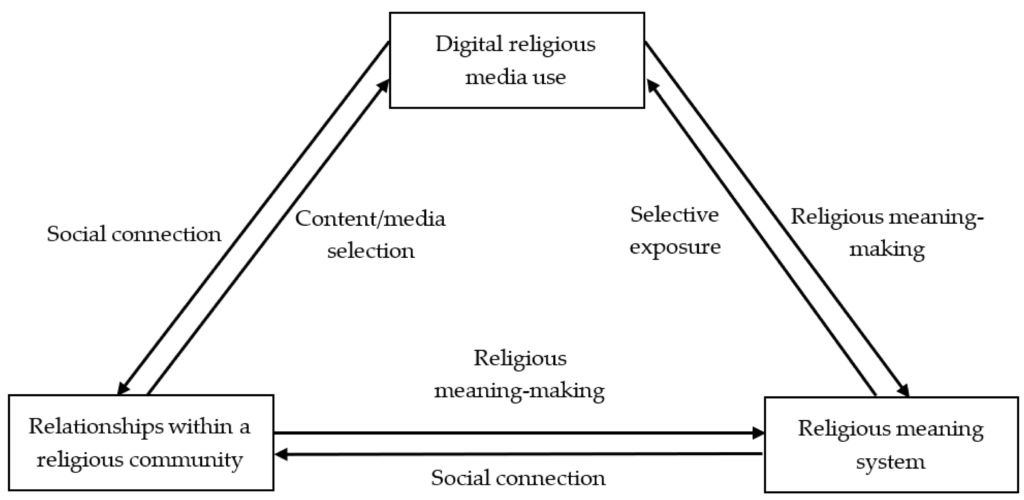
Another important aspect of this transformation is the changing nature of religious participation. Social media encourages individualized forms of worship, where people engage with religion privately through screens rather than collectively in physical communities. While this increases accessibility, it may also reduce personal interaction, communal bonding, and traditional religious experiences that have historically strengthened social unity.
In addition, social media has created spaces for interfaith interaction and dialogue. People from diverse religious backgrounds can share perspectives, ask questions, and learn about different traditions, promoting awareness and tolerance. At the same time, disagreements and misunderstandings can also arise online, sometimes leading to conflicts or polarization when religious discussions become sensitive or emotionally charged.
Therefore, the impact of social media on religious practices cannot be viewed as entirely positive or negative. Instead, it represents a significant transformation in how faith is expressed, learned, and practiced in contemporary society. Social media acts as both a tool for spiritual connection and a platform that requires careful and responsible use to preserve the authenticity and depth of religious traditions.
In today’s digital age, understanding the influence of social media on religion is essential because it reflects broader changes in culture, communication, and identity. As technology continues to evolve, religious communities and individuals must find ways to balance traditional values with modern communication methods, ensuring that technology supports rather than replaces the true purpose of religious practice—spiritual growth, moral development, and social harmony.
Here is a complete, well-structured explanation of “Impact of Social Media on Religious Practices”, suitable for school, college assignments, or exam answers.
Initiation
Social media has become an essential part of modern life, influencing communication, education, culture, and even spirituality. Platforms such as Facebook, YouTube, Instagram, WhatsApp, and X (Twitter) allow people to share ideas and interact instantly across the world. Religion, which has traditionally been practiced through physical gatherings, rituals, and community interactions, has also been significantly affected by this digital transformation.
In earlier times, religious teachings were mainly learned through religious leaders, sacred texts, and visits to places of worship. Today, social media has created new ways for individuals to express faith, participate in religious activities, and access spiritual knowledge. Religious practices are no longer limited by geography or time; they can now take place online through live streaming, digital discussions, and virtual communities. This shift has brought both opportunities and challenges, making the impact of social media on religion a complex and important subject.
2. Meaning of Religious Practices
Religious practices are activities through which individuals or communities express their faith and devotion. These include:
- Prayer and worship
- Reading and studying sacred texts
- Participating in religious festivals and rituals
- Listening to sermons and spiritual guidance
- Charity and helping others
- Following moral and ethical teachings
Social media has changed how many of these practices are performed and shared.
3. Positive Impacts of Social Media on Religious Practices
3.1 Easy Access to Religious Knowledge
Social media provides instant access to religious teachings, lectures, and scriptures. People can watch sermons, read explanations, and learn about religious traditions anytime and anywhere. This has made religious education more accessible, especially for those living far from religious institutions.
3.2 Online Worship and Virtual Participation
Live streaming of prayers, sermons, and festivals allows believers to participate even when they cannot attend physically. Elderly people, students, or individuals living abroad can remain connected to their faith through online platforms.
3.3 Strengthening Global Religious Communities
Social media connects followers from different parts of the world. Online groups and communities allow people to share experiences, discuss beliefs, and support each other spiritually, creating a sense of unity beyond geographical boundaries.
3.4 Promotion of Charity and Social Service
Religious organizations use social media to promote charitable activities, fundraising campaigns, and social welfare programs. Online awareness increases participation in helping the needy.
3.5 Religious Awareness Among Youth
Young people spend significant time online, and social media helps introduce them to religious teachings through videos, motivational messages, and discussions presented in modern formats.
3.6 Interfaith Dialogue and Understanding
Social media enables communication among people of different religions, encouraging understanding, tolerance, and peaceful coexistence when used responsibly.
4. Negative Impacts of Social Media on Religious Practices
4.1 Spread of Misinformation
One major problem is the rapid spread of incorrect or misleading religious information. Unverified interpretations may confuse followers and create misunderstandings.
4.2 Superficial Understanding of Religion
Short videos and simplified posts sometimes reduce deep religious teachings into brief content, which may weaken true understanding and reflection.
4.3 Online Religious Conflicts
Religious discussions on social media can sometimes turn into arguments or hate speech, increasing social tension instead of harmony.
4.4 Commercialization of Religion
Some individuals or organizations may use religion mainly to gain popularity, followers, or financial benefits, which can reduce the spiritual essence of religious practices.
4.5 Reduced Physical Community Participation
Excessive dependence on online worship may decrease attendance at places of worship, weakening community bonding and traditional collective experiences.
4.6 Distraction and Lack of Spiritual Focus
Social media platforms contain entertainment and distractions that may reduce concentration and sincerity during religious activities.
5. Impact on Religious Leaders and Institutions
Social media has changed how religious leaders communicate with followers. Leaders now reach large audiences through online sermons and live sessions. Religious institutions also use digital platforms for announcements, education, and outreach programs. While this increases influence, it also requires responsible communication to avoid misinformation.
6. Impact on Youth and Modern Society
Young generations often learn about religion through digital media rather than traditional teaching methods. This makes religion more accessible but also exposes youth to mixed opinions and debates. Social media can strengthen faith when used wisely, but excessive reliance may lead to confusion or selective understanding of religious teachings.
7. Social and Cultural Changes
Social media has made religious expression more public. People share prayers, festival celebrations, and spiritual messages online. This increases awareness and cultural exchange but sometimes turns religious practice into social display rather than personal devotion.
8. Balancing Tradition and Technology
The key challenge today is balancing traditional religious values with modern technology. Social media should be used as a supportive tool rather than a replacement for genuine spiritual practice. Responsible use includes verifying information, promoting respect, and maintaining sincerity in religious activities.
9. Conclusion
In conclusion, social media has greatly transformed religious practices by making spiritual knowledge more accessible, connecting global communities, and encouraging participation in religious activities. At the same time, it has introduced challenges such as misinformation, reduced personal interaction, and commercialization of faith. The impact of social media on religion depends largely on how individuals and communities use it. When used wisely and responsibly, social media can strengthen faith, promote understanding, and support spiritual growth. However, maintaining balance between digital engagement and traditional religious practices is essential to preserve the true essence of religion—spiritual development, moral values, and social harmony.
Here is a detailed conclusion on the topic “Impact of Social Media on Religious Practices”, written in approximately 1000 words, suitable for assignments, research work, or long essays.
In conclusion, the emergence of social media has brought a profound transformation in the way religious beliefs are expressed, practiced, and experienced in contemporary society. Religion, which has traditionally relied on physical gatherings, personal interaction, and community-based rituals, has gradually expanded into digital spaces. Social media platforms have created new opportunities for spiritual engagement by connecting individuals across geographical boundaries, making religious knowledge more accessible, and allowing faith communities to interact in ways that were unimaginable in earlier times. This technological shift represents one of the most significant changes in religious practice in the modern era.
One of the most important contributions of social media to religious life is the democratization of religious knowledge. Previously, access to religious teachings often depended on proximity to places of worship or religious scholars. Today, individuals can easily access sermons, scriptural explanations, motivational talks, and religious discussions through online videos, live streams, podcasts, and digital posts. This has allowed people from remote areas, busy lifestyles, or different countries to remain connected with their faith. Social media has therefore reduced barriers to religious learning and created a more inclusive environment where spiritual guidance is available to a wider audience.
Another major impact is the strengthening of global religious communities. Social media enables believers from diverse cultural and national backgrounds to interact, share experiences, and support one another spiritually. Online prayer groups, discussion forums, and religious pages help individuals feel connected even when they are physically distant from their communities. During times of crisis—such as pandemics, natural disasters, or social isolation—social media has played a vital role in maintaining religious continuity and emotional comfort. Virtual participation in religious events has ensured that faith remains an active part of people’s lives despite physical limitations.
At the same time, social media has transformed the role of religious leaders and institutions. Religious leaders can now communicate directly with followers through digital platforms, reaching millions instantly. This direct communication has strengthened engagement and allowed religious teachings to address modern social issues more effectively. Religious institutions have also adopted technology to organize charity campaigns, educational programs, and social service initiatives. As a result, religion has become more visible and active within the digital public sphere.
However, alongside these benefits, social media has introduced several challenges that must be carefully considered. One of the most significant concerns is the spread of misinformation and misinterpretation of religious teachings. Because social media allows anyone to create and share content, inaccurate or biased interpretations can circulate widely without proper verification. Such misinformation may confuse followers, create divisions within communities, or even lead to misunderstandings between different religious groups. The absence of traditional scholarly supervision in online spaces sometimes weakens the authenticity of religious knowledge.
Another important issue is the risk of superficial engagement with religion. Social media often promotes short, simplified, and visually appealing content designed for quick consumption. While this format attracts attention, it may reduce complex religious teachings to brief messages that lack depth and context. Religion, which traditionally encourages reflection, patience, and deep understanding, may be transformed into momentary digital experiences. This shift can lead to a more performative form of religiosity, where religious expression becomes focused on public display rather than sincere personal devotion.
Furthermore, the commercialization of religious content has become increasingly noticeable in the digital age. Some individuals or organizations may use religious themes primarily to gain popularity, followers, or financial benefits. Sponsored religious content, monetized sermons, and influencer culture can sometimes blur the line between spiritual guidance and commercial activity. This commercialization risks weakening the sacred and ethical essence of religion, shifting attention from spiritual growth to social recognition or economic gain.
Social media has also influenced the nature of religious participation by encouraging individualized forms of worship. Many people now engage with religion privately through mobile devices instead of attending communal gatherings. While this increases accessibility and convenience, it may reduce face-to-face interaction and communal bonding that have historically been central to religious life. Religious festivals and gatherings have long served as opportunities for social unity, cultural transmission, and shared identity. Excessive reliance on virtual participation may gradually weaken these collective experiences.
At the same time, social media has created both opportunities and challenges for interfaith relations. On one hand, it allows individuals from different religious backgrounds to learn about each other’s beliefs, promoting tolerance and mutual respect. Exposure to diverse perspectives can reduce prejudice and encourage peaceful coexistence. On the other hand, online discussions about religion can sometimes become heated or confrontational, especially when sensitive topics are discussed without empathy or understanding. Therefore, responsible communication and digital ethics are essential to ensure that social media promotes harmony rather than conflict.
The impact of social media on religious practices also highlights a broader cultural shift toward digital identity and expression. Religious activities are increasingly shared publicly through posts, photos, and videos, making faith more visible in everyday online life. While this visibility can inspire others and spread positive messages, it also raises questions about sincerity and intention. Religious practice, which is often deeply personal and spiritual, may sometimes be influenced by the desire for social approval or recognition.
Looking toward the future, it is clear that social media will continue to shape religious practices as technology evolves. Artificial intelligence, virtual reality, and digital communities may further transform how people experience spirituality. Religious institutions and communities will need to adapt responsibly, ensuring that technology supports spiritual growth without replacing the deeper values of reflection, compassion, and ethical living. Education and awareness will play an essential role in helping individuals distinguish reliable religious information from misinformation and encouraging balanced digital engagement.
Ultimately, the impact of social media on religious practices is neither entirely positive nor entirely negative. It is a powerful tool whose influence depends on how it is used. When utilized responsibly, social media can strengthen faith, expand knowledge, promote charity, and build global communities based on shared values. However, when misused, it can lead to misunderstanding, superficiality, and division. The key lies in maintaining balance—embracing technological advantages while preserving the authenticity, depth, and communal spirit of religious traditions.
In summary, social media has reshaped religion by making it more accessible, interactive, and globally connected, while simultaneously presenting new ethical and spiritual challenges. As society continues to move forward in the digital age, individuals and religious communities must use social media thoughtfully, ensuring that it enhances rather than diminishes the true purpose of religion: fostering inner peace, moral development, compassion, and harmony among humanity.




Leave a Reply