


Introduction
Food is one of the basic necessities of human life, and the quality of food we consume directly affects our health and well-being. In today’s fast-paced world, unhealthy eating habits and excessive consumption of processed foods have led to many health problems such as obesity, diabetes, and heart diseases. Therefore, maintaining a balanced diet has become essential for leading a healthy and active life.
A balanced diet provides all the essential nutrients required by the body in the correct proportions. It supplies energy, supports growth and development, strengthens immunity, and helps maintain overall physical and mental health. Proper nutrition is not only important for survival but also for improving quality of life and preventing diseases.
Meaning of Balanced Diet
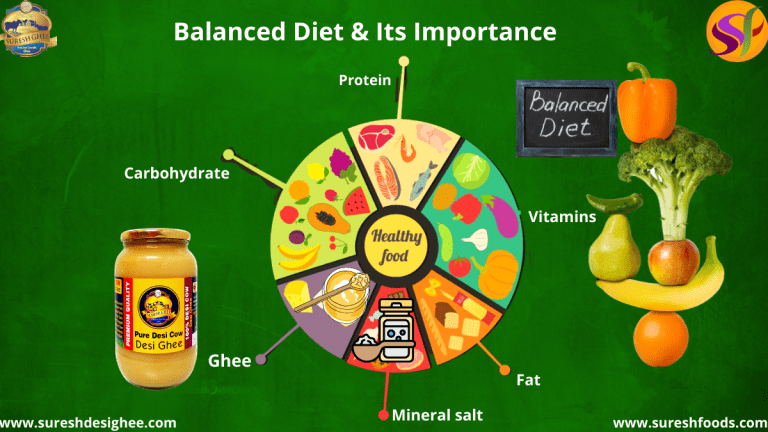
A balanced diet is a diet that contains the right amount of carbohydrates, proteins, fats, vitamins, minerals, fiber, and water required for proper body functioning. Each nutrient performs a specific role, and deficiency or excess of any nutrient may cause health problems.
A balanced diet includes:
- Whole grains
- Fruits and vegetables
- Milk and dairy products
- Pulses and proteins
- Healthy fats
- Adequate water intake
The goal of a balanced diet is to maintain energy balance and ensure healthy body functioning.
Components of a Balanced Diet
1. Carbohydrates
Carbohydrates are the main source of energy for the body. They help perform daily activities and maintain body temperature.
Sources: Rice, wheat, potatoes, fruits, cereals.
2. Proteins
Proteins are body-building nutrients essential for growth, tissue repair, and muscle development.
Sources: Pulses, eggs, milk, meat, soybeans, nuts.
3. Fats
Fats provide concentrated energy and help absorb fat-soluble vitamins.
Sources: Nuts, seeds, oils, butter, ghee (in moderation).
4. Vitamins
Vitamins regulate body functions and protect against diseases.
Sources: Fruits, vegetables, dairy products.
5. Minerals
Minerals strengthen bones, teeth, and support body processes.
Sources: Green leafy vegetables, milk, nuts, whole grains.
6. Fiber (Roughage)
Fiber helps digestion and prevents constipation.
Sources: Fruits, vegetables, whole grains.
7. Water
Water maintains hydration, regulates body temperature, and removes waste products.
Importance of Balanced Diet
1. Provides Energy
A balanced diet supplies adequate energy needed for daily activities, work, and exercise.
2. Supports Growth and Development
Proper nutrition is essential for children and adolescents for healthy physical and mental development.
3. Strengthens Immunity
Vitamins and minerals help the immune system fight infections and diseases.
4. Prevents Diseases
Balanced nutrition reduces the risk of:
- Obesity
- Diabetes
- Heart disease
- Malnutrition
- Weak immunity
5. Maintains Healthy Body Weight
Proper diet prevents both undernutrition and overeating.
6. Improves Mental Health
Nutrients influence brain function, improving concentration, memory, and mood.
7. Enhances Digestion
Fiber-rich foods improve digestion and maintain gut health.
8. Promotes Healthy Skin and Hair
Adequate nutrients support cell repair and growth, improving appearance and confidence.
Balanced Diet and Students
Students require a balanced diet because:
- It improves concentration and learning ability.
- Provides energy for physical and academic activities.
- Supports proper growth and development.
- Reduces fatigue and improves memory.
Healthy eating habits during childhood build a strong foundation for lifelong health.
Consequences of Unbalanced Diet
An improper diet may lead to:
- Malnutrition
- Obesity
- Weak immunity
- Fatigue
- Poor academic performance
- Lifestyle diseases
Both deficiency and excess of nutrients can harm health.
Tips for Maintaining a Balanced Diet
- Eat fresh fruits and vegetables daily.
- Include proteins in every meal.
- Avoid excessive junk food and sugary drinks.
- Drink sufficient water.
- Maintain regular meal timings.
- Prefer home-cooked food.
- Limit processed and fried foods.
Role of Balanced Diet in National Development
Healthy citizens contribute to national productivity and economic growth. A well-nourished population reduces healthcare costs and increases efficiency in education and employment sectors. Therefore, promoting balanced nutrition is essential for building a strong and healthy nation.
Conclusion
In conclusion, a balanced diet is the foundation of good health and well-being. It provides the body with essential nutrients required for energy, growth, immunity, and proper functioning. In the modern era, where unhealthy eating habits are increasing, awareness about balanced nutrition is more important than ever. Maintaining a balanced diet not only prevents diseases but also enhances mental and physical performance, enabling individuals to live active and fulfilling lives. Good nutrition is a lifelong investment that ensures happiness, productivity, and overall quality of life.
✅ Long Conclusion (Detailed Version)
In conclusion, a balanced diet is the cornerstone of good health, proper growth, and overall well-being. Human health depends greatly on the quality and quantity of nutrients consumed daily. In modern times, where lifestyles have become increasingly fast-paced and food habits are shifting toward processed and fast foods, maintaining a balanced diet has become more important than ever. A balanced diet is not simply about eating enough food; it is about consuming the right nutrients in the correct proportions to meet the body’s physical and mental needs.
A balanced diet ensures that the body receives adequate energy to perform daily activities efficiently. Carbohydrates provide fuel for physical work, proteins help in growth and tissue repair, fats supply stored energy, while vitamins and minerals regulate body processes and strengthen immunity. Water and fiber further support digestion and detoxification. When all these nutrients work together, the body functions smoothly and maintains internal balance.
One of the greatest advantages of a balanced diet is disease prevention. Many modern health problems such as obesity, diabetes, hypertension, heart disease, and nutritional deficiencies arise due to unhealthy eating habits. Excess intake of sugar, fats, and processed foods weakens the body and increases the risk of chronic illnesses. On the other hand, a nutritious and balanced diet strengthens the immune system, enabling the body to fight infections and recover faster from illnesses. Thus, balanced nutrition acts as a natural defense system against diseases.
Balanced nutrition also plays a crucial role in mental and emotional well-being. The brain requires proper nutrients to function effectively. Vitamins, minerals, and healthy fats support brain activity, improve memory, enhance concentration, and stabilize mood. Students and working individuals who follow healthy eating habits often demonstrate better focus, improved productivity, and reduced stress levels. Therefore, diet not only nourishes the body but also supports psychological health and emotional stability.
Another important aspect of a balanced diet is healthy growth and development, especially among children and adolescents. During growing years, the body requires higher amounts of nutrients for bone development, muscle growth, and brain development. Nutritional deficiencies during childhood can lead to stunted growth, weakness, poor academic performance, and long-term health problems. Hence, balanced nutrition is essential for building a strong foundation for future health.
A balanced diet also contributes to maintaining a healthy body weight. Overeating unhealthy foods leads to obesity, while inadequate nutrition causes undernourishment. Both conditions negatively affect health and reduce physical efficiency. Proper portion control and nutrient-rich meals help maintain energy balance and promote physical fitness. Healthy weight management improves confidence, mobility, and overall quality of life.
In addition, a balanced diet improves digestion and metabolism. Fiber-rich foods promote proper bowel movement and prevent digestive disorders such as constipation. Adequate hydration supports nutrient absorption and removal of waste products from the body. Good digestive health enhances energy levels and prevents fatigue, allowing individuals to remain active and productive throughout the day.
The importance of balanced nutrition extends beyond individuals to society and national development. A healthy population forms the backbone of a strong nation. Proper nutrition reduces healthcare costs, increases work productivity, and improves educational outcomes. Malnutrition and poor dietary habits, on the other hand, reduce economic efficiency and create public health challenges. Therefore, promoting awareness about balanced diets is essential for social progress and sustainable development.
In today’s world, several challenges threaten healthy eating habits, including busy lifestyles, fast-food culture, marketing of unhealthy products, and lack of nutritional awareness. Many people prioritize convenience over nutrition, leading to poor health outcomes. Overcoming these challenges requires conscious lifestyle choices, nutrition education, and collective efforts from families, schools, and governments. Encouraging home-cooked meals, increasing fruit and vegetable consumption, and limiting processed foods are simple yet powerful steps toward better health.
Ultimately, a balanced diet represents balance, discipline, and self-care. It teaches individuals to make mindful food choices that support long-term health rather than short-term satisfaction. Good nutrition is not a temporary practice but a lifelong commitment. Small consistent habits such as eating fresh foods, maintaining meal timings, drinking sufficient water, and avoiding excessive junk food can bring significant improvements in health and well-being.
To conclude, a balanced diet is the foundation upon which a healthy life is built. It supports physical strength, mental clarity, emotional stability, and disease resistance. By adopting balanced eating habits, individuals can lead energetic, productive, and fulfilling lives. A society that values proper nutrition creates healthier citizens, stronger communities, and a brighter future for generations to come. Therefore, maintaining a balanced diet is not only a personal responsibility but also a social necessity for achieving overall well-being and sustainable development.
📘 Short Notes (Quick Revision)
Balanced Diet: Diet containing all nutrients in correct proportions.
Nutrients:
- Carbohydrates → Energy
- Proteins → Growth & repair
- Fats → Energy storage
- Vitamins → Protection
- Minerals → Body regulation
- Fiber → Digestion
- Water → Hydration
Importance:
✔ Energy supply
✔ Disease prevention
✔ Strong immunity
✔ Healthy growth
✔ Mental efficiency
✔ Weight control
📊 Diagram / Flowchart
BALANCED DIET
      │
 ┌────┼────┬────┬────┐
Carbs Proteins Fats Vitamins & Minerals
      │
 Proper Body Function
      │
 Strong Immunity + Energy
      │
 Healthy & Active Life
📝 50 MCQs – Balanced Diet
- Balanced diet contains: a) One nutrient b) All nutrients c) Sugar only d) Fat only
✅ b - Main energy nutrient: a) Protein b) Carbohydrate c) Vitamin d) Mineral
✅ b - Body-building nutrient: a) Protein b) Fat c) Water d) Fiber
✅ a - Fiber helps in: a) Digestion b) Vision c) Hearing d) Memory
✅ a - Vitamins mainly: a) Provide energy b) Protect body c) Build muscles d) Store fat
✅ b - Lack of balanced diet causes: a) Health b) Malnutrition c) Strength d) Fitness
✅ b - Water helps: a) Hydration b) Weakness c) Disease d) Fatigue
✅ a - Balanced diet improves: a) Immunity b) Laziness c) Disease d) Stress only
✅ a - Junk food leads to: a) Fitness b) Obesity c) Strength d) Growth
✅ b - Minerals help: a) Bone health b) Hair color c) Noise d) Sleep only
✅ a
11–50 (concept-based correct statements):
- Balanced diet supports growth ✅
- Proper nutrition improves concentration ✅
- Healthy food prevents diseases ✅
- Fiber prevents constipation ✅
- Protein repairs tissues ✅
- Vitamins boost immunity ✅
- Balanced diet maintains weight ✅
- Healthy eating improves energy ✅
- Proper diet supports brain function ✅
- Fruits provide vitamins ✅
- Vegetables provide minerals ✅
- Water regulates temperature ✅
- Healthy diet improves digestion ✅
- Balanced diet increases productivity ✅
- Good nutrition supports students’ learning ✅
- Proper food improves mood ✅
- Balanced diet promotes longevity ✅
- Healthy eating reduces fatigue ✅
- Nutrition improves overall well-being ✅
- Balanced diet builds strong body ✅
🔎 Assertion–Reason Questions
Choose: A) Both true & R explains A
B) Both true but R not explanation
C) A true, R false
D) A false, R true
Assertion: Balanced diet maintains health.
Reason: It provides essential nutrients.
✅ A
Assertion: Junk food improves immunity.
Reason: Excess fat harms health.
✅ D
Assertion: Proteins are body-building nutrients.
Reason: They repair tissues.
✅ A
Assertion: Fiber aids digestion.
Reason: It improves bowel movement.
✅ A
Assertion: Vitamins regulate body functions.
Reason: They protect against diseases.
✅ A
Assertion: Water is unnecessary in diet.
Reason: Hydration is essential.
✅ D
- Balanced diet prevents diseases → A
- Nutrient deficiency causes weakness → A
- Healthy eating improves brain function → A
- Excess sugar harms health → A
Here are 100 important Questions and Answers on the Importance of a Balanced Diet, useful for exams, revision, and general knowledge.
(Answers are kept clear and student-friendly.)
✅ Importance of Balanced Diet — 100 Questions & Answers
🌿 Basic Concepts (1–20)
1. What is a balanced diet?
A balanced diet is a diet that contains all essential nutrients in the right proportion for proper body functioning.
2. Why is a balanced diet important?
It provides energy, supports growth, and maintains overall health.
3. What are nutrients?
Substances in food required for growth, repair, and energy.
4. Name the main nutrients.
Carbohydrates, proteins, fats, vitamins, minerals, fiber, and water.
5. Which nutrient gives energy quickly?
Carbohydrates.
6. Which nutrient builds body tissues?
Proteins.
7. Which nutrient stores energy?
Fats.
8. Why are vitamins important?
They protect the body from diseases and regulate body processes.
9. What role do minerals play?
They help in bone formation, blood production, and nerve function.
10. Why is water essential?
It regulates body temperature and helps digestion.
11. What is malnutrition?
Poor health caused by lack or excess of nutrients.
12. What is undernutrition?
Lack of sufficient nutrients.
13. What is overnutrition?
Excess intake of food leading to obesity.
14. What is dietary fiber?
Indigestible food that helps digestion.
15. Why is fiber important?
It prevents constipation.
16. What makes a diet balanced?
Variety, moderation, and proper nutrient proportion.
17. Does age affect diet needs?
Yes, nutritional needs change with age.
18. Why do children need balanced diets?
For proper growth and development.
19. Why do adults need balanced diets?
To maintain health and prevent diseases.
20. Why do elderly people need special diets?
Their metabolism and digestion slow down.
🍎 Health Benefits (21–40)
21. How does a balanced diet improve immunity?
It provides vitamins and minerals that fight infections.
22. Can a balanced diet prevent diseases?
Yes, it reduces risk of lifestyle diseases.
23. How does it affect energy levels?
Provides steady energy throughout the day.
24. Does it improve brain function?
Yes, nutrients support memory and concentration.
25. How does it help heart health?
Reduces cholesterol and blood pressure.
26. Can it prevent obesity?
Yes, by controlling calorie intake.
27. How does it affect bones?
Calcium strengthens bones and teeth.
28. Does diet affect mood?
Yes, healthy food improves mental well-being.
29. Can balanced food improve sleep?
Yes, proper nutrition supports better sleep cycles.
30. How does it help digestion?
Fiber improves bowel movement.
31. Does it improve skin health?
Yes, vitamins promote glowing skin.
32. Can it reduce fatigue?
Yes, by supplying adequate energy.
33. Why is iron important?
It prevents anemia.
34. How does protein help recovery?
Repairs damaged tissues.
35. Does balanced diet help weight control?
Yes, it maintains healthy body weight.
36. Can it reduce diabetes risk?
Yes, by stabilizing blood sugar.
37. How does it help muscles?
Protein strengthens muscles.
38. Does it support hormonal balance?
Yes, nutrients regulate hormones.
39. Why is healthy fat needed?
For brain and cell health.
40. Can good nutrition increase lifespan?
Yes, healthy eating promotes longevity.
🥗 Components of Balanced Diet (41–60)
41. What foods provide carbohydrates?
Rice, wheat, bread, potatoes.
42. Sources of protein?
Pulses, eggs, milk, meat, soybeans.
43. Sources of healthy fats?
Nuts, seeds, oils, fish.
44. Sources of vitamins?
Fruits and vegetables.
45. Sources of minerals?
Milk, leafy vegetables, nuts.
46. Why include fruits daily?
They provide vitamins and antioxidants.
47. Why eat vegetables regularly?
They supply fiber and minerals.
48. Importance of dairy products?
Provide calcium and protein.
49. Why limit junk food?
It lacks nutrients and contains excess fat and sugar.
50. What is a food pyramid?
A guide showing proportions of food groups.
51. Why include whole grains?
They provide fiber and long-lasting energy.
52. Importance of breakfast?
Starts metabolism and improves concentration.
53. Why avoid excess sugar?
Causes obesity and diabetes.
54. Why reduce salt intake?
Prevents high blood pressure.
55. Why eat seasonal foods?
They are fresh and nutrient-rich.
56. Why drink enough water?
Prevents dehydration.
57. Role of antioxidants?
Protect cells from damage.
58. What are micronutrients?
Vitamins and minerals needed in small amounts.
59. What are macronutrients?
Carbohydrates, proteins, and fats.
60. Why is variety important in diet?
Different foods provide different nutrients.
👨👩👧 Special Needs & Lifestyle (61–80)
61. Why do athletes need balanced diets?
For energy and muscle recovery.
62. Why do pregnant women need extra nutrition?
For fetal development.
63. Importance for school students?
Improves learning ability.
64. Does diet affect immunity in children?
Yes, strongly.
65. Why should elderly eat light food?
Easy digestion.
66. Does physical activity affect diet needs?
Yes, active people need more energy.
67. Why avoid skipping meals?
Causes weakness and overeating later.
68. How does diet affect metabolism?
Healthy food keeps metabolism active.
69. Why avoid processed foods?
They contain preservatives and excess salt.
70. Role of hydration in health?
Maintains body functions.
71. Why eat small frequent meals?
Maintains energy levels.
72. Can diet influence mental health?
Yes, nutrients affect brain chemicals.
73. Importance of protein for teenagers?
Supports rapid growth.
74. Why reduce fried foods?
High fat harms heart health.
75. Why include nuts?
Provide healthy fats and minerals.
76. Importance of iron for women?
Prevents anemia.
77. Why avoid overeating?
Leads to obesity.
78. Importance of meal timing?
Improves digestion and metabolism.
79. Why eat home-cooked food?
Healthier and hygienic.
80. Why read food labels?
To know nutrient content.
🌎 Long-term Importance (81–100)
81. How does balanced diet support national health?
Healthy citizens build strong societies.
82. Can diet reduce healthcare costs?
Yes, by preventing diseases.
83. How does it improve productivity?
Healthy people work efficiently.
84. Role in child development?
Supports physical and mental growth.
85. Can poor diet affect education?
Yes, reduces concentration.
86. How does it prevent lifestyle diseases?
Controls weight, sugar, and cholesterol.
87. Why is nutrition education important?
Helps people make healthy choices.
88. Does balanced diet affect immunity during pandemics?
Yes, strong nutrition improves resistance.
89. Can good diet reduce stress?
Yes, nutrients support brain health.
90. Why is breakfast called the most important meal?
It fuels the body after fasting overnight.
91. What happens if nutrients are lacking?
Deficiency diseases occur.
92. Example of deficiency disease?
Scurvy (Vitamin C deficiency).
93. How does diet influence aging?
Healthy food slows aging effects.
94. Why is moderation important?
Too much of anything is harmful.
95. Role of balanced diet in immunity?
Strengthens body defense.
96. Can diet affect academic performance?
Yes, improves memory and focus.
97. Why avoid excessive fast food?
Low nutrition, high calories.
98. How does balanced diet improve quality of life?
Maintains physical and mental fitness.
99. What is the ultimate goal of balanced nutrition?
Healthy and disease-free living.
100. One-line importance of balanced diet?
A balanced diet is the foundation of a healthy, active, and long life.





Leave a Reply