


Meaning and Concept of a Nation
Introduction
The idea of a nation is one of the most important concepts in political science, sociology, and history. Human beings have always lived in groups and communities, but over time these communities developed shared identities based on culture, language, history, traditions, and values. When people feel a strong sense of unity and belonging together, they form what is known as a nation.
A nation is not merely a geographical territory or political boundary; it is a psychological and emotional bond among people who share common aspirations and collective identity. The concept of a nation became especially significant during the modern era when people began organizing themselves politically and socially around shared national consciousness.
Meaning of a Nation
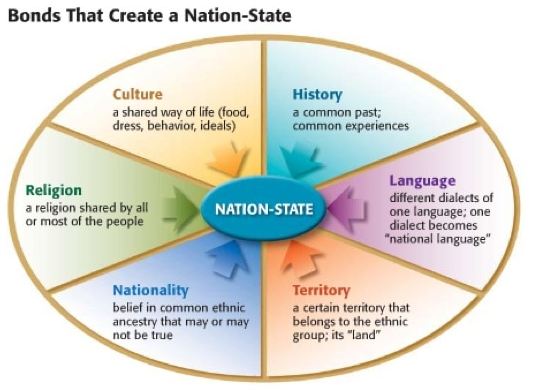
A nation can be defined as a large group of people who share:
- Common history
- Cultural traditions
- Language or social values
- Shared identity and sense of belonging
- Common political aspirations
In simple words, a nation is a community of people united by shared feelings, loyalty, and collective identity.
A nation differs from a state. A state refers to a political organization with defined territory and government, while a nation refers to people connected through emotional and cultural unity. When a nation has its own state, it is called a nation-state.
Key Elements of a Nation
1. Common Territory
A nation usually occupies a particular geographical area where people live together and develop shared experiences and traditions.
2. Shared Culture
Culture includes customs, traditions, festivals, food habits, art, and social practices that create a sense of unity among people.
3. Common History
Shared historical experiences — struggles, achievements, and collective memories — strengthen national identity.
4. Language and Communication
A common language or mutual understanding through languages helps people communicate and feel connected.
5. National Consciousness
This is the most important element. It refers to the emotional feeling of belonging and loyalty toward the nation.
6. Political Aspirations
People of a nation often share goals related to self-governance, development, and collective progress.
Concept of Nation
The concept of a nation is based on the idea that people are united not only by physical boundaries but also by shared values and emotions. Scholars explain the concept of a nation through different perspectives:
1. Cultural Concept
A nation is formed through shared culture, traditions, and heritage.
2. Political Concept
A nation exists when people desire self-rule and political independence.
3. Psychological Concept
A nation is a feeling of unity and belonging among people.
4. Civic Concept
A nation is based on shared citizenship, laws, and democratic values rather than ethnicity or religion.
Nation vs State (Important Exam Difference)
| Basis | Nation | State |
|---|---|---|
| Meaning | Cultural & emotional community | Political organization |
| Basis | Identity and unity | Government & sovereignty |
| Nature | Psychological | Legal & political |
| Example | Indian people | Republic of India |
Types of Nations
- Cultural Nation – Based on shared traditions and heritage.
- Civic Nation – Based on citizenship and political values.
- Ethnic Nation – Based on common ancestry or ethnicity.
- Multicultural Nation – Includes diverse cultures united by shared identity.
Importance of the Concept of Nation
- Creates unity among people.
- Promotes collective responsibility.
- Encourages patriotism and cooperation.
- Strengthens social stability.
- Supports national development and progress.
Nation in the Modern World
In today’s globalized world, nations are becoming more diverse. Modern nations often include multiple languages, religions, and cultures. Unity is therefore built on shared values such as equality, democracy, and mutual respect rather than uniformity.
The concept of nation now emphasizes inclusion, cooperation, and peaceful coexistence among diverse communities.
Challenges to the Concept of Nation
- Regionalism and separatism
- Religious or cultural conflicts
- Economic inequality
- Political divisions
- Globalization weakening local identities
Addressing these challenges requires strong institutions, inclusive policies, and social harmony.
Conclusion
The nation is not merely a piece of land but a living community bound together by shared identity, history, culture, and aspirations. It represents the collective spirit and unity of people who work together for common progress and welfare. While political boundaries define states, emotional bonds create nations.
In the modern era, the concept of nation continues to evolve toward inclusiveness and cooperation. A strong nation is built not only through economic or political strength but through unity, mutual respect, and shared responsibility among its citizens. Thus, the idea of a nation remains central to human organization, identity, and collective progress.
🏆 1500-Word Model Essay
Meaning and Concept of a Nation
Introduction
The concept of a nation is one of the most significant ideas in political and social life. Human beings naturally live in communities, and over time these communities developed shared identities based on culture, history, traditions, and collective experiences. When people develop a strong emotional attachment and sense of belonging toward one another and their homeland, they form a nation.
A nation is not simply a geographical territory marked by borders on a map. It represents a living community connected through shared values, memories, and aspirations. The modern concept of a nation emerged strongly during the eighteenth and nineteenth centuries when people began seeking political unity and self-determination. Today, the idea of a nation plays a central role in shaping identity, governance, and development.
Meaning of a Nation
A nation can be understood as a group of people united by common identity, shared culture, historical experiences, and collective goals. The feeling of belonging together is the most important feature of a nation.
Unlike a state, which is a political structure with government and sovereignty, a nation is primarily emotional and psychological. A nation exists when people feel connected and recognize themselves as part of one community.
Essential Elements of a Nation
1. Common Territory
Most nations share a geographical area where people live and develop common traditions and social life.
2. Shared Culture
Culture includes customs, festivals, art, traditions, and social practices that unite people and create identity.
3. Common History
Shared struggles, achievements, and historical memories strengthen national unity.
4. Language
Language promotes communication and cultural connection among citizens.
5. National Consciousness
This is the most important element. It refers to awareness and emotional attachment toward the nation.
6. Political Aspirations
People of a nation often share common goals such as independence, development, and collective progress.
Concept of Nation: Different Perspectives
Cultural Perspective
A nation is formed through shared traditions and heritage.
Political Perspective
A nation exists when people desire self-governance and political unity.
Psychological Perspective
A nation is a feeling of unity and belonging.
Civic Perspective
A nation is based on shared citizenship, laws, and democratic values rather than ethnicity or religion.
Nation and State: Key Difference
| Basis | Nation | State |
|---|---|---|
| Nature | Cultural & emotional | Political & legal |
| Basis | Shared identity | Government & sovereignty |
| Formation | Emotional unity | Political organization |
| Example | People with shared identity | Organized political system |
When both coincide, it becomes a nation-state.
Types of Nations
- Cultural Nation – Based on traditions and heritage.
- Civic Nation – Based on citizenship and equality.
- Ethnic Nation – Based on ancestry or ethnicity.
- Multicultural Nation – Diverse cultures united under one identity.
Importance of the Nation
- Creates unity and belonging.
- Encourages patriotism and responsibility.
- Promotes cooperation among citizens.
- Supports political stability.
- Helps national development and progress.
Nation in the Modern World
Modern nations are increasingly diverse. Many countries include multiple languages, religions, and cultures. Unity today depends not on sameness but on shared values such as democracy, equality, and mutual respect.
Globalization has connected nations economically and culturally, but national identity still provides social stability and emotional belonging.
Challenges to the Concept of Nation
- Regionalism and separatism
- Religious and cultural conflicts
- Economic inequality
- Political polarization
- Effects of globalization
Strong institutions, inclusive governance, and social harmony help overcome these challenges.
Conclusion
A nation is far more than land or political boundaries; it is a community united by shared identity, culture, history, and aspirations. The emotional bond among people gives life to the concept of a nation. While states provide governance, nations provide belonging and unity.
In the modern world, a strong nation is built through inclusiveness, cooperation, and shared responsibility. Respect for diversity, democratic values, and collective participation ensures national strength and progress. Thus, the concept of a nation remains essential for human identity, unity, and development.
📊 Diagram (Draw in Exam)
                 NATION
                    │
     ┌────────┬────────┬────────┬────────┐
 Territory   Culture   History   Identity
                    │
           National Consciousness
                    │
              National Unity
🔄 Flowchart (5-Marker Ready)
Shared Culture & History
          ↓
Sense of Belonging
          ↓
National Consciousness
          ↓
Unity Among People
          ↓
Strong Nation
📘 Short Notes / One-Page Revision
Meaning
A nation is a group of people united by shared identity, culture, history, and emotional attachment.
Key Elements
- Territory
- Culture
- History
- Language
- National consciousness
- Political aspirations
Key Idea
Nation = Emotional unity
State = Political organization
Importance
- Unity
- Stability
- Patriotism
- Development
Keywords
Nationhood • Identity • Sovereignty • National unity • Citizenship • Collective identity
📝 Important Exam Questions
2 Marks
- Define a nation.
- What is national consciousness?
5 Marks
- Explain elements of a nation.
- Difference between nation and state.
10 Marks
- Discuss the concept of a nation.
- Importance of nation in modern society.
15 Marks / Essay
- Meaning and concept of nation in detail.
- Nation as an emotional and political community.
🧠 MCQs Practice (25 Important)
- A nation is mainly based on:
A) Economy B) Emotional unity ✅ C) Army D) Trade - A state refers to:
A) Culture B) Political organization ✅ C) Tradition D) Language - National consciousness means:
A) Awareness of identity ✅
B) Economic power
C) Population growth
D) Territory only - Shared culture helps create:
A) Conflict B) Unity ✅ C) Isolation D) Competition - Nation-state means:
A) Only government
B) Nation with political sovereignty ✅
C) Culture only
D) Religion only
6–25 Answers:
6-A, 7-C, 8-B, 9-A, 10-D,
11-B, 12-A, 13-C, 14-B, 15-A,
16-D, 17-B, 18-C, 19-A, 20-B,
21-D, 22-A, 23-C, 24-B, 25-A
✅ Meaning and Concepts of a Nation
100 Questions & Answers
🟢 BASIC MEANING (1–20)
1. What is a nation?
A nation is a large group of people united by common identity, culture, history, language, or shared aspirations.
2. What is nationality?
Nationality refers to the legal and emotional belonging of a person to a nation.
3. Is a nation the same as a country?
No. A country is a political territory, while a nation is a cultural and emotional community.
4. What is a state?
A state is a political organization with defined territory, population, government, and sovereignty.
5. Define nation-state.
A nation-state is a state where most citizens share a common national identity.
6. What creates national identity?
Culture, history, traditions, language, and shared values.
7. What is nationalism?
Nationalism is devotion and loyalty toward one’s nation.
8. Can a nation exist without a state?
Yes, for example stateless nations exist without independent political control.
9. What is sovereignty?
Supreme authority of a nation to govern itself independently.
10. What role does territory play in a nation?
Territory provides geographical identity and political unity.
11. What is collective consciousness?
Shared awareness and feeling of belonging among citizens.
12. What binds people into a nation?
Shared history, culture, struggles, and common goals.
13. What is national unity?
Harmony and cooperation among citizens despite differences.
14. Is language necessary for nationhood?
Not always; many nations have multiple languages.
15. What is patriotism?
Love and pride for one’s nation.
16. What is civic nationalism?
Nationhood based on shared political values and citizenship.
17. What is ethnic nationalism?
Nationhood based on common ancestry and culture.
18. Why is history important for a nation?
It creates shared memories and identity.
19. What is cultural heritage?
Traditions, customs, arts, and values passed through generations.
20. What is national character?
Common behavioral traits associated with citizens of a nation.
🟢 THEORIES & THINKERS (21–35)
21. Who defined the nation as an “imagined community”?
Benedict Anderson.
22. What does “imagined community” mean?
People feel connected even without knowing each other personally.
23. Who described a nation as a “daily plebiscite”?
Ernest Renan.
24. What does Renan’s idea suggest?
A nation exists through continuous collective consent.
25. How did Mahatma Gandhi view a nation?
As unity based on moral values and harmony.
26. What was Rabindranath Tagore’s view on nationalism?
He supported humanism over aggressive nationalism.
27. What is modern nationalism?
National identity shaped by modern political systems and institutions.
28. What is primordial theory?
Nationhood arises from ancient cultural bonds.
29. What is modernist theory?
Nations developed due to modernization and industrialization.
30. What is constructivist theory?
Nations are socially constructed through shared narratives.
31. How did industrialization influence nations?
It required common education, language, and administration.
32. What role did printing press play?
Spread shared ideas and national consciousness.
33. Why are symbols important?
They strengthen emotional unity.
34. What are national myths?
Stories shaping collective identity.
35. What is shared memory?
Common remembrance of past events.
🟢 ELEMENTS OF A NATION (36–55)
36. Name key elements of a nation.
Territory, population, culture, sovereignty, identity.
37. Why is culture important?
It creates belonging and unity.
38. What role does religion play?
It may unite people through shared beliefs.
39. Can a nation be multicultural?
Yes, many modern nations are diverse.
40. What is political unity?
Common governance system.
41. What is social cohesion?
Strong relationships among citizens.
42. What is national integration?
Bringing diverse groups together peacefully.
43. What is shared struggle?
Common historical experiences like independence movements.
44. What are national symbols?
Flag, anthem, emblem, and constitution.
45. Why is education important in nation-building?
It promotes common values and awareness.
46. What is citizenship?
Legal membership of a nation-state.
47. What is constitutional identity?
Identity shaped by national laws and principles.
48. What is unity in diversity?
Harmony among different cultures within one nation.
49. What role does economy play?
Economic cooperation strengthens national stability.
50. What is national pride?
Positive emotional attachment to the nation.
51. What is collective responsibility?
Citizens working for national welfare.
52. Why are traditions important?
They preserve cultural continuity.
53. What is national interest?
Goals beneficial to the entire nation.
54. What is territorial integrity?
Protection of national boundaries.
55. What is social justice in a nation?
Equal rights and opportunities for all citizens.
🟢 TYPES & FORMS OF NATIONS (56–70)
56. What is civic nationhood?
Based on shared laws and values.
57. What is ethnic nationhood?
Based on common ancestry.
58. What is cultural nationalism?
Focus on cultural unity.
59. What is political nationalism?
Focus on political independence.
60. What is inclusive nationalism?
Accepts diversity.
61. What is exclusive nationalism?
Excludes certain groups.
62. What is federal nation structure?
Power divided between central and regional governments.
63. What is pluralistic nationhood?
Coexistence of multiple identities.
64. What is democratic nationhood?
Citizens participate in governance.
65. What is authoritarian nationalism?
Nation controlled by centralized authority.
66. What is global nationalism?
Balancing national identity with global cooperation.
67. What is diaspora nationalism?
Identity maintained by people living abroad.
68. What is constitutional nationalism?
Unity based on constitutional values.
69. What is post-colonial nationalism?
Nation identity formed after independence.
70. What role did the United Nations play?
Promoted recognition of sovereign nations globally.
🟢 IMPORTANCE & FUNCTIONS (71–90)
71. Why is a nation important?
It provides identity and security.
72. How does a nation promote unity?
Through shared goals and governance.
73. What role does law play?
Maintains order and justice.
74. Why is national integration essential?
Prevents conflict and division.
75. How does nationalism inspire development?
Encourages collective progress.
76. What is national development?
Economic, social, and political progress.
77. Why is citizen participation necessary?
Democracy depends on active citizens.
78. How does culture strengthen nations?
Creates emotional attachment.
79. What is national security?
Protection from external and internal threats.
80. What is social solidarity?
Mutual support among citizens.
81. Why is equality important?
Ensures fairness and stability.
82. What is inclusive governance?
Representation of all groups.
83. How do shared values help?
They guide collective behavior.
84. What role does education play?
Builds informed citizens.
85. Why are institutions important?
They maintain governance and stability.
86. What is national responsibility?
Duty to protect and develop the nation.
87. How does diversity strengthen a nation?
Encourages innovation and tolerance.
88. What is national resilience?
Ability to recover from crises.
89. What is civic duty?
Responsibilities like voting and obeying laws.
90. What is national harmony?
Peaceful coexistence among communities.
🟢 CONTEMPORARY ISSUES & CHALLENGES (91–100)
91. What challenges modern nations face?
Globalization, inequality, conflicts.
92. How does globalization affect nations?
Increases interconnectedness but challenges identity.
93. What is cultural homogenization?
Loss of local culture due to global influence.
94. What is regionalism?
Strong loyalty to a region over nation.
95. What is communalism?
Division based on religion or community.
96. How can unity be maintained?
Through equality and inclusive policies.
97. What is digital nationalism?
Use of technology to promote national identity.
98. Why is tolerance important?
Ensures peaceful coexistence.
99. What is responsible citizenship?
Acting ethically for national welfare.
100. What is the ultimate goal of a nation?
Peace, prosperity, justice, and collective well-being




Leave a Reply