


Meta Description
Morphology of the Plant Class 11 Biology NCERT notes with summary, keywords, MCQs, questions & answers for board and competitive exams.
Introduction of the Chapter: Morphology of the Plant
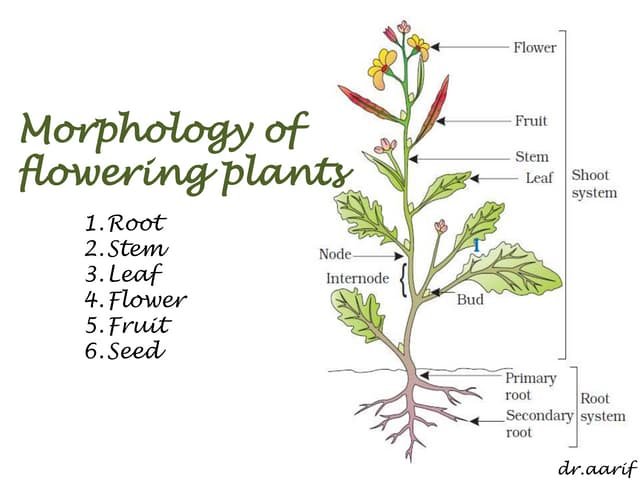
The chapter Morphology of the Plant from Class 11 Biology NCERT deals with the study of the external structure and form of flowering plants. Morphology refers to the study of the shape, size, structure, and arrangement of different parts of a plant such as root, stem, leaf, flower, fruit, and seed.
Understanding Morphology of the Plant is extremely important for students preparing for CBSE board exams, NEET, CUET, and other competitive examinations, as many direct and indirect questions are framed from this chapter. This chapter helps students identify plants, understand their adaptations, and classify them based on observable characters.
The chapter Morphology of the Plant also builds a strong foundation for advanced topics like plant anatomy, taxonomy, and physiology. NCERT gives special emphasis on definitions, modifications, diagrams, and examples, making this chapter scoring as well as concept-oriented.
Short Notes on Morphology of the Plant
•Morphology of the Plant studies the external features of plants.
•Root, stem, leaf, flower, fruit, and seed are major plant organs.
•Roots may be tap root, fibrous root, or adventitious root.
•Stems show modifications like tuber, rhizome, tendril, thorn.
•Leaves perform photosynthesis and transpiration.
•Flowers are reproductive organs of angiosperms.
•Fruits develop from ovary after fertilization.
•Seeds contain embryo and stored food.
•A flower can be complete or incomplete.
•Inflorescence is the arrangement of flowers on a stem.
Detailed Summary of Morphology of the Plant (800–1000 Words)
The chapter Morphology of the Plant explains the structure and appearance of different plant parts. Each plant organ performs specific functions essential for growth, reproduction, and survival.
Root
The root is usually an underground part of the plant that develops from the radicle of the embryo. Roots anchor the plant in the soil, absorb water and minerals, and sometimes store food.
Types of Root Systems:
•Tap root system: Found in dicots like mustard and gram.
•Fibrous root system: Found in monocots like wheat and rice.
•Adventitious roots: Arise from stem or leaf, seen in banyan.
Root Modifications:
•Storage roots (carrot, radish)
•Respiratory roots (pneumatophores in mangroves)
•Prop roots (banyan)
Stem
The stem develops from the plumule and bears branches, leaves, flowers, and fruits. It conducts water and nutrients.
Functions of Stem:
•Supports aerial parts
•Transports water and food
•Sometimes stores food
Stem Modifications:
•Underground stems: rhizome (ginger), tuber (potato)
•Aerial stems: tendrils (grapevine), thorns (bougainvillea)
•Sub-aerial stems: runner, stolon
Leaf
Leaves arise from nodes of the stem and are the main organs of photosynthesis.
•Leaf base
Petiole
Lamina
•Types of Leaves:
Simple leaf
Compound leaf
Leaf Modifications:
•Tendrils (pea)
•Spines (cactus)
•Storage leaves (onion)
Inflorescence
Inflorescence is the arrangement of flowers on the floral axis.
Types:
•Racemose
•Cymose
•Flower
Flower is the reproductive organ of angiosperms.
Parts of Flower:
•Calyx
•Corolla
•Androecium
•Gynoecium
Flowers may be:
•Complete or incomplete
•Bisexual or unisexual
•Actinomorphic or zygomorphic
Fruit
Fruit develops from the ovary after fertilization. It protects seeds.
Types of Fruits:
Types of Fruits:
•Simple fruit
•Aggregate fruit
•Multiple fruit
Seed
Morphology of the Plant
→ Vegetative Organs
→ Root → Types → Modifications
→ Stem → Types → Modifications
→ Leaf → Types → Modifications
→ Reproductive Organs
→ Flower → Parts → Types
→ Fruit → Types
→ Seed → Monocot / Dicot
Important Keywords with Meanings
1.Morphology – Study of external plant structure
2.Tap root – Main root system in dicots
3.Fibrous root – Cluster of roots in monocots
4.Adventitious root – Roots from non-radicle parts
5.Rhizome – Underground stem
6.Tendril – Slender climbing structure
7.Lamina – Broad part of leaf
8.Inflorescence – Arrangement of flowers
9.Androecium – Male reproductive part
10.Gynoecium – Female reproductive part
Short Answer Questions :-
1.What is morphology of the plant?
Morphology of the plant is the branch of botany that deals with the study of the external structure, form, and appearance of different plant parts such as root, stem, leaf, flower, fruit, and seed.
- Define tap root system.
The tap root system is a root system in which a primary root develops from the radicle and gives rise to secondary and tertiary roots. It is commonly found in dicot plants like mustard and gram. - What are adventitious roots?
Adventitious roots are roots that arise from parts of the plant other than the radicle, such as stem or leaves. Example: prop roots of banyan.
- Name any two modifications of stem.
Two modifications of stem are:
•Tuber (potato) – for storage of food
•Tendril (grapevine) – for climbing
- What is lamina?
Lamina is the flat, green, expanded part of a leaf that carries out photosynthesis and transpiration. - Define inflorescence.
Inflorescence is the arrangement of flowers on the floral axis or peduncle of a plant. - What is a complete flower?
A complete flower is one that possesses all four floral whorls: calyx, corolla, androecium, and gynoecium. - What is a fruit?
A fruit is a ripened ovary formed after fertilization, which contains seeds and helps in their protection and dispersal. - Define seed.
A seed is a fertilized ovule containing an embryo, reserve food, and a protective seed coat.
- Name the four parts of a flower.
The four parts of a flower are:
Calyx
Corolla
Androecium
Gynoecium
Stem modifications help plants in storage, support, protection, and vegetative propagation.
Long Answer Questions –
Below are clear, exam-oriented answers for the Short Answer Questions (10) and Long Answer Questions (10) from Class 11 Biology – Morphology of the Plant (NCERT).
Language is simple and suitable for CBSE, NEET, CUET, and school exams.
Short Answer Questions – Answers (2–3 Marks Each)
1. What is morphology of the plant?
Morphology of the plant is the branch of botany that deals with the study of the external structure, form, and appearance of different plant parts such as root, stem, leaf, flower, fruit, and seed.
2. Define tap root system.
The tap root system is a root system in which a primary root develops from the radicle and gives rise to secondary and tertiary roots. It is commonly found in dicot plants like mustard and gram.
3. What are adventitious roots?
Adventitious roots are roots that arise from parts of the plant other than the radicle, such as stem or leaves. Example: prop roots of banyan.
4. Name any two modifications of stem.
Two modifications of stem are:
- Tuber (potato) – for storage of food
- Tendril (grapevine) – for climbing
5. What is lamina?
Lamina is the flat, green, expanded part of a leaf that carries out photosynthesis and transpiration.
6. Define inflorescence.
Inflorescence is the arrangement of flowers on the floral axis or peduncle of a plant.
7. What is a complete flower?
A complete flower is one that possesses all four floral whorls: calyx, corolla, androecium, and gynoecium.
8. What is a fruit?
A fruit is a ripened ovary formed after fertilization, which contains seeds and helps in their protection and dispersal.
9. Define seed.
A seed is a fertilized ovule containing an embryo, reserve food, and a protective seed coat.
10. Name the four parts of a flower.
The four parts of a flower are:
- Calyx
- Corolla
- Androecium
- Gynoecium
Long Answer Questions – Answers (5–8 Marks Each)
1. Describe the different types of roots with examples.
Roots are underground parts of plants that absorb water and minerals.
Types of Root Systems:
- Tap Root System:
- Develops from radicle
- Has a main root with branches
- Found in dicots
- Example: mustard, pea
- Fibrous Root System:
- No main root
- Cluster of thin roots
- Found in monocots
- Example: wheat, rice
- Adventitious Roots:
- Arise from stem or leaves
- Example: banyan, maize
2. Explain the modifications of stem.
Stem modifications help plants in storage, support, protection, and vegetative propagation.
Types:
- Underground stems: rhizome (ginger), tuber (potato)
- Sub-aerial stems: runner (grass), stolon
- Aerial stems: tendrils (grapevine), thorns (bougainvillea)
3. Describe the structure of a leaf.
A typical leaf consists of three parts:
- Leaf base: attaches leaf to stem
- Petiole: stalk of the leaf
- Lamina: broad green part responsible for photosynthesis
Leaves may be simple or compound and show venation patterns.
4. Explain different types of inflorescence.
- Racemose Inflorescence:
- Main axis continues to grow
- Flowers develop in acropetal order
- Example: mustard
- Cymose Inflorescence:
- Main axis ends in flower
- Flowers develop in basipetal order
- Example: jasmine
5. Describe the structure of a flower.
A flower consists of four whorls:
- Calyx: protects flower in bud stage
- Corolla: attracts insects
- Androecium: male reproductive part
- Gynoecium: female reproductive part
6. Explain different types of fruits.
- Simple Fruit: develops from single ovary
- Aggregate Fruit: develops from multicarpellary apocarpous ovary
- Multiple Fruit: develops from entire inflorescence
Example: pineapple
7. Describe dicot and monocot seeds.
Dicot Seed:
- Two cotyledons
- Example: gram
Monocot Seed:
- One cotyledon
- Endosperm present
- Example: maize
8. Explain modifications of leaves.
Leaf modifications help in climbing, protection, and storage.
- Tendrils: pea
- Spines: cactus
- Storage leaves: onion
9. Describe different modifications of roots.
- Storage roots: carrot
- Respiratory roots: mangroves
- Prop roots: banyan
These modifications help plants adapt to their environment.
10. Explain the importance of morphology of the plant.
The study of morphology of the plant is important for:
- Plant identification
- Classification
- Understanding adaptations
- Agricultural practices
- Scoring well in exams
Below are 10 Value-Based Questions with Answers from Class 11 Biology – Morphology of the Plant (NCERT).
These are framed as per CBSE exam pattern, focusing on values, awareness, application, and scientific attitude.
Each answer is written in simple, scoring language.
Value-Based Questions: Morphology of the Plant
1. A farmer observes that mangrove plants have special roots growing above the soil. What value does this reflect and why are these roots important?
Answer:
This reflects the value of scientific awareness and environmental adaptation. These roots, called pneumatophores, help the plant breathe in oxygen-deficient, waterlogged soil. Understanding such adaptations helps in conserving mangrove ecosystems.
2. A student notices that potato is a stem and not a root. What scientific value does this observation show?
Answer:
This shows keen observation and scientific thinking. Potato has nodes and internodes, proving it is a stem. Such understanding helps students correctly identify plant parts based on morphology.
3. Why should students learn about modifications of roots and stems? What value does this knowledge promote?
Answer:
Learning about modifications promotes curiosity and practical knowledge. It helps students understand how plants adapt for storage, support, and survival, encouraging respect for plant diversity.
4. A gardener trims excess leaves from a plant to improve growth. How does the knowledge of leaf morphology support this action?
Answer:
This reflects application of scientific knowledge. Leaves perform photosynthesis, but excess leaves increase water loss. Proper trimming maintains balance and promotes healthy growth.
5. Why is the study of flower structure important for students interested in agriculture and medicine?
Answer:
This reflects career awareness and responsibility. Knowledge of flower morphology helps in plant breeding, crop improvement, and identification of medicinal plants.
6. A student carefully labels diagrams of flowers and roots in an exam. What academic values does this show?
Answer:
It shows discipline, clarity, and precision. Proper diagrams reflect clear understanding and improve communication of scientific concepts.
7. How does learning about seed structure promote environmental responsibility?
Answer:
Understanding seed structure promotes environmental awareness. Seeds help in plant reproduction and biodiversity conservation. This knowledge encourages tree plantation and sustainable practices.
8. Why is morphology of the plant important in identifying plants in daily life? What value does it add?
Answer:
It adds the value of practical life skills. Knowledge of morphology helps identify edible, medicinal, and harmful plants, ensuring safety and informed decision-making.
9. A teacher emphasizes NCERT terminology while teaching morphology of the plant. What educational value does this highlight?
Answer:
This highlights the value of accuracy and standardization in learning. Correct terminology ensures conceptual clarity and better performance in exams.
10. How does studying morphology of the plant develop respect for nature among students?
Answer:
It develops respect for nature and biodiversity. Understanding how different plant parts function and adapt encourages students to protect plants and the environment.
Conclusion
The chapter Morphology of the Plant is one of the most fundamental and scoring chapters of Class 11 Biology NCERT. It introduces students to the basic structure of flowering plants and helps them understand how different plant organs are adapted to perform specific functions.
A strong understanding of Morphology of the Plant is essential not only for school examinations but also for competitive exams like NEET and CUET. Questions from this chapter are often direct and concept-based, making it highly beneficial for students to revise definitions, diagrams, and examples thoroughly.
The chapter explains how roots absorb water and minerals, how stems support and transport materials, how leaves manufacture food, and how flowers ensure reproduction. The study of Morphology of the Plant also helps in plant identification and classification, which is the base of taxonomy.
For best exam performance, students should focus on:
Clear definitions
Diagrams of root, stem, leaf, and flower
Examples of modifications
Differences between monocot and dicot plants
In conclusion, Morphology of the Plant builds a solid foundation for higher studies in botany and life sciences. With proper notes, MCQs, and practice questions, this chapter can easily become a high-scoring unit for every biology student.
MCQs: Morphology of the Plant
1. Morphology of the plant deals with the study of:
A. Internal structure of plants
B. External form and structure of plants
C. Physiological processes
D. Genetic makeup
Answer: B
2. Tap root system is commonly found in:
A. Monocot plants
B. Dicot plants
C. Algae
D. Bryophytes
Answer: B
3. Fibrous root system is characteristic of:
A. Mustard
B. Pea
C. Wheat
D. Gram
Answer: C
4. Roots arising from stem or leaves are called:
A. Tap roots
B. Lateral roots
C. Fibrous roots
D. Adventitious roots
Answer: D
5. Carrot is an example of:
A. Stem modification
B. Leaf modification
C. Storage root
D. Fibrous root
Answer: C
6. Potato is a modification of:
A. Root
B. Stem
C. Leaf
D. Fruit
Answer: B
7. Ginger is an example of:
A. Tuber
B. Bulb
C. Rhizome
D. Corm
Answer: C
8. Which stem modification helps in climbing?
A. Thorn
B. Tendril
C. Tuber
D. Rhizome
Answer: B
9. The broad, green part of the leaf is called:
A. Petiole
B. Lamina
C. Leaf base
D. Midrib
Answer: B
10. Photosynthesis mainly occurs in:
A. Stem
B. Root
C. Flower
D. Leaf
Answer: D
11. Neem leaf is a:
A. Simple leaf
B. Compound leaf
C. Scale leaf
D. Needle leaf
Answer: B
12. Arrangement of flowers on a stem is called:
A. Venation
B. Phyllotaxy
C. Inflorescence
D. Placentation
Answer: C
13. In racemose inflorescence, flowers show:
A. Basipetal succession
B. Acropetal succession
C. Random order
D. Centrifugal order
Answer: B
14. Male reproductive part of a flower is:
A. Calyx
B. Corolla
C. Androecium
D. Gynoecium
Answer: C
15. Female reproductive part of a flower is:
A. Stamen
B. Anther
C. Pistil
D. Filament
Answer: C
16. Fruit develops from:
A. Ovule
B. Ovary
C. Seed
D. Embryo
Answer: B
17. Multiple fruits develop from:
A. Single ovary
B. Single flower
C. Entire inflorescence
D. Ovule
Answer: C
18. A seed having two cotyledons is called:
A. Monocot seed
B. Dicot seed
C. Endospermic seed
D. Albuminous seed
Answer: B
19. Seed coat is formed from:
A. Ovary wall
B. Endosperm
C. Integuments
D. Cotyledons
Answer: C
20. Pneumatophores are characteristic of:
A. Desert plants
B. Aquatic plants
C. Mangrove plants
D. Epiphytes
Answer: C
Assertion–Reason Questions
Directions:
Each question consists of two statements:
- Assertion (A)
- Reason (R)
Choose the correct option:
a) Both A and R are true and R is the correct explanation of A
b) Both A and R are true but R is not the correct explanation of A
c) A is true but R is false
d) A is false but R is true
1.
Assertion (A): Potato is considered a stem modification.
Reason (R): Potato possesses nodes and internodes.
Correct Answer: a)
2.
Assertion (A): Tap root system is found in dicot plants.
Reason (R): Tap roots develop from the radicle of the embryo.
Correct Answer: a)
3.
Assertion (A): Leaves are the main organs of photosynthesis.
Reason (R): Leaves contain chlorophyll in their lamina.
Correct Answer: a)
4.
Assertion (A): Pneumatophores are found in mangrove plants.
Reason (R): Mangrove plants grow in waterlogged, oxygen-deficient soil.
Correct Answer: a)
5.
Assertion (A): Racemose inflorescence shows acropetal succession of flowers.
Reason (R): In racemose inflorescence, the main axis continues to grow.
Correct Answer: a)
Exam Tip
In assertion–reason questions, always:
- Check both statements separately
- Then see if the reason explains the assertion
Sample Question Paper
Class: XI | Subject: Biology
Chapter: Morphology of the Plant
Time: 3 Hours
Maximum Marks: 70
General Instructions:
- All questions are compulsory.
- The question paper consists of 4 Sections A, B, C, and D.
- Draw neat and labelled diagrams wherever required.
- Use proper biological terminology.
Section A – MCQs (1 × 15 = 15 Marks)
Choose the correct option:
- Tap root system is found in:
a) Rice
b) Wheat
c) Mustard
d) Maize - Fibrous roots are characteristic of:
a) Dicot plants
b) Gymnosperms
c) Monocot plants
d) Bryophytes - Potato is a modification of:
a) Root
b) Stem
c) Leaf
d) Fruit - The edible part of carrot is:
a) Stem
b) Leaf
c) Root
d) Flower - Tendrils help the plant in:
a) Storage
b) Photosynthesis
c) Climbing
d) Respiration - Which part of the leaf performs photosynthesis?
a) Petiole
b) Leaf base
c) Lamina
d) Vein - Racemose inflorescence shows:
a) Basipetal succession
b) Acropetal succession
c) Random arrangement
d) Cyclic arrangement - Androecium represents:
a) Calyx
b) Corolla
c) Male reproductive part
d) Female reproductive part - Gynoecium consists of:
a) Sepals
b) Petals
c) Stamens
d) Carpels - Fruit develops from:
a) Ovule
b) Ovary
c) Seed
d) Embryo - Pneumatophores are found in:
a) Desert plants
b) Aquatic plants
c) Mangrove plants
d) Epiphytes - Which of the following is a compound leaf?
a) Mango
b) Peepal
c) Neem
d) Banyan - Onion is an example of:
a) Stem tuber
b) Rhizome
c) Storage leaf
d) Corm - A complete flower has:
a) Only calyx and corolla
b) Only androecium
c) All four whorls
d) Only gynoecium - Seed coat is derived from:
a) Ovary wall
b) Integuments
c) Endosperm
d) Cotyledons
Section B – Very Short Answer (2 × 10 = 20 Marks)
Answer any 10 questions:
- Define morphology of the plant.
- What is a tap root?
- Define adventitious roots.
- What is inflorescence?
- What is lamina?
- Name two underground stem modifications.
- What is a bisexual flower?
- Define fruit.
- What is a seed?
- Name any two leaf modifications.
- What are prop roots?
- Define fibrous root system.
Section C – Short Answer (3 × 7 = 21 Marks)
Answer any 7 questions:
- Explain tap root system with example.
- Describe any three functions of stem.
- Write differences between simple and compound leaves.
- Explain racemose inflorescence.
- Describe structure of a typical flower.
- Explain modifications of roots for storage.
- Write differences between dicot and monocot seeds.
- Describe venation in leaves.
Section D – Long Answer (5 × 3 = 15 Marks)
Answer any 3 questions:
- Describe different types of roots with examples.
- Explain various modifications of stem with suitable examples.
- Describe the structure of a dicot seed with labelled diagram.
- Explain different types of fruits.
- Write the importance of morphology of the plant.
End of Question Paper
Below is the complete, exam-oriented solution / answer key of the Sample Question Paper for
Class 11 Biology – Morphology of the Plant (NCERT).
Answers are written in simple NCERT language, suitable for self-evaluation, teachers, and revision.
Solution of Sample Question Paper
Chapter: Morphology of the Plant
Section A – MCQs (15 Marks)
- c) Mustard
- c) Monocot plants
- b) Stem
- c) Root
- c) Climbing
- c) Lamina
- b) Acropetal succession
- c) Male reproductive part
- d) Carpels
- b) Ovary
- c) Mangrove plants
- c) Neem
- c) Storage leaf
- c) All four whorls
- b) Integuments
Section B – Very Short Answer (2 Marks each)
1. Define morphology of the plant.
Morphology of the plant is the study of the external form, structure, and appearance of different plant parts.
2. What is a tap root?
A tap root is the primary root developing from the radicle, having lateral branches, found in dicots.
3. Define adventitious roots.
Roots arising from stem, leaf, or any part other than radicle are called adventitious roots.
4. What is inflorescence?
Inflorescence is the arrangement of flowers on the floral axis.
5. What is lamina?
Lamina is the broad, flat, green part of a leaf responsible for photosynthesis.
6. Name two underground stem modifications.
- Potato (tuber)
- Ginger (rhizome)
7. What is a bisexual flower?
A flower having both male and female reproductive organs is called bisexual.
8. Define fruit.
A fruit is a ripened ovary formed after fertilization, containing seeds.
9. What is a seed?
A seed is a fertilized ovule containing an embryo and reserve food.
10. Name any two leaf modifications.
- Tendril (pea)
- Spine (cactus)
11. What are prop roots?
Prop roots are adventitious roots arising from branches to provide support, as in banyan.
12. Define fibrous root system.
A fibrous root system consists of many thin roots of equal size arising from the base of the stem.
Section C – Short Answer (3 Marks each)
1. Explain tap root system with example.
Tap root system develops from the radicle and has a main root with lateral branches.
Example: mustard, gram.
2. Write any three functions of stem.
- Supports aerial parts
- Conducts water and food
- Bears leaves, flowers, and fruits
3. Differences between simple and compound leaf.
| Simple Leaf | Compound Leaf |
|---|---|
| Single lamina | Divided into leaflets |
| Incision not reaching midrib | Incision reaches midrib |
| Example: Mango | Example: Neem |
4. Explain racemose inflorescence.
In racemose inflorescence, the main axis continues to grow, and flowers are arranged in acropetal order.
5. Describe structure of a typical flower.
A flower has four whorls:
- Calyx
- Corolla
- Androecium
- Gynoecium
6. Explain storage root modifications.
Roots modify to store food, become swollen and fleshy.
Example: carrot, radish.
7. Differences between dicot and monocot seeds.
| Dicot Seed | Monocot Seed |
|---|---|
| Two cotyledons | One cotyledon |
| Endosperm absent | Endosperm present |
| Example: Gram | Example: Maize |
8. Describe venation in leaves.
Venation is the arrangement of veins in lamina.
Types:
- Reticulate
- Parallel
Section D – Long Answer (5 Marks each)
1. Describe different types of roots with examples.
Roots are of three types:
- Tap root (mustard)
- Fibrous root (wheat)
- Adventitious root (banyan)
They help in absorption, anchorage, and storage.
2. Explain modifications of stem with examples.
- Underground stems: potato, ginger
- Sub-aerial stems: runner
- Aerial stems: tendril, thorn
They help in storage, support, and propagation.
3. Describe structure of dicot seed.
A dicot seed has:
- Seed coat
- Two cotyledons
- Embryo with radicle and plumule
Example: gram.
4. Explain different types of fruits.
- Simple fruit
- Aggregate fruit
- Multiple fruit (pineapple)
5. Importance of morphology of the plant.
- Helps in plant identification
- Useful in classification
- Important for agriculture
- Helps understand adaptations
- Important for exams







Leave a Reply