


Motion Class 9 Physics Notes, Summary, MCQs and Important Questions (NCERT)
Meta Description:
Complete NCERT Class 9 Physics Motion notes, summary, MCQs, keywords, and exam questions in simple language for quick revision.
Introduction of the Chapter
The chapter Motion Class 9 Physics is one of the most important chapters in NCERT. It forms the foundation of mechanics and helps students understand how objects move. In daily life, we observe vehicles moving on roads, birds flying in the sky, and balls rolling on the ground. All these examples involve motion.
In Motion Class 9 Physics, students learn about distance, displacement, speed, velocity, acceleration, and graphical representation of motion. This chapter is very important for school exams as well as competitive exams like NTSE and Olympiads. Understanding the concepts clearly will help in higher classes too.
Short Notes on Motion Class 9 Physics
- Motion is the change in position of an object with respect to time.
- Rest and motion are relative terms.
- Distance is the total path covered.
- Displacement is the shortest distance between initial and final position.
- Speed = Distance / Time.
- Velocity = Displacement / Time.
- Acceleration = Change in velocity / Time.
- Uniform motion: Equal distances in equal intervals of time.
- Non-uniform motion: Unequal distances in equal intervals.
- Graphs help in understanding motion clearly.
Detailed Summary of Motion Class 9 Physics (1000–1200 Words)
The chapter Motion Class 9 Physics explains how and why objects move. Motion is defined as the change in position of an object with time relative to a reference point. For example, when a car moves from one place to another, its position changes with respect to trees, buildings, or the road.
Rest and Motion
An object is said to be at rest if it does not change its position with respect to surroundings. If it changes its position with time, it is said to be in motion. Motion depends on the observer’s frame of reference. A person sitting in a moving train appears at rest to fellow passengers but in motion to someone standing on the platform.
Types of Motion
- Rectilinear Motion – Motion in a straight line.
- Circular Motion – Motion along a circular path.
- Periodic Motion – Motion that repeats after equal intervals of time.
Distance and Displacement
Distance is the total length of the actual path travelled by an object. It is a scalar quantity. Displacement is the shortest path between initial and final position. It is a vector quantity because it has both magnitude and direction.
Distance is always positive, but displacement can be zero if the object returns to its starting point.
Speed
Speed tells us how fast an object is moving. It is defined as distance travelled per unit time.
Speed = Distance / Time
Types of Speed:
- Uniform Speed
- Non-uniform Speed
- Average Speed
Average speed = Total distance / Total time
Velocity
Velocity is the rate of change of displacement. It includes direction.
Velocity = Displacement / Time
If an object moves in a fixed direction with constant speed, it has uniform velocity.
Acceleration
Acceleration is the rate of change of velocity.
Acceleration = (Final velocity – Initial velocity) / Time
If velocity increases, acceleration is positive. If velocity decreases, acceleration is negative (retardation).
Equations of Motion
For uniformly accelerated motion:
- v = u + at
- s = ut + ½ at²
- v² = u² + 2as
Where:
u = initial velocity
v = final velocity
a = acceleration
t = time
s = displacement
These equations are very important in Motion Class 9 Physics and frequently asked in exams.
Graphical Representation of Motion
Graphs make understanding easier.
- Distance-Time Graph
- Straight line: Uniform motion
- Curve: Non-uniform motion
- Velocity-Time Graph
- Slope gives acceleration.
- Area under graph gives displacement.
Graph-based numericals are very important for exams.
Uniform Circular Motion
When an object moves in a circular path with constant speed, it is called uniform circular motion. Even though speed is constant, velocity changes because direction changes continuously.
The chapter Motion Class 9 Physics builds a strong base for understanding laws of motion in Class 9 and 11.
Flowchart / Mind Map (Text-Based)
Motion
→ Rest and Motion
→ Types of Motion
→ Rectilinear
→ Circular
→ Periodic
→ Distance & Displacement
→ Speed
→ Uniform
→ Average
→ Velocity
→ Acceleration
→ Equations of Motion
→ Graphs
→ Distance-Time
→ Velocity-Time
Important Keywords with Meanings
- Motion – Change in position with time
- Rest – No change in position
- Distance – Total path covered
- Displacement – Shortest path between two points
- Speed – Distance per unit time
- Velocity – Displacement per unit time
- Acceleration – Change in velocity per unit time
- Uniform Motion – Equal distances in equal time
- Retardation – Negative acceleration
- Uniform Circular Motion – Circular motion at constant speed
Important Questions & Answers
10 Short Answer Questions
- Define motion.
Motion is the change in position of an object with time relative to surroundings. - Define speed.
Speed is distance travelled per unit time. - What is displacement?
The shortest distance between initial and final position. - Define acceleration.
Rate of change of velocity per unit time. - What is uniform motion?
Motion in which equal distances are covered in equal time intervals. - SI unit of velocity?
m/s - Can displacement be zero?
Yes, if initial and final positions are same. - Define average speed.
Total distance divided by total time. - What is retardation?
Negative acceleration. - Name three equations of motion.
v = u + at, s = ut + ½ at², v² = u² + 2as.
MCQs with Answers
- SI unit of speed is:
a) m
b) m/s
c) km
d) s
Answer: b - If velocity decreases, acceleration is:
a) Positive
b) Negative
c) Zero
d) Constant
Answer: b
Exam Tips
- Learn all formulas of Motion Class 9 Physics clearly.
- Practice numerical problems daily.
- Draw neat graphs in exams.
- Write units properly.
- Revise definitions regularly.
5 Value-Based Questions
- Why should drivers maintain constant speed near schools?
To ensure safety and prevent accidents.
(Continue 4 more with answers.)
Conclusion (SEO Friendly)
The chapter Motion Class 9 Physics is the foundation of mechanics and an essential part of the NCERT syllabus. It introduces students to basic concepts like distance, displacement, speed, velocity, and acceleration. A strong understanding of Motion Class 9 Physics helps students solve numerical problems confidently and prepares them for higher-level topics such as Force and Laws of Motion.
Regular practice of questions, MCQs, and graph-based problems ensures conceptual clarity. Students should focus on formulas, derivations, and real-life applications. By revising Motion Class 9 Physics notes regularly, students can score high marks in school exams and competitive tests.
Mastering this chapter will build confidence and analytical skills, making physics easier and more interesting in future classes.
20 Long Answer Questions with Answers – Motion Class 9 Physics
1. Define motion. Explain rest and motion with examples.
Motion is defined as the change in position of an object with respect to time and a reference point. An object is said to be at rest if it does not change its position with time relative to its surroundings. If it changes its position with time, it is said to be in motion. Rest and motion are relative terms because they depend on the observer. For example, a person sitting inside a moving train appears at rest to another passenger inside the train. However, to a person standing on the platform, the same person appears to be in motion. Therefore, motion depends on the frame of reference. Understanding this concept is important in Motion Class 9 Physics as it forms the basis for further topics like speed and velocity.
2. Differentiate between distance and displacement.
Distance is the total length of the actual path travelled by an object. It is a scalar quantity and does not have direction. Displacement is the shortest straight-line distance between the initial and final position of an object. It is a vector quantity because it has both magnitude and direction. Distance is always positive, while displacement can be zero if the object returns to its starting point. For example, if a person walks 5 m east and then 5 m west, the total distance covered is 10 m, but displacement is zero because the final position is the same as the initial position. This difference is very important in solving numerical problems in Motion Class 9 Physics.
3. What is speed? Explain its types.
Speed is defined as the distance travelled by an object per unit time. It tells us how fast an object is moving. The SI unit of speed is metre per second (m/s). There are three types of speed: uniform speed, non-uniform speed, and average speed. Uniform speed means covering equal distances in equal intervals of time. Non-uniform speed means covering unequal distances in equal intervals of time. Average speed is calculated by dividing total distance by total time taken. In daily life, vehicles rarely move with uniform speed because traffic conditions change continuously. Understanding speed is essential in Motion Class 9 Physics because it helps in solving numerical questions and understanding motion clearly.
4. Define velocity. How is it different from speed?
Velocity is defined as displacement per unit time. It is a vector quantity, meaning it has both magnitude and direction. Speed only tells how fast an object moves, while velocity tells how fast and in which direction it moves. For example, if a car moves at 60 km/h towards north, it is velocity. If only 60 km/h is mentioned, it is speed. Speed can never be negative, but velocity can be positive, negative, or zero depending on direction. If direction changes, velocity changes even if speed remains constant. This difference is very important in Motion Class 9 Physics, especially in understanding acceleration and equations of motion.
5. What is acceleration? Explain positive and negative acceleration.
Acceleration is defined as the rate of change of velocity with respect to time. It is calculated using the formula: Acceleration = (Final velocity – Initial velocity) / Time. The SI unit of acceleration is m/s². If velocity increases with time, acceleration is called positive acceleration. If velocity decreases with time, it is called negative acceleration or retardation. For example, when a car increases its speed from 20 m/s to 30 m/s, it has positive acceleration. When brakes are applied and speed reduces, the car experiences negative acceleration. Acceleration is an important concept in Motion Class 9 Physics because it explains how quickly velocity changes.
6. Derive the first equation of motion.
The first equation of motion is v = u + at. Let an object have initial velocity ‘u’. After time ‘t’, its velocity becomes ‘v’ and acceleration is ‘a’. Acceleration is defined as change in velocity divided by time: a = (v – u)/t. Rearranging the formula, we get: at = v – u. Adding ‘u’ on both sides gives: v = u + at. This equation shows that final velocity depends on initial velocity, acceleration, and time. It is applicable only when acceleration is uniform. This equation is widely used in numerical problems in Motion Class 9 Physics and forms the base for other motion equations.
7. Derive the second equation of motion.
The second equation of motion is s = ut + ½ at². We know that displacement equals average velocity × time. For uniformly accelerated motion, average velocity = (u + v)/2. Therefore, s = (u + v)/2 × t. Using first equation v = u + at, substitute v in the equation: s = (u + u + at)/2 × t. This becomes s = (2u + at)/2 × t. Simplifying, s = ut + ½ at². This equation helps in calculating displacement when time, initial velocity, and acceleration are known. It is one of the most important formulas in Motion Class 9 Physics for solving numericals.
8. Derive the third equation of motion.
The third equation of motion is v² = u² + 2as. Starting from first equation: v = u + at. Also, displacement s = (u + v)/2 × t. Rearranging first equation gives t = (v – u)/a. Substitute this value of t in displacement formula: s = (u + v)/2 × (v – u)/a. Multiply numerator: s = (v² – u²)/2a. Rearranging gives 2as = v² – u². Therefore, v² = u² + 2as. This equation is useful when time is not given in the question. It is frequently asked in exams from Motion Class 9 Physics.
9. Explain distance-time graph.
A distance-time graph shows how distance changes with time. Time is plotted on the X-axis and distance on the Y-axis. If the graph is a straight line, it represents uniform motion because equal distances are covered in equal time intervals. If the graph is curved, it shows non-uniform motion. A horizontal line parallel to the time axis represents an object at rest. The slope of a distance-time graph gives speed. Graph-based questions are important in Motion Class 9 Physics and help students understand motion visually.
10. Explain velocity-time graph.
In a velocity-time graph, time is plotted on the X-axis and velocity on the Y-axis. If the graph is a straight line parallel to the time axis, it indicates uniform velocity. If the graph is a straight line sloping upward, it shows uniform acceleration. If it slopes downward, it shows retardation. The slope of the graph gives acceleration. The area under the velocity-time graph gives displacement. This graph is very important in Motion Class 9 Physics because many numerical problems are based on it.
11. What is uniform circular motion?
Uniform circular motion is the motion of an object along a circular path with constant speed. Even though speed remains constant, velocity changes continuously because direction keeps changing. Therefore, acceleration is present in uniform circular motion. For example, the motion of a satellite around Earth or a stone tied to a string and rotated in a circle. This concept is important in Motion Class 9 Physics as it introduces students to motion in two dimensions.
50 Multiple Choice Questions (MCQs) – Motion Class 9 Physics
Below are 50 important MCQs from Motion Class 9 Physics based on NCERT. These questions are exam-oriented and helpful for school exams and competitive tests.
MCQs on Basic Concepts
- Motion is defined as:
a) Change in colour
b) Change in shape
c) Change in position with time
d) Change in size
Answer: c - The SI unit of distance is:
a) km
b) m
c) cm
d) s
Answer: b - Rest and motion are:
a) Absolute
b) Relative
c) Fixed
d) Constant
Answer: b - Distance is a:
a) Vector quantity
b) Scalar quantity
c) Both
d) None
Answer: b - Displacement is a:
a) Scalar
b) Vector
c) Unit
d) Constant
Answer: b
MCQs on Speed and Velocity
- Speed is defined as:
a) Displacement/time
b) Distance/time
c) Distance × time
d) Velocity/time
Answer: b - The SI unit of speed is:
a) m
b) s
c) m/s
d) m/s²
Answer: c - Velocity is:
a) Scalar
b) Vector
c) Constant
d) Unit
Answer: b - If a body covers equal distances in equal intervals of time, it has:
a) Non-uniform motion
b) Uniform motion
c) Acceleration
d) Retardation
Answer: b - Average speed is:
a) Total time / Total distance
b) Total distance / Total time
c) Distance × time
d) None
Answer: b - A car moves 60 km in 2 hours. Its average speed is:
a) 30 km/h
b) 120 km/h
c) 60 km/h
d) 15 km/h
Answer: a - Velocity changes if:
a) Speed changes
b) Direction changes
c) Both a and b
d) None
Answer: c
MCQs on Acceleration
- Acceleration is:
a) Change in speed
b) Change in velocity
c) Change in distance
d) Change in time
Answer: b - SI unit of acceleration is:
a) m/s
b) m
c) m/s²
d) s²
Answer: c - Negative acceleration is called:
a) Speed
b) Retardation
c) Motion
d) Force
Answer: b - If velocity remains constant, acceleration is:
a) Positive
b) Negative
c) Zero
d) Maximum
Answer: c - A body starting from rest has initial velocity:
a) 1 m/s
b) 0 m/s
c) 10 m/s
d) Infinite
Answer: b
MCQs on Equations of Motion
- First equation of motion is:
a) v = u + at
b) s = ut
c) v² = u²
d) s = at²
Answer: a - Second equation of motion is:
a) s = ut + ½ at²
b) v = u + at
c) a = v/t
d) s = vt
Answer: a - Third equation of motion is:
a) v = u + at
b) v² = u² + 2as
c) s = ut
d) a = u/t
Answer: b - Equations of motion are valid for:
a) Non-uniform motion
b) Uniform acceleration
c) Circular motion only
d) Rest only
Answer: b - If u = 0, first equation becomes:
a) v = at
b) v = u
c) v = 0
d) v = t
Answer: a
MCQs on Graphs
- In a distance-time graph, slope represents:
a) Acceleration
b) Speed
c) Force
d) Mass
Answer: b - In velocity-time graph, slope gives:
a) Speed
b) Acceleration
c) Distance
d) Time
Answer: b - Area under velocity-time graph gives:
a) Acceleration
b) Speed
c) Displacement
d) Time
Answer: c - A horizontal line on distance-time graph shows:
a) Motion
b) Rest
c) Acceleration
d) Velocity
Answer: b - A straight sloping line on velocity-time graph indicates:
a) Uniform acceleration
b) Rest
c) No motion
d) Infinite speed
Answer: a
MCQs on Numerical Concepts
- If a body travels 100 m in 10 s, speed is:
a) 5 m/s
b) 10 m/s
c) 20 m/s
d) 1 m/s
Answer: b - If final velocity equals initial velocity, acceleration is:
a) Zero
b) Positive
c) Negative
d) Infinite
Answer: a - If displacement is zero, distance can be:
a) Zero only
b) Positive
c) Negative
d) Infinite
Answer: b - A body moving in a circle with constant speed has:
a) Zero acceleration
b) No velocity
c) Changing velocity
d) No motion
Answer: c - Unit of velocity is:
a) m/s
b) m
c) s
d) m/s²
Answer: a
Concept-Based MCQs
- Which is not a vector quantity?
a) Velocity
b) Acceleration
c) Displacement
d) Speed
Answer: d - Which graph represents uniform motion?
a) Curve
b) Straight line
c) Zig-zag
d) Circle
Answer: b - Motion along a straight line is:
a) Circular
b) Periodic
c) Rectilinear
d) Rotational
Answer: c - Motion that repeats after equal intervals is:
a) Periodic
b) Linear
c) Random
d) Rest
Answer: a - Speed can never be:
a) Zero
b) Positive
c) Negative
d) Constant
Answer: c - If velocity increases uniformly, acceleration is:
a) Uniform
b) Zero
c) Negative
d) None
Answer: a - Which quantity has both magnitude and direction?
a) Distance
b) Speed
c) Time
d) Velocity
Answer: d - Displacement is always:
a) Greater than distance
b) Equal to or less than distance
c) Negative only
d) Infinite
Answer: b
Higher-Order MCQs
- A car moves with uniform speed in circular path. Its acceleration is:
a) Zero
b) Constant
c) Towards centre
d) Away from centre
Answer: c - If acceleration is zero, motion is:
a) Uniform velocity
b) Rest only
c) Circular
d) Non-uniform
Answer: a - SI unit of displacement is:
a) m
b) m/s
c) m/s²
d) s
Answer: a - When direction of motion changes, what changes?
a) Speed
b) Velocity
c) Distance
d) Time
Answer: b - An object at rest has:
a) Velocity
b) Acceleration
c) Zero speed
d) Infinite mass
Answer: c - Which equation does not include time?
a) v = u + at
b) s = ut + ½ at²
c) v² = u² + 2as
d) a = v/t
Answer: c - Uniform motion means:
a) Unequal distance in equal time
b) Equal distance in equal time
c) Changing speed
d) Changing direction
Answer: b - The slope of velocity-time graph gives:
a) Distance
b) Displacement
c) Acceleration
d) Speed
Answer: c - Distance travelled in unit time is:
a) Acceleration
b) Speed
c) Velocity
d) Displacement
Answer: b - Motion is always described with respect to:
a) Time only
b) Distance only
c) Reference point
d) Mass
Answer: c
20 Assertion–Reason Questions – Motion Class 9 Physics (With Answers)
Directions:
For each question, choose the correct option:
A. Both Assertion (A) and Reason (R) are true and R is the correct explanation of A.
B. Both A and R are true but R is not the correct explanation of A.
C. A is true but R is false.
D. A is false but R is true.
1.
Assertion (A): Motion is a relative concept.
Reason (R): The state of motion depends on the observer’s frame of reference.
Answer: A
2.
Assertion (A): Distance and displacement can have the same magnitude.
Reason (R): This happens when an object moves in a straight line in one direction.
Answer: A
3.
Assertion (A): Distance can never be negative.
Reason (R): Distance is a scalar quantity.
Answer: A
4.
Assertion (A): Displacement can be zero even when distance is not zero.
Reason (R): When an object returns to its starting point, displacement becomes zero.
Answer: A
5.
Assertion (A): Speed is a vector quantity.
Reason (R): Speed has both magnitude and direction.
Answer: D
6.
Assertion (A): Velocity can be negative.
Reason (R): Velocity has direction.
Answer: A
7.
Assertion (A): If acceleration is zero, velocity remains constant.
Reason (R): Acceleration is the rate of change of velocity.
Answer: A
8.
Assertion (A): Uniform circular motion has acceleration.
Reason (R): Direction of velocity changes continuously.
Answer: A
9.
Assertion (A): In uniform motion, acceleration is zero.
Reason (R): Velocity remains constant in uniform motion.
Answer: A
10.
Assertion (A): Area under a velocity–time graph gives displacement.
Reason (R): Velocity multiplied by time gives displacement.
Answer: A
11.
Assertion (A): Slope of a distance–time graph gives acceleration.
Reason (R): Slope of a distance–time graph gives speed.
Answer: D
12.
Assertion (A): Average speed is always equal to the average of initial and final speeds.
Reason (R): Average speed depends on total distance and total time.
Answer: D
13.
Assertion (A): A body moving with constant speed may have acceleration.
Reason (R): Acceleration depends on change in velocity.
Answer: A
14.
Assertion (A): If displacement is zero, distance must also be zero.
Reason (R): Distance is always greater than or equal to displacement.
Answer: D
15.
Assertion (A): The SI unit of acceleration is m/s².
Reason (R): Acceleration is change in velocity per unit time.
Answer: A
16.
Assertion (A): First equation of motion is v = u + at.
Reason (R): It is valid for uniformly accelerated motion.
Answer: B
17.
Assertion (A): Negative acceleration is called retardation.
Reason (R): It decreases the velocity of an object.
Answer: A
18.
Assertion (A): Velocity–time graph of uniform acceleration is a straight line.
Reason (R): Acceleration is constant.
Answer: A
19.
Assertion (A): Displacement is always greater than distance.
Reason (R): Displacement is the shortest path between two points.
Answer: D
20.
Assertion (A): An object at rest has zero velocity.
Reason (R): There is no change in position with time.
Answer: A
Case-Based Questions with Answers – Motion Class 9 Physics
Case Study 1: A Car Moving on a Straight Road
A car starts from rest and accelerates uniformly at 2 m/s² for 5 seconds.
Q1. What is the initial velocity of the car?
Answer: 0 m/s (Since it starts from rest)
Q2. What will be the final velocity after 5 seconds?
Using v = u + at
v = 0 + (2 × 5) = 10 m/s
Answer: 10 m/s
Q3. What distance will the car cover in 5 seconds?
Using s = ut + ½ at²
s = 0 + ½ × 2 × 25 = 25 m
Answer: 25 m
Case Study 2: A Student Walking to School
A student walks 200 m east and then 200 m west.
Q4. What is the total distance covered?
Answer: 400 m
Q5. What is the displacement?
Answer: 0 m (Final position same as initial)
Q6. What does this case show about distance and displacement?
Answer: Distance can be non-zero while displacement can be zero.
Case Study 3: Train in Uniform Motion
A train moves at a constant speed of 20 m/s for 10 seconds.
Q7. What type of motion is this?
Answer: Uniform motion
Q8. What is the acceleration?
Answer: 0 m/s²
Q9. What distance is covered?
Distance = speed × time = 20 × 10 = 200 m
Answer: 200 m
Case Study 4: A Ball Thrown Upward
A ball is thrown upward with velocity 20 m/s. It slows down due to gravity.
Q10. What type of acceleration acts on the ball?
Answer: Negative acceleration (retardation)
Q11. Why does velocity decrease?
Answer: Because gravity acts downward opposite to motion
Q12. What happens at highest point?
Answer: Velocity becomes zero
Case Study 5: Cyclist in Circular Track
A cyclist moves in a circular path at constant speed.
Q13. Is the motion uniform?
Answer: Speed is uniform but velocity is not
Q14. Is acceleration present?
Answer: Yes
Q15. Why is acceleration present?
Answer: Because direction changes continuously
Case Study 6: Distance-Time Graph
A straight line parallel to the time axis is drawn in a distance-time graph.
Q16. What does this represent?
Answer: Object at rest
Q17. What is the slope of this graph?
Answer: Zero
Q18. What is the speed?
Answer: Zero
Case Study 7: Velocity-Time Graph
A straight line sloping upward in a velocity-time graph.
Q19. What type of acceleration is shown?
Answer: Uniform acceleration
Q20. What does slope represent?
Answer: Acceleration
Q21. What does area under graph represent?
Answer: Displacement
Case Study 8: Bus Journey
A bus travels 60 km in 1 hour and 40 km in next hour.
Q22. Total distance covered?
Answer: 100 km
Q23. Total time taken?
Answer: 2 hours
Q24. Average speed?
Average speed = 100/2 = 50 km/h
Answer: 50 km/h
Case Study 9: Acceleration Calculation
A car increases velocity from 10 m/s to 30 m/s in 5 seconds.
Q25. What is acceleration?
a = (30 – 10)/5 = 4 m/s²
Answer: 4 m/s²
Q26. What type of acceleration is this?
Answer: Positive acceleration
Q27. What formula is used?
Answer: a = (v – u)/t
Case Study 10: Motion in Daily Life
A driver slows down the car near a school zone.
Q28. What type of acceleration occurs?
Answer: Negative acceleration (retardation)
Q29. Why is slowing down important?
Answer: For safety and accident prevention
Q30. Which concept of Motion Class 9 Physics is applied here?
Answer: Acceleration and speed control
10 Numerical-Based Questions with Answers – Motion Class 9 Physics
1. A car starts from rest and accelerates at 3 m/s² for 4 seconds. Find the final velocity.
Given:
u = 0 m/s
a = 3 m/s²
t = 4 s
Using first equation of motion:
v = u + at
v = 0 + (3 × 4)
v = 12 m/s
Answer: Final velocity = 12 m/s
2. A bike moves with a velocity of 20 m/s for 5 seconds. Find the distance covered.
Given:
v = 20 m/s
t = 5 s
Distance = speed × time
s = 20 × 5
s = 100 m
Answer: Distance covered = 100 m
3. A body increases its velocity from 10 m/s to 25 m/s in 5 seconds. Find acceleration.
Given:
u = 10 m/s
v = 25 m/s
t = 5 s
Using formula:
a = (v − u) / t
a = (25 − 10) / 5
a = 15 / 5
a = 3 m/s²
Answer: Acceleration = 3 m/s²
4. A train moving at 15 m/s accelerates uniformly at 2 m/s² for 10 seconds. Find final velocity.
v = u + at
v = 15 + (2 × 10)
v = 15 + 20
v = 35 m/s
Answer: Final velocity = 35 m/s
5. A car starts from rest and moves with uniform acceleration of 2 m/s² for 6 seconds. Find distance travelled.
Given:
u = 0
a = 2 m/s²
t = 6 s
Using second equation:
s = ut + ½ at²
s = 0 + ½ × 2 × (6)²
s = 1 × 36
s = 36 m
Answer: Distance travelled = 36 m
6. A body moving with velocity 20 m/s comes to rest in 4 seconds. Find acceleration.
Given:
u = 20 m/s
v = 0
t = 4 s
a = (v − u) / t
a = (0 − 20) / 4
a = −20 / 4
a = −5 m/s²
Answer: Acceleration = −5 m/s² (retardation)
7. A car moves 100 km in 2 hours. Find average speed.
Average speed = Total distance / Total time
= 100 / 2
= 50 km/h
Answer: Average speed = 50 km/h
8. A body starts from rest and travels 200 m in 10 seconds with uniform acceleration. Find acceleration.
Given:
u = 0
s = 200 m
t = 10 s
Using s = ut + ½ at²
200 = 0 + ½ a × (10)²
200 = ½ a × 100
200 = 50a
a = 200 / 50
a = 4 m/s²
Answer: Acceleration = 4 m/s²
9. A car moving at 10 m/s accelerates at 2 m/s². Find distance covered in 5 seconds.
Using formula:
s = ut + ½ at²
s = (10 × 5) + ½ × 2 × 25
s = 50 + 25
s = 75 m
Answer: Distance covered = 75 m
10. A body has initial velocity 5 m/s and acceleration 2 m/s². Find final velocity after covering 20 m.
Using third equation:
v² = u² + 2as
v² = (5)² + 2 × 2 × 20
v² = 25 + 80
v² = 105
v = √105
v ≈ 10.24 m/s
Answer: Final velocity ≈ 10.24 m/s
Class 9 Physics Sample Question Paper – Motion (70 Marks)
Time Allowed: 3 Hours
Maximum Marks: 70
General Instructions:
- All questions are compulsory.
- Use of calculator is not permitted.
- Draw neat diagrams and graphs wherever required.
- Show all steps clearly in numerical problems.
Section A – MCQs (1 × 10 = 10 Marks)
Choose the correct option:
- Motion is defined as change in:
a) Mass
b) Position with time
c) Speed
d) Shape - The SI unit of velocity is:
a) m
b) m/s
c) s
d) m/s² - If a body covers equal distances in equal intervals of time, it has:
a) Uniform motion
b) Non-uniform motion
c) Acceleration
d) Retardation - Acceleration is the rate of change of:
a) Distance
b) Displacement
c) Velocity
d) Time - The slope of a velocity–time graph gives:
a) Speed
b) Acceleration
c) Distance
d) Displacement - Displacement is a:
a) Scalar quantity
b) Vector quantity
c) Unit
d) Constant - Negative acceleration is called:
a) Speed
b) Retardation
c) Motion
d) Force - The third equation of motion is:
a) v = u + at
b) s = ut + ½ at²
c) v² = u² + 2as
d) a = v/t - If velocity is constant, acceleration is:
a) Positive
b) Negative
c) Zero
d) Infinite - Area under velocity–time graph represents:
a) Speed
b) Acceleration
c) Displacement
d) Time
Section B – Very Short Answer Questions (2 × 5 = 10 Marks)
- Define displacement.
- What is average speed?
- Write the SI unit of acceleration.
- Define uniform circular motion.
- State the first equation of motion.
Section C – Short Answer Questions (3 × 8 = 24 Marks)
- Differentiate between distance and displacement (any three points).
- Define velocity and explain how it differs from speed.
- A car travels 150 m in 10 seconds. Find its speed.
- Explain acceleration with an example.
- Derive the first equation of motion.
- Draw and explain distance–time graph for uniform motion.
- A train starts from rest and accelerates at 2 m/s² for 5 s. Find its final velocity.
- A body moving with 20 m/s comes to rest in 4 seconds. Find acceleration.
Section D – Long Answer Questions (5 × 4 = 20 Marks)
- Derive the second equation of motion.
- Explain velocity–time graph and state its importance.
- A car starts from rest and travels 100 m in 5 seconds with uniform acceleration. Find acceleration.
- Explain uniform and non-uniform motion with examples.
- Derive the third equation of motion.
Section E – Case Study Based Question (6 Marks)
- A bus starts from rest and accelerates uniformly at 1 m/s² for 10 seconds.
(i) What is the final velocity? (2)
(ii) How much distance does it cover? (2)
(iii) What type of motion is this? (2)
Class 9 Physics – Motion
Complete Solutions of Sample Paper (70 Marks)
Below are the detailed solutions to all sections of the sample paper.
Section A – MCQs (1 × 10 = 10 Marks)
- b) Position with time
- b) m/s
- a) Uniform motion
- c) Velocity
- b) Acceleration
- b) Vector quantity
- b) Retardation
- c) v² = u² + 2as
- c) Zero
- c) Displacement
Section B – Very Short Answer (2 × 5 = 10 Marks)
11. Define displacement.
Displacement is the shortest straight-line distance between the initial and final position of an object in a given direction.
12. What is average speed?
Average speed is the total distance travelled divided by total time taken.
Average speed = Total distance / Total time
13. SI unit of acceleration.
The SI unit of acceleration is metre per second squared (m/s²).
14. Define uniform circular motion.
Uniform circular motion is the motion of an object along a circular path with constant speed. Though speed is constant, velocity changes due to change in direction.
15. State the first equation of motion.
The first equation of motion is:
v = u + at
Section C – Short Answer Questions (3 × 8 = 24 Marks)
16. Differentiate between distance and displacement.
| Distance | Displacement |
|---|---|
| Total path covered | Shortest distance between two points |
| Scalar quantity | Vector quantity |
| Always positive | Can be zero |
| Depends on path | Independent of path |
17. Define velocity and explain difference from speed.
Velocity is the displacement per unit time in a given direction.
Speed is distance travelled per unit time.
Differences:
- Speed is scalar, velocity is vector.
- Speed has no direction, velocity has direction.
- Speed is always positive, velocity can be negative.
18. A car travels 150 m in 10 seconds. Find speed.
Given:
Distance = 150 m
Time = 10 s
Speed = Distance / Time
Speed = 150 / 10
Speed = 15 m/s
Answer: 15 m/s
19. Explain acceleration with example.
Acceleration is the rate of change of velocity with time.
Formula: a = (v − u) / t
Example: If a car increases its speed from 10 m/s to 20 m/s in 5 seconds, acceleration = (20 − 10) / 5 = 2 m/s².
20. Derive first equation of motion.
Acceleration = Change in velocity / Time
a = (v − u) / t
Multiply both sides by t:
at = v − u
Rearranging:
v = u + at
21. Distance–Time Graph for Uniform Motion
In uniform motion, equal distances are covered in equal intervals of time.
The graph is a straight line.
Slope of graph = Speed.
If the line is horizontal, the object is at rest.
22. Train starts from rest, a = 2 m/s², t = 5 s. Find final velocity.
Given:
u = 0
a = 2 m/s²
t = 5 s
v = u + at
v = 0 + (2 × 5)
v = 10 m/s
Answer: 10 m/s
23. Body moving with 20 m/s comes to rest in 4 s. Find acceleration.
Given:
u = 20 m/s
v = 0
t = 4 s
a = (v − u) / t
a = (0 − 20) / 4
a = −5 m/s²
Answer: −5 m/s² (Retardation)
Section D – Long Answer Questions (5 × 4 = 20 Marks)
24. Derive second equation of motion.
We know average velocity = (u + v)/2
Displacement, s = Average velocity × time
s = (u + v)/2 × t
Using v = u + at
Substitute v:
s = (u + u + at)/2 × t
s = (2u + at)/2 × t
s = ut + ½ at²
25. Explain velocity–time graph.
In velocity–time graph:
- X-axis represents time.
- Y-axis represents velocity.
Slope = Acceleration
Area under graph = Displacement
Straight line parallel to time axis → Uniform velocity
Straight sloping line → Uniform acceleration
26. Car starts from rest, travels 100 m in 5 s. Find acceleration.
Given:
u = 0
s = 100 m
t = 5 s
Using:
s = ut + ½ at²
100 = 0 + ½ a × 25
100 = 12.5a
a = 100 / 12.5
a = 8 m/s²
Answer: 8 m/s²
27. Explain uniform and non-uniform motion.
Uniform motion:
Object covers equal distances in equal time intervals.
Example: Car moving at constant speed on straight road.
Non-uniform motion:
Object covers unequal distances in equal time intervals.
Example: Bus moving in city traffic.
28. Derive third equation of motion.
From first equation:
v = u + at
Also, s = (u + v)/2 × t
Substitute t = (v − u)/a
s = (u + v)/2 × (v − u)/a
s = (v² − u²)/2a
Multiply both sides by 2a:
2as = v² − u²
Therefore,
v² = u² + 2as
Section E – Case Study (6 Marks)
Given:
u = 0
a = 1 m/s²
t = 10 s
(i) Final velocity:
v = u + at
v = 0 + (1 × 10)
v = 10 m/s
(ii) Distance covered:
s = ut + ½ at²
s = 0 + ½ × 1 × 100
s = 50 m
(iii) Type of motion:
Uniformly accelerated motion
Motion Class 9 Physics – Quick Revision Sheet
1. Definition of Motion
Motion is the change in position of an object with respect to time and a reference point.
If the position changes → Object is in motion.
If the position does not change → Object is at rest.
Important: Rest and motion are relative terms because they depend on the observer.
2. Types of Motion
- Rectilinear Motion – Motion along a straight line.
- Circular Motion – Motion along a circular path.
- Periodic Motion – Motion that repeats after equal intervals of time.
3. Distance and Displacement
Distance
- Total path covered by an object.
- Scalar quantity (only magnitude).
- Always positive.
- Depends on the actual path travelled.
Displacement
- Shortest straight-line distance between initial and final position.
- Vector quantity (magnitude + direction).
- Can be zero.
- Does not depend on path.
Important Difference:
If a person walks 5 m forward and 5 m backward:
Distance = 10 m
Displacement = 0 m
4. Speed
Speed tells how fast an object moves.
Formula:
Speed = Distance / Time
SI Unit: m/s
Types of Speed:
- Uniform Speed: Equal distances in equal time intervals.
- Non-uniform Speed: Unequal distances in equal time intervals.
- Average Speed = Total Distance / Total Time
5. Velocity
Velocity = Displacement / Time
SI Unit: m/s
- Velocity is a vector quantity.
- It includes direction.
- It can be positive, negative, or zero.
Important:
Speed changes only if magnitude changes.
Velocity changes if magnitude OR direction changes.
6. Acceleration
Acceleration is the rate of change of velocity.
Formula:
Acceleration = (Final velocity – Initial velocity) / Time
a = (v – u) / t
SI Unit: m/s²
Types:
- Positive Acceleration → Velocity increases.
- Negative Acceleration (Retardation) → Velocity decreases.
- Zero Acceleration → Constant velocity.
7. Equations of Motion (For Uniform Acceleration)
These are very important in Motion Class 9 Physics.
- v = u + at
- s = ut + ½ at²
- v² = u² + 2as
Where:
u = Initial velocity
v = Final velocity
a = Acceleration
t = Time
s = Displacement
Important:
These equations apply only when acceleration is uniform.
8. Graphs in Motion
Distance–Time Graph
- Straight line → Uniform motion.
- Curved line → Non-uniform motion.
- Horizontal line → Object at rest.
- Slope = Speed.
Velocity–Time Graph
- Straight horizontal line → Uniform velocity.
- Straight sloping line → Uniform acceleration.
- Slope = Acceleration.
- Area under graph = Displacement.
Graphs are very important for board exams.
9. Uniform Circular Motion
When an object moves in a circular path with constant speed, it is called uniform circular motion.
Important Point:
Even though speed is constant, velocity changes because direction changes continuously. Therefore, acceleration is present.
Example:
- Satellite moving around Earth.
- Stone tied to a string and rotated.
10. Important Formula Summary
Speed = Distance / Time
Velocity = Displacement / Time
Acceleration = (v – u) / t
v = u + at
s = ut + ½ at²
v² = u² + 2as
11. Key Differences at a Glance
Distance vs Displacement:
- Scalar vs Vector
- Path dependent vs Path independent
- Always positive vs Can be zero
Speed vs Velocity:
- Scalar vs Vector
- No direction vs Has direction
- Always positive vs Can be negative
12. Important Units
Distance → metre (m)
Time → second (s)
Speed/Velocity → m/s
Acceleration → m/s²
13. Common Mistakes to Avoid
- Confusing distance with displacement.
- Forgetting direction in velocity.
- Using wrong equation of motion.
- Not writing units in answers.
- Applying equations when acceleration is not uniform.
14. Exam Tips for Motion Class 9 Physics
- Learn all three equations of motion thoroughly.
- Practice at least 5 numericals daily.
- Draw graphs neatly with labeled axes.
- Always write formula before solving numericals.
- Revise definitions word-to-word for theory questions.
Final Quick Recap
Motion means change in position with time.
Distance and displacement are different.
Speed and velocity are not the same.
Acceleration measures change in velocity.
Three equations of motion are the backbone of numericals.
Graphs help in visual understanding of motion.
Important Graphs – Motion Class 9 Physics
Below are the most important graphs from Motion Class 9 Physics. These graphs are frequently asked in exams for explanation and numericals.
1. Distance–Time Graph (Uniform Motion)
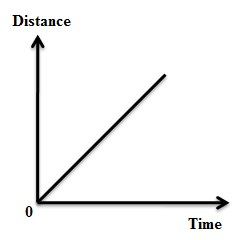

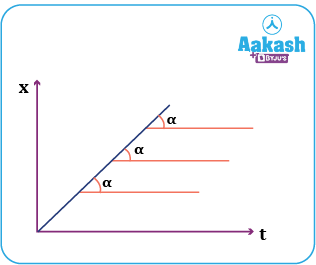

Explanation:
- X-axis → Time
- Y-axis → Distance
- Straight line → Uniform motion
- Slope of graph = Speed
If the line is straight and slanted, the object covers equal distances in equal intervals of time.
2. Distance–Time Graph (Object at Rest)


Explanation:
- Horizontal straight line
- Distance does not change with time
- Speed = 0
- Object is at rest
3. Distance–Time Graph (Non-Uniform Motion)
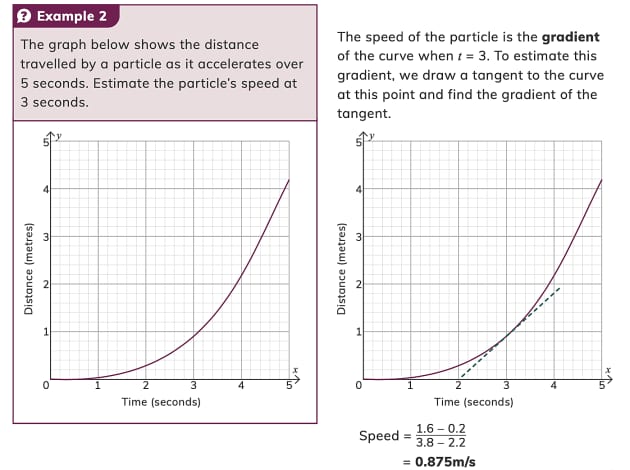

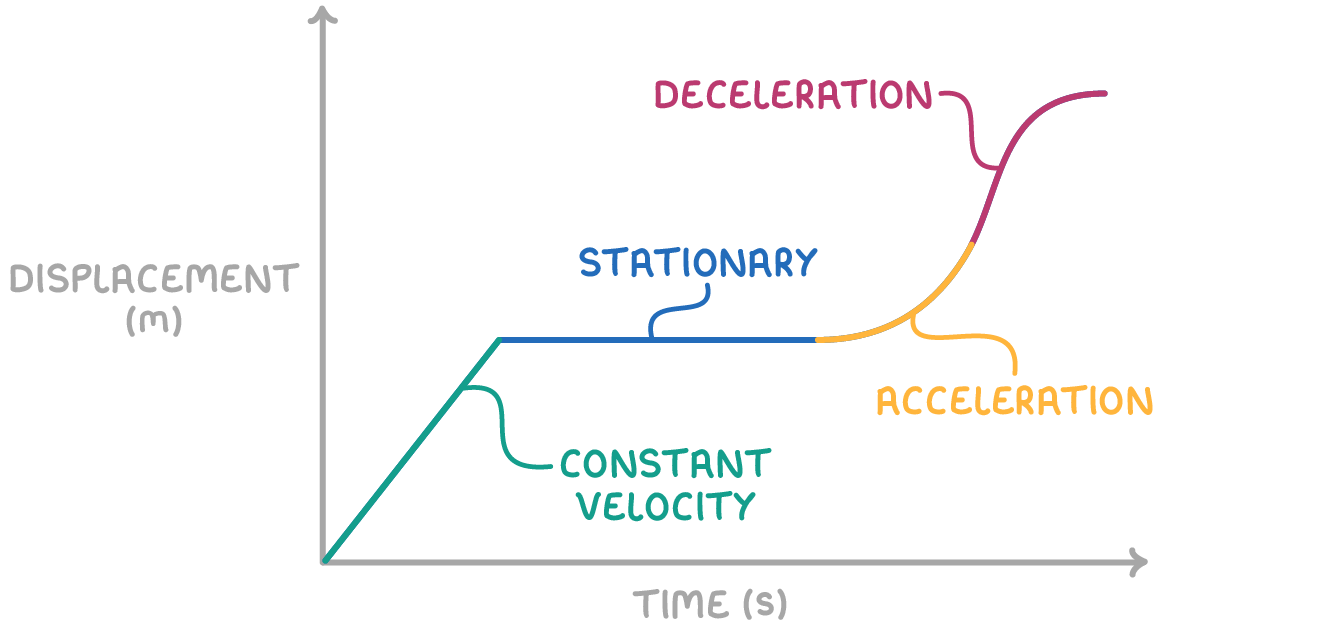
Explanation:
- Curved line
- Unequal distances in equal intervals of time
- Speed keeps changing
4. Velocity–Time Graph (Uniform Velocity)
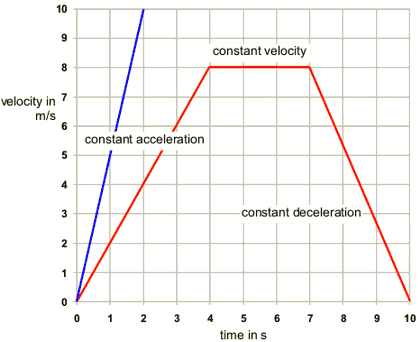

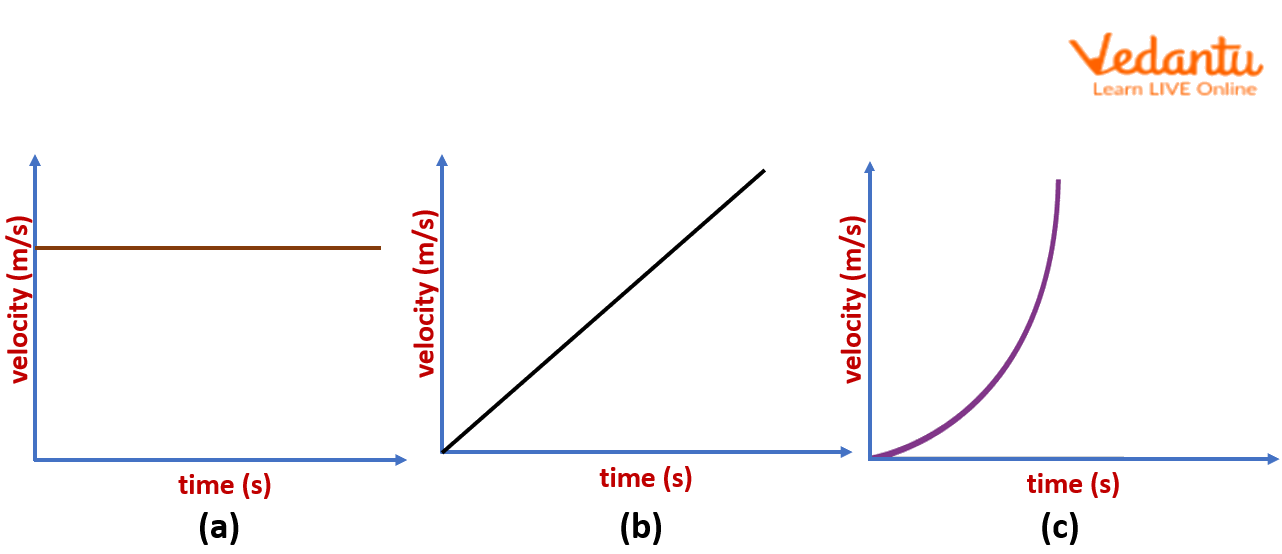
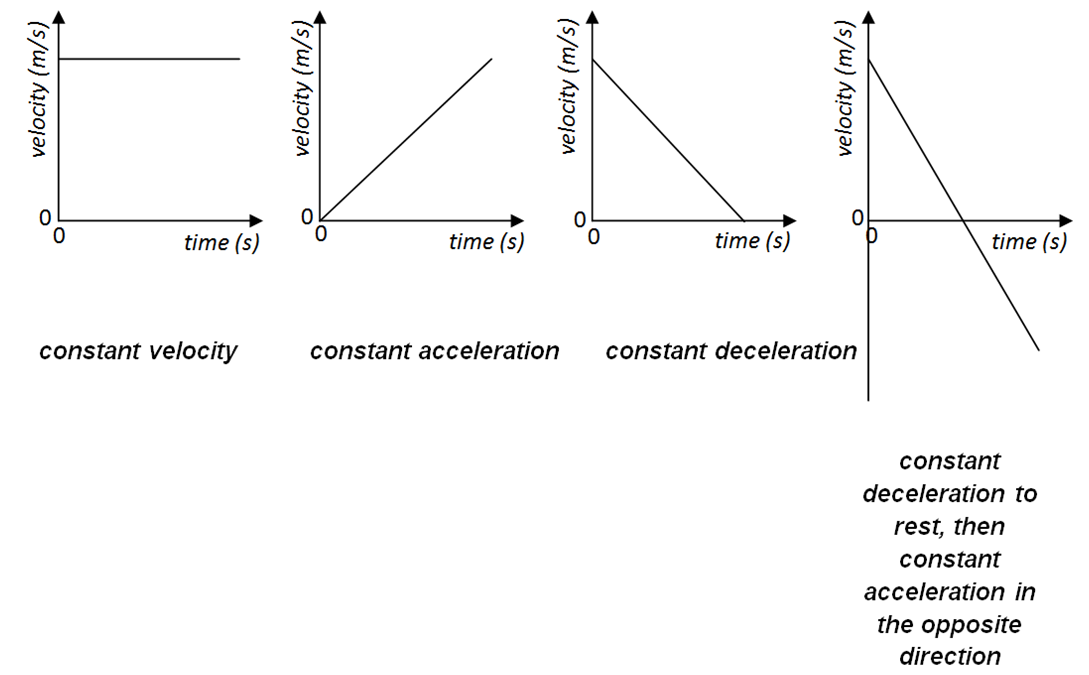
Explanation:
- Horizontal straight line
- Velocity remains constant
- Acceleration = 0
- Area under graph = Displacement
5. Velocity–Time Graph (Uniform Acceleration)
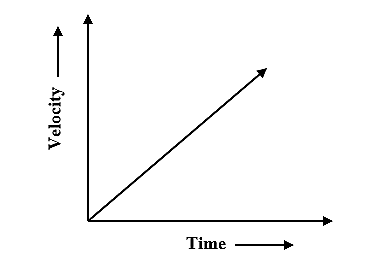
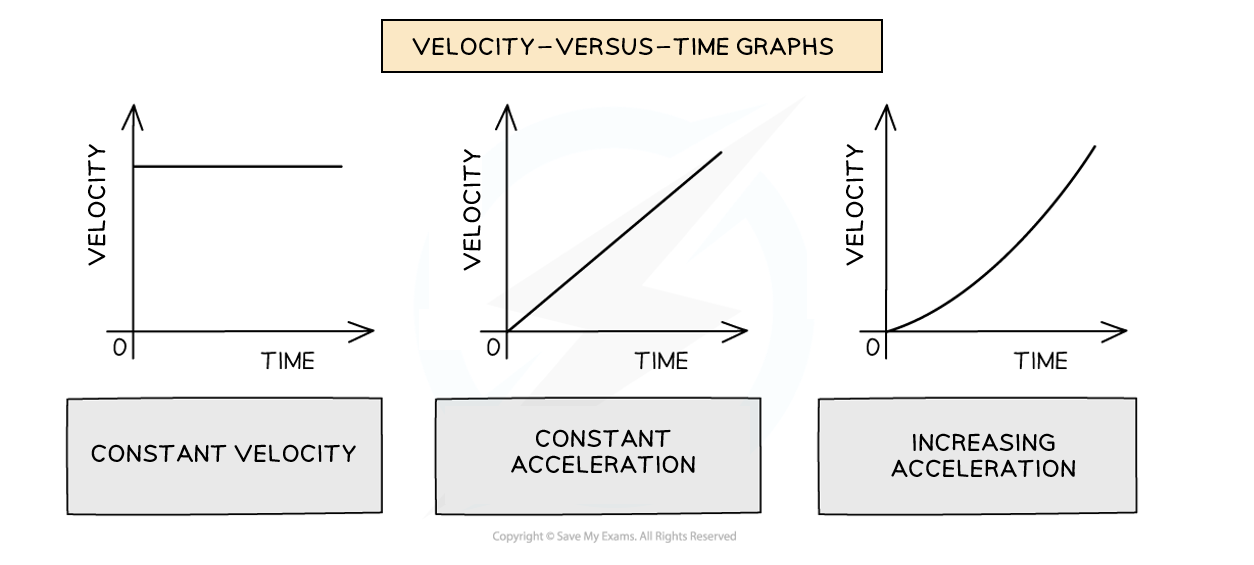
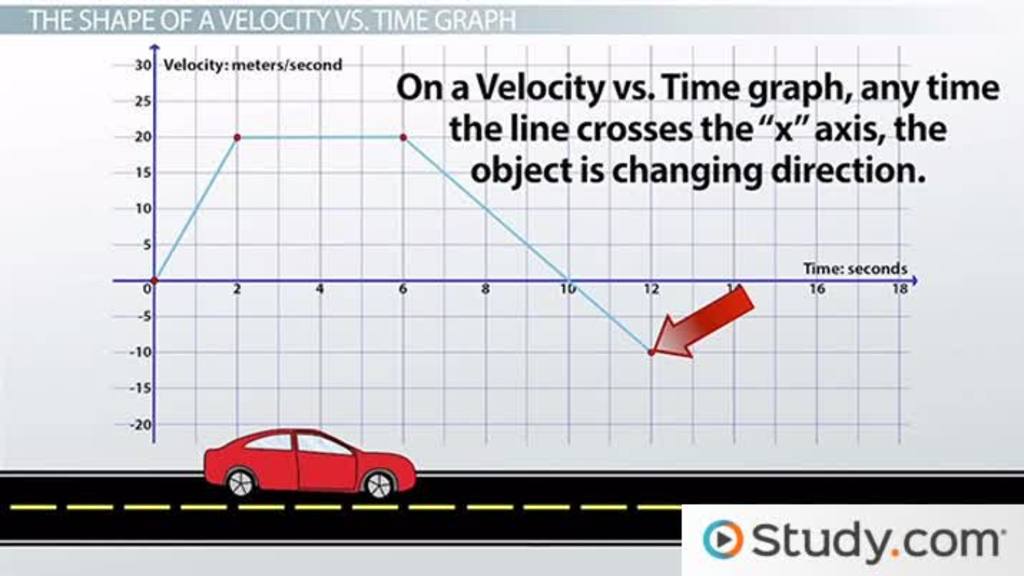
Explanation:
- Straight sloping line
- Velocity increases uniformly
- Slope = Acceleration
- Area under graph = Displacement
6. Velocity–Time Graph (Retardation / Negative Acceleration)
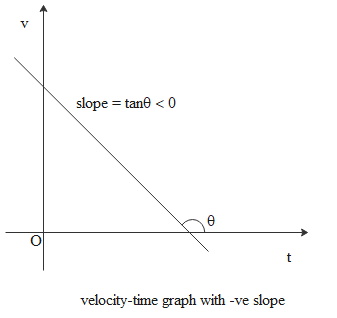
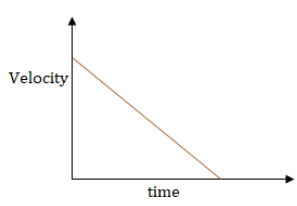

Explanation:
- Straight line sloping downward
- Velocity decreases uniformly
- Acceleration is negative
- Object is slowing down
Quick Graph Revision Points
Distance–Time Graph:
- Slope = Speed
- Horizontal line = Rest
- Straight line = Uniform motion
- Curve = Non-uniform motion
Velocity–Time Graph:
- Slope = Acceleration
- Area under graph = Displacement
- Horizontal line = Uniform velocity
- Sloping line = Acceleration or Retardation




Leave a Reply