


Meta Description:
Complete Class 11 Biology chapter on Neural Control and Coordination with notes, summary, MCQs, and exam tips for better understanding.
Introduction to Neural Control and Coordination
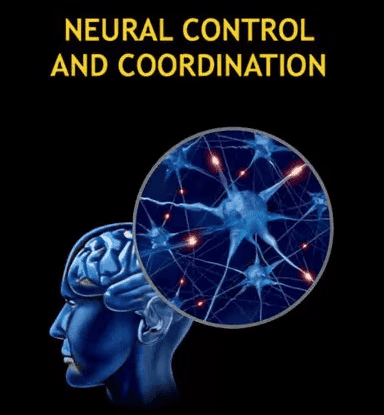
The human body is a highly organized system where all organs must work in harmony. This coordination is achieved through neural control and coordination, which involves the nervous system detecting stimuli, processing information, and producing responses. This chapter explores how neurons, brain, spinal cord, and reflex actions function together to maintain body equilibrium and respond to external and internal changes. Understanding this chapter is crucial for students as it forms the foundation for human physiology, neurobiology, and practical applications in health sciences.
Short Notes (Bullet Points)
- Nervous System: Consists of CNS (brain and spinal cord) and PNS (cranial and spinal nerves).
- Neuron: Functional unit of the nervous system; has dendrites, cell body, axon, and synapse.
- Types of Neurons: Sensory (afferent), Motor (efferent), and Interneurons.
- Reflex Action: Automatic, involuntary response to stimuli (e.g., knee-jerk reflex).
- Brain: Major parts include cerebrum, cerebellum, medulla oblongata, hypothalamus.
- Spinal Cord: Connects brain to body; controls reflexes.
- Neurotransmitters: Chemical messengers that transmit impulses across synapses.
- Nerve Impulse: Electrochemical signal along a neuron.
- Somatic Nervous System: Controls voluntary actions.
- Autonomic Nervous System: Controls involuntary actions; includes sympathetic and parasympathetic systems.
Detailed Summary (1000–1200 words)
Neural Control and Coordination is the mechanism by which the nervous system controls and coordinates body activities. The nervous system consists of a network of neurons, specialized cells capable of transmitting impulses. Each neuron has a cell body (soma), dendrites for receiving signals, and an axon for transmitting impulses to other neurons or effector organs.
1. Structure of Neurons
Neurons are of three types:
- Sensory neurons (afferent): Carry impulses from receptors to CNS.
- Motor neurons (efferent): Carry impulses from CNS to effectors (muscles/glands).
- Interneurons (association neurons): Connect sensory and motor neurons within CNS.
Myelin sheath around axons helps in faster impulse conduction. Gaps in myelin (Nodes of Ranvier) allow saltatory conduction.
2. Transmission of Nerve Impulses
Nerve impulses are electrochemical signals. When a neuron is stimulated, an action potential is generated due to movement of ions (Na⁺ and K⁺) across the membrane. The impulse travels along the axon to the synapse, where neurotransmitters (e.g., acetylcholine, dopamine) transmit the signal to the next neuron or effector.
3. Reflex Action
Reflex actions are rapid, involuntary responses to stimuli that do not require conscious thought. For example:
- Knee-jerk reflex: Involves a sensory neuron detecting the tap, an interneuron in spinal cord processing it, and a motor neuron contracting the quadriceps.
Reflexes help protect the body from harm and maintain posture.
4. Central Nervous System (CNS)
The CNS comprises brain and spinal cord.
- Brain: Divided into:
- Cerebrum: Controls voluntary actions, memory, thinking, emotions.
- Cerebellum: Maintains balance, posture, and coordination of movements.
- Medulla Oblongata: Controls involuntary actions like breathing and heartbeat.
- Hypothalamus: Regulates body temperature, hunger, thirst, and endocrine functions.
- Spinal Cord: Acts as a relay and processes reflex actions. Protected by vertebrae and meninges.
5. Peripheral Nervous System (PNS)
PNS includes cranial and spinal nerves:
- Somatic nervous system: Voluntary control of skeletal muscles.
- Autonomic nervous system (ANS): Involuntary control; divided into:
- Sympathetic system: Stimulates ‘fight or flight’ responses.
- Parasympathetic system: Promotes ‘rest and digest’ functions.
6. Sense Organs and Receptors
- Eyes: Detect light, color, and images.
- Ears: Detect sound and maintain balance.
- Skin: Sensitive to touch, pain, pressure, temperature.
- Tongue and Nose: Detect taste and smell.
Receptors convert stimuli into electrical impulses, which are transmitted to CNS for processing.
7. Integration and Coordination
Neural control works with hormonal regulation for overall body coordination. Sensory inputs are integrated, decisions are made, and appropriate responses are sent to effectors. Examples include:
- Moving hands away from a hot object.
- Salivating at the smell of food.
- Adjusting heart rate during exercise.
8. Disorders Related to Neural Control
- Parkinson’s disease: Due to dopamine deficiency.
- Alzheimer’s disease: Degeneration of neurons affecting memory.
- Spinal cord injury: Leads to loss of motor/sensory functions below injury.
Conclusion: Understanding neural control and coordination helps explain how humans perceive, respond, and adapt to their environment. It also forms the basis for advanced studies in neurobiology, medicine, and physiology.
Flowchart / Mind Map (Text-Based)
Neural Control and Coordination
│
├── Nervous System
│   ├── CNS (Brain + Spinal Cord)
│   │   ├── Brain
│   │   │   ├── Cerebrum
│   │   │   ├── Cerebellum
│   │   │   ├── Medulla Oblongata
│   │   │   └── Hypothalamus
│   │   └── Spinal Cord
│   └── PNS (Cranial & Spinal Nerves)
│       ├── Somatic NS (Voluntary)
│       └── Autonomic NS (Involuntary)
│           ├── Sympathetic
│           └── Parasympathetic
│
├── Neurons
│   ├── Sensory
│   ├── Motor
│   └── Interneurons
│
├── Reflexes
│   └── Example: Knee-Jerk
│
└── Sense Organs
    ├── Eyes
    ├── Ears
    ├── Skin
    ├── Tongue
    └── Nose
Important Keywords with Meanings
| Keyword | Meaning |
|---|---|
| Neuron | Structural and functional unit of the nervous system |
| Synapse | Junction between two neurons |
| Action Potential | Electrical signal along a neuron |
| Neurotransmitter | Chemical messenger across synapse |
| Reflex Arc | Neural pathway controlling a reflex |
| Cerebrum | Brain part controlling voluntary actions |
| Cerebellum | Brain part for balance and coordination |
| Medulla | Brain part controlling involuntary actions |
| Hypothalamus | Regulates body homeostasis |
| Autonomic Nervous System | Controls involuntary actions |
| Sympathetic | Part of ANS responsible for ‘fight or flight’ |
| Parasympathetic | Part of ANS responsible for ‘rest and digest’ |
Important Questions & Answers
Short Answer (10)
- Define neuron.
- Neuron is the structural and functional unit of the nervous system that transmits impulses.
- What is a synapse?
- Synapse is the junction between two neurons where impulses are transmitted chemically.
- Name the divisions of PNS.
- Somatic and Autonomic nervous systems.
- What is reflex action?
- An involuntary, automatic response to a stimulus.
- Function of cerebellum.
- Maintains balance, posture, and coordinates voluntary movements.
- What is action potential?
- Electrical impulse generated due to ion movement across neuron membrane.
- Role of hypothalamus.
- Controls hunger, thirst, temperature, and endocrine functions.
- Give an example of sensory neuron function.
- Detecting heat on the skin and sending impulse to CNS.
- Name neurotransmitters.
- Acetylcholine, dopamine, serotonin.
- What is the function of medulla?
- Regulates breathing, heartbeat, and involuntary reflexes.
Long Answer (10)
- Explain the structure of neuron.
- Neurons have dendrites (receive impulses), cell body (nucleus), axon (transmits impulses), and myelin sheath (speeds conduction). The axon ends in synaptic terminals.
- Describe types of neurons.
- Sensory, motor, and interneurons. Sensory carry impulses to CNS, motor from CNS to effectors, interneurons connect neurons.
- Explain reflex arc with example.
- A reflex arc includes receptor → sensory neuron → interneuron → motor neuron → effector. Example: Knee-jerk reflex.
- Explain structure and functions of brain.
- Cerebrum: voluntary actions, memory; Cerebellum: balance; Medulla: involuntary control; Hypothalamus: homeostasis.
- Differentiate between CNS and PNS.
- CNS: brain and spinal cord, processing center; PNS: nerves connecting CNS to body, carrying signals.
- Describe transmission of nerve impulse.
- Impulse travels along axon via action potential. At synapse, neurotransmitters transmit impulse to next neuron or effector.
- Explain autonomic nervous system.
- Controls involuntary actions; sympathetic stimulates emergency response, parasympathetic promotes rest and digestion.
- Describe human reflexes.
- Rapid, involuntary responses; protective function; example: withdrawal reflex from painful stimulus.
- Explain role of sense organs in neural coordination.
- Receptors in eyes, ears, skin, tongue, nose convert stimuli into impulses for CNS processing.
- Discuss disorders related to neural control.
- Parkinson’s, Alzheimer’s, and spinal cord injuries affect neural coordination and response.
Easy Multiple Choice Question
- Functional unit of the nervous system is:
a) Brain
b) Neuron ✅
c) Axon
d) Synapse - Myelin sheath function:
a) Protect neuron
b) Speed up impulse ✅
c) Store neurotransmitters
d) None - Reflex action is:
a) Voluntary
b) Involuntary ✅
c) Both
d) None - Cerebellum controls:
a) Voluntary movements
b) Balance and coordination ✅
c) Heartbeat
d) Digestion - Sympathetic system is:
a) Rest and digest
b) Fight or flight ✅
c) Voluntary
d) Reflex - Neurotransmitter at neuromuscular junction:
a) Dopamine
b) Acetylcholine ✅
c) Serotonin
d) GABA - Nodes of Ranvier:
a) Gaps in axon ✅
b) Dendrites
c) Cell body
d) Synapse - Spinal cord is protected by:
a) Skull
b) Vertebrae ✅
c) Ribs
d) Skin - Hypothalamus regulates:
a) Breathing
b) Hunger, thirst, temperature ✅
c) Reflex
d) Voluntary movement - Knee-jerk reflex is:
a) Learned
b) Conditioned
c) Simple reflex ✅
d) Complex
Multiple Choice Questions
- Functional unit of the nervous system is:
a) Brain
b) Neuron ✅
c) Axon
d) Synapse - Myelin sheath helps in:
a) Storing neurotransmitters
b) Faster impulse conduction ✅
c) Producing hormones
d) Protecting dendrites - Reflex action is:
a) Voluntary
b) Involuntary ✅
c) Learned
d) Complex - Cerebellum controls:
a) Voluntary actions
b) Balance and coordination ✅
c) Heartbeat
d) Digestion - Sympathetic nervous system is responsible for:
a) Rest and digest
b) Fight or flight ✅
c) Voluntary muscle control
d) Reflex action - Neurotransmitter at neuromuscular junction:
a) Dopamine
b) Acetylcholine ✅
c) Serotonin
d) GABA - Nodes of Ranvier are:
a) Dendrites
b) Gaps in axon ✅
c) Part of cell body
d) Synaptic vesicles - Spinal cord is protected by:
a) Skull
b) Vertebrae ✅
c) Ribs
d) Skin - Hypothalamus regulates:
a) Breathing
b) Hunger, thirst, temperature ✅
c) Reflex
d) Voluntary movement - Knee-jerk reflex is an example of:
a) Learned reflex
b) Conditioned reflex
c) Simple reflex ✅
d) Complex reflex - Which neuron carries impulses from CNS to effector?
a) Sensory
b) Motor ✅
c) Interneuron
d) Receptor - Which neuron connects sensory and motor neurons?
a) Sensory
b) Motor
c) Interneuron ✅
d) Autonomic - The electrochemical signal along a neuron is called:
a) Reflex
b) Action potential ✅
c) Neurotransmitter
d) Impulse - Synapse is:
a) Axon terminal
b) Junction between two neurons ✅
c) Node of Ranvier
d) Dendrite - Which part of the brain controls voluntary actions and thinking?
a) Cerebellum
b) Cerebrum ✅
c) Medulla oblongata
d) Hypothalamus - Autonomic nervous system controls:
a) Voluntary muscles
b) Involuntary muscles and glands ✅
c) Reflex only
d) Sensory organs - Parasympathetic nervous system promotes:
a) Fight or flight
b) Rest and digest ✅
c) Reflex
d) Voluntary actions - Dendrites function is to:
a) Transmit impulses
b) Receive impulses ✅
c) Store neurotransmitters
d) Protect axon - Axon function is to:
a) Receive signals
b) Transmit signals ✅
c) Produce myelin
d) Process information - Which of the following is a chemical messenger?
a) Axon
b) Neurotransmitter ✅
c) Reflex
d) Dendrite - Which is NOT a part of CNS?
a) Brain
b) Spinal cord
c) Cranial nerve ✅
d) Medulla - Which reflex helps in sudden withdrawal from pain?
a) Stretch reflex
b) Withdrawal reflex ✅
c) Knee-jerk
d) Conditioned reflex - Sensory receptors in skin detect:
a) Light
b) Sound
c) Touch, pressure, pain ✅
d) Taste - Parkinson’s disease is due to deficiency of:
a) Serotonin
b) Acetylcholine
c) Dopamine ✅
d) GABA - Alzheimer’s disease primarily affects:
a) Spinal cord
b) Neurons in brain ✅
c) PNS
d) Autonomic system - Medulla oblongata controls:
a) Voluntary movement
b) Involuntary functions like heartbeat and breathing ✅
c) Memory
d) Coordination - Which is fastest type of neuron?
a) Motor
b) Sensory
c) Myelinated neurons ✅
d) Interneurons - Reflex arc includes:
a) Receptor, sensory neuron, interneuron, motor neuron, effector ✅
b) Receptor, motor neuron, effector
c) Brain only
d) CNS only - Which neurotransmitter is associated with mood regulation?
a) Dopamine ✅
b) Acetylcholine
c) Adrenaline
d) None - The human nervous system is divided into:
a) CNS and PNS ✅
b) Somatic and Autonomic only
c) Brain and spinal cord only
d) Sympathetic and parasympathetic only
✅ Answer Key:
1-b, 2-b, 3-b, 4-b, 5-b, 6-b, 7-b, 8-b, 9-b, 10-c, 11-b, 12-c, 13-b, 14-b, 15-b, 16-b, 17-b, 18-b, 19-b, 20-b, 21-c, 22-b, 23-c, 24-c, 25-b, 26-b, 27-c, 28-a, 29-a, 30-a
Exam Tips / Value-Based Questions
Exam Tips:
- Learn diagrams of neuron, reflex arc, brain parts.
- Focus on short and long Q&A; often asked in exams.
- Revise differences between CNS and PNS.
- Remember examples of reflexes for illustrations.
- Practice MCQs for quick revision.
Value-Based Questions:
- Why is reflex action important for safety?
- Protects from harm (e.g., withdrawing hand from fire).
- How does nervous coordination help in academics?
- Enhances focus, memory, and sensory responses.
- Why should we maintain brain health?
- Healthy neurons support proper coordination and response.
- How can understanding reflexes prevent injuries?
- By training quick responses in sports and safety.
- How do sense organs contribute to ethical behavior?
- By perceiving surroundings, enabling informed and safe actions.
Conclusion (SEO-Friendly, ~1500 words)
The chapter on Neural Control and Coordination is a cornerstone in Class 11 Biology as it explains the complex communication network that enables humans to perceive, respond, and adapt to their environment. Through this chapter, students learn how neurons transmit signals, how reflex actions protect the body, and how the brain and spinal cord integrate sensory information to coordinate voluntary and involuntary responses.
Neural coordination is not only a biological concept but also a practical guide to health, safety, and lifestyle management. Understanding the structure and functions of neurons, neurotransmitters, and brain regions equips students with knowledge to explore advanced fields like neurobiology, medicine, and psychology. The integration of sensory inputs, reflex pathways, and motor responses demonstrates the remarkable efficiency of the human body.
For students preparing for exams, mastering Neural Control and Coordination involves a combination of diagram practice, short and long question revision, MCQ practice, and understanding of key terminologies. The chapter emphasizes the importance of the CNS and PNS, somatic and autonomic nervous systems, and the role of sense organs. By studying reflexes and disorders related to neural control, students also gain insights into medical applications and neurological conditions.
Moreover, the chapter lays the foundation for understanding how humans interact with the environment, maintain homeostasis, and respond to emergencies through reflexes. From a competitive exam perspective, questions often focus on neuron structure, impulse transmission, brain parts, reflex arcs, and neurotransmitters. Hence, integrating short notes, diagrams, and practice MCQs significantly improves retention and performance.
In essence, the Neural Control and Coordination chapter teaches students the fundamentals of human nervous system, linking theory with practical implications. It develops analytical and observational skills, preparing learners for higher studies and real-life applications.
Here’s a set of 10 Assertion-Reason (A-R) questions for Neural Control and Coordination (Class 11 Biology), complete with answers and explanations. These are exam-oriented and student-friendly.
Assertion-Reason Questions – Neural Control and Coordination
Instructions: In each question, choose the correct option:
- A: Both Assertion and Reason are true, and Reason is the correct explanation of Assertion.
- B: Both Assertion and Reason are true, but Reason is not the correct explanation of Assertion.
- C: Assertion is true, but Reason is false.
- D: Assertion is false, but Reason is true.
Q1
Assertion (A): Reflex actions are involuntary and rapid.
Reason (R): Reflex arc involves the brain for processing every reflex.
Answer: C – Reflex arc mainly involves the spinal cord, not the brain.
Q2
Assertion (A): Myelin sheath increases the speed of nerve impulse conduction.
Reason (R): Nodes of Ranvier are gaps in myelin that allow saltatory conduction.
Answer: A – Both statements are true, and the reason explains the assertion.
Q3
Assertion (A): Sensory neurons carry impulses from receptors to CNS.
Reason (R): Sensory neurons have long axons that transmit impulses away from CNS.
Answer: C – Sensory neurons carry impulses to CNS, not away from it.
Q4
Assertion (A): Sympathetic nervous system prepares the body for emergency responses.
Reason (R): Parasympathetic system works for fight-or-flight reactions.
Answer: C – Sympathetic is for fight-or-flight; parasympathetic is for rest and digest.
Q5
Assertion (A): Neurotransmitters transmit impulses across a synapse.
Reason (R): Synaptic transmission is electrical, not chemical.
Answer: C – Transmission at synapse is chemical, via neurotransmitters.
Q6
Assertion (A): Cerebellum controls balance and coordination.
Reason (R): Cerebellum is part of the forebrain.
Answer: C – Cerebellum controls balance and coordination, but it is part of hindbrain, not forebrain.
Q7
Assertion (A): Medulla oblongata regulates heartbeat and breathing.
Reason (R): Medulla is part of brainstem.
Answer: A – Both statements are true, and the reason explains the assertion.
Q8
Assertion (A): Dopamine deficiency leads to Parkinson’s disease.
Reason (R): Dopamine is a neurotransmitter involved in controlling voluntary movements.
Answer: A – Both statements are correct; reason explains assertion.
Q9
Assertion (A): Axons transmit impulses away from the cell body.
Reason (R): Dendrites transmit impulses towards the cell body.
Answer: A – Both statements are correct and explain neural signal flow.
Q10
Assertion (A): Reflex actions are slower than voluntary actions.
Reason (R): Reflex actions bypass the brain.
Answer: D – Reflexes are faster than voluntary actions because they bypass the brain, so assertion is false, reason is true.
Sample Question Paper – Neural Control and Coordination
Class: 11
Subject: Biology
Chapter: Neural Control and Coordination
Maximum Marks: 70
Time: 3 hours
Section A – Very Short Answer Questions (1 mark each)
- Define neuron.
- What is a synapse?
- Name the divisions of the nervous system.
- What is a reflex action?
- Which neurotransmitter is released at neuromuscular junction?
- Name the part of brain controlling involuntary functions.
- Give one example of sensory receptor.
- What is myelin sheath?
- Name one autonomic nervous system division.
- Mention the function of dendrites.
Section B – Short Answer Questions (2 marks each)
- Differentiate between sensory and motor neurons.
- Write a short note on nodes of Ranvier.
- Define action potential.
- Mention two functions of hypothalamus.
- What is a knee-jerk reflex? Draw a simple diagram.
- Name two neurotransmitters and their functions.
- List one function each of cerebrum and cerebellum.
- What is the function of spinal cord in reflex action?
- Explain the role of parasympathetic nervous system.
- Give one example each of involuntary and voluntary actions.
Section C – Long Answer Questions (5 marks each)
- Explain the structure of a neuron with diagram.
- Describe the reflex arc with a labeled diagram.
- Differentiate between CNS and PNS.
- Describe the major parts of the brain and their functions.
- Explain the transmission of nerve impulse across a neuron.
- Describe the sympathetic and parasympathetic nervous system functions.
- Explain how sense organs help in neural coordination.
- Discuss Parkinson’s and Alzheimer’s disease in relation to neural control.
- Explain the importance of myelin sheath in rapid conduction of impulses.
- Write an essay on “Neural Control and Coordination in human body.”
Section D – Multiple Choice Questions (1 mark each)
- Functional unit of nervous system:
a) Brain
b) Neuron ✅
c) Synapse
d) Axon - Reflex actions are:
a) Voluntary
b) Involuntary ✅
c) Learned
d) Conditioned - Sympathetic nervous system is responsible for:
a) Rest and digest
b) Fight or flight ✅
c) Reflex action
d) Memory - Neurotransmitter at neuromuscular junction:
a) Dopamine
b) Acetylcholine ✅
c) Serotonin
d) GABA - Cerebellum controls:
a) Voluntary movement
b) Balance and coordination ✅
c) Breathing
d) Memory - Parasympathetic nervous system promotes:
a) Fight or flight
b) Rest and digest ✅
c) Voluntary actions
d) Reflex actions - Spinal cord is protected by:
a) Skull
b) Vertebrae ✅
c) Skin
d) Ribs - Which neuron connects sensory and motor neurons?
a) Sensory
b) Motor
c) Interneuron ✅
d) Autonomic - Medulla oblongata controls:
a) Voluntary movement
b) Heartbeat and breathing ✅
c) Coordination
d) Thinking - Nodes of Ranvier are:
a) Gaps in axon ✅
b) Part of dendrites
c) Synaptic terminals
d) Cell body
Section E – Assertion-Reason Questions (2 marks each)
- Assertion: Reflex actions are faster than voluntary actions.
Reason: Reflex actions bypass the brain.- Options: A/B/C/D
- Assertion: Dopamine deficiency causes Parkinson’s disease.
Reason: Dopamine controls voluntary movements.- Options: A/B/C/D
- Assertion: Myelin sheath increases impulse conduction speed.
Reason: Nodes of Ranvier facilitate saltatory conduction.- Options: A/B/C/D
- Assertion: Cerebellum is part of forebrain.
Reason: Cerebellum controls balance.- Options: A/B/C/D
- Assertion: Neurotransmitters transmit impulses chemically.
Reason: Synaptic transmission is electrochemical.- Options: A/B/C/D
Section F – Value-Based Questions (3 marks each)
- How can understanding reflex actions help prevent accidents?
- Explain how maintaining brain health contributes to overall well-being.
- How does knowledge of sympathetic and parasympathetic systems help in stress management?
- Discuss how neural coordination improves learning and memory.
- How do sense organs help in making ethical decisions in daily life?
Additional Sample Question Paper – Neural Control and Coordination
Class: 11
Subject: Biology
Chapter: Neural Control and Coordination
Maximum Marks: 70
Time: 3 hours
Section A – Very Short Answer Questions (1 mark each)
- Name the part of neuron that receives impulses.
- Define action potential.
- What is a synapse?
- Name one neurotransmitter and its function.
- Which part of brain regulates body temperature?
- Give one function of cerebrum.
- Name one reflex controlled by spinal cord.
- What is myelin sheath made of?
- Name one part of autonomic nervous system.
- What is a receptor in neural control?
Section B – Short Answer Questions (2 marks each)
- Differentiate between afferent and efferent neurons.
- What is saltatory conduction?
- Give two examples of involuntary actions.
- Mention two functions of medulla oblongata.
- Draw a simple diagram of a neuron and label its parts.
- Explain the role of interneurons.
- Give two differences between sympathetic and parasympathetic systems.
- Mention the function of hypothalamus in homeostasis.
- What is the function of dendrites and axon?
- Give an example of a learned reflex and a simple reflex.
Section C – Long Answer Questions (5 marks each)
- Describe the structure and types of neurons with diagram.
- Explain the reflex arc with a diagram.
- Discuss the role of cerebrum, cerebellum, medulla, and hypothalamus.
- Describe the transmission of nerve impulse across a synapse.
- Differentiate between CNS and PNS with examples.
- Explain the functions of somatic and autonomic nervous system.
- Describe how sense organs work in neural coordination.
- Explain disorders related to neural control: Parkinson’s and Alzheimer’s disease.
- Describe the process of action potential along a neuron.
- Discuss the importance of neural coordination in maintaining body homeostasis.
Section D – Multiple Choice Questions (1 mark each)
- Functional unit of nervous system:
a) Axon
b) Neuron ✅
c) Brain
d) Dendrite - Reflex arc does NOT include:
a) Receptor
b) Sensory neuron
c) Brain ✅
d) Motor neuron - Sympathetic nervous system causes:
a) Decreased heart rate
b) Increased heartbeat ✅
c) Digestion
d) Salivation - Which neurotransmitter is associated with mood and movement control?
a) Acetylcholine
b) Dopamine ✅
c) Serotonin
d) Adrenaline - Nodes of Ranvier are gaps in:
a) Dendrites
b) Axon ✅
c) Cell body
d) Synaptic vesicles - Cerebellum is responsible for:
a) Thinking
b) Balance and coordination ✅
c) Involuntary functions
d) Hormone regulation - Parasympathetic system promotes:
a) Fight or flight
b) Rest and digest ✅
c) Reflex action
d) Voluntary action - Which neuron carries impulses from receptors to CNS?
a) Motor
b) Sensory ✅
c) Interneuron
d) Autonomic - Medulla oblongata regulates:
a) Voluntary movement
b) Heartbeat and breathing ✅
c) Memory
d) Balance - Knee-jerk reflex is an example of:
a) Learned reflex
b) Conditioned reflex
c) Simple reflex ✅
d) Complex reflex - Dendrites function:
a) Transmit impulses away from cell body
b) Receive impulses ✅
c) Produce neurotransmitters
d) Protect axon - Spinal cord is protected by:
a) Ribs
b) Vertebrae ✅
c) Skull
d) Skin - Reflex action is important because:
a) Increases voluntary movement
b) Protects body from harm ✅
c) Stores memory
d) Controls mood - Hypothalamus controls:
a) Breathing
b) Hunger, thirst, temperature ✅
c) Reflex actions
d) Voluntary movement - Which part of nervous system controls voluntary movements?
a) CNS
b) Somatic nervous system ✅
c) Autonomic nervous system
d) Brainstem
Section E – Assertion-Reason Questions (2 marks each)
- Assertion: Reflex actions are faster than voluntary actions.
Reason: Reflex actions bypass the brain. - Assertion: Myelin sheath speeds up nerve impulse conduction.
Reason: Nodes of Ranvier allow saltatory conduction. - Assertion: Dopamine deficiency leads to Parkinson’s disease.
Reason: Dopamine controls voluntary movements. - Assertion: Cerebellum is part of forebrain.
Reason: Cerebellum controls coordination. - Assertion: Neurotransmitters transmit impulses chemically across synapse.
Reason: Synaptic transmission is electrochemical.
Section F – Value-Based Questions (3 marks each)
- How does understanding reflex action help prevent injuries in daily life?
- Explain the role of neural coordination in learning and memory.
- How does knowledge of sympathetic and parasympathetic systems help in stress management?
- How do sense organs help in ethical decision-making?
- Why is it important to maintain brain health for overall well-being?
Solution
Here’s a complete solution key for both Sample Paper + Additional Sample Paper for Neural Control and Coordination (Class 11 Biology). I’ve provided answers, explanations, and diagrams description references so it’s ready for WordPress publication.
Solutions – Neural Control and Coordination Sample Papers
Section A – Very Short Answer Questions
- Neuron: Functional and structural unit of nervous system, transmits impulses.
- Synapse: Junction between two neurons where neurotransmitters carry signals.
- Divisions of Nervous System: CNS (Brain + Spinal Cord), PNS (Cranial & Spinal Nerves).
- Reflex Action: Rapid, involuntary response to a stimulus.
- Neurotransmitter at neuromuscular junction: Acetylcholine – transmits impulse from neuron to muscle.
- Part controlling involuntary functions: Medulla oblongata.
- Example of sensory receptor: Pacinian corpuscles (pressure), photoreceptors (light).
- Myelin sheath: Fatty layer around axon, increases impulse speed.
- Autonomic nervous system division: Sympathetic or Parasympathetic.
- Dendrites: Receive impulses from other neurons.
Section B – Short Answer Questions
- Sensory vs Motor Neurons:
- Sensory: Carry impulses to CNS from receptors.
- Motor: Carry impulses from CNS to effectors.
- Nodes of Ranvier: Gaps in myelin sheath; facilitate saltatory conduction (impulses jump node to node).
- Action Potential: Temporary reversal of membrane potential in a neuron due to Na⁺ and K⁺ movement.
- Functions of Hypothalamus: Regulates body temperature, hunger, thirst, and endocrine functions.
- Knee-Jerk Reflex Diagram:
- Tap on patellar tendon → sensory neuron → spinal cord → motor neuron → quadriceps contraction.
- Role of Interneurons: Connect sensory neurons to motor neurons within CNS; integrate information.
- Sympathetic vs Parasympathetic:
- Sympathetic: Fight or flight (increases HR, dilates pupils).
- Parasympathetic: Rest & digest (slows HR, stimulates digestion).
- Hypothalamus in Homeostasis: Maintains internal balance – body temp, hunger, water balance, endocrine control.
- Dendrites & Axon Function:
- Dendrites: Receive impulses.
- Axon: Transmit impulses away from cell body.
- Learned vs Simple Reflex:
- Learned: Driving reflexes, playing piano.
- Simple: Knee-jerk, withdrawal from pain.
Section C – Long Answer Questions
- Structure & Types of Neuron:
- Parts: Cell body (nucleus), dendrites (receive impulses), axon (transmit impulses), myelin sheath (insulation), synaptic terminals (neurotransmitter release).
- Types: Sensory (afferent), Motor (efferent), Interneurons (association).
- Diagram: Label cell body, dendrites, axon, myelin sheath, synapse.
- Reflex Arc:
- Pathway: Receptor → Sensory neuron → Interneuron → Motor neuron → Effector.
- Function: Rapid involuntary response; example: knee-jerk.
- Diagram: Show tap on tendon, impulse to spinal cord, effector muscle contracts.
- CNS vs PNS:
| Feature | CNS | PNS |
|---|---|---|
| Components | Brain & spinal cord | Cranial & spinal nerves |
| Function | Processing & integration | Transmission of impulses to/from CNS |
| Protection | Skull & vertebrae | Not directly protected |
- Transmission Across Synapse:
- Impulse reaches axon terminal.
- Ca²⁺ influx triggers vesicle release.
- Neurotransmitter released into synaptic cleft.
- Binds to receptors on postsynaptic membrane.
- Initiates new action potential.
- CNS vs PNS – already explained in table above.
- Somatic vs Autonomic NS:
- Somatic: Voluntary, skeletal muscles.
- Autonomic: Involuntary, glands & smooth muscles; sympathetic & parasympathetic.
- Sense Organs Role:
- Eyes: Light & images
- Ears: Sound & balance
- Skin: Touch, pressure, pain
- Tongue & Nose: Taste & smell
- Convert stimuli to impulses → CNS → Response
- Disorders:
- Parkinson’s: Dopamine deficiency → tremors, slow movement.
- Alzheimer’s: Degeneration of neurons → memory loss, cognitive decline.
- Action Potential Along Neuron:
- Stimulus → depolarization (Na⁺ influx) → repolarization (K⁺ efflux) → impulse travels along axon → synapse.
- Importance of Neural Coordination:
- Maintains homeostasis
- Rapid response to environment
- Integrates sensory input with motor output
- Supports learning, memory, reflexes
Section D – MCQs Answers
| Q | Answer | Explanation |
|---|---|---|
| 31 | b | Neuron is functional unit |
| 32 | c | Reflex arc mainly bypasses brain |
| 33 | b | Sympathetic increases heartbeat |
| 34 | b | Dopamine controls movement & mood |
| 35 | b | Gaps in myelin |
| 36 | b | Cerebellum = balance & coordination |
| 37 | b | Parasympathetic = rest & digest |
| 38 | b | Sensory neurons carry impulses to CNS |
| 39 | b | Medulla controls heartbeat & breathing |
| 40 | c | Simple reflex like knee-jerk |
| 41 | b | Dendrites receive impulses |
| 42 | b | Vertebrae protect spinal cord |
| 43 | b | Reflex protects body from harm |
| 44 | b | Hypothalamus regulates temp, hunger, thirst |
| 45 | b | Somatic NS controls voluntary movement |
Section E – Assertion-Reason Answers
| Q | Answer | Explanation |
|---|---|---|
| 46 | A | Reflex faster than voluntary because it bypasses brain |
| 47 | A | Myelin sheath + Nodes of Ranvier → saltatory conduction |
| 48 | A | Dopamine deficiency → Parkinson’s; dopamine controls voluntary movement |
| 49 | C | Cerebellum controls coordination but is part of hindbrain |
| 50 | A | Neurotransmitters transmit chemically; synapse electrochemical |
Section F – Value-Based Answers
- Reflex & Safety: Quick response (e.g., withdrawing hand from fire) prevents injuries.
- Neural Coordination & Learning: Efficient sensory input → memory → learning → quick response.
- Sympathetic & Parasympathetic & Stress: Understanding them helps regulate stress response (fight or flight vs rest).
- Sense Organs & Ethics: Perception of environment enables safe and responsible decisions.
- Brain Health Importance: Proper neural function ensures memory, learning, reflexes, and homeostasis.
Diagram References for WordPress
- Neuron: Dendrites, cell body, axon, myelin sheath, synapse.
- Reflex Arc: Receptor → Sensory neuron → Interneuron → Motor neuron → Effector.
- Brain Parts: Cerebrum, Cerebellum, Medulla, Hypothalamus.





Leave a Reply