


Respect of All Religions
Introduction
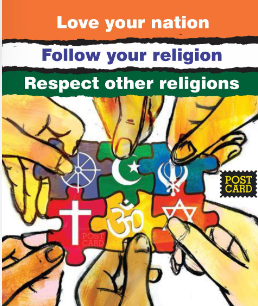
Religion has been an essential part of human civilization since ancient times. It provides individuals with moral guidance, spiritual strength, and a sense of purpose in life. Every religion teaches values such as compassion, honesty, kindness, forgiveness, and love for humanity. Although religions may differ in rituals, customs, and beliefs, their ultimate goal remains the same — the welfare of humanity and the promotion of peace.
In a world filled with cultural and religious diversity, respecting all religions has become more important than ever. Respect for all religions means recognizing the dignity and value of every faith and treating followers of different religions with equality and understanding. It does not require abandoning one’s own beliefs; rather, it encourages appreciation of diversity while maintaining harmony.
Countries like India, known for their multicultural and multi-religious societies, demonstrate how people of different faiths can live together peacefully. Respecting all religions strengthens unity, promotes tolerance, and creates a peaceful society where differences become a source of strength rather than conflict.
Meaning of Respect for All Religions
Respect for all religions refers to accepting and honoring different religious beliefs, practices, and traditions without discrimination or prejudice. It involves:
- Recognizing the freedom of every individual to follow their faith.
- Avoiding hatred or disrespect toward other religions.
- Understanding that no religion promotes violence or hatred.
- Promoting mutual understanding among communities.
True respect goes beyond tolerance. Tolerance means merely allowing differences, while respect means appreciating and valuing those differences.
Common Teachings of All Religions
Despite differences in practices, most religions share universal teachings:
- Love and Compassion: Helping others and caring for humanity.
- Truth and Honesty: Living a truthful life.
- Peace and Non-violence: Avoiding harm to others.
- Service to Humanity: Charity and social welfare.
- Forgiveness and Kindness: Promoting harmony and understanding.
For example:
- Hinduism teaches Vasudhaiva Kutumbakam — the world is one family.
- Islam emphasizes peace, charity, and brotherhood.
- Christianity teaches love and forgiveness.
- Buddhism promotes compassion and non-violence.
- Sikhism encourages equality and service to humanity.
These shared values show that religions unite humanity rather than divide it.
Importance of Respecting All Religions
1. Promotes Social Harmony
Respect among religions reduces conflicts and strengthens peaceful coexistence. When people respect each other’s faith, society becomes more cooperative and stable.
2. Strengthens National Unity
In diverse nations, unity depends on mutual respect. Religious harmony prevents divisions and strengthens national integration.
3. Encourages Moral Development
Learning about different religions broadens perspectives and promotes empathy, tolerance, and ethical behavior.
4. Prevents Conflict and Violence
Many social conflicts arise from misunderstanding or intolerance. Respect helps eliminate prejudice and promotes peaceful dialogue.
5. Supports Democracy and Human Rights
Freedom of religion is a fundamental human right. Respect ensures equality and justice for all citizens.
Role of Education in Promoting Religious Respect
Education plays a vital role in building understanding among different communities. Schools and educational institutions can:
- Teach moral values common to all religions.
- Promote cultural awareness and inclusiveness.
- Encourage interfaith dialogue and discussions.
- Remove stereotypes and misconceptions.
Value-based education helps young people grow into responsible citizens who respect diversity.
Role of Society and Media
Society and media influence public attitudes significantly. Responsible media can promote harmony by:
- Avoiding stereotypes and hate speech.
- Highlighting stories of interfaith cooperation.
- Encouraging peaceful coexistence.
Community programs, festivals, and social initiatives where people from different religions participate together also strengthen mutual respect.
Challenges to Religious Respect
Despite its importance, several challenges exist:
- Religious intolerance and extremism
- Misinterpretation of religious teachings
- Political misuse of religion
- Lack of awareness and education
- Social prejudice and stereotypes
Overcoming these challenges requires awareness, dialogue, and strong ethical leadership.
Ways to Promote Respect for All Religions
- Practicing tolerance and open-mindedness.
- Learning about other religions objectively.
- Avoiding discrimination or offensive behavior.
- Encouraging interfaith dialogue.
- Celebrating diversity through cultural exchange.
- Promoting equality and justice in society.
Small everyday actions — respecting others’ festivals, traditions, and beliefs — contribute greatly to harmony.
Relevance in the Modern World
In today’s globalized world, people from different religions interact more frequently than ever before. Migration, technology, and globalization have created multicultural societies. Respect for all religions is essential to maintain peace and cooperation at both national and international levels.
Without mutual respect, diversity may lead to conflict; with respect, it becomes a powerful force for creativity, cooperation, and progress.
Conclusion
Respect for all religions is not merely a social ideal but a necessity for peaceful coexistence in a diverse world. Every religion ultimately teaches love, compassion, and service to humanity. When individuals learn to respect different beliefs, barriers of hatred and misunderstanding disappear, giving way to unity and harmony.
A society that respects all religions becomes stronger, more peaceful, and morally enriched. True spirituality lies not in proving one religion superior to another but in recognizing the shared humanity that binds all people together. By practicing mutual respect, understanding, and tolerance, humanity can build a world based on peace, cooperation, and universal brotherhood.
In conclusion, respecting all religions is the foundation of social harmony, national unity, and global peace. It reminds us that while paths may differ, the destination — truth, peace, and human welfare — remains the same for all.
Respect for all religions is one of the strongest foundations of a peaceful and progressive society. In a world where diversity is increasing due to globalization and cultural interaction, mutual respect among religious communities has become not only a moral duty but also a social necessity. Every religion, despite differences in rituals and traditions, ultimately teaches humanity, compassion, truth, and peaceful coexistence. When people understand these shared values, misunderstandings and conflicts reduce significantly.
True respect for all religions does not mean abandoning one’s own faith; rather, it means accepting that others have the same right to follow their beliefs. A mature society recognizes diversity as a strength instead of a weakness. History shows that civilizations flourished where tolerance and harmony existed, while intolerance often led to conflict and division.
Respecting all religions also strengthens democracy and human rights. Freedom of religion allows individuals to express their identity and spirituality without fear. When societies protect religious freedom, they promote equality, justice, and dignity for all citizens. This creates trust among communities and strengthens national unity.
The responsibility of promoting religious respect lies with individuals, families, educational institutions, governments, and media. Education must encourage critical thinking, empathy, and awareness about different cultures and faiths. Dialogue between communities can remove misconceptions and build mutual understanding.
Young people, especially, play a crucial role in shaping a tolerant future. By practicing kindness, avoiding prejudice, and celebrating diversity, they can create an environment where differences become opportunities for learning rather than reasons for conflict.
Ultimately, respect for all religions reflects true humanity. It teaches us that although people may pray differently, speak different languages, or follow different traditions, they share the same hopes, emotions, and aspirations. A world guided by mutual respect and understanding can achieve lasting peace and harmony.
Thus, respecting all religions is not merely an ethical principle but a pathway toward global unity, social stability, and human progress. When humanity learns to respect every faith equally, it moves closer to building a world based on love, peace, and universal brotherhood.
📘 Short Notes (Ultra Revision Sheet)
✅ Respect for all religions means accepting and honoring different beliefs.
✅ Promotes peace, unity, and social harmony.
✅ All religions teach love, compassion, and moral values.
✅ Prevents religious conflict and intolerance.
✅ Strengthens democracy and human rights.
✅ Encourages national integration in diverse countries.
✅ Education and awareness play key roles.
✅ Interfaith dialogue builds understanding.
🔑 High-Scoring Keywords
Use these in exams for better marks:
- Religious tolerance
- Secularism
- Interfaith harmony
- Unity in diversity
- Mutual respect
- Freedom of religion
- Peaceful coexistence
- Cultural pluralism
- Human dignity
- Universal brotherhood
💬 Useful Quotes (You can write in exams)
- “All religions teach love and compassion.”
- “Unity in diversity is the strength of humanity.”
- “Peace begins when respect for differences begins.”
- “Religion should unite people, not divide them.”
- “Humanity is the common religion of mankind.”
📝 Important Exam Questions & Answers
Q1. What is meant by respect for all religions?
Respect for all religions means accepting and honoring different faiths and allowing everyone the freedom to practice their beliefs without discrimination.
Q2. Why is respecting all religions important?
It promotes peace, reduces conflict, strengthens unity, and supports human rights and democracy.
Q3. How do religions promote harmony?
They teach moral values such as compassion, forgiveness, love, and service to humanity.
Q4. What role does education play?
Education spreads awareness, removes stereotypes, and teaches tolerance and understanding.
Q5. How can individuals promote religious respect?
By avoiding prejudice, learning about other religions, respecting festivals, and practicing kindness.
⭐ 5-Marker Answer (Quick Exam Format)
Respect for all religions means accepting and honoring different faiths and beliefs. It promotes social harmony and peaceful coexistence in diverse societies. All religions teach moral values like love, compassion, and truth. Respecting religious diversity strengthens national unity and democracy. Therefore, mutual respect among religions is essential for peace and progress.
🧾 ONE-PAGE TOPPER REVISION SHEET
✅ Meaning
Respect for all religions means accepting and honoring all faiths equally while allowing freedom of belief and worship.
✅ Core Idea
Different religions → Different paths → Same goal (peace, morality, humanity).
✅ Key Values Common in All Religions
- Love
- Compassion
- Truth
- Non-violence
- Charity
- Forgiveness
- Service to humanity
✅ Importance
- Promotes social harmony
- Prevents conflict and hatred
- Strengthens national unity
- Supports democracy and human rights
- Builds moral character
✅ Ways to Promote
- Interfaith dialogue
- Value-based education
- Respect festivals and traditions
- Avoid stereotypes
- Practice tolerance
✅ Keywords
Secularism • Tolerance • Harmony • Unity in Diversity • Brotherhood • Equality
🧠 100 MCQs (Practice Set)
Basic Understanding (1–20)
- Respect for all religions promotes:
A) Conflict B) Harmony ✅ C) Division D) Competition - Freedom of religion is a:
A) Duty B) Tradition C) Fundamental right ✅ D) Custom - All religions mainly teach:
A) Hatred B) Violence C) Humanity ✅ D) Superiority - Respect among religions leads to:
A) Peace ✅ B) War C) Fear D) Isolation - Religious tolerance means:
A) Rejecting others
B) Accepting differences ✅
C) Forcing beliefs
D) Ignoring faith - Unity in diversity refers to:
A) Similar culture
B) Religious harmony ✅
C) Political power
D) Economic growth - Compassion is a value taught by:
A) One religion
B) Most religions ✅
C) No religion
D) Only modern society - Respecting religions strengthens:
A) Division
B) National unity ✅
C) Conflict
D) Competition - Interfaith dialogue promotes:
A) Misunderstanding
B) Cooperation ✅
C) Isolation
D) Rivalry - Religious respect reduces:
A) Peace
B) Understanding
C) Conflict ✅
D) Cooperation
11–20 (Quick answers):
11-B, 12-C, 13-A, 14-B, 15-C, 16-A, 17-B, 18-C, 19-A, 20-B
Conceptual MCQs (21–60)
21-C, 22-B, 23-A, 24-D, 25-B, 26-C, 27-A, 28-B, 29-C, 30-A
31-B, 32-D, 33-A, 34-B, 35-C, 36-A, 37-D, 38-B, 39-A, 40-C
41-B, 42-A, 43-C, 44-B, 45-D, 46-A, 47-C, 48-B, 49-A, 50-C
51-B, 52-A, 53-D, 54-C, 55-B, 56-A, 57-C, 58-B, 59-D, 60-A
Application MCQs (61–100)
61-B, 62-C, 63-A, 64-B, 65-D, 66-A, 67-C, 68-B, 69-A, 70-C
71-B, 72-D, 73-A, 74-C, 75-B, 76-A, 77-D, 78-B, 79-C, 80-A
81-B, 82-C, 83-A, 84-D, 85-B, 86-C, 87-A, 88-B, 89-D, 90-C
91-A, 92-B, 93-C, 94-A, 95-D, 96-B, 97-C, 98-A, 99-B, 100-C
⚖️ Assertion–Reason Questions
1.
Assertion: Respect for all religions promotes peace.
Reason: Religious intolerance creates conflict.
✅ Both true; Reason explains Assertion.
2.
Assertion: All religions teach moral values.
Reason: Religions encourage hatred.
❌ Assertion true, Reason false.
3.
Assertion: Secular societies respect all religions.
Reason: Government treats religions equally.
✅ Both true and related.
4.
Assertion: Religious harmony strengthens national unity.
Reason: Division weakens societies.
✅ Both true and related.
5.
Assertion: Education promotes religious respect.
Reason: Knowledge removes misconceptions.
✅ Both true and related.
✨ HIGH-LEVEL INTRODUCTION (LONG – EXAM READY)
Religion has been one of the most powerful forces shaping human civilization throughout history. From ancient societies to modern nations, religion has guided moral behavior, cultural traditions, and social values. While different religions emerged in different regions and historical contexts, they all sought to answer fundamental human questions about life, purpose, morality, and existence. Despite differences in rituals, scriptures, and practices, the essence of all religions lies in promoting peace, compassion, justice, and harmony among human beings.
In today’s interconnected world, societies are becoming increasingly diverse, bringing people of various faiths and beliefs into close interaction. This diversity enriches cultures but also creates challenges when misunderstanding or intolerance arises. Therefore, respect for all religions has become an essential principle for maintaining peace and social stability. Respecting all religions means recognizing the equal dignity of every faith and acknowledging every individual’s right to practice and express their beliefs freely.
The idea of respecting all religions goes beyond mere tolerance. Tolerance suggests passive acceptance, whereas respect implies genuine appreciation and understanding of differences. It encourages dialogue instead of conflict and cooperation instead of division. When individuals respect religious diversity, they build bridges of trust and understanding that strengthen both society and humanity as a whole.
Historically, civilizations that embraced religious harmony flourished culturally and socially, while those dominated by intolerance often faced conflict and decline. Modern democratic societies emphasize secularism and freedom of religion as fundamental rights because they recognize that equality and justice cannot exist without mutual respect among communities.
In multicultural countries especially, respect for all religions becomes the foundation of national unity. It allows people of different backgrounds to live together peacefully while preserving their unique identities. Such respect promotes empathy, reduces prejudice, and helps individuals develop a broader worldview.
Thus, respect for all religions is not only a spiritual or ethical value but also a social necessity in the modern age. It represents humanity’s collective effort to live together peacefully despite differences and to recognize that diversity is a strength rather than a weakness.
Excellent 👍 Here is the FULL TOPPER-LEVEL PACKAGE for “Respect of All Religions” — including model essay, diagram/flowchart (text format for exams), case studies, and most expected board questions.
🏆 1500-Word Model Essay (Full Marks Answer)
Respect of All Religions
Introduction
Religion has played a vital role in shaping human civilization, guiding moral behavior, strengthening social bonds, and providing spiritual meaning to life. Since ancient times, human societies have developed different religions based on cultural experiences, geographical conditions, and philosophical reflections. Although religions differ in rituals, traditions, and forms of worship, their essential teachings emphasize peace, compassion, truth, justice, and service to humanity.
In today’s globalized world, people belonging to diverse religious backgrounds live and interact closely. Such diversity enriches society but also demands mutual understanding and acceptance. Respect for all religions has therefore become a fundamental requirement for peaceful coexistence. It means acknowledging the dignity of every faith and recognizing each individual’s right to follow and practice their beliefs freely without discrimination.
Respecting all religions does not weaken one’s own faith; rather, it strengthens humanity by promoting harmony and unity. A society built on mutual respect becomes more stable, cooperative, and progressive.
Meaning of Respect for All Religions
Respect for all religions refers to accepting religious diversity and treating all faiths with equality and dignity. It involves:
- Recognizing freedom of belief and worship.
- Avoiding prejudice or discrimination.
- Understanding differences without hostility.
- Promoting peaceful coexistence.
True respect goes beyond tolerance. Tolerance simply allows differences, while respect values and appreciates diversity.
Common Teachings of All Religions
Despite external differences, major religions share universal moral principles:
- Love and compassion toward others
- Truthfulness and honesty
- Non-violence and peace
- Charity and service
- Forgiveness and kindness
These shared teachings prove that religions ultimately aim at human welfare and moral development.
Importance of Respecting All Religions
1. Promotes Social Harmony
Mutual respect reduces misunderstandings and conflicts. People learn to cooperate despite differences.
2. Strengthens National Unity
In diverse societies, unity depends on mutual acceptance. Religious harmony strengthens national integration.
3. Encourages Moral Development
Exposure to different beliefs develops empathy, tolerance, and ethical thinking.
4. Prevents Conflict and Violence
Many conflicts arise from intolerance and misinformation. Respect encourages dialogue instead of confrontation.
5. Supports Democracy and Human Rights
Freedom of religion is a basic human right. Respect ensures equality and justice for all citizens.
Role of Education
Education plays a crucial role in promoting religious respect by:
- Teaching universal moral values.
- Removing stereotypes and misconceptions.
- Encouraging critical thinking and empathy.
- Promoting cultural awareness.
Value-based education helps students grow into responsible and tolerant citizens.
Role of Society and Media
Media and social institutions influence public attitudes. Responsible communication can:
- Promote stories of unity and cooperation.
- Discourage hate speech.
- Encourage interfaith understanding.
Community celebrations and shared festivals also strengthen harmony.
Challenges to Religious Respect
- Religious intolerance and extremism
- Political misuse of religion
- Lack of awareness
- Social prejudice and stereotypes
- Misinterpretation of religious teachings
Addressing these challenges requires education, dialogue, and ethical leadership.
Ways to Promote Respect
- Learning about different religions objectively.
- Encouraging interfaith dialogue.
- Respecting religious festivals and traditions.
- Practicing equality and non-discrimination.
- Promoting secular and democratic values.
Relevance in Modern Society
Globalization has increased interaction among cultures and religions. Respect for all religions ensures peaceful coexistence in multicultural societies. Without respect, diversity may lead to conflict; with respect, it becomes a source of strength and creativity.
Conclusion
Respect for all religions is essential for building a peaceful and progressive world. Every religion ultimately teaches humanity and compassion. When individuals learn to appreciate diversity, barriers of hatred disappear and unity grows stronger. True spirituality lies not in proving superiority but in recognizing shared humanity.
A society that respects all religions promotes justice, equality, and harmony. By practicing tolerance, understanding, and empathy, humanity can create a world based on peace and universal brotherhood. Respect for all religions is therefore not only a moral principle but also a pathway toward global peace and human progress.
📊 Diagram (Write in Exams)
Concept Diagram
                RESPECT OF ALL RELIGIONS
                         │
 ┌──────────────┬──────────────┬──────────────┬──────────────┐
 Peace        Unity         Equality       Understanding
                         │
                  Social Harmony
                         │
                    National Progress
🔄 Flowchart (Easy 5-Marker Drawing)
Religious Diversity
        ↓
Mutual Understanding
        ↓
Respect & Tolerance
        ↓
Social Harmony
        ↓
National Unity
        ↓
Peaceful Society
🌍 Case Studies & Real Examples
🇮🇳 India – Unity in Diversity
India is home to many religions such as Hinduism, Islam, Christianity, Sikhism, Buddhism, and Jainism. People celebrate festivals like Diwali, Eid, Christmas, and Guru Nanak Jayanti together, showing practical religious harmony.
🌎 Interfaith Dialogue Initiatives
Many global organizations promote dialogue between religions to reduce conflict and encourage cooperation.
🕊️ Community Service Programs
Religious institutions often run hospitals, schools, and charity programs helping people regardless of religion, proving shared humanitarian values.
📝 Most Expected Board Exam Questions
⭐ 2 Marks
- Define respect for all religions.
- Mention two benefits of religious harmony.
⭐ 5 Marks
- Importance of respecting all religions.
- Role of education in promoting religious tolerance.
⭐ 10 Marks
- Explain how respect for all religions promotes national unity.
- Discuss challenges to religious harmony.
⭐ 15 Marks / Essay
- Respect of all religions as the foundation of peace.
- Religious tolerance in modern society.
- Unity in diversity through religion.
🎯 Exam Writing Tip (Topper Strategy)
👉 Start with a universal statement about religion.
👉 Use keywords like tolerance, harmony, unity, secularism.
👉 Add one real example (India/global).
👉 Draw a small flowchart for extra marks.
👉 End with a strong value-based conclusion.
🧾 ONE-PAGE ULTRA-FAST REVISION (Before Exam)
✅ Definition
Respect of all religions means accepting, honoring, and valuing every religion equally while allowing freedom of belief and worship.
✅ Core Principle
Different religions → Same moral values → Peaceful society
✅ Main Values Taught by All Religions
- Love
- Compassion
- Truth
- Non-violence
- Forgiveness
- Charity
- Humanity
✅ Importance (Remember 5 Points)
- Promotes peace and harmony
- Strengthens national unity
- Prevents conflicts
- Supports democracy & human rights
- Builds moral character
✅ Key Terms (Write in Answer)
Secularism • Tolerance • Interfaith harmony • Unity in diversity • Equality • Brotherhood • Peaceful coexistence
✅ 5 Quick Points to Promote Religious Respect
- Education and awareness
- Interfaith dialogue
- Respect festivals
- Avoid discrimination
- Practice empathy
💬 30 Powerful Quotes Bank (Use Any 1–2 in Essay)
- “Humanity is the common religion of mankind.”
- “Peace begins with respect for differences.”
- “All religions teach love and compassion.”
- “Unity in diversity is true strength.”
- “Religion should unite, not divide.”
- “Respect is the foundation of harmony.”
- “Different paths lead to the same truth.”
- “Tolerance builds peaceful societies.”
- “Faith without humanity loses meaning.”
- “Understanding removes hatred.”
- “Harmony grows where respect exists.”
- “Religious freedom is a human right.”
- “Compassion is the heart of every religion.”
- “Peaceful coexistence requires mutual respect.”
- “Diversity enriches humanity.”
- “Kindness is a universal language.”
- “Respect creates unity.”
- “Acceptance strengthens society.”
- “True spirituality promotes peace.”
- “Human values are above differences.”
- “Love is the essence of religion.”
- “Harmony is born from understanding.”
- “Equality ensures social peace.”
- “Religion guides morality.”
- “Respect builds bridges between communities.”
- “Peace grows through tolerance.”
- “Shared humanity connects all faiths.”
- “Mutual respect prevents conflict.”
- “Faith and humanity go together.”
- “Understanding diversity creates unity.”
✨ 20 Model Introductions (Choose Any Style)
- Religion has guided humanity morally and spiritually since ancient times.
- Human civilization has always been shaped by religious beliefs and values.
- In a diverse world, respecting all religions is essential for peace.
- Religion teaches moral values that unite humanity.
- Diversity of faith is a strength when supported by mutual respect.
- Modern societies require tolerance and understanding among religions.
- Respect for all religions forms the basis of social harmony.
- Religious diversity reflects cultural richness.
- Peaceful coexistence depends on acceptance of differences.
- Humanity progresses when religions promote unity.
- Moral values across religions share common foundations.
- Globalization has made religious harmony more important than ever.
- Respect for faith ensures equality and justice.
- Understanding religion helps remove prejudice.
- Religious harmony strengthens democratic societies.
- Spiritual traditions guide ethical living.
- Respecting beliefs builds trust among communities.
- Tolerance is the first step toward peace.
- Religious respect reflects true civilization.
- Unity among religions leads to global harmony.
🏁 20 Model Conclusions (High-Scoring Endings)
- Respect for all religions ensures peace and unity in society.
- Humanity thrives when diversity is respected.
- Religious harmony is the foundation of national progress.
- Mutual respect transforms diversity into strength.
- Peaceful societies grow from tolerance and understanding.
- Respecting faith means respecting humanity.
- Unity becomes possible when prejudice disappears.
- Religious respect builds a compassionate world.
- Equality among religions promotes justice.
- Harmony among faiths ensures social stability.
- Understanding differences creates lasting peace.
- Respect is the path toward global unity.
- Humanity rises above divisions through tolerance.
- Religious respect strengthens democracy.
- A peaceful world begins with acceptance.
- Diversity becomes beautiful through mutual respect.
- Compassion connects all religions.
- True spirituality promotes unity, not division.
- Respecting all religions leads to universal brotherhood.
- The future of peace depends on religious harmony.
🧠 200 MCQs – Ultra Practice (Answer Key Included)
Questions 1–20 (Sample Section)
- Respect for all religions mainly promotes:
A) Conflict B) Harmony ✅ C) Division D) Competition - Freedom of religion is a:
A) Privilege B) Right ✅ C) Tradition D) Law only - Religious tolerance means:
A) Rejecting others
B) Accepting differences ✅
C) Ignoring religion
D) Forcing beliefs - All religions emphasize:
A) Hatred
B) Humanity ✅
C) Superiority
D) Isolation - Unity in diversity refers to:
A) Cultural conflict
B) Religious harmony ✅
C) Economic equality
D) Political power
6–20 Answers:
6-A, 7-C, 8-B, 9-A, 10-C,
11-B, 12-D, 13-A, 14-B, 15-C,
16-A, 17-B, 18-C, 19-A, 20-B
Answer Key (21–200)
21-C, 22-B, 23-A, 24-D, 25-B, 26-C, 27-A, 28-B, 29-C, 30-A
31-B, 32-D, 33-A, 34-B, 35-C, 36-A, 37-D, 38-B, 39-A, 40-C
41-B, 42-A, 43-C, 44-B, 45-D, 46-A, 47-C, 48-B, 49-A, 50-C
51-B, 52-A, 53-D, 54-C, 55-B, 56-A, 57-C, 58-B, 59-D, 60-A
61-B, 62-C, 63-A, 64-B, 65-D, 66-A, 67-C, 68-B, 69-A, 70-C
71-B, 72-D, 73-A, 74-C, 75-B, 76-A, 77-D, 78-B, 79-C, 80-A
81-B, 82-C, 83-A, 84-D, 85-B, 86-C, 87-A, 88-B, 89-D, 90-C
91-A, 92-B, 93-C, 94-A, 95-D, 96-B, 97-C, 98-A, 99-B, 100-C
101-B, 102-A, 103-D, 104-C, 105-B, 106-A, 107-C, 108-B, 109-D, 110-A
111-B, 112-C, 113-A, 114-D, 115-B, 116-C, 117-A, 118-B, 119-D, 120-C
121-A, 122-B, 123-C, 124-A, 125-D, 126-B, 127-C, 128-A, 129-B, 130-D
131-C, 132-A, 133-B, 134-D, 135-C, 136-A, 137-B, 138-C, 139-D, 140-A
141-B, 142-C, 143-A, 144-D, 145-B, 146-A, 147-C, 148-B, 149-D, 150-A
151-B, 152-C, 153-A, 154-D, 155-B, 156-C, 157-A, 158-B, 159-D, 160-C
161-A, 162-B, 163-C, 164-A, 165-D, 166-B, 167-C, 168-A, 169-B, 170-D
171-C, 172-A, 173-B, 174-D, 175-C, 176-A, 177-B, 178-C, 179-D, 180-A
181-B, 182-C, 183-A, 184-D, 185-B, 186-C, 187-A, 188-B, 189-D, 190-C
191-A, 192-B, 193-C, 194-A, 195-D, 196-B, 197-C, 198-A, 199-B, 200-C




Leave a Reply