



Introduction: Technology – Transforming the Landscape of Education
Education has always been the foundation of human civilization. From the ancient Gurukul system of Nalanda University to modern digital classrooms, the methods of teaching and learning have continuously evolved. Earlier, education was limited to physical classrooms, chalkboards, and printed textbooks. However, with the advent of the digital revolution, technology has fundamentally transformed how knowledge is delivered, accessed, and understood.
In the 21st century, technology is no longer an optional tool in education—it has become an essential pillar. The integration of computers, the internet, smartphones, artificial intelligence, and cloud-based platforms has reshaped traditional teaching methods into interactive, engaging, and student-centered learning experiences. The COVID-19 pandemic further accelerated this transformation, pushing schools and universities worldwide to adopt online platforms such as Zoom and Google Classroom for uninterrupted learning.
Technology in education goes beyond simply using computers in classrooms. It includes digital resources, virtual classrooms, e-learning platforms, artificial intelligence, educational apps, and interactive simulations. These tools not only make learning accessible but also personalize education according to students’ needs and pace.
Today, a student in a remote village can attend online classes from prestigious institutions, access digital libraries, watch video lectures, and collaborate with peers across the globe. Thus, technology has democratized education by breaking geographical and social barriers.
💻 1. Digital Classrooms and Smart Learning
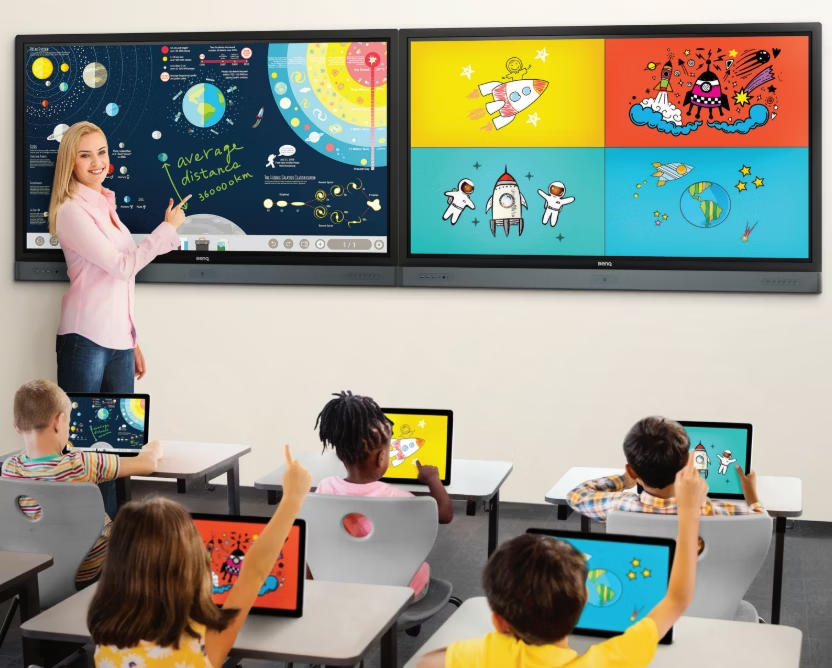
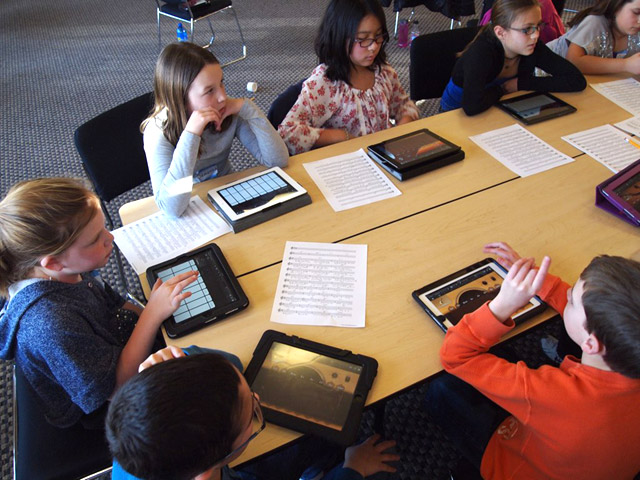

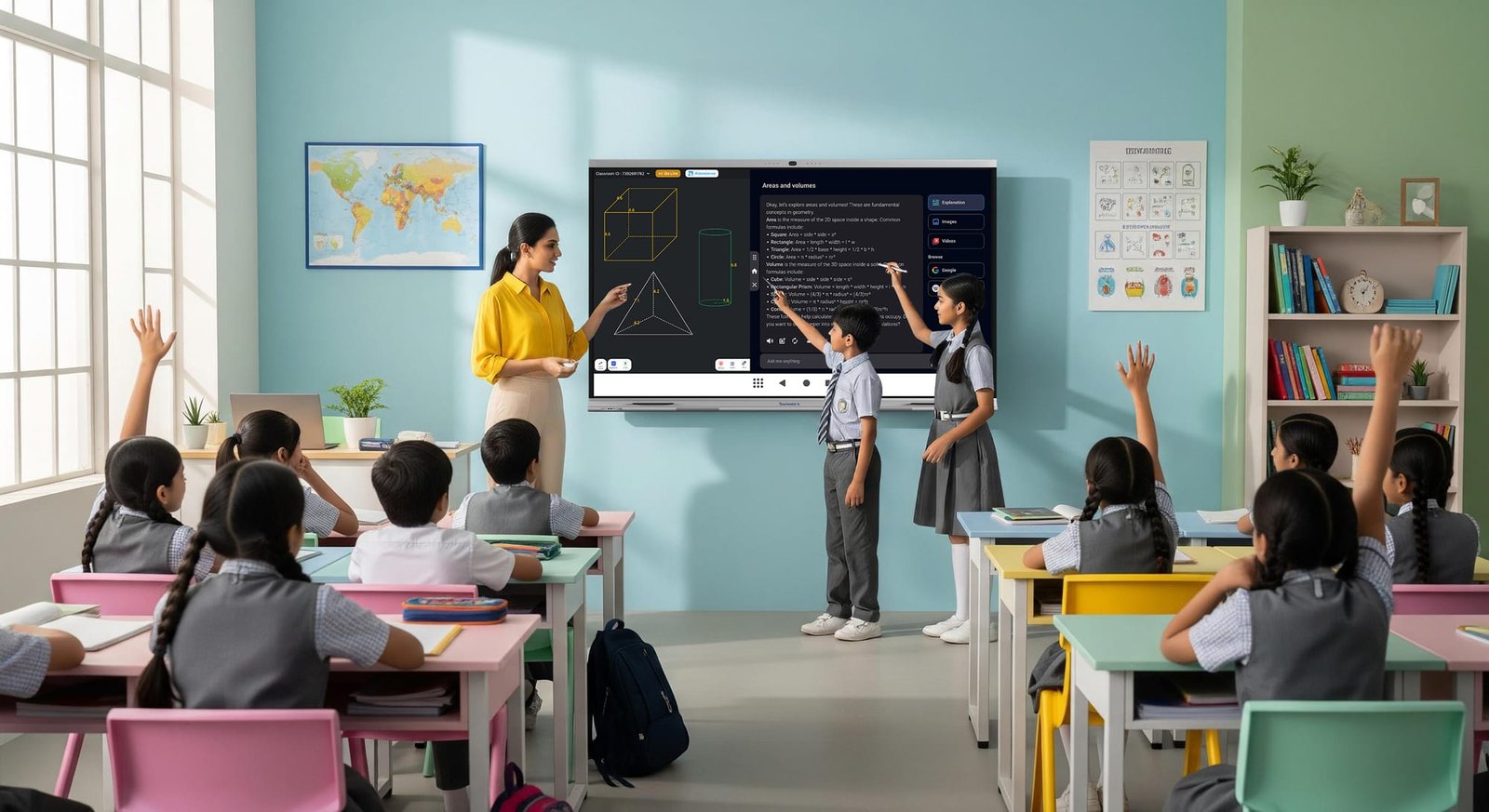
Digital classrooms use smart boards, projectors, tablets, and high-speed internet to enhance learning. Unlike traditional blackboards, interactive whiteboards allow teachers to display videos, animations, and real-time examples.
Benefits:
- Makes lessons more engaging and interactive
- Improves understanding through visual and audio aids
- Encourages participation
- Saves time through digital resources
For example, science experiments can be shown through simulations instead of only theoretical explanations.
2. Online Learning and E-Learning Platforms

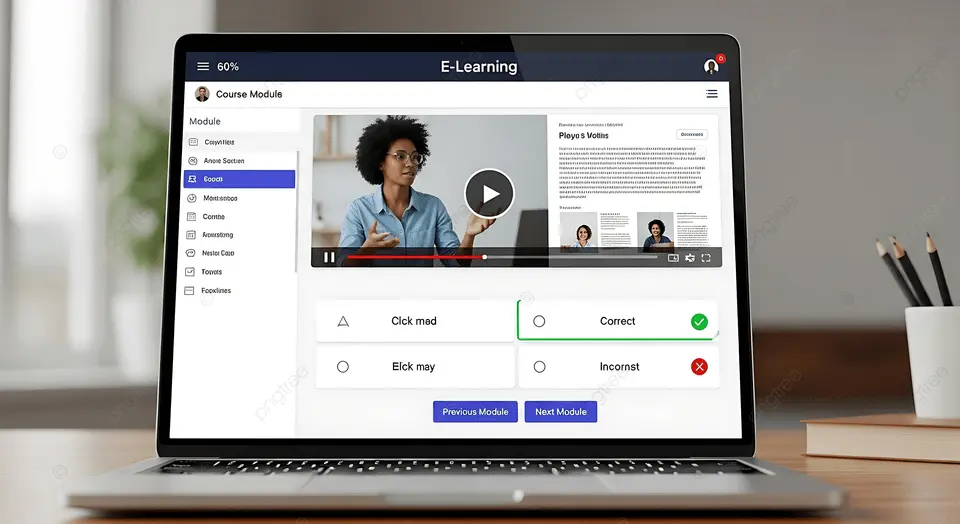

Online education platforms have revolutionized access to knowledge. Platforms like Coursera, Khan Academy, and Byju’s provide courses from school level to professional degrees.
Advantages:
- Learn anytime, anywhere
- Self-paced learning
- Access to global educators
- Affordable or free courses
Students can revisit recorded lectures multiple times for better understanding.
3. Artificial Intelligence (AI) in Education
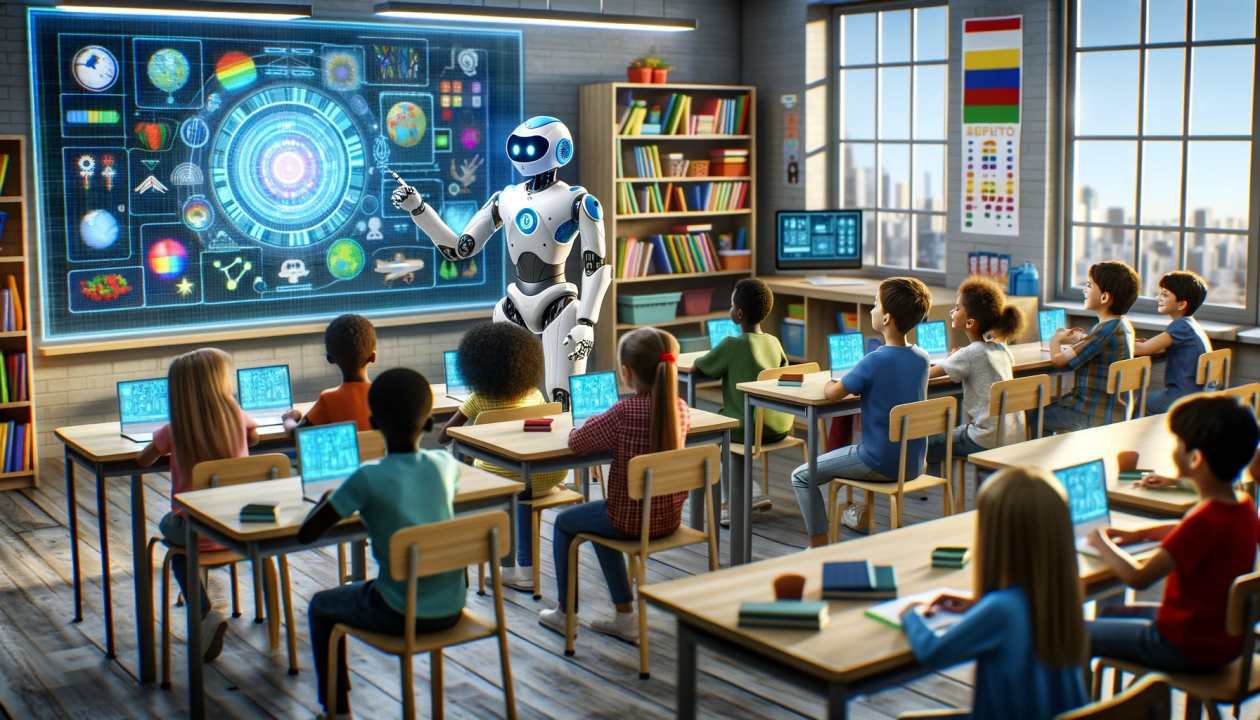



Artificial Intelligence helps personalize education. AI-based platforms analyze students’ strengths and weaknesses and provide customized content.
Uses of AI:
- Automated grading
- Virtual tutors
- Chatbots for student queries
- Adaptive learning systems
AI ensures that slow learners receive additional support while advanced learners are given challenging material.
4. Mobile Learning (M-Learning)
Smartphones have become powerful educational tools. Educational apps allow students to learn on the go.
Benefits:
- Quick access to information
- Learning through apps and videos
- Digital flashcards and quizzes
- Language learning apps
Mobile learning is especially beneficial in developing countries where smartphones are more common than computers.
5. Gamification in Education



Gamification means using game elements like points, rewards, and competition in learning.
Impact:
- Increases motivation
- Makes learning fun
- Encourages healthy competition
- Improves retention of concepts
Students learn better when they enjoy the process.
6. Improved Communication and Collaboration
Technology enables easy communication between teachers, students, and parents.
- Emails and messaging apps
- Online discussion forums
- Group projects through shared documents
- Parent-teacher communication apps
Collaborative tools allow students to work together even from different locations.
7. Access to Vast Educational Resources
The internet provides access to:
- E-books
- Research papers
- Online libraries
- Educational videos
For example, students can watch educational content from National Geographic or academic lectures on YouTube.
8. Skill Development and Career Preparation
Technology prepares students for the digital workplace.
Skills Developed:
- Digital literacy
- Coding and programming
- Research skills
- Online communication
- Critical thinking
Learning platforms offer coding courses, graphic design tutorials, and digital marketing certifications.
9. Inclusive Education
Technology supports students with disabilities through:
- Screen readers
- Speech-to-text software
- Subtitles in videos
- Adjustable font sizes
This ensures equal learning opportunities for all students.
Challenges of Technology in Education
Despite its benefits, technology also has some challenges:
- Digital divide (lack of internet access)
- Distraction due to social media
- Cybersecurity concerns
- Reduced face-to-face interaction
- Over-dependence on devices
Therefore, balanced and responsible use of technology is necessary.
Conclusion
Technology has revolutionized education by making it more accessible, interactive, and personalized. From smart classrooms to AI-based tutors, digital tools have transformed traditional learning methods into modern, efficient systems. While challenges like digital inequality and misuse exist, the benefits of technology in education far outweigh the drawbacks.
In the future, with advancements in artificial intelligence, virtual reality, and augmented reality, education will become even more immersive and globally connected. Thus, technology is not just supporting education—it is redefining it for the better.
The role of technology in education is not merely supportive—it is transformative, revolutionary, and foundational to the future of learning. Over the past few decades, education has undergone a dramatic shift from traditional chalk-and-talk methods to dynamic, interactive, and student-centered approaches powered by digital tools. This transformation reflects a broader global change driven by technological innovation, connectivity, and the rapid exchange of information.
Technology has fundamentally redefined how knowledge is created, delivered, and consumed. In earlier times, learning was confined within classroom walls, limited by textbooks, physical libraries, and face-to-face interaction. Today, with the help of the internet, cloud computing, and digital platforms, education has transcended geographical boundaries. A student in a rural village can attend virtual lectures from prestigious universities, access global research materials, and collaborate with peers worldwide. Platforms such as Khan Academy and Coursera have democratized education by making high-quality learning resources available to millions at little or no cost. This shift has reduced inequality in access to knowledge and opened doors of opportunity for learners from diverse backgrounds.
One of the most significant contributions of technology is personalization in education. Traditional classrooms often follow a “one-size-fits-all” approach, where all students are taught at the same pace regardless of their individual abilities. Technology changes this model by enabling adaptive learning systems that adjust content according to each student’s strengths and weaknesses. Artificial intelligence tools analyze performance data and recommend tailored exercises, additional resources, or advanced challenges. This ensures that slow learners receive necessary support while advanced learners are not held back. Personalized education fosters confidence, reduces stress, and enhances overall academic performance.
Moreover, technology has enhanced engagement and interactivity in learning. Visual aids, animations, simulations, and multimedia presentations make complex concepts easier to understand. For instance, scientific experiments, historical events, and mathematical models can be demonstrated through digital simulations instead of mere theoretical explanation. Such methods stimulate curiosity and encourage critical thinking. Students are no longer passive recipients of information; they actively participate in discussions, virtual labs, and collaborative projects. Interactive tools create a more immersive learning environment that promotes deeper understanding and long-term retention.
The global pandemic of 2020 marked a turning point in educational technology. With schools and universities closed, online learning platforms became essential for continuity. Video conferencing tools like Zoom and classroom management systems such as Google Classroom ensured that education did not come to a complete halt. While the transition was challenging, it demonstrated the resilience and adaptability of the education system when supported by technology. The experience highlighted the importance of digital infrastructure and accelerated the adoption of blended learning models that combine online and offline methods.
Technology also plays a vital role in developing essential 21st-century skills. In today’s digital economy, skills such as digital literacy, problem-solving, communication, collaboration, and creativity are crucial. By using computers, coding platforms, design software, and online research tools, students gain hands-on experience that prepares them for future careers. The integration of technology into education bridges the gap between academic learning and real-world application. Students learn not only subject knowledge but also how to navigate digital environments responsibly and effectively.
Furthermore, technology promotes inclusive education by supporting learners with special needs. Assistive technologies such as screen readers, speech-to-text software, subtitles, and adjustable font sizes enable students with visual, hearing, or learning disabilities to access educational content independently. This fosters equality and ensures that no learner is left behind. Inclusive education powered by technology aligns with the broader goal of creating equitable societies where every individual has the opportunity to thrive.
Collaboration and communication have also been significantly enhanced through technology. Students can work together on shared documents, participate in online forums, and exchange ideas through digital platforms regardless of physical distance. Teachers can communicate with parents more effectively through emails, apps, and online meetings. This interconnected system strengthens the educational community and ensures transparency and accountability.
However, while celebrating these achievements, it is essential to acknowledge the challenges that accompany technological integration. The digital divide remains a significant concern. Not all students have access to reliable internet connections, modern devices, or digital literacy training. Socioeconomic disparities can limit the benefits of educational technology for marginalized communities. Bridging this gap requires government initiatives, public-private partnerships, and investments in infrastructure to ensure equal access for all learners.
Another challenge is the risk of distraction and over-dependence on digital devices. Social media, online games, and non-academic content can divert students’ attention from learning objectives. Excessive screen time may also impact physical health, mental well-being, and social interaction. Therefore, it is crucial to promote responsible usage, digital discipline, and balanced learning practices. Teachers and parents play a vital role in guiding students toward constructive and ethical use of technology.
Cybersecurity and data privacy are additional concerns in digital education. Online platforms collect vast amounts of student data, including personal information and academic records. Protecting this data from breaches and misuse is essential to maintain trust and safety. Educational institutions must implement strong cybersecurity measures and educate students about online safety practices.
Despite these challenges, the advantages of technology in education far outweigh its limitations. The key lies in thoughtful integration rather than blind adoption. Technology should serve as a tool to enhance pedagogy, not replace human interaction. Teachers remain central to the learning process as mentors, facilitators, and role models. Technology complements their efforts by providing resources, efficiency, and innovative methods of instruction.
Looking toward the future, emerging technologies promise even greater transformation. Artificial intelligence, virtual reality (VR), augmented reality (AR), and blockchain have the potential to reshape education further. VR can create immersive virtual laboratories and historical reconstructions. AR can overlay digital information onto real-world objects for interactive learning. AI-driven analytics can predict learning outcomes and recommend targeted interventions. Blockchain technology can secure academic credentials and streamline administrative processes. These advancements indicate that the evolution of educational technology is far from complete.
The integration of technology also supports lifelong learning. In a rapidly changing world, continuous skill development is necessary to remain competitive. Online courses, webinars, and certification programs allow individuals to update their knowledge throughout their lives. This culture of lifelong learning fosters adaptability, innovation, and personal growth.
Ethical considerations must also guide the future of educational technology. Equity, accessibility, inclusivity, and sustainability should remain core priorities. Policymakers and educators must ensure that technological progress does not widen social gaps or compromise human values. Digital education should promote empathy, collaboration, and cultural understanding in addition to academic excellence.
In essence, technology in education represents progress toward a more connected, efficient, and inclusive learning ecosystem. It empowers students to take ownership of their education, equips teachers with advanced tools, and prepares societies for a knowledge-driven future. The transformation is not limited to tools and devices—it reflects a shift in mindset from rigid structures to flexible, learner-centered approaches.
As we move forward, the ultimate goal should not be to replace traditional education entirely but to integrate the best of both worlds. Blended learning models that combine face-to-face interaction with digital innovation can create balanced and holistic educational experiences. Human connection, empathy, and mentorship remain irreplaceable aspects of education, and technology should strengthen—not weaken—these elements.
In conclusion, the role of technology in education is profound and enduring. It has broken barriers, personalized learning, enhanced engagement, fostered inclusivity, and prepared learners for the demands of a digital age. While challenges such as the digital divide, cybersecurity risks, and over-dependence exist, strategic planning and responsible implementation can address these issues effectively. Technology is not merely a trend; it is an integral component of modern education and a catalyst for continuous improvement.
Education is the foundation of progress, and technology is the tool that amplifies its reach and impact. Together, they form a powerful partnership capable of shaping a brighter, more equitable, and innovative future for generations to come.
📚 Advantages and Disadvantages of Technology in Education
Technology has become an integral part of modern education. From smart classrooms and digital boards to online learning platforms and artificial intelligence tools, technology has changed how students learn and how teachers teach. While it offers numerous benefits, it also brings certain challenges. Understanding both sides helps in using technology wisely and effectively.
✅ Advantages of Technology in Education
1️⃣ Easy Access to Information



Technology provides instant access to a vast amount of information through the internet. Students can search for research papers, e-books, educational videos, and tutorials within seconds.
Platforms like Khan Academy and Coursera offer free and paid courses on various subjects.
Benefit: Learning is no longer limited to textbooks and classroom notes.
2️⃣ Flexible Learning (Anytime, Anywhere)
Online learning platforms and virtual classrooms allow students to study at their own pace and time.
Tools like Google Classroom and Zoom make remote learning possible.
Benefit: Students can revisit recorded lectures and manage their study schedule conveniently.
3️⃣ Interactive and Engaging Learning

Multimedia tools such as videos, animations, and simulations make lessons more interesting.
- Science experiments can be demonstrated through simulations.
- Historical events can be shown through documentaries.
- Math concepts can be explained using animated graphics.
Benefit: Improves understanding and retention of concepts.
4️⃣ Personalized Learning
Artificial Intelligence (AI) tools analyze student performance and provide customized content based on strengths and weaknesses.
Benefit:
- Slow learners receive additional support.
- Advanced learners get challenging material.
This increases confidence and academic success.
5️⃣ Improved Communication and Collaboration
Technology allows easy communication between students, teachers, and parents through emails, chat apps, and online forums.
Students can collaborate on projects using shared documents and online tools.
Benefit: Encourages teamwork and better coordination.
6️⃣ Development of Digital Skills
In today’s digital world, students must learn:
- Computer literacy
- Online research skills
- Coding and programming
- Digital communication
Technology in education prepares students for future careers in the digital economy.
7️⃣ Inclusive Education

Assistive technologies support students with disabilities.
Examples:
- Screen readers for visually impaired students
- Subtitles for hearing-impaired learners
- Speech-to-text tools
Benefit: Ensures equal learning opportunities for all.
❌ Disadvantages of Technology in Education
1️⃣ Digital Divide
Not all students have access to:
- High-speed internet
- Smartphones or laptops
- Proper digital infrastructure
This creates inequality between urban and rural or wealthy and poor students.
2️⃣ Distractions and Reduced Focus




Students may get distracted by:
- Social media
- Online games
- Entertainment websites
Problem: Decreases concentration and productivity.
3️⃣ Reduced Face-to-Face Interaction
Excessive online learning may reduce:
- Social interaction
- Emotional bonding
- Classroom discussions
Students may feel isolated or disconnected from peers and teachers.
4️⃣ Health Issues
Long screen time can cause:
- Eye strain
- Headaches
- Poor posture
- Sleep problems
Overuse of devices may also affect mental health.
5️⃣ Cybersecurity and Privacy Risks
Online platforms collect personal data. Risks include:
- Data breaches
- Cyberbullying
- Online scams
- Hacking
Students need proper guidance about online safety.
6️⃣ Over-Dependence on Technology
Students may become too dependent on:
- Online calculators
- Search engines
- AI tools
This can reduce critical thinking and problem-solving skills if not balanced properly.
7️⃣ High Cost of Implementation
Schools need to invest in:
- Smart boards
- Computers
- Software licenses
- Internet infrastructure
This can be expensive, especially for government school.
100 MCQs on Technology in Education.
1. Technology in education mainly helps to:
A) Increase homework
B) Replace teachers completely
C) Improve learning methods
D) Reduce school buildings
Answer: C
2. Online learning allows students to:
A) Study only in classrooms
B) Learn anytime and anywhere
C) Avoid exams
D) Stop reading books
Answer: B
3. Which is an example of an online learning platform?
A) Blackboard chalk
B) Library shelf
C) Khan Academy
D) Notebook
Answer: C
4. Smart boards are used in classrooms to:
A) Cook food
B) Display digital content
C) Replace students
D) Lock classrooms
Answer: B
5. Artificial Intelligence in education helps in:
A) Closing schools
B) Personalized learning
C) Reducing subjects
D) Removing exams
Answer: B
6. One major benefit of digital learning is:
A) Limited resources
B) Instant access to information
C) No need to study
D) No interaction
Answer: B
7. The digital divide refers to:
A) Division of textbooks
B) Gap between those with and without technology access
C) School competition
D) Online exams
Answer: B
8. Online classes became common during:
A) Industrial Revolution
B) World War I
C) COVID-19 pandemic
D) Ancient times
Answer: C
9. Which tool is commonly used for virtual meetings?
A) Pen
B) Zoom
C) Blackboard
D) Chalk
Answer: B
10. E-books are:
A) Printed books
B) Digital versions of books
C) Newspapers
D) Magazines only
Answer: B
11. Gamification in education means:
A) Playing only sports
B) Using game elements in learning
C) Avoiding studies
D) Writing games
Answer: B
12. Technology improves collaboration through:
A) Isolation
B) Shared online documents
C) No communication
D) Paper-only projects
Answer: B
13. A disadvantage of technology is:
A) Easy access
B) Personalized learning
C) Distraction
D) Flexibility
Answer: C
14. Which skill is improved by technology?
A) Digital literacy
B) Illiteracy
C) Laziness
D) Confusion
Answer: A
15. Screen readers help:
A) Teachers
B) Visually impaired students
C) Printers
D) Drivers
Answer: B
16. Online exams are conducted using:
A) Smart boards
B) Digital platforms
C) Chalk
D) Paper only
Answer: B
17. Excessive screen time may cause:
A) Better eyesight
B) Eye strain
C) Strong muscles
D) Faster writing
Answer: B
18. Cloud computing allows:
A) Storing data online
B) Rainfall
C) Air pollution
D) Offline study only
Answer: A
19. Technology makes education:
A) Limited
B) Expensive only
C) More accessible
D) Impossible
Answer: C
20. Which is a learning management system?
A) Google Classroom
B) Pencil
C) Notebook
D) Desk
Answer: A
21. Virtual reality in education provides:
A) Physical books
B) Immersive experiences
C) Chalk writing
D) Handwriting practice
Answer: B
- Online discussion forums promote:
A) Silence
B) Collaboration
C) Isolation
D) Competition only
Answer: B - Technology supports inclusive education by:
A) Excluding students
B) Providing assistive tools
C) Removing exams
D) Limiting access
Answer: B - AI-based grading saves:
A) Paper only
B) Time and effort
C) Money only
D) Electricity
Answer: B - Cybersecurity protects against:
A) Rain
B) Hackers
C) Homework
D) Exams
Answer: B
26. Educational apps are mainly used for:
A) Cooking
B) Learning subjects
C) Driving
D) Cleaning
Answer: B
- Blended learning combines:
A) Online and offline learning
B) Games only
C) Exams only
D) Sports only
Answer: A - Digital literacy means:
A) Ability to read books
B) Ability to use digital tools effectively
C) Writing letters
D) Painting
Answer: B - One risk of online learning is:
A) Data privacy issues
B) Better flexibility
C) Easy access
D) Interactive learning
Answer: A - Technology encourages:
A) Passive learning
B) Active learning
C) No learning
D) Book burning
Answer: B
- Multimedia includes:
A) Text only
B) Audio and video
C) Chalk only
D) Board only
Answer: B - Coding classes help students develop:
A) Cooking skills
B) Programming skills
C) Farming skills
D) Driving skills
Answer: B - The main aim of technology in education is to:
A) Replace books completely
B) Enhance learning experience
C) Close schools
D) Increase exams
Answer: B - Online libraries provide:
A) Physical chairs
B) Digital resources
C) Sports equipment
D) Uniforms
Answer: B - One challenge of technology is:
A) Lack of infrastructure
B) Improved communication
C) Easy updates
D) Flexibility
Answer: A
36. M-learning stands for:
A) Machine learning
B) Modern learning
C) Mobile learning
D) Manual learning
Answer: C
37. AI tutors mainly provide:
A) Printed notes
B) Personalized help
C) Physical classrooms
D) Sports training
Answer: B
38. Digital whiteboards are used to:
A) Replace teachers
B) Cook food
C) Replace traditional blackboards
D) Lock classrooms
Answer: C
39. Online quizzes help in:
A) Entertainment only
B) Quick assessment
C) Avoiding exams
D) Cancelling classes
Answer: B
40. Online learning mainly requires:
A) Blackboard
B) Chalk
C) Paper
D) Internet connection
Answer: D
41. Technology in education increases:
A) Global connectivity
B) Isolation
C) Illiteracy
D) Confusion
Answer: A
42. Assistive technology mainly supports:
A) Teachers only
B) Parents only
C) Students with disabilities
D) Drivers
Answer: C
43. Excessive gaming during study leads to:
A) Focus
B) Distraction
C) Better grades
D) Physical fitness
Answer: B
44. E-learning reduces:
A) Knowledge
B) Learning speed
C) Interest
D) Travel time
Answer: D
45. A data breach means:
A) Safe data storage
B) Unauthorized access to data
C) Faster internet
D) Free learning
Answer: B
46. Online certifications improve:
A) Cooking skills
B) Career prospects
C) Sleeping habits
D) Sports ability
Answer: B
47. AR stands for:
A) Active Reading
B) Artificial Response
C) Augmented Reality
D) Academic Report
Answer: C
48. Digital notes can be:
A) Burned easily
B) Shared easily
C) Lost forever
D) Printed only
Answer: B
49. EdTech refers to:
A) Editing technology
B) Educational technology
C) Electrical tools
D) Economic theory
Answer: B
50. Over-dependence on technology may reduce:
A) Electricity use
B) Critical thinking
C) Screen time
D) Internet speed
Answer: B
51. Online collaboration uses:
A) Shared documents
B) Chalk
C) Erasers
D) Desks
Answer: A
52. Screen fatigue mainly affects:
A) Ears
B) Hands
C) Eyes
D) Feet
Answer: C
53. Learning Management Systems track:
A) Weather
B) Student progress
C) Traffic
D) Food habits
Answer: B
54. MOOCs are:
A) Printed books
B) Massive Open Online Courses
C) Offline exams
D) Manual classes
Answer: B
55. Technology makes learning more:
A) Rigid
B) Expensive only
C) Flexible
D) Boring
Answer: C
56. Smart classrooms include:
A) Digital devices
B) Only chalk
C) Only benches
D) No technology
Answer: A
57. AI analyzes:
A) Weather
B) Performance data
C) School uniforms
D) Attendance sheets only
Answer: B
58. Cyberbullying occurs:
A) In playground
B) Online
C) In library
D) At home only
Answer: B
59. Tablets are mainly used for:
A) Cooking
B) Digital learning
C) Farming
D) Driving
Answer: B
60. Online exams need:
A) Pencil
B) Blackboard
C) Desk
D) Internet
Answer: D
61. E-books help save:
A) Electricity
B) Paper
C) Water
D) Uniforms
Answer: B
62. Educational podcasts are:
A) Video games
B) Audio learning resources
C) Printed books
D) Newspapers
Answer: B
63. Technology encourages:
A) Passive learning
B) Self-learning
C) Laziness
D) Isolation
Answer: B
64. Online group projects promote:
A) Competition only
B) Teamwork
C) Isolation
D) Silence
Answer: B
65. Virtual labs simulate:
A) Exams
B) Sports
C) Experiments
D) Homework
Answer: C
66. Technology improves:
A) Confusion
B) Engagement
C) Noise
D) Delay
Answer: B
67. Digital divide affects:
A) Equality in education
B) Weather
C) Sports
D) Food supply
Answer: A
68. Automated grading reduces:
A) Manual effort
B) Learning
C) Subjects
D) Exams
Answer: A
69. Interactive content increases:
A) Boredom
B) Interest
C) Sleep
D) Stress
Answer: B
70. Internet safety is:
A) Optional
B) Important
C) Useless
D) Expensive
Answer: B
71. Online tools enhance:
A) Creativity
B) Illiteracy
C) Laziness
D) Distraction
Answer: A
72. Recorded lectures allow:
A) Deletion
B) Revision
C) Confusion
D) Absence
Answer: B
73. AI chatbots answer:
A) Homework only
B) Queries
C) Exams
D) Attendance
Answer: B
74. Digital classrooms reduce:
A) Learning
B) Paper usage
C) Students
D) Subjects
Answer: B
75. Tech-based learning is:
A) Teacher-centered only
B) Student-centered
C) Offline only
D) Limited
Answer: B
76. E-learning platforms provide:
A) Courses
B) Uniforms
C) Furniture
D) Lunch
Answer: A
77. Smart devices include:
A) Tablets
B) Chalk
C) Boards
D) Desks
Answer: A
78. Cybersecurity prevents:
A) Reading
B) Hacking
C) Studying
D) Exams
Answer: B
79. Technology requires:
A) Careless use
B) Responsible use
C) No rules
D) Overuse
Answer: B
80. Online resources are:
A) Limited
B) Vast
C) Hidden
D) Closed
Answer: B
81. EdTech promotes:
A) Innovation
B) Illiteracy
C) Confusion
D) Delay
Answer: A
82. Online platforms increase:
A) Accessibility
B) Isolation
C) Distance
D) Boredom
Answer: A
83. Excessive technology use may reduce:
A) Interest
B) Physical activity
C) Grades
D) Communication
Answer: B
84. Cloud storage keeps data:
A) Offline
B) On paper
C) Online
D) Hidden
Answer: C
85. Hybrid learning combines:
A) Sports & exams
B) Online & offline learning
C) Homework & games
D) Tests & projects
Answer: B
86. Assistive tools support:
A) Inclusion
B) Isolation
C) Competition
D) Exams
Answer: A
87. Internet misuse leads to:
A) Focus
B) Distraction
C) Success
D) Confidence
Answer: B
88. Online education reduces:
A) Knowledge
B) Geographical barriers
C) Teachers
D) Exams
Answer: B
89. Digital tools support:
A) Research
B) Sleeping
C) Ignorance
D) Noise
Answer: A
90. Technology prepares students for:
A) Past careers
B) Future careers
C) No jobs
D) Farming only
Answer: B
91. Gamified learning increases:
A) Stress
B) Motivation
C) Confusion
D) Sleep
Answer: B
92. Video lectures enhance:
A) Understanding
B) Laziness
C) Distraction
D) Noise
Answer: A
93. Online surveys collect:
A) Homework
B) Feedback
C) Exams
D) Games
Answer: B
94. AI can identify:
A) Weather
B) Learning gaps
C) Uniform size
D) Lunch menu
Answer: B
95. Technology integration requires:
A) Planning
B) Random use
C) No training
D) Ignorance
Answer: A
96. Data privacy is:
A) Unimportant
B) Essential
C) Optional
D) Expensive
Answer: B
97. Online mentoring supports:
A) Students
B) Machines
C) Buildings
D) Uniforms
Answer: A
98. Digital collaboration builds:
A) Isolation
B) Communication skills
C) Laziness
D) Noise
Answer: B
99. Technology promotes:
A) Lifelong learning
B) Illiteracy
C) Boredom
D) Confusion
Answer: A
100. Balanced use of technology ensures:
A) Distraction
B) Effective education
C) No learning
D) Screen addiction
Answer: B
Short question answer.
1. What is technology in education?
Technology in education refers to the use of digital tools, devices, and software to enhance teaching and learning. It includes computers, smart boards, online platforms, and educational apps. It makes learning more interactive and accessible.
2. Why is technology important in modern education?
Technology improves access to information and supports flexible learning. It helps students develop digital skills needed for future careers. It also makes lessons more engaging and interactive.
3. What is e-learning?
E-learning is learning conducted through electronic devices, mainly via the internet. It allows students to access courses, lectures, and study materials online. It supports both live and recorded learning.
4. What are smart classrooms?
Smart classrooms are digitally equipped classrooms with smart boards, projectors, and internet access. They allow teachers to use multimedia presentations and online resources. This enhances student engagement.
5. How does technology support personalized learning?
Technology uses AI tools to analyze student performance. It provides customized lessons based on strengths and weaknesses. This helps students learn at their own pace.
6. What is the digital divide?
The digital divide refers to the gap between people who have access to technology and those who do not. It affects equal learning opportunities. It is common in rural and economically weaker areas.
7. How did online learning grow during COVID-19?
During the pandemic, schools were closed, and online platforms became essential. Tools like virtual classrooms ensured continuity in education. It increased global acceptance of digital learning.
8. What is a Learning Management System (LMS)?
An LMS is a platform used to manage and deliver educational courses online. It tracks attendance, assignments, and grades. It simplifies classroom management.
9. What is mobile learning (M-learning)?
Mobile learning is studying using smartphones or tablets. It allows students to learn anytime and anywhere. Educational apps make learning convenient and flexible.
10. What is gamification in education?
Gamification involves using game elements like points and rewards in learning. It increases motivation and student participation. It makes education fun and interactive.
11. How does technology improve collaboration?
Students can work on shared documents and projects online. They can communicate through chats and discussion forums. This encourages teamwork even from different locations.
12. What are virtual classrooms?
Virtual classrooms are online learning spaces where teachers and students interact through video conferencing. They simulate real classroom environments. They allow live discussions and lectures.
13. What are digital textbooks?
Digital textbooks are electronic versions of printed books. They can be accessed on computers or tablets. They are portable and environmentally friendly.
14. How does AI help in education?
AI helps by analyzing student data and providing personalized feedback. It can automate grading and answer queries through chatbots. It improves efficiency and accuracy.
15. What are assistive technologies?
Assistive technologies help students with disabilities. Examples include screen readers and speech-to-text tools. They promote inclusive education.
16. What are the benefits of online assessments?
Online assessments provide instant results and save time. They reduce paper usage and manual grading. They also allow remote examination.
17. How does technology save time for teachers?
It automates grading and attendance tracking. Teachers can use ready-made digital resources. This allows them to focus more on teaching.
18. What are the disadvantages of excessive screen time?
Too much screen time can cause eye strain and headaches. It may reduce physical activity. It can also impact mental health.
19. What is blended learning?
Blended learning combines traditional classroom teaching with online learning. It offers flexibility and face-to-face interaction. It balances digital and physical education.
20. How does technology increase access to information?
Students can search for information instantly using the internet. Online libraries and databases provide vast resources. This expands learning beyond textbooks.
21. What is digital literacy?
Digital literacy is the ability to use digital devices effectively and safely. It includes skills like online research and communication. It is essential in modern education.
22. How does technology support research?
Students can access academic journals and online libraries. They can gather global information quickly. It improves research quality.
23. What are MOOCs?
MOOCs are Massive Open Online Courses. They provide free or affordable courses online. They allow global participation.
24. What is cybersecurity in education?
Cybersecurity protects student data from hacking and misuse. Schools must secure online platforms. Students should be aware of online safety.
25. What are virtual labs?
Virtual labs simulate scientific experiments digitally. They allow safe experimentation. They are useful when physical labs are unavailable.
26. How does technology promote self-learning?
Students can access recorded lectures and tutorials anytime. They can revise topics independently. It builds confidence and responsibility.
27. What is cloud storage?
Cloud storage stores data online instead of on physical devices. It allows easy sharing and access. It prevents data loss.
28. How does technology reduce paper use?
Digital notes and e-books replace printed materials. Assignments can be submitted online. This supports environmental sustainability.
29. What is online collaboration?
Online collaboration means working together using digital tools. Students share files and ideas virtually. It enhances teamwork skills.
30. How does technology prepare students for careers?
It develops digital skills like coding and data analysis. It improves communication and problem-solving abilities. These skills are required in modern workplaces.
- What is an educational app?
An educational app is a mobile or computer application designed for learning. It offers lessons, quizzes, and practice exercises. It supports flexible learning. - How does technology support inclusive education?
It provides tools for students with disabilities. Features like subtitles and screen readers ensure accessibility. It promotes equal opportunities. - What are the risks of online learning?
Risks include distraction, cyberbullying, and privacy issues. Students may misuse the internet. Proper supervision is needed. - What is virtual reality in education?
Virtual reality creates immersive digital environments. It allows students to explore simulations. It enhances practical understanding. - How does technology enhance engagement?
Multimedia and interactive tools attract attention. Students participate more actively. Learning becomes enjoyable. - What is an online forum?
An online forum is a digital discussion space. Students ask questions and share ideas. It promotes communication. - What is screen fatigue?
Screen fatigue is tiredness caused by long device use. It affects eyes and concentration. Breaks are important. - How does technology improve feedback?
Teachers can provide instant digital feedback. Students quickly understand mistakes. It improves performance. - What is cyberbullying?
Cyberbullying is online harassment. It harms students emotionally. Schools must prevent it. - How does technology save costs?
Digital resources reduce printing expenses. Online meetings save travel costs. It can be economical long-term.
41. What is hybrid learning?
Hybrid learning is a method that combines traditional classroom teaching with online instruction. Students attend physical classes along with virtual sessions. It offers flexibility and personal interaction. This approach balances technology and face-to-face learning effectively.
42. How does Artificial Intelligence help identify learning gaps?
AI analyzes students’ performance data such as quiz scores and assignment results. It identifies weak areas where students need improvement. Based on this analysis, it suggests personalized study materials. This helps in improving academic performance.
43. What are webinars in education?
Webinars are online seminars conducted through video conferencing platforms. They allow experts and teachers to connect with students globally. Participants can ask questions and interact in real time. Webinars expand learning beyond classroom walls.
44. What is digital assessment?
Digital assessment refers to evaluating students using online platforms. Exams, quizzes, and assignments are conducted electronically. Results are often generated instantly. It saves time and reduces paper usage.
45. How does technology make teaching more effective?
Technology provides multimedia tools like videos and presentations. It automates grading and attendance systems. Teachers can track progress easily. This improves efficiency and classroom engagement.
46. What is an e-library?
An e-library is an online collection of digital books and research materials. Students can access it anytime from any device. It provides updated academic content. It reduces dependency on physical books.
47. What are online certifications?
Online certifications are digital documents awarded after course completion. They validate skills and knowledge in a subject. These certifications enhance career opportunities. Many employers recognize them globally.
48. How does technology promote creativity among students?
Students use digital tools to design presentations, videos, and apps. Creative software encourages innovation and imagination. They can experiment with ideas easily. Technology turns creative thoughts into practical projects.
49. What is video conferencing in education?
Video conferencing allows live communication between teachers and students. It supports online lectures and discussions. Students can interact and ask questions instantly. It became popular during remote learning periods.
50. Why is internet safety important in education?
Internet safety protects students from cyberbullying and hacking. It safeguards personal and academic data. Students must follow safe browsing practices. Awareness ensures a secure learning environment.
51. How does digital collaboration improve teamwork?
Digital collaboration tools allow students to work together remotely. They share documents and ideas online. This improves communication and coordination skills. It prepares them for future workplaces.
52. How does technology improve communication in schools?
Teachers and students communicate through emails and messaging apps. Parents receive updates digitally. Information sharing becomes faster and clearer. This strengthens school relationships.
53. Why are e-books considered eco-friendly?
E-books reduce the need for printed paper. This helps conserve trees and natural resources. They can store many books in one device. It supports environmental sustainability.
54. How does cloud storage benefit students?
Cloud storage allows students to save files online securely. They can access their work from any device. It prevents data loss due to hardware damage. Sharing files becomes easy and quick.
55. How do online tools develop problem-solving skills?
Interactive apps provide challenges and puzzles. Students analyze situations to find solutions. Instant feedback helps them correct mistakes. This enhances critical thinking abilities.
56. Why are recorded lectures useful?
Recorded lectures allow students to review lessons anytime. They can pause and replay difficult topics. This supports better understanding. It encourages independent learning.
57. What is the role of AI chatbots in education?
AI chatbots answer student queries instantly. They provide information about assignments and schedules. They are available 24/7. This improves accessibility to academic support.
58. What are educational podcasts?
Educational podcasts are audio learning programs. Students can listen while traveling or resting. They improve listening and comprehension skills. Learning becomes flexible and convenient.
59. How does the digital divide impact education?
Students without internet or devices cannot access online learning. This creates inequality in education. Rural and low-income areas are most affected. Efforts are needed to reduce this gap.
60. How does technology encourage lifelong learning?
Online platforms offer courses for all age groups. Professionals can upgrade skills anytime. Learning continues beyond formal education. Technology supports continuous personal growth.
61. Why are digital skills essential for students?
Digital skills help students operate computers and online tools. They are required in modern careers. These skills improve research and communication abilities. They enhance employability.
62. How do online surveys benefit schools?
Online surveys collect feedback from students quickly. Teachers analyze responses to improve teaching. They save time compared to paper forms. This supports better decision-making.
63. What is a virtual classroom?
A virtual classroom is an online learning environment. Teachers conduct lessons through video conferencing tools. Students participate from remote locations. It replicates classroom interaction digitally.
64. How does technology support distance education?
Distance education uses digital platforms to deliver lessons. Students can learn from anywhere. It removes geographical limitations. Education becomes more accessible.
65. Why are online resources considered vast?
The internet offers unlimited books, videos, and research articles. Students access global knowledge easily. Content is regularly updated. It expands learning opportunities significantly.
66. How does gamification improve student motivation?
Gamification uses points, badges, and rewards. Students feel encouraged to achieve goals. Learning becomes enjoyable and competitive. It increases participation and retention.
67. How does automation benefit education?
Automation reduces manual grading and record keeping. It increases efficiency and accuracy. Teachers save valuable time. They can focus more on teaching.
68. How do digital tools improve presentation skills?
Students create slideshows and multimedia projects. They learn to organize ideas clearly. This builds confidence and communication skills. It prepares them for professional settings.
69. How can excessive technology affect health?
Long screen time may cause eye strain and headaches. It reduces physical activity. It may affect mental well-being. Balanced usage is important.
70. What is online mentoring?
Online mentoring connects students with experts digitally. They receive career and academic guidance. It is flexible and convenient. It supports personal development.
71. How does LMS help teachers?
A Learning Management System tracks attendance and grades. It organizes assignments and materials. Teachers monitor progress easily. It improves academic management.
72. How does technology ensure inclusive education?
Assistive tools help students with disabilities. Screen readers and subtitles improve accessibility. Equal opportunities are provided. Education becomes barrier-free.
73. How does AI provide instant feedback?
AI systems evaluate answers immediately. Students learn mistakes quickly. Suggestions for improvement are given. Learning becomes more efficient.
74. How does digital learning promote independence?
Students manage their own study schedules. They choose topics and pace of learning. It builds responsibility and self-confidence. Independent learning improves discipline.
75. How does the internet provide global exposure?
Students connect with peers worldwide. They learn about different cultures and ideas. Global competitions and webinars are accessible. It broadens perspectives.
76. Why is data privacy crucial in education?
Schools store sensitive student information online. Data privacy prevents misuse and hacking. Secure systems protect trust. Safety is essential in digital learning.
77. How do smart devices simplify learning?
Smartphones and tablets provide access to apps and notes. Students can study anytime. Learning materials are portable. It increases convenience.
78. How does e-learning save time and money?
Students avoid travel expenses. Classes can be attended from home. It reduces printing costs. It is cost-effective in many cases.
79. How does multimedia enhance learning?
Videos and animations explain complex topics clearly. Audio-visual content improves memory retention. Students stay engaged. Concepts become easier to understand.
80. How does online collaboration break geographical barriers?
Students from different regions work together. Ideas are shared digitally. Cultural understanding improves. Education becomes globally connected.
81. What is digital literacy?
Answer:
Digital literacy is the ability to use digital devices, software, and the internet effectively and responsibly. It includes skills like online research, communication, and data evaluation. Students with digital literacy can identify reliable information. It is essential for academic and professional success in the modern world.
82. How does technology help in distance learning?
Answer:
Technology enables students to attend classes from anywhere through video conferencing and online platforms. It provides access to digital study materials and recorded lectures. Teachers can conduct live discussions and assessments online. This makes education flexible and accessible.
83. What is the role of teachers in a technology-based classroom?
Answer:
Teachers act as guides and facilitators rather than just information providers. They help students use technology effectively and responsibly. Teachers design interactive lessons using digital tools. Their role is to ensure technology supports learning goals.
84. How can technology improve student engagement?
Answer:
Technology uses videos, animations, and interactive quizzes to make lessons interesting. Gamified learning platforms motivate students through rewards and challenges. Virtual simulations make complex topics easier to understand. This increases participation and curiosity.
85. What is cyberbullying in education?
Answer:
Cyberbullying refers to harassment or bullying through digital platforms like social media or messaging apps. It can harm students emotionally and psychologically. Schools must teach digital ethics and online safety. Monitoring and awareness help prevent such issues.
86. How does technology support collaborative learning?
Answer:
Students can work together on shared documents and online discussion forums. Video conferencing tools allow group meetings even from different locations. Collaboration tools improve communication and teamwork skills. This prepares students for modern workplaces.
87. What are smart classrooms?
Answer:
Smart classrooms use digital boards, projectors, and internet-enabled devices. Teachers present lessons using multimedia content. Students interact through tablets or laptops. This modern setup enhances understanding and engagement.
88. How does artificial intelligence help in education?
Answer:
AI analyzes student performance and provides personalized learning paths. It can recommend extra practice materials where needed. Chatbots and AI tutors offer instant support. This improves learning efficiency and outcomes.
89. What are online assessments?
Answer:
Online assessments are tests conducted through digital platforms. They provide instant results and performance analysis. Teachers can easily track student progress. However, they require proper monitoring to prevent cheating.
90. How does technology promote self-learning?
Answer:
Students can access tutorials, e-books, and online courses independently. Recorded lectures allow revision at any time. Search engines help clarify doubts instantly. This encourages responsibility and independent learning habits.
91. What is blended learning?
Answer:
Blended learning combines traditional classroom teaching with online learning. Students attend physical classes and also use digital resources. It offers flexibility and interactive learning opportunities. This approach balances technology and personal interaction.
92. How does technology affect student creativity?
Answer:
Technology provides tools for designing, editing, and creating digital projects. Students can make videos, presentations, and digital art. Creative software enhances imagination and innovation. However, over-dependence may reduce original thinking.
93. What are educational apps?
Answer:
Educational apps are software programs designed for learning purposes. They include language learning apps, math practice apps, and science simulations. These apps make learning interactive and fun. Many apps track progress and provide feedback.
94. How can technology reduce paperwork in schools?
Answer:
Digital records replace physical files and notebooks. Attendance, grades, and assignments can be managed online. This saves time and storage space. It also improves accuracy and organization.
95. What is the digital divide?
Answer:
The digital divide refers to the gap between those who have access to technology and those who do not. Students without devices or internet face disadvantages. It creates inequality in education. Governments must work to reduce this gap.
96. How does technology prepare students for future careers?
Answer:
Students learn computer skills, coding, and digital communication. Many modern jobs require technological knowledge. Early exposure builds confidence and competence. This increases employability in the digital economy.
97. What are the health risks of excessive technology use?
Answer:
Long screen time may cause eye strain and headaches. Poor posture can lead to back and neck pain. Excessive device use may disturb sleep patterns. Balanced usage is important for good health.
98. How can schools ensure safe use of technology?
Answer:
Schools can install security software and content filters. Teachers should educate students about online safety rules. Parental monitoring also plays a role. Regular awareness programs reduce risks.
99. Does technology replace teachers?
Answer:
No, technology does not replace teachers. It supports teaching by providing tools and resources. Teachers provide emotional guidance and motivation. Human interaction remains essential in education.
100. What is the future of technology in education?
Answer:
The future includes AI-based tutors, virtual reality classrooms, and smart learning systems. Education will become more personalized and interactive. Technology will continue evolving rapidly. However, balanced and responsible use will remain crucial.




Leave a Reply