


The “modern style” of mobile usage has shifted from simply having a powerful tool in your pocket to creating a seamless, integrated lifestyle ecosystem. We’ve moved past the era of “there’s an app for that” and into the era of “my phone predicts what I need.”
Here is how mobile usage has evolved into its current modern form:
- The “Minimalist” Digital Aesthetic
Modern users are moving away from cluttered home screens. The current trend focuses on:
- Widget-First Layouts: Using Stacked Widgets (iOS) or Smart Cards (Android) to see weather, calendar events, and fitness stats without ever opening an app.
- Focus Modes: Automatically changing home screens based on the time of day (e.g., a “Work” screen with Slack and Email, and a “Sleep” screen with just Meditate and Kindle).
- Monochromatic Icons: Using custom icon packs to reduce visual overstimulation and “dopamine loops.”
- AI as a Co-Pilot
We no longer just “search” on mobile; we collaborate.
- Generative Assistance: Using tools like Gemini to draft emails on the go, summarize long articles, or remove “photobombers” from pictures instantly using Magic Eraser.
- Live Translation: Using the camera to translate menus in real-time or using “Circle to Search” to identify objects in a video without switching apps.
- The “Invisible” Wallet
Modern mobile style is defined by how little else you carry.
- Digital Keys: Storing car keys, hotel room keys, and home smart locks in the mobile wallet.
- Biometric Dominance: Using FaceID or under-display fingerprints for everything from buying coffee to logging into bank accounts, making physical cards nearly obsolete.
- Content Creation & “Verticalism”
Mobile devices are now primary production studios rather than just consumption devices.
- Mobile Cinematography: High-bitrate video and “Log” recording allow users to film professional-grade content directly on their phones.
- Computational Photography: Modern phones use complex math to simulate professional lenses. For example, calculating depth of field (bokeh) can be represented by the simplified Gaussian blur relationship:
Comparison: Traditional vs. Modern Usage
| Feature | Traditional Style | Modern Style |
|—|—|—|
| Interaction | Tapping icons | Voice, Gestures, & AI Automation |
| Connectivity | Standalone device | Hub for Watch, Buds, & Smart Home |
| Navigation | Looking at a map | Augmented Reality (AR) overlays |
| Privacy | Open permissions | App Tracking Transparency & Sandboxing |
In the modern style, a “Routine” isn’t just a schedule; it’s an automation layer that makes your phone adapt to your life without you touching it. Whether you use iOS Shortcuts, Samsung Modes and Routines, or Google Assistant Routines, the goal is “set it and forget it.”
Here are the four most powerful modern routines to set up today:
- The “Deep Work” Fortress
Modern distractions are the enemy of flow. This routine triggers when you arrive at a specific location (office/library) or open a productivity app (Notion/Slack).
- Trigger: App Open (e.g., Notion) OR Location-based.
- Actions: * Turn on Do Not Disturb (allow only “Time Sensitive” notifications).
- Set Grayscale mode (removes the “color craving” for social media).
- Auto-play a specific Lo-fi or White Noise playlist.
- The “Cinema & Streaming” Mode
Stop toggling your settings every time you want to watch a movie.
- Trigger: Opening Netflix, YouTube, or Disney+.
- Actions:
- Enable Auto-Rotate (landscape).
- Set brightness to 70% and Volume to 80%.
- Turn off Notifications (to prevent pop-ups during the climax).
- Switch screen refresh rate to 60Hz (to save battery, as movies don’t need 120Hz).
- The “Smart Commute”
Modern style is about hands-free efficiency while moving.
- Trigger: Phone connects to Car Bluetooth or CarPlay/Android Auto.
- Actions:
- Auto-Read Messages: Use the AI assistant to announce incoming texts.
- Navigation: Launch Google Maps/Waze with your “Home” or “Work” route.
- Mute Shutter: (Optional) Some modern routines auto-mute the camera or system sounds when you leave your home.
- The “Sleep Hygiene” Automation
This is the most critical routine for 2026 wellness.
- Trigger: 10:00 PM (or when the phone is placed on a charger after 9 PM).
- Actions:
- Eye Comfort: Enable the Blue Light Filter/Night Shift.
- Battery Protection: Limit charging to 80% until 5 AM (to preserve battery health).
- Silent Mode: Turn off Mobile Data/Wi-Fi to prevent “ghost notifications.”
How to set these up:
Platform Where to find it
iPhone Open the Shortcuts app > Tap Automation tab.
Samsung Go to Settings > Modes and Routines.
Pixel / Android Go to Settings > Google > Google Assistant > Routines. Pro Tip: Try the “Low Battery” routine. Set it so that when your battery hits 20%, the phone automatically enters Power Saving, lowers brightness, and switches to Dark Mode.
To give you the exact steps for your “Modern Routine,” I’ve broken them down for the three major phone ecosystems. Whether you are on an iPhone, a Samsung Galaxy, or a Google Pixel, here is how you build those automations.
- iPhone (iOS 19)
Apple uses the Shortcuts app for its “Personal Automations.” It is the most powerful for deep app integration.
- How to access: Open the Shortcuts app > Tap the Automation tab (bottom center) > Tap the + icon.
- Step-by-Step:
- Choose a Trigger: Select an event (e.g., “Arrive,” “CarPlay,” or “App”).
- Logic: Select “Run Immediately” so it doesn’t ask for permission every time.
- Actions: Tap “New Blank Automation.” Use the search bar to add actions like “Set Focus”, “Open App”, or “Play Music”.
- Save: Tap Done.
- Samsung (One UI 8)
Samsung’s Modes and Routines is arguably the most user-friendly and offers the best hardware-level control (like changing screen refresh rates).
- How to access: Settings > Modes and Routines > Tap the Routines tab > Tap the + icon.
- Step-by-Step:
- If: Tap the + in the “If” section. Choose a condition like “Battery level,” “Place,” or “App opened.”
- Then: Tap the + in the “Then” section. Choose actions like “Power saving mode: On”, “Always On Display: Off”, or “Media Volume: 0%”.
- Save: Give it a name and an icon. Tap Done.
- Google Pixel (Android 16)
Google relies on Assistant Routines, which are excellent for voice control and smart home integration.
- How to access: Settings > Google > Google Assistant > Routines.
- Step-by-Step:
- Starter: Tap + New. Choose a “Starter” (e.g., a voice command like “Hey Google, I’m heading out” or a specific time).
- Actions: Tap Add action. You can browse categories like “Get info and reminders” or “Adjust Home devices.”
- Shortcut: Tap the “Add to Home screen” icon (top right) to make your routine a one-tap button on your home screen.
Pro-Tip: The “Condition” Table
When building your first routine, use this logic to decide which trigger to use:
| If you want to… | Use this Trigger | Modern Example |
|—|—|—|
| Save Battery | Battery Level < 25% | Auto-switch to Dark Mode + Power Save. |
| Focus at Work | Location (GPS) | Mute all social media apps at the office. |
| Sleep Better | Time (e.g., 10 PM) | Turn on Grayscale & Blue Light filter. |
| Drive Safely | Bluetooth Connection | Auto-launch Maps and read texts aloud.
The mobile phone has evolved from a luxury brick used for grainy voice calls into the “remote control for life.” It is no longer just a gadget; it is a digital appendage, an external brain, and a primary gateway to human experience.
- The Architectural Shift: From Tool to Ecosystem
In the early 2000s, a mobile phone was a utility. Today, it is an ecosystem. The transition from the “feature phone” to the “smartphone” shifted the device’s primary function from communication to computation.
- The Convergence of Technology: The modern smartphone has cannibalized dozens of standalone industries. It is your camera, GPS, flashlight, wallet, television, and library.
- The “Always-On” Culture: For the first time in human history, the barrier between “private time” and “reachable time” has evaporated. We are effectively tethered to a global network 24/7.
- Communication and the Social Fabric
The way we relate to one another has been fundamentally rewritten by mobile technology.
The Death of Distance
The mobile phone has effectively killed the concept of long-distance. Through VoIP and instant messaging (WhatsApp, Telegram, Signal), the cost of communicating across the globe has dropped to near zero.
The Rise of Visual Language
We are moving away from text-heavy communication toward a visual shorthand. Emojis, stickers, GIFs, and short-form video (TikTok, Reels) have created a new universal syntax. While this allows for rapid expression, critics argue it may be eroding our capacity for deep, nuanced linguistic nuance.
The Paradox of Choice
Social media on mobile devices creates a “window” into everyone else’s life. This leads to:
- FOMO (Fear Of Missing Out): Constant comparison with curated highlights.
- Digital Tribalism: Algorithms tend to show us what we already like, reinforcing “echo chambers” and making social discourse more polarized.
- The Mobile Economy: Commerce in Your Pocket
The economic impact of mobile devices is staggering. We have moved from a “brick-and-mortar” economy to a “click-and-mortar” one, and now to a “mobile-first” reality.
The Gig Economy
Apps like Uber, DoorDash, and TaskRabbit wouldn’t exist without real-time GPS and mobile connectivity. The smartphone has turned the average person’s car or spare time into a liquid asset, though it also raises questions about labor rights and job security.
Mobile Banking and Fintech
In many developing nations, mobile phones have allowed people to skip traditional banking altogether.
- M-Pesa in Africa: A prime example of how mobile minutes became a form of currency, providing financial inclusion to the unbanked.
- The Cashless Society: In places like China or Scandinavia, physical cash is becoming a relic, replaced by QR codes and NFC (Near Field Communication) taps.
- Education and the Democratization of Knowledge
The smartphone is arguably the greatest educational tool ever invented—and the greatest distraction.
- Micro-learning: Apps like Duolingo or Khan Academy allow users to learn complex subjects in 5-minute bursts during a commute.
- The End of “Not Knowing”: We no longer wonder about facts; we “Google it.” This has shifted the value of education from rote memorization to information synthesis. The challenge is no longer finding information, but discerning which information is true (media literacy).
- The Psychological and Physiological Impact
This is where the “wit” meets the “wisdom”: We have a supercomputer in our pockets, but we mostly use it to look at memes and argue with strangers.
Dopamine Loops
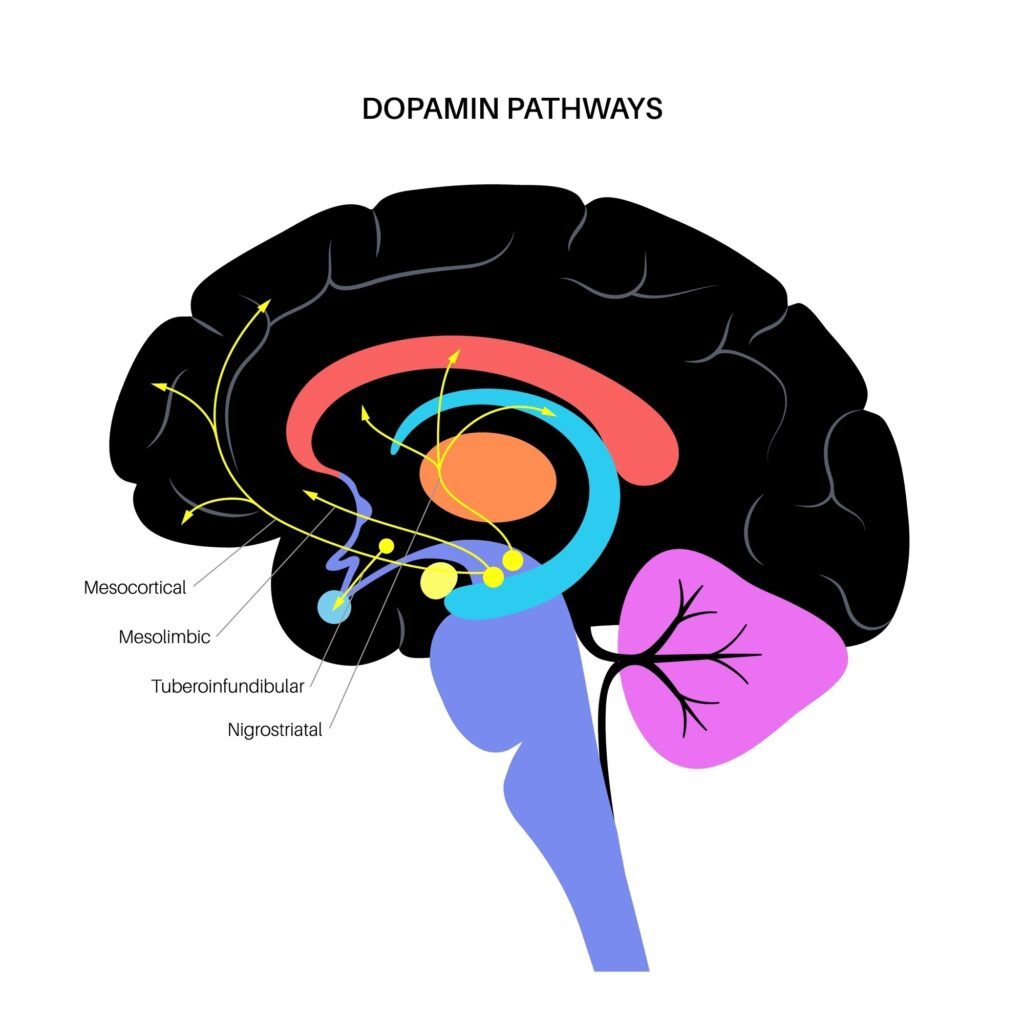
App developers use “persuasive design”—the same psychological triggers used in slot machines—to keep us scrolling. Every notification is a hit of dopamine, leading to shortened attention spans and “phantom vibration syndrome.”
Mental Health
The link between heavy mobile use and increased rates of anxiety/depression (especially in teenagers) is a major area of modern study. The “highlight reel” of others’ lives often makes our “behind-the-scenes” feel inadequate. - The Future: AI and Wearables
We are approaching a “post-mobile” era where the screen might disappear.
- Augmented Reality (AR): Glasses that overlay digital information onto the physical world.
- AI Integration: As your AI becomes more proactive, you won’t “search” for things; your phone will anticipate your needs before you ask.
- Health Monitoring: Smartphones and synced wearables are becoming medical devices, tracking everything from heart rhythm (ECG) to blood oxygen levels, potentially extending human life through early detection.
Summary Table: Mobile Transformation
| Aspect | Pre-Mobile Era | Modern Mobile Era |
|—|—|—|
| Communication | Scheduled / Location-based | Instant / Ubiquitous |
| Information | Scarce / Found in Libraries | Overabundant / In-pocket |
| Navigation | Paper maps / Asking for directions | Real-time GPS / Satellite |
| Work | Office-bound (9 to 5) | Remote / “Always-on” |
| Privacy | High | Low (Data tracking) |
A Final Thought
The mobile phone is neither “good” nor “bad”; it is a multiplier. It multiplies our productivity, our reach, and our knowledge—but it also multiplies our distractions and our anxieties. The challenge of modern life isn’t learning how to use the phone, but learning when to put it down.
To understand the psychological impact of mobile phones in 2026, we have to look past the “distraction” narrative and recognize that smartphones have fundamentally altered our neural architecture and emotional regulation.
Recent research indicates that we are no longer just using devices; we are co-evolving with them. Here is a breakdown of the primary psychological consequences observed in modern life.
- The Neurochemistry of the “Infinite Scroll”
The most profound impact is on the brain’s reward system. Apps are designed using Variable Ratio Schedules—the same psychological principle that makes slot machines addictive.
- Dopamine Looping: Every notification, “like,” or new video triggers a micro-dose of dopamine. Over time, the brain requires more frequent and intense stimulation to achieve the same level of satisfaction, leading to a state of anhedonia (where real-world activities feel “boring” by comparison).
- Structural Changes: Neuroimaging studies have shown reductions in gray matter volume in the prefrontal cortex—the area responsible for executive function, impulse control, and decision-making—in individuals with high smartphone dependency.
- Attention Fragmentation and “Attention Residue”
Our capacity for “Deep Work” is being eroded by what psychologists call Attention Residue.
- The Switch Cost: Even a quick 5-second glance at a text message leaves a “residue” of thoughts about that message in your mind. It can take up to 20 minutes for your brain to fully refocus on a complex task after a single digital interruption.
- Cognitive Load: The constant demand for “Continuous Partial Attention” (tracking multiple digital streams simultaneously) leads to chronic cognitive fatigue and a measurable decline in long-term memory formation.
- The Emotional Landscape: Anxiety and “Meta-Stress”
In 2026, we are seeing the rise of Meta-Stress—stress about being stressed, often triggered by the digital environment.
- FOMO and Social Comparison: Constant exposure to the “highlight reels” of others creates a distorted reality. For many, this leads to a “Social Comparison Trap,” where one’s self-worth becomes tied to digital metrics rather than internal growth.
- The “Always-On” Anxiety: The blurring of boundaries between work and home life means the brain never enters a “true” rest state. This leads to Digital Burnout, characterized by irritability, sleep disturbances, and a feeling of being perpetually overwhelmed.
Psychological Metrics (High vs. Low Usage)
Impact Area Heavy Users (>6 hrs/day) Moderate Users (<2 hrs/day)
Anxiety Risk 50% Higher Baseline
Sleep Quality Significantly Fragmented Normal / Restorative
Focus Duration Short / Fragmented Sustained
Self-Esteem Higher Correlation with Online Validation Higher Correlation with Real-World Achievement- Impact on Social Intelligence
While mobile phones connect us globally, they often isolate us locally.
- Phubbing (Phone Snubbing): The act of ignoring someone in person to look at a phone has been shown to significantly damage trust and intimacy in romantic and platonic relationships.
- Loss of Boredom: Boredom is the “nursery of creativity.” By filling every vacant second (waiting for a bus, standing in line) with a screen, we are losing the psychological space required for introspection and original thought.
How smartphone addiction may be hurting our brains
This video explores recent medical perspectives on how excessive smartphone use can lead to “brain rot” and why doctors are increasingly advocating for “unplugging” to preserve mental health. YouTube video views will be stored in your YouTube History, and your data will be stored and used by YouTube according to its Terms of Service - Impact on Social Intelligence
In 2026, the mobile phone has transitioned from being a “peripheral device” to the central engine of the global economy. This economic shift is defined by three major pillars: the rise of “Agentic Commerce,” the explosion of the Gig Economy, and the transformation of financial inclusion through mobile-first banking.
- From M-Commerce to “Agentic Commerce”
We have moved past simple mobile shopping. In 2026, the trend is Agentic Commerce, where AI agents on our phones don’t just recommend products—they act on our behalf.
- Autonomous Transactions: AI agents can now surface products, compare prices across the web, build carts, and complete transactions autonomously within a single chat interface.
- Conversion Power: Mobile apps now convert at a rate 157% higher than mobile websites. This is driven by seamless one-touch checkouts, biometric authentication (FaceID/Fingerprint), and deeply integrated loyalty loops.
- The M-Commerce Market: The global mobile commerce market is projected to grow from roughly $2.4 trillion in 2026 to over $5 trillion by 2034.
- The Gig Economy: The New Labor Frontier
The smartphone has fundamentally decoupled “work” from “the office.” By 2026, the gig economy has matured into a multi-hundred-billion-dollar sector.
- Workforce Penetration: In rapidly developing economies like India, gig workers now represent over 2% of the total workforce, with numbers growing 55% over the last few years.
- Platformization: Apps like Uber, Swiggy, and Upwork have reduced traditional employment barriers. In the U.S., over 52% of Gen-Z has engaged in freelance or gig work, managed entirely through mobile interfaces.
- Algorithmic Management: While providing flexibility, this shift has introduced “algorithmic management,” where workers’ schedules and pay are determined by mobile software, leading to new 2026 regulations focused on “algorithmic transparency.”
- Financial Inclusion and the Cashless Pivot
The most significant economic shift for the “unbanked” population has been the move to mobile-first finance.
- Leapfrogging Traditional Banking: Many developing nations have skipped the “credit card era” entirely, moving straight from cash to mobile wallets.
- Real-Time Payments: Systems like UPI (India) and Pix (Brazil) have made digital transactions as instant and “free” as physical cash. In 2026, India alone sees over 15 billion UPI transactions per month.
- Credit Accessibility: Mobile usage data (digital footprints) is now being used to build alternative credit scores, allowing low-income individuals to access small business loans that traditional banks would have denied.
Economic Impact Comparison (2020 vs. 2026)
Metric 2020 (The Pivot) 2026 (The Standard)
Global M-Commerce Size ~$1.0 Trillion ~$2.4 Trillion
Primary Payment Mode Cash / Physical Cards Digital Wallets / Biometric Tap
Shopping Journey Search -> Site -> Buy AI Agent -> Order Confirmed
Work Structure Transitioning to Remote Mobile-First / Gig-Dominant
The “Cost of Connectivity”
As of 2026, a new economic challenge has emerged: Hardware Polarization. While entry-level smartphones are more affordable than ever, “Premium AI” features are often locked behind high-end hardware. This has created a new digital divide where economic opportunity is increasingly tied to the processing power in your pocket.
Would you like me to dive deeper into the “Fintech Revolution” and how mobile phones are replacing physical banks, or should we look at how 5G/6G infrastructure is fueling these economic changes?
Global smartphone market trends for 2026
This video analyzes how the global smartphone market is evolving in 2026, specifically looking at how AI-led differentiation and new financing models are reshaping consumer value and industry economics. YouTube video views will be stored in your YouTube History, and your data will be stored and used by YouTube according to its Terms of Service
In 2026, Artificial Intelligence (AI) has shifted from being a specialized tool to the “invisible electricity” of modern life. It no longer just answers questions; it manages, predicts, and co-creates our daily experiences.
Here is how AI is integrated into the core pillars of 2026 living.
- Agentic Living: The Personal Assistant 2.0
The biggest shift in 2026 is the rise of Agentic AI. Unlike the chatbots of 2023, these “Agents” have the authority to execute tasks.
- Autonomous Scheduling: Your AI doesn’t just remind you of a doctor’s appointment; it cross-references your calendar, finds a slot, communicates with the clinic’s AI to book it, and pre-orders a ride to get you there.
- Hyper-Personalized Shopping: We have moved into “The Death of the Funnel.” AI agents now surface products based on your specific needs (e.g., “Find me a jacket for a 10°C rainy hike that fits my current wardrobe”), compare prices, and handle the checkout autonomously.
- Financial Guardianship: AI monitors subscriptions, automatically switches you to cheaper utility providers, and flags “impulse buy” patterns before you hit ‘confirm.’
- Healthcare: From Reactive to Predictive
In 2026, AI has turned the smartphone and wearable into a portable clinic.
- Symptom Triage: AI systems now analyze medical imaging (X-rays, skin scans) with higher accuracy than general practitioners, often detecting conditions like heart disease or early-stage cancer before physical symptoms appear.
- The “AI Patient Record”: Your health data is no longer a static file. It is a live, AI-driven model that predicts potential health risks based on real-time metrics from your smartwatch, suggesting preventative dietary or lifestyle shifts.
- Drug Discovery: AI has accelerated the time it takes to develop new medicines by simulating how molecules interact, bringing “personalized medicine” (drugs tailored to your specific DNA) closer to reality.
- Work and the “Co-Pilot” Economy
Work in 2026 is defined by Human-AI Collaboration.
- The Prototype Economy: AI allows teams to move from an idea to a working prototype in hours rather than months. It writes the baseline code, generates the marketing assets, and analyzes the market data simultaneously.
- Creative Augmentation: Rather than replacing creators, AI acts as an “executional partner.” It handles the routine—editing video, summarizing 500-page reports, or translating content into 40 languages—allowing humans to focus on high-level strategy and emotional resonance.
- Productivity Gains: Automation of “boring” administrative tasks (email triaging, meeting minutes, expense reporting) has theoretically freed up 20% of the average worker’s week, though this has led to a major debate about the “four-day workweek.”
- Education: The End of “One-Size-Fits-All”
AI has finally cracked the code of personalized learning.
- Socratic Tutors: Every student now has access to a 24/7 AI tutor that adapts to their specific learning style. If a student struggles with calculus, the AI might explain it through music theory or sports statistics to make it click.
- The Shift in Assessment: Since AI can write perfect essays, education has shifted away from “homework” toward oral examinations, critical thinking labs, and AI-assisted problem-solving.
AI Integration Table: 2023 vs. 2026
| Feature | 2023 (Generative Era) | 2026 (Agentic Era) |
|—|—|—|
| Search | List of links / Chat response | Direct action / “Done for you” |
| Home Tech | Voice commands for lights | Predictive (adjusts for mood/health) |
| Content | AI-suggested feeds | AI-generated personalized media |
| Coding | Autocomplete suggestions | End-to-end automated deployment |
| Security | Basic firewalls | Predictive “Self-healing” networks |
The 2026 Ethical Boundary
As AI becomes a “partner,” society is grappling with the Human-in-the-loop dilemma. In 2026, the value of “human-made” has skyrocketed. We are seeing a “Luxury of Human Touch” trend, where products and services without AI involvement are sold at a premium.
In 2026, the “Smart Home” has transitioned from a collection of gadgets you control with an app to an Ambient Intelligence environment that operates without your input. The shift is moving away from reactive commands (“Alexa, turn on the lights”) toward predictive adaptation.
Here is how AI is fundamentally rewriting the DNA of our living spaces today.
- From Command-Based to Intent-Based Living
In the early 2020s, a smart home followed rigid “If-This-Then-That” logic. In 2026, Generative AI acts as a central “Action Planner.”
- Contextual Awareness: Your home no longer waits for a schedule. It uses “Digital Fingerprints” (patterns of movement and occupancy) to understand intent. If you sit on the couch with a book at 8:00 PM, the AI recognizes the context, dims the main lights, and activates a warm reading lamp without being asked.
- Natural Conversations: We’ve moved past robotic phrases. You can now say, “Hey, I’m feeling a bit stressed, can you fix the vibe?” The AI coordinates lighting (cool blues), climate (lowering the temp by 1 degree), and audio (ambient soundscapes) as a single, multi-layered action.
- The Rise of “Matter 1.4” and Universal Interoperability
The “Ecosystem Wars” are largely over. In 2026, the Matter Protocol has become the standard “plumbing” for the home.
- Unified Control: You can now mix a Google Nest hub with Apple HomeKit devices and Samsung appliances seamlessly. The AI sits above these brands, acting as a single brain that controls everything regardless of the manufacturer.
- Invisible Tech: Modern smart homes are becoming less about visible screens and more about embedded sensors. Intelligence lives “behind the walls,” using Thread networking to ensure low-power, high-speed communication between devices.
- Energy as an “Active System”
Driven by high energy costs and sustainability mandates, AI has turned the home into a miniature power plant.
- Predictive Energy Management: AI agents monitor real-time electricity grid prices. Your home “decides” to charge your EV or run the dishwasher at 3:00 AM when prices are lowest.
- Smart Grid Participation: Homes with solar and battery storage (like Tesla Powerwalls) now use AI to automatically sell excess energy back to the grid during peak demand, essentially turning the smart home into a source of passive income.
- Proactive Security and “Sentinel” AI
Security in 2026 has shifted from “recording crimes” to “understanding behavior.”
- Anomaly Detection: Instead of just alerting you to motion, AI security systems recognize behavioral patterns. It knows the difference between the delivery person dropping a package and a stranger lingering near a window.
- Privacy-First Processing: To combat privacy concerns, 2026 systems utilize Edge AI. Most data processing happens locally on your home hub rather than in the cloud, ensuring your private routines aren’t stored on a corporate server.
The 2026 Smart Home Checklist
| Feature | Old School (2022) | Modern AI Home (2026) |
|—|—|—|
| Thermostat | Set to a schedule | Learns “Metabolic Comfort” |
| Appliances | Alerts when cycle is done | Predictive Maintenance: Books a repair before the pump fails |
| Security | Notifies you of movement | Differentiates “Usual” vs. “Unusual” behavior |
| Interface | Multiple proprietary apps | Single Voice/Intent-based controller |
| Robotics | Roomba bumps into walls | Mobile Butlers: Handle laundry, dishwasher, and trash |
The “Ghost in the Machine”
The ultimate trend of 2026 is Predictive Maintenance. Your refrigerator, HVAC, and even your plumbing now have AI-driven sensors that listen for micro-vibrations or pressure drops. The “smart” part isn’t the screen on the fridge; it’s the fact that the fridge sends you a message saying, “My compressor is 90% likely to fail in two weeks; I’ve already messaged the technician to check their availability.”






Leave a Reply