


1. Introduction 🌍
The Earth has millions of living organisms such as plants, animals, bacteria and fungi. Studying each organism separately would be very difficult. Therefore, scientists group similar organisms together. This process is called classification.
Classification means arranging living organisms into groups based on their similarities and differences.
The branch of science that deals with classification of living organisms is called Taxonomy.
2. Need for Classification
Classification is important because:
- It makes the study of organisms easy and systematic.
- It helps scientists identify organisms correctly.
- It shows relationships between organisms.
- It helps understand the evolution of life.
For example, a dog, tiger and cat share many features, so they are placed in the same group called mammals.
3. Basis of Classification
Scientists classify living organisms on the basis of:
- Cell structure – Prokaryotic or eukaryotic cells
- Number of cells – Unicellular or multicellular
- Mode of nutrition – Autotrophic or heterotrophic
- Body organization – Simple or complex
- Reproduction – Sexual or asexual
Five Kingdom Classification
The most widely used classification system was proposed by Robert H. Whittaker in 1969. He divided living organisms into five kingdoms.
The Five Kingdoms
- Monera
- Protista
- Fungi
- Plantae
- Animalia
1. Kingdom Monera 🦠
This kingdom includes the simplest and smallest organisms.
Characteristics
- They are unicellular.
- Cells are prokaryotic (no true nucleus).
- Mostly microscopic.
- Reproduce mainly by binary fission.
Examples
- Bacteria
- Blue-green algae (cyanobacteria)
Importance
Some bacteria help in nitrogen fixation and decomposition.
2. Kingdom Protista 🧫
Protista includes simple organisms that are mostly unicellular but have a true nucleus.
Characteristics
- Mostly unicellular.
- Eukaryotic cells.
- Live mostly in water.
- Some move using cilia or flagella.
Examples
- Amoeba
- Paramecium
- Euglena
3. Kingdom Fungi 🍄
Fungi are organisms that obtain food from dead or decaying matter.
Characteristics
- Mostly multicellular (except yeast).
- Lack chlorophyll.
- Heterotrophic nutrition.
- Reproduce by spores.
Examples
- Mushroom
- Bread mould
- Yeast
Importance
- Used in baking and fermentation.
- Help in decomposition.
4. Kingdom Plantae 🌱
This kingdom includes all plants.
Characteristics
- Multicellular organisms.
- Contain chlorophyll.
- Prepare their own food by Photosynthesis.
- Cells have cell walls.
Examples
- Moss
- Fern
- Mango tree
- Grass
Importance
- Produce oxygen
- Provide food and shelter
5. Kingdom Animalia 🐾
This kingdom includes all animals.
Characteristics
- Multicellular organisms.
- No cell wall.
- Cannot make their own food.
- Most animals can move from place to place.
Examples
- Fish
- Birds
- Dogs
- Humans
6. Differences Between Plants and Animals
| Feature | Plants | Animals |
|---|---|---|
| Food | Make their own food | Depend on others |
| Movement | Usually fixed | Can move |
| Cell wall | Present | Absent |
| Chlorophyll | Present | Absent |
7. Levels of Classification
Living organisms are classified into several levels called taxonomic categories.
The main categories are:
- Kingdom
- Phylum / Division
- Class
- Order
- Family
- Genus
- Species
Example:
Human classification
- Kingdom – Animalia
- Phylum – Chordata
- Class – Mammalia
8. Binomial Nomenclature
Each organism has a scientific name consisting of two words. This system is called Binomial Nomenclature, developed by Carl Linnaeus.
Example:
- Human – Homo sapiens
Rules:
- First word = Genus
- Second word = Species
- Written in italics or underlined.
9. Importance of Classification
- Helps in scientific study of organisms.
- Avoids confusion caused by local names.
- Shows evolutionary relationships.
✅ Conclusion
The classification of the living world helps scientists organize the huge variety of life on Earth. The five-kingdom system groups organisms according to their cell structure, nutrition and complexity, making the study of biology easier and more systematic.
✅ If you want, I can also provide:
- 5000-word detailed notes
- Diagrams of the five kingdoms
- Exercises and questions for Class 7 ICSE 📚✏️
Here are complete and easy notes for “Classification of the Living World” (Class 7 – ICSE Biology). These notes cover the whole chapter in simple language so it is easy to revise.
Classification of the Living World
(Class 7 ICSE Biology – Full Chapter Notes)
1. Introduction
The Earth has millions of different types of living organisms such as plants, animals, bacteria, fungi, and microscopic organisms. It is difficult to study all of them individually. Therefore, scientists group organisms with similar characteristics together. This process is called classification.
Classification helps scientists organize the living world so that it becomes easier to study and understand the relationships between organisms.
2. Meaning of Classification
Classification is the scientific method of arranging organisms into groups and subgroups according to their similarities and differences.
Organisms with similar features are placed in the same group.
Example
- Cow, goat, and horse are grouped together because they are mammals.
- Mango, neem, and banyan are grouped as plants.
3. Importance of Classification
Classification is important for several reasons:
1. Easy Study of Organisms
It helps scientists study millions of organisms easily.
2. Identification
It helps identify new organisms.
3. Understanding Relationships
It shows relationships between different organisms.
4. Universal System
Scientists all over the world use the same classification system.
5. Organised Knowledge
It arranges living organisms in a systematic way.
4. Basis of Classification
Organisms are classified based on different characteristics such as:
- Cell Structure – Whether the organism has a cell or not.
- Number of Cells – Unicellular or multicellular.
- Mode of Nutrition – Autotrophic or heterotrophic.
- Body Organisation – Simple or complex body structure.
- Reproduction – Sexual or asexual reproduction.
- Habitat – Land, water, or air.
5. Two Main Groups of Living Organisms
The living world is broadly divided into two main groups:
1. Plant Kingdom
Plants make their own food through photosynthesis.
Characteristics of plants:
- They contain chlorophyll.
- They prepare food by photosynthesis.
- They usually remain fixed in one place.
- They have cell walls.
Examples:
- Mango tree
- Grass
- Rose plant
- Algae
2. Animal Kingdom
Animals cannot make their own food and depend on plants or other animals.
Characteristics of animals:
- They do not have chlorophyll.
- They depend on other organisms for food.
- They can move from one place to another.
- They have well-developed organs.
Examples:
- Dog
- Human
- Fish
- Bird
Classification of Plants
Plants are classified into different groups based on their structure and reproduction.
1. Algae
Algae are simple plants usually found in water.
Characteristics:
- Mostly aquatic
- Simple body structure
- No true roots, stems, or leaves
- Green in colour due to chlorophyll
Examples:
- Spirogyra
- Chlamydomonas
2. Fungi
Fungi are organisms that do not contain chlorophyll.
Characteristics:
- Cannot make their own food
- Grow on dead and decaying matter
- Reproduce by spores
Examples:
- Mushroom
- Yeast
- Bread mould
3. Bryophytes
Bryophytes are small plants that grow in moist places.
Characteristics:
- Called amphibians of the plant kingdom
- No true roots, stems, or leaves
- Need water for reproduction
Examples:
- Moss
- Liverwort
4. Pteridophytes
These plants have roots, stems, and leaves but reproduce through spores.
Characteristics:
- Vascular tissues present
- No flowers or seeds
Examples:
- Fern
- Horsetail
5. Gymnosperms
Gymnosperms are plants with naked seeds.
Characteristics:
- Seeds are not enclosed in fruits
- Usually evergreen trees
- Needle-like leaves
Examples:
- Pine
- Cycas
6. Angiosperms
Angiosperms are flowering plants.
Characteristics:
- Produce flowers
- Seeds are enclosed in fruits
- Most common plants on Earth
Examples:
- Mango
- Sunflower
- Rose
- Wheat
Angiosperms are further divided into:
Monocots
Seeds have one cotyledon.
Examples:
- Rice
- Wheat
- Maize
Dicots
Seeds have two cotyledons.
Examples:
- Pea
- Bean
- Mango
Classification of Animals
Animals are classified into two major groups:
1. Invertebrates
Animals without a backbone.
Characteristics:
- Soft body
- No vertebral column
- Mostly small
Examples:
- Earthworm
- Butterfly
- Snail
- Octopus
Groups of invertebrates include:
- Sponges
- Coelenterates
- Worms
- Arthropods
- Molluscs
2. Vertebrates
Animals with a backbone.
Characteristics:
- Well-developed body
- Internal skeleton
- Complex organs
Examples:
- Fish
- Frog
- Bird
- Human
Vertebrates are divided into five classes:
1. Pisces (Fish)
- Live in water
- Breathe through gills
- Body covered with scales
Examples: Rohu, Shark
2. Amphibians
- Live both on land and in water
- Moist skin
Examples: Frog, Toad
3. Reptiles
- Cold-blooded animals
- Dry scaly skin
Examples: Snake, Lizard, Crocodile
4. Birds (Aves)
- Warm-blooded animals
- Body covered with feathers
- Can fly
Examples: Sparrow, Eagle, Parrot
5. Mammals
- Warm-blooded animals
- Give birth to young ones
- Have mammary glands
Examples: Human, Cow, Dog, Whale
Taxonomy
The branch of biology that deals with classification of organisms is called taxonomy.
Taxonomy includes:
- Identification
- Naming
- Classification of organisms
Binomial Nomenclature
Every organism has a scientific name made of two words.
Example:
- Human – Homo sapiens
- Mango – Mangifera indica
Rules:
- First word is Genus.
- Second word is Species.
- Names are written in Latin.
- Genus begins with a capital letter.
Advantages of Scientific Names
- Same name is used worldwide.
- Avoids confusion of local names.
- Helps identify organisms easily.
Summary
Classification of the living world helps scientists organize and study the vast variety of living organisms. Plants and animals are divided into different groups based on their structure, nutrition, and reproduction. This systematic arrangement helps understand relationships between organisms and makes biological study easier.
If you want, I can also give:
- Extra 1–2 mark questions
- Important exam questions
- MCQs for this chapter
- Short revision notes (1 page).
Here are more detailed notes for “Classification of the Living World” (Class 7 ICSE Biology) to help you understand the chapter deeply for exams.
Classification of the Living World – Extended Notes
1. Diversity in the Living World
The Earth contains a huge variety of living organisms. This variety is called biodiversity. Organisms differ in:
- Size (bacteria to elephants)
- Shape
- Structure
- Mode of nutrition
- Habitat
Because there are millions of species, scientists arrange them into groups through classification.
Examples of diversity:
- Plants like grass, banyan, cactus
- Animals like fish, birds, insects, mammals
- Microorganisms like bacteria and protozoa
2. History of Classification
Scientists have been trying to classify organisms for a long time.
Aristotle
One of the earliest scientists to classify living organisms was .
He divided animals based on habitat:
- Animals living on land
- Animals living in water
- Animals living in air
Although simple, this was the beginning of scientific classification.
Carolus Linnaeus
The modern system of classification was developed by , also called the Father of Taxonomy.
He introduced:
- Scientific naming system
- Classification based on similarities
- Binomial nomenclature
3. Levels of Classification
Organisms are classified into different levels called taxonomic categories.
The main levels are:
- Kingdom
- Phylum (or Division in plants)
- Class
- Order
- Family
- Genus
- Species
Example (Human):
Kingdom → Animalia
Phylum → Chordata
Class → Mammalia
Order → Primates
Family → Hominidae
Genus → Homo
Species → sapiens
Scientific name: Homo sapiens
4. Five Kingdom Classification
Scientists classify living organisms into five kingdoms based on cell structure and nutrition.
The five kingdoms are:
- Monera
- Protista
- Fungi
- Plantae
- Animalia
This classification system was proposed by in 1969.
5. Kingdom Monera
This kingdom includes the simplest organisms.
Characteristics:
- Unicellular organisms
- No true nucleus
- Very small
- Reproduce by binary fission
Examples:
- Bacteria
- Blue-green algae
These organisms are microscopic.
6. Kingdom Protista
Protists are simple organisms but have a true nucleus.
Characteristics:
- Mostly unicellular
- Found in water
- Some are autotrophic and some heterotrophic
Examples:
- Amoeba
- Paramecium
- Euglena
7. Kingdom Fungi
Fungi are organisms that absorb nutrients from dead matter.
Characteristics:
- No chlorophyll
- Grow on decaying matter
- Reproduce by spores
- Cell walls made of chitin
Examples:
- Mushroom
- Bread mould
- Yeast
Importance of fungi:
- Used in baking
- Used in medicine
- Help in decomposition
8. Kingdom Plantae
This kingdom includes all plants.
Characteristics:
- Multicellular organisms
- Contain chlorophyll
- Perform photosynthesis
- Have cell walls
Plants are the main producers of food on Earth.
Types of Plants
Plants are divided into different groups:
1. Thallophyta
- Simple plants
- No roots, stems, or leaves
Example:
- Algae
2. Bryophyta
- Small plants
- Grow in moist areas
- Lack true vascular tissues
Example:
- Moss
3. Pteridophyta
- Have roots, stems, and leaves
- Reproduce through spores
Example:
- Fern
4. Gymnosperms
- Seeds are naked
- No fruits
Example:
- Pine
- Cycas
5. Angiosperms
- Flowering plants
- Seeds enclosed in fruits
Example:
- Mango
- Rose
- Wheat
9. Kingdom Animalia
Animals are multicellular organisms that depend on other organisms for food.
Characteristics:
- No chlorophyll
- Active movement
- Complex organ systems
- Mostly reproduce sexually
Animals are divided into two main groups.
Invertebrates
Animals without backbone.
Major groups:
Porifera
- Simple animals
- Body with pores
Example:
- Sponges
Coelenterates
- Radial symmetry
- Tentacles present
Example:
- Hydra
- Jellyfish
Worms
Soft elongated body.
Examples:
- Roundworms
- Flatworms
Arthropods
Largest group of animals.
Characteristics:
- Jointed legs
- Hard outer skeleton
Examples:
- Spider
- Ant
- Butterfly
Molluscs
Soft-bodied animals.
Examples:
- Snail
- Octopus
Vertebrates
Animals with backbone.
Groups include:
Fish
- Live in water
- Gills for breathing
Examples:
- Rohu
- Tuna
Amphibians
- Live on land and water
Example:
- Frog
Reptiles
- Dry scaly skin
Examples:
- Snake
- Lizard
Birds
- Feathers
- Wings
- Lay eggs
Examples:
- Sparrow
- Eagle
Mammals
- Give birth to young ones
- Feed babies with milk
Examples:
- Human
- Dog
- Whale
10. Importance of Biodiversity
Classification also helps protect biodiversity.
Benefits:
- Maintains balance in nature
- Helps in medicine development
- Provides food and resources
- Maintains ecosystems
Loss of biodiversity can disturb ecological balance.
11. Difference Between Plants and Animals
| Plants | Animals |
|---|---|
| Make their own food | Cannot make food |
| Contain chlorophyll | No chlorophyll |
| Usually fixed | Can move |
| Cell wall present | Cell wall absent |
12. Scientific Naming Rules
Scientific names follow certain rules:
- Written in Latin language
- Consist of two words
- Genus name begins with capital letter
- Species name begins with small letter
- Written in italics
Example:
Human – Homo sapiens
Mango – Mangifera indica
Short Conclusion
Classification is an important part of biology that organizes the huge variety of living organisms into groups based on similarities and differences. It helps scientists study organisms, identify species, and understand their relationships.
If you want, I can also give:
- Very short exam revision notes (1 page)
- Important ICSE exam questions
- MCQs + answers
- Diagrams for classification chapter.
Here is more detailed explanation and extra study material for “Classification of the Living World” (Class 7 ICSE Biology). This part includes additional concepts, examples, diagrams explanation, and exam-oriented points.
Classification of the Living World – Advanced Notes
1. What is the Living World?
The living world includes all organisms that show characteristics of life such as:
- Growth
- Respiration
- Nutrition
- Reproduction
- Movement
- Excretion
- Response to stimuli
These characteristics help scientists distinguish living organisms from non-living things.
Example:
- Living: plants, animals, bacteria
- Non-living: rocks, water, air
2. Characteristics of Living Organisms
1. Growth
All living organisms grow and increase in size.
Example: A seed grows into a plant.
2. Respiration
All organisms release energy by breaking down food.
Example: Humans breathe oxygen and release carbon dioxide.
3. Nutrition
Living organisms need food for energy and growth.
Types of nutrition:
Autotrophic nutrition
- Organisms make their own food.
- Example: Plants
Heterotrophic nutrition
- Organisms depend on others for food.
- Example: Animals
4. Reproduction
Living organisms produce new individuals of their own kind.
Types:
- Sexual reproduction
- Asexual reproduction
Example: Plants produce seeds.
5. Movement
Many organisms move from one place to another.
Example:
- Animals walk or fly
- Some microscopic organisms move using tiny structures.
6. Response to Stimuli
Living organisms respond to changes in their environment.
Example: Plants bend towards sunlight.
3. Need for Classification
There are millions of organisms on Earth. Without classification it would be very difficult to study them.
Classification helps in:
- Organizing knowledge
- Identifying organisms
- Understanding evolution
- Studying similarities and differences
4. Artificial and Natural Classification
Artificial Classification
Organisms are grouped based on one or two characteristics.
Example: Animals classified by habitat:
- Land animals
- Water animals
This method is simple but not very accurate.
Natural Classification
Organisms are grouped based on many characteristics such as structure, reproduction, and development.
This method is more scientific and accurate.
5. Modern Classification System
Modern classification uses many criteria:
- Cell type
- Cell structure
- Body organisation
- Mode of nutrition
- Evolutionary relationship
The Five Kingdom Classification System proposed by is widely used.
6. Differences Between the Five Kingdoms
| Kingdom | Cell Type | Example |
|---|---|---|
| Monera | Prokaryotic | Bacteria |
| Protista | Eukaryotic unicellular | Amoeba |
| Fungi | Heterotrophic | Mushroom |
| Plantae | Autotrophic | Mango |
| Animalia | Multicellular heterotrophic | Human |
7. Cell Structure in Classification
Prokaryotic Cells
- No true nucleus
- Simple structure
- Example: Bacteria
Eukaryotic Cells
- True nucleus present
- Complex cell structure
- Example: Plants and animals
8. Habitat-Based Classification
Organisms can also be classified according to where they live.
Terrestrial organisms
Live on land.
Examples:
- Tiger
- Elephant
- Dog
Aquatic organisms
Live in water.
Examples:
- Fish
- Whale
- Octopus
Amphibious organisms
Live both on land and water.
Example:
- Frog
Aerial organisms
Spend most time in air.
Example:
- Birds
- Bats
9. Importance of Plants in Classification
Plants are very important because they are producers.
They:
- Produce oxygen
- Provide food
- Maintain ecological balance
- Provide medicines
- Prevent soil erosion
10. Importance of Animals
Animals are important in ecosystems.
They:
- Maintain food chains
- Help in pollination
- Provide food and materials
- Help maintain balance in nature
11. Food Chain and Classification
Classification helps understand food chains.
Example food chain:
Plants → Grasshopper → Frog → Snake → Eagle
Each organism belongs to different classification groups.
12. Simple Diagram of Classification
Living Organisms
│
├── Plants
│ ├── Algae
│ ├── Bryophytes
│ ├── Pteridophytes
│ ├── Gymnosperms
│ └── Angiosperms
│
└── Animals
├── Invertebrates
└── Vertebrates
13. Importance of Taxonomy
Taxonomy is the science of classification.
The term taxonomy comes from two Greek words:
- Taxis = arrangement
- Nomos = law
The scientist is called the Father of Taxonomy.
14. Advantages of Classification
- Makes study of organisms easier
- Helps identify unknown organisms
- Shows evolutionary relationships
- Helps understand biodiversity
- Provides a universal naming system
15. Disadvantages of Simple Classification
Earlier classification systems had some limitations:
- Based on few characteristics
- Did not consider evolutionary relationships
- Sometimes grouped unrelated organisms together
Modern classification is more accurate.
16. Interesting Facts
- Scientists have identified more than 1.7 million species.
- Many organisms are still undiscovered.
- The smallest living organisms are bacteria.
- The largest animals are whales.
Quick Revision Points
- Classification means grouping organisms based on similarities.
- Living organisms are divided into five kingdoms.
- Plants and animals are the most familiar groups.
- Scientific naming system is called binomial nomenclature.
- developed the modern classification system.
If you want, I can also give:
- 20–30 ICSE exam questions from this chapter
- MCQs for practice
- One-page revision sheet
- Important diagrams that come in exams.
Here are even more detailed notes, explanations, examples, and exam preparation material for “Classification of the Living World” (Class 7 ICSE Biology).
Classification of the Living World – Complete Extended Study Notes
- Biodiversity and the Living World
The Earth is full of living organisms. The variety of living organisms found on Earth is called biodiversity.
Different organisms differ in:
Shape
Size
Habitat
Body structure
Mode of nutrition
Method of reproduction
Example:
Microorganisms like bacteria are microscopic.
Large animals like elephants are huge.
Because of this huge diversity, scientists classify organisms into groups. - Branches of Biology Related to Classification
Taxonomy
The branch of biology that deals with identification, naming, and classification of organisms.
The father of taxonomy is Carl Linnaeus.
Systematics
Systematics studies the evolutionary relationships between organisms.
It helps understand how organisms evolved from common ancestors.
Nomenclature
The scientific naming of organisms is called nomenclature. - Binomial Nomenclature
The system of naming organisms with two words is called binomial nomenclature.
This system was introduced by Carl Linnaeus.
Example:
Human → Homo sapiens
Mango → Mangifera indica
Rules of binomial nomenclature:
Scientific names are written in Latin.
The name has two parts.
The first word is genus.
The second word is species.
The genus name begins with a capital letter.
The species name begins with a small letter.
Names are written in italics or underlined. - Taxonomic Hierarchy
Classification follows a hierarchy from larger groups to smaller groups.
The main categories are:
Kingdom
↓
Phylum / Division
↓
Class
↓
Order
↓
Family
↓
Genus
↓
Species
Example (Human):
Kingdom → Animalia
Phylum → Chordata
Class → Mammalia
Order → Primates
Family → Hominidae
Genus → Homo
Species → sapiens - Five Kingdom Classification
The five kingdom system was proposed by Robert H. Whittaker.
This classification is based on:
Cell structure
Body organisation
Mode of nutrition
Reproduction
Evolutionary relationships
The five kingdoms are:
Monera
Protista
Fungi
Plantae
Animalia - Kingdom Monera
Characteristics:
Unicellular organisms
Prokaryotic cells
No true nucleus
Very small
Reproduce by binary fission
Examples:
Bacteria
Cyanobacteria
Importance:
Help in nitrogen fixation
Used in fermentation
Help in decomposition - Kingdom Protista
Characteristics:
Mostly unicellular
Eukaryotic cells
Aquatic organisms
Some autotrophic, some heterotrophic
Examples:
Amoeba
Paramecium
Euglena
Some protists move using:
Pseudopodia
Cilia
Flagella - Kingdom Fungi
Characteristics:
Lack chlorophyll
Heterotrophic nutrition
Absorb food from organic matter
Reproduce through spores
Examples:
Mushroom
Yeast
Bread mould
Importance of fungi:
Used in making bread
Used in medicines like antibiotics
Help in decomposition - Kingdom Plantae
Plants are multicellular organisms that make their own food through photosynthesis.
Characteristics:
Chlorophyll present
Cell wall present
Fixed in one place
Produce oxygen
Plants are the primary producers in ecosystems. - Classification of Plants
Plants are divided into major groups.
Thallophyta
Simplest plants
No roots, stems, leaves
Example:
Algae
Bryophyta
Small plants
Grow in moist places
Need water for reproduction
Example:
Moss
Pteridophyta
First plants with vascular tissues
Reproduce by spores
Example:
Fern
Gymnosperms
Seed-producing plants
Seeds not enclosed in fruits
Example:
Pine
Cycas
Angiosperms
Flowering plants
Seeds enclosed in fruits
Example:
Mango
Rose
Wheat - Classification of Animals
Animals are divided into two groups.
Invertebrates
Animals without backbone.
Examples:
Worms
Insects
Snails
Jellyfish
Characteristics:
Soft body
No vertebral column
Many are small in size
Vertebrates
Animals with backbone.
Examples:
Fish
Birds
Mammals
Characteristics:
Complex body structure
Internal skeleton
Well-developed organs - Classes of Vertebrates
Fish (Pisces)
Live in water
Breathe through gills
Body covered with scales
Examples:
Rohu
Shark
Amphibians
Live on land and in water
Moist skin
Example:
Frog
Reptiles
Cold-blooded animals
Dry scaly skin
Examples:
Snake
Lizard
Crocodile
Birds (Aves)
Warm-blooded
Body covered with feathers
Lay eggs
Examples:
Sparrow
Eagle
Peacock
Mammals
Warm-blooded animals
Give birth to young ones
Feed babies with milk
Examples:
Humans
Cow
Dog
Whale - Difference Between Vertebrates and Invertebrates
Feature
Vertebrates
Invertebrates
Backbone
Present
Absent
Skeleton
Internal
Usually absent
Body complexity
Complex
Simple - Importance of Classification
Classification helps in:
Studying organisms easily
Understanding relationships
Identifying species
Organizing biological knowledge
Studying evolution - Biodiversity Conservation
Protecting biodiversity is very important.
Ways to conserve biodiversity:
Protect forests
Prevent pollution
Protect endangered species
Create wildlife sanctuaries - Very Short Summary
Classification groups organisms based on similarities.
Living organisms are divided into five kingdoms.
Plants and animals are further divided into many groups.
Scientific naming is called binomial nomenclature.
Carl Linnaeus is the father of taxonomy.
If you want, I can also give:
50 important ICSE exam questions from this chapter
MCQs + answers
Very short revision notes for quick study
Diagrams that usually come in exams.
Here are additional detailed concepts, diagrams explanation, examples, and exam-oriented material for “Classification of the Living World – Class 7 ICSE”. This section will help you understand the topic more deeply and prepare for school exams.
Classification of the Living World – Further Detailed Study
- What is a Species?
The species is the smallest unit of classification.
A species is a group of organisms that:
Look similar
Have similar characteristics
Can reproduce among themselves
Produce fertile offspring
Example: All human beings belong to the species Homo sapiens.
Scientific naming of species was introduced by Carl Linnaeus. - Difference Between Genus and Species
Genus
Species
A group of similar species
Smallest unit of classification
Broader category
More specific category
Example: Homo
Example: sapiens
Example: Human scientific name = Homo sapiens
Homo → Genus
sapiens → Species - Importance of Scientific Names
Common names of organisms vary from place to place. Scientific names solve this problem.
Advantages:
Same name used worldwide
Avoid confusion between languages
Help scientists communicate easily
Show relationship between organisms
Example: A mango tree may have different local names but its scientific name remains Mangifera indica. - Classification Based on Body Organisation
Living organisms may have simple or complex body structures.
Simple Organisms
Few cells
Simple structure
No complex organs
Example:
Bacteria
Amoeba
Complex Organisms
Many cells
Specialized organs
Complex body systems
Example:
Humans
Animals
Plants - Unicellular and Multicellular Organisms
Unicellular Organisms
Organisms made up of only one cell.
Characteristics:
Very small
Microscopic
One cell performs all life processes
Examples:
Bacteria
Amoeba
Paramecium
Multicellular Organisms
Organisms made up of many cells.
Characteristics:
Cells specialized for different functions
Large body size
Complex body systems
Examples:
Plants
Animals
Humans - Autotrophic and Heterotrophic Organisms
Autotrophs
Organisms that make their own food using sunlight.
Example:
Green plants
Algae
Process used: Photosynthesis
Heterotrophs
Organisms that depend on other organisms for food.
Examples:
Animals
Fungi
Humans - Classification Based on Mode of Nutrition
Organisms can also be classified based on how they obtain food.
Type
Example
Producers
Plants
Consumers
Animals
Decomposers
Fungi and bacteria
Producers
Organisms that produce their own food.
Example: Plants produce food by photosynthesis.
Consumers
Organisms that eat plants or other animals.
Example:
Herbivores eat plants
Carnivores eat animals
Omnivores eat both
Decomposers
Organisms that break down dead plants and animals.
Example:
Bacteria
Fungi
They help recycle nutrients in nature. - Importance of Microorganisms in Classification
Microorganisms are extremely small organisms that cannot be seen with naked eyes.
Examples:
Bacteria
Protozoa
Some fungi
Some algae
Uses of microorganisms:
Making curd
Making bread
Producing medicines
Decomposing dead organisms - Ecosystem and Classification
Classification helps scientists understand ecosystems.
An ecosystem includes living organisms and their environment.
Example ecosystem:
Forest ecosystem
Components:
Plants
Animals
Microorganisms
Soil
Water
Air
All organisms play a role in maintaining balance. - Food Web
Many food chains connect to form a food web.
Example:
Grass → Rabbit → Fox
Grass → Grasshopper → Frog → Snake
Food webs show relationships between organisms. - Evolution and Classification
Modern classification also considers evolution.
Evolution means gradual change in organisms over millions of years.
Organisms with common ancestors are grouped together.
Example:
Birds evolved from reptiles.
Humans evolved from primates. - Importance of Biodiversity
Biodiversity means the variety of life forms on Earth.
Importance:
Provides food
Provides medicines
Maintains ecological balance
Supports agriculture
Helps maintain ecosystems
Loss of biodiversity can cause environmental problems. - Threats to Biodiversity
Major threats include:
Deforestation
Pollution
Climate change
Overhunting
Habitat destruction
Protecting biodiversity is important for the future of life on Earth. - Conservation of Biodiversity
Methods of conservation include:
Wildlife Sanctuaries
Protected areas where animals live safely.
National Parks
Large protected natural areas.
Botanical Gardens
Places where plants are protected and studied.
Zoos
Places where animals are protected and studied. - Interesting Facts About Classification
Scientists have discovered over 1.7 million species.
Many species are still undiscovered.
Insects form the largest group of animals.
The blue whale is the largest animal on Earth. - Quick Revision Points
Classification groups organisms based on similarities and differences.
Five kingdom system was proposed by Robert H. Whittaker.
Scientific naming system is called binomial nomenclature.
The father of taxonomy is Carl Linnaeus.
Plants are producers while animals are consumers.
✅ If you want, I can also give:
30–50 ICSE exam questions from this chapter
MCQ test for practice
Very short one-page revision notes
Important diagrams (classification tree, five kingdoms, plant groups).
Here is even more advanced and exam-oriented explanation for “Classification of the Living World – Class 7 ICSE Biology” including extra theory, comparisons, and practice questions.
Classification of the Living World – Additional Detailed Notes
- Meaning of Biological Classification
Biological classification means arranging living organisms into groups according to their similarities and differences.
Scientists classify organisms so that they can:
Identify organisms easily
Study organisms systematically
Understand relationships between organisms
The modern system of classification was developed by Carl Linnaeus, who is known as the Father of Taxonomy. - Basic Principles of Classification
Scientists consider several factors while classifying organisms.
Cell Structure
Whether the organism has:
Prokaryotic cells
Eukaryotic cells
Number of Cells
Organisms may be:
Unicellular
Multicellular
Mode of Nutrition
Organisms obtain food in different ways:
Autotrophic
Heterotrophic
Reproduction
Organisms reproduce by:
Sexual reproduction
Asexual reproduction
Body Organisation
Some organisms have simple body structures while others have complex body systems. - Differences Between Prokaryotic and Eukaryotic Cells
Feature
Prokaryotic Cell
Eukaryotic Cell
Nucleus
Absent
Present
Size
Small
Larger
Complexity
Simple
Complex
Example
Bacteria
Plants and animals - Differences Between Unicellular and Multicellular Organisms
Feature
Unicellular
Multicellular
Number of cells
One
Many
Size
Very small
Usually large
Organisation
Simple
Complex
Example
Amoeba
Human - Classification of Animals Based on Food Habits
Herbivores
Animals that eat plants.
Examples:
Cow
Deer
Rabbit
Carnivores
Animals that eat other animals.
Examples:
Lion
Tiger
Eagle
Omnivores
Animals that eat both plants and animals.
Examples:
Human
Bear - Cold-Blooded and Warm-Blooded Animals
Cold-Blooded Animals
Their body temperature changes according to the environment.
Examples:
Fish
Frogs
Snakes
Warm-Blooded Animals
They maintain constant body temperature.
Examples:
Birds
Mammals - Differences Between Major Vertebrate Groups
Group
Habitat
Body Covering
Breathing
Fish
Water
Scales
Gills
Amphibians
Land & water
Moist skin
Lungs & skin
Reptiles
Land
Dry scales
Lungs
Birds
Air
Feathers
Lungs
Mammals
Land
Hair or fur
Lungs - Importance of Plants in Ecosystem
Plants play a very important role in nature.
They:
Produce oxygen
Provide food
Provide shelter
Maintain balance in ecosystems
Prevent soil erosion
Plants are therefore called producers. - Role of Animals in Nature
Animals contribute to ecosystems by:
Maintaining food chains
Helping in pollination
Spreading seeds
Maintaining ecological balance
Animals are called consumers. - Role of Decomposers
Decomposers break down dead plants and animals.
Examples:
Fungi
Bacteria
Functions:
Recycle nutrients
Clean the environment
Maintain soil fertility - Ecological Balance
All living organisms are connected through food chains and ecosystems.
Example food chain:
Grass → Deer → Tiger
If one organism disappears, the balance of nature can be disturbed. - Classification Based on Habitat
Organisms can also be classified according to their environment.
Terrestrial organisms
Live on land.
Examples:
Lion
Elephant
Horse
Aquatic organisms
Live in water.
Examples:
Fish
Octopus
Dolphin
Amphibious organisms
Live both on land and water.
Example:
Frog
Arboreal organisms
Live on trees.
Examples:
Monkey
Squirrel - Importance of Studying Classification
Studying classification helps us:
Understand biodiversity
Study evolution
Identify unknown organisms
Protect endangered species
Understand relationships between organisms - Conservation of Living Organisms
Humans must protect plants and animals.
Important conservation methods:
Wildlife sanctuaries
National parks
Biosphere reserves
Botanical gardens
These areas help protect biodiversity. - Example of a Complete Classification
Example: Human
Kingdom → Animalia
Phylum → Chordata
Class → Mammalia
Order → Primates
Family → Hominidae
Genus → Homo
Species → sapiens
Scientific name: Homo sapiens
This naming system was introduced by Carl Linnaeus. - Important Definitions for Exams
Classification
Grouping organisms based on similarities and differences.
Taxonomy
Science of identification, naming, and classification of organisms.
Species
Group of organisms capable of reproducing with each other.
Genus
Group of closely related species. - Short Conclusion
The classification of the living world helps scientists organize the enormous diversity of life on Earth. By grouping organisms based on similarities, scientists can study their characteristics, relationships, and evolution more effectively.
✅ If you want, I can also provide:
50 ICSE board-style questions from this chapter
MCQ test with answers
One-page super quick revision sheet
Important diagrams that often come in exams.
Here are even more extended notes for “Classification of the Living World – Class 7 ICSE Biology” with deeper explanations, extra concepts, and exam-oriented information.
Classification of the Living World – Further Extended Notes
- Early Attempts at Classification
In ancient times, people classified organisms only by observing their appearance or habitat.
One of the earliest attempts was made by Aristotle.
He classified animals into two groups:
Animals with red blood
Animals without red blood
He also classified animals according to their habitat:
Land animals
Water animals
Air animals
Although this system was simple, it was not very accurate. - Modern Classification
The modern classification system is based on scientific observations and research.
Important scientists contributed to classification.
Carl Linnaeus
The modern system was developed by Carl Linnaeus.
His contributions include:
Scientific naming system
Classification based on similarities
Development of binomial nomenclature
Because of these contributions, he is known as the Father of Taxonomy. - Criteria Used in Modern Classification
Scientists classify organisms using several characteristics: - Cell Type
Organisms may have:
Prokaryotic cells
Eukaryotic cells - Cell Organisation
Organisms may be:
Unicellular
Multicellular - Mode of Nutrition
Organisms may obtain food through:
Photosynthesis
Absorption
Ingestion - Reproduction
Organisms reproduce by:
Sexual reproduction
Asexual reproduction - Evolutionary Relationships
Organisms with common ancestors are placed in the same group. - Structural Organization in Organisms
Organisms show different levels of body organization.
Cellular Level
Body consists of single cells.
Example: Amoeba
Tissue Level
Cells combine to form tissues.
Example: Some simple animals
Organ Level
Different tissues form organs.
Example: Plants and animals
Organ System Level
Organs combine to form organ systems.
Example: Humans - Levels of Biological Organisation
Biological organisation can be arranged from smallest to largest:
Cell
↓
Tissue
↓
Organ
↓
Organ system
↓
Organism
↓
Population
↓
Community
↓
Ecosystem
↓
Biosphere - Importance of Plants in the Living World
Plants are essential for life on Earth.
Functions of plants:
Produce oxygen
Provide food
Maintain ecological balance
Provide raw materials
Provide medicines
Plants form the base of most food chains. - Importance of Animals
Animals also play important roles in nature.
They:
Help maintain food chains
Assist in pollination
Spread seeds
Maintain ecological balance - Food Chain
A food chain shows how energy flows from one organism to another.
Example:
Grass → Grasshopper → Frog → Snake → Eagle
Explanation:
Grass is the producer
Grasshopper is the primary consumer
Frog is the secondary consumer
Snake is the tertiary consumer - Food Web
A food web is a network of many interconnected food chains.
Food webs help maintain stability in ecosystems.
Example:
Plants → Rabbit → Fox
Plants → Mouse → Snake → Eagle - Ecological Roles of Organisms
Organisms in ecosystems perform different roles.
Producers
Organisms that produce food.
Example: Plants
Consumers
Organisms that eat other organisms.
Example: Animals
Decomposers
Organisms that break down dead matter.
Example: Fungi and bacteria - Adaptations in Living Organisms
Adaptation means special features that help organisms survive in their environment.
Examples:
Desert Animals
Camel stores fat in hump.
Thick skin reduces water loss.
Aquatic Animals
Fish have streamlined bodies.
Gills help in breathing underwater.
Polar Animals
Thick fur for warmth.
White colour for camouflage. - Endangered Species
Some species are at risk of extinction.
Reasons include:
Habitat destruction
Pollution
Climate change
Hunting
Examples of endangered animals:
Tiger
Giant panda
Rhinoceros
Conservation efforts are necessary to protect these species. - Methods of Conservation
Wildlife Sanctuaries
Protected areas for animals.
National Parks
Large protected areas where wildlife is preserved.
Biosphere Reserves
Areas protecting entire ecosystems. - Interesting Facts About Living Organisms
The smallest living organisms are bacteria.
The largest animal on Earth is the blue whale.
Insects make up the largest group of animals.
Plants produce most of the oxygen on Earth. - Key Terms
Biodiversity
Variety of living organisms on Earth.
Classification
Grouping organisms based on similarities and differences.
Taxonomy
Science of classification.
Species
Group of organisms that can reproduce and produce fertile offspring.
Genus
Group of closely related species. - Very Short Chapter Summary
The living world consists of millions of organisms. To study them easily, scientists classify them into groups based on similarities and differences. The modern classification system includes five kingdoms. Scientific naming of organisms using two words is called binomial nomenclature, introduced by Carl Linnaeus.
✅ If you want, I can also provide:
100 important ICSE exam questions from this chapter
MCQ practice test
Short 1-page super revision notes
Important diagrams for exams (five kingdoms, plant classification, vertebrates).
Here are additional advanced explanations, comparisons, diagrams explanation, and exam-focused content for “Classification of the Living World – Class 7 ICSE Biology” so you can study the chapter more deeply.
Classification of the Living World – Further Detailed Study
- Why Scientists Continue to Improve Classification
As scientists discover new organisms and learn more about genetics and evolution, classification systems change.
Earlier classifications were based mainly on appearance, but modern classification also considers:
Cell structure
DNA and genetic similarities
Evolutionary relationships
Biochemical characteristics
Modern classification therefore gives a more accurate picture of relationships between organisms. - Microscopic and Macroscopic Organisms
Microscopic Organisms
These organisms are so small that they can only be seen with a microscope.
Examples:
Bacteria
Amoeba
Paramecium
Characteristics:
Very small
Mostly unicellular
Found everywhere
Macroscopic Organisms
These organisms are large enough to be seen with the naked eye.
Examples:
Plants
Animals
Mushrooms - Importance of Microorganisms in Nature
Microorganisms play a major role in ecosystems.
Uses include:
Food Production
Microorganisms help in making:
Curd
Cheese
Bread
Medicine
Some microorganisms produce antibiotics.
Example: Penicillin produced by fungi.
Decomposition
Microorganisms break down dead plants and animals and recycle nutrients. - Harmful Effects of Microorganisms
Some microorganisms cause diseases.
Examples:
Disease
Caused by
Cholera
Bacteria
Malaria
Protozoa
Influenza
Virus
These diseases spread through contaminated food, water, air, or insects. - Classification of Animals Based on Body Symmetry
Animals may have different body symmetries.
Radial Symmetry
Body parts arranged around a central axis.
Examples:
Jellyfish
Starfish
Bilateral Symmetry
Body can be divided into two equal halves.
Examples:
Humans
Dogs
Birds - Body Coverings of Animals
Different animals have different body coverings.
Animal Group
Body Covering
Fish
Scales
Birds
Feathers
Mammals
Hair or fur
Reptiles
Dry scales
Amphibians
Moist skin
These coverings help animals survive in their environments. - Reproduction in Living Organisms
Reproduction is necessary for survival of species.
Asexual Reproduction
Only one parent involved.
Examples:
Bacteria divide into two cells
Amoeba divides by binary fission
Sexual Reproduction
Two parents involved.
Examples:
Humans
Animals
Flowering plants - Growth in Living Organisms
Living organisms grow by increasing the number or size of cells.
Examples:
Plants grow continuously throughout life.
Animals grow until they reach maturity. - Movement in Living Organisms
Movement helps organisms survive.
Examples:
Animals move to:
Find food
Escape predators
Find shelter
Plants also show movement such as:
Bending toward sunlight
Opening and closing flowers - Differences Between Plants and Animals
Feature
Plants
Animals
Food
Make their own food
Depend on others
Movement
Usually fixed
Move freely
Cell wall
Present
Absent
Chlorophyll
Present
Absent - Adaptation and Classification
Adaptations are features that help organisms survive.
Classification helps scientists study adaptations.
Examples:
Desert Adaptation
Camel:
Stores fat in hump
Can survive without water for long periods
Aquatic Adaptation
Fish:
Streamlined body
Fins for swimming
Gills for breathing
Arboreal Adaptation
Animals living on trees:
Examples:
Monkey
Squirrel
Features:
Strong limbs
Long tails for balance - Human Impact on Biodiversity
Human activities affect biodiversity.
Major causes:
Deforestation
Pollution
Overpopulation
Climate change
Overhunting
These activities reduce the number of species. - Importance of Conservation
Conservation protects plants and animals from extinction.
Methods include:
Wildlife Sanctuaries
Protected areas where animals live safely.
National Parks
Large protected areas with natural ecosystems.
Biosphere Reserves
Protect both plants and animals. - Relationship Between Organisms
All organisms depend on each other in ecosystems.
Examples:
Bees and flowers:
Bees get nectar
Flowers get pollinated
This relationship is called mutualism. - Major Contributions to Classification
Important scientists:
Aristotle – Early classification of animals
Carl Linnaeus – Developed modern taxonomy
Robert H. Whittaker – Proposed the five-kingdom classification system - Complete Chapter Conclusion
The living world contains a huge diversity of organisms. Scientists classify these organisms based on similarities and differences. Classification helps in identifying organisms, understanding relationships, and studying biodiversity. The five-kingdom classification system provides a systematic way to organize all living organisms.
✅ If you want, I can also give:
ICSE exam notes in 1–2 pages for quick revision
100 MCQs from this chapter
Important diagrams for drawing in exams
Complete question-answer set for this chapter.
Here are even more extended and deeper notes for “Classification of the Living World – Class 7 ICSE Biology” including extra theory, scientific details, examples, and exam-oriented content.
Classification of the Living World – Additional Extended Study
- The Concept of Biodiversity
The living world contains an enormous number of organisms. Scientists estimate that millions of species exist on Earth. This wide variety of life forms is called biodiversity.
Biodiversity includes:
Plants
Animals
Microorganisms
Fungi
Algae
Different organisms differ in:
Shape
Structure
Behaviour
Habitat
Food habits
Because of this diversity, classification is necessary. - Identification of Organisms
Identification means recognizing an organism and determining its scientific name.
Scientists identify organisms by studying:
Body structure
Physical features
Behaviour
Habitat
Genetic information
Correct identification is the first step in classification. - Role of Taxonomy
Taxonomy is the science that deals with classification, identification, and naming of organisms.
The term taxonomy comes from Greek words:
Taxis – arrangement
Nomos – law
The scientist Carl Linnaeus made major contributions to taxonomy. - Scientific Naming System
Scientific names help avoid confusion caused by local names.
For example:
Common Name
Scientific Name
Human
Homo sapiens
Mango
Mangifera indica
Housefly
Musca domestica
This naming system is called binomial nomenclature.
It was introduced by Carl Linnaeus. - Rules for Writing Scientific Names
Scientific names must be written in Latin or Latinized form.
The name has two parts.
The genus name begins with a capital letter.
The species name begins with a small letter.
Scientific names are written in italics in printed form.
When handwritten, they are underlined separately.
Example:
Homo sapiens - Hierarchical System of Classification
Classification follows a hierarchical system.
From largest group to smallest group:
Kingdom
↓
Phylum (animals) / Division (plants)
↓
Class
↓
Order
↓
Family
↓
Genus
↓
Species
Each level becomes more specific. - Example of Classification of a Plant
Example: Mango
Kingdom → Plantae
Division → Angiosperms
Class → Dicotyledons
Order → Sapindales
Family → Anacardiaceae
Genus → Mangifera
Species → indica
Scientific name: Mangifera indica - Classification Based on Mode of Life
Organisms may be classified based on how they live.
Free-Living Organisms
Live independently in nature.
Examples:
Plants
Animals
Parasitic Organisms
Depend on other organisms for food.
Examples:
Tapeworm
Lice
These organisms harm the host.
Saprophytic Organisms
Feed on dead and decaying matter.
Examples:
Fungi
Some bacteria
They help recycle nutrients in nature. - Levels of Organisation in Animals
Animals show increasing complexity of body structure.
Cellular Organisation
Cells perform all functions.
Example: Sponges
Tissue Organisation
Cells form tissues.
Example: Some simple animals
Organ Organisation
Tissues combine to form organs.
Example: Flatworms
Organ System Organisation
Organs combine to form organ systems.
Example: Humans and mammals - Evolutionary Classification
Modern classification considers evolutionary relationships.
Organisms that share a common ancestor are grouped together.
Example:
Birds and reptiles share some similar features, indicating a common evolutionary origin.
Evolution explains why organisms have similarities. - Classification and Ecology
Classification helps scientists understand ecosystems.
An ecosystem includes:
Living organisms
Non-living environment
Examples of ecosystems:
Forest ecosystem
Desert ecosystem
Marine ecosystem
Grassland ecosystem
Each ecosystem contains different types of organisms. - Adaptation and Survival
Adaptations help organisms survive in specific environments.
Examples:
Desert Plants
Cactus:
Thick stems store water
Spines reduce water loss
Aquatic Plants
Water lily:
Broad leaves float on water
Air spaces help in floating
Polar Animals
Polar bear:
Thick fur
Thick layer of fat
These features help them survive extreme conditions. - Human Responsibility Towards Biodiversity
Humans depend on biodiversity for:
Food
Medicine
Clothing
Shelter
Industrial resources
Therefore humans must protect biodiversity. - Conservation of Species
Steps to conserve species:
Protect forests
Reduce pollution
Prevent illegal hunting
Protect habitats
Promote wildlife conservation
Conservation helps maintain ecological balance. - Interesting Biological Records
Largest animal: Blue whale
Fastest bird: Peregrine falcon
Tallest tree: Redwood tree
Smallest organisms: Bacteria
These examples show the diversity of the living world. - Key Terms for Exams
Biodiversity
Variety of life forms on Earth.
Classification
Grouping organisms based on similarities.
Taxonomy
Science of classification.
Species
Group of organisms capable of reproducing with each other.
Genus
Group of closely related species. - Short Final Summary
The living world contains millions of organisms with diverse features. To study them effectively, scientists classify them into groups. Classification helps identify organisms, understand their relationships, and study biodiversity. The system of binomial nomenclature developed by Carl Linnaeus provides a universal method for naming organisms.
✅ If you want, I can also prepare:
A full 5000–7000 word chapter notes version
Important ICSE exam questions and answers
MCQ practice test (100 questions)
Important diagrams for this chapter.
Here are even more extended concepts, deeper explanations, and additional study material for “Classification of the Living World – Class 7 ICSE Biology”. This section adds advanced understanding, examples, and exam-focused explanations.
Classification of the Living World – Additional Advanced Notes
- Biological Diversity of Earth
Earth contains an extremely large variety of organisms. Scientists estimate that more than 8 million species may exist on Earth, although only about 1.7–2 million species have been identified.
These organisms differ in:
Size (bacteria to whales)
Shape (round, elongated, branched)
Structure (simple or complex)
Habitat (land, water, air)
Mode of nutrition
Because studying each organism individually would be impossible, scientists classify them into groups. - The Importance of Systematic Study
A systematic study means studying organisms in an organized and scientific manner.
Classification helps scientists:
Study organisms step by step
Compare different organisms
Discover new species
Understand relationships between species
The modern system of classification began with the work of Carl Linnaeus, who developed the binomial naming system. - Major Differences Between Living and Non-Living Things
Feature
Living Things
Non-Living Things
Growth
Grow and develop
Do not grow
Respiration
Release energy from food
No respiration
Reproduction
Produce offspring
Cannot reproduce
Response to stimuli
Respond to environment
No response
Movement
Show movement
No movement
Examples of living organisms:
Plants
Animals
Bacteria
Fungi
Examples of non-living things:
Rocks
Water
Air - Organization of Life
Living organisms show a hierarchical organization.
Cell
The smallest unit of life.
Example: Nerve cell, plant cell.
Tissue
A group of similar cells performing a specific function.
Example: Muscle tissue.
Organ
Different tissues combine to form organs.
Example: Heart, leaves.
Organ System
A group of organs working together.
Example: Digestive system.
Organism
A complete living individual.
Example: Human, dog, tree. - Classification Based on Lifestyle
Symbiotic Organisms
Two organisms live together and benefit from each other.
Example: Lichens (algae + fungi).
Parasitic Organisms
One organism lives on another organism and harms it.
Example: Tapeworm.
Saprophytic Organisms
Feed on dead organic matter.
Examples: Fungi, bacteria.
These organisms are important for decomposition. - Structure of Plants in Classification
Plants have different body structures which help classify them.
Roots
Absorb water and minerals.
Stem
Supports the plant and transports substances.
Leaves
Perform photosynthesis.
Flowers
Help in reproduction.
These structures become more complex in higher plants. - Differences Between Major Plant Groups
Plant Group
Special Feature
Example
Algae
Simple aquatic plants
Spirogyra
Bryophytes
Grow in moist areas
Moss
Pteridophytes
First vascular plants
Fern
Gymnosperms
Naked seeds
Pine
Angiosperms
Flowering plants
Mango - Differences Between Major Animal Groups
Animal Group
Example
Feature
Fish
Rohu
Gills for breathing
Amphibians
Frog
Live on land and water
Reptiles
Snake
Dry scaly skin
Birds
Eagle
Feathers and wings
Mammals
Human
Hair and mammary glands - Ecological Interdependence
Living organisms depend on each other for survival.
Examples:
Plants → produce oxygen and food
Animals → consume plants and other animals
Decomposers → recycle nutrients
This interdependence maintains ecological balance. - Adaptations in Different Environments
Organisms develop special features to survive.
Desert Adaptations
Examples: Cactus, camel
Features:
Water storage
Reduced leaves
Aquatic Adaptations
Examples: Fish, whales
Features:
Streamlined body
Fins or flippers
Mountain Adaptations
Examples: Yak, pine trees
Features:
Thick fur
Needle-shaped leaves - Endangered and Extinct Species
Endangered Species
Species that are at risk of extinction.
Examples:
Tiger
Rhinoceros
Panda
Extinct Species
Species that no longer exist.
Example:
Dinosaurs
Extinction can occur due to environmental changes or human activities. - Protection of Biodiversity
To protect biodiversity, governments and organizations create protected areas such as:
National Parks
Large protected areas where wildlife is conserved.
Wildlife Sanctuaries
Protected areas for animals.
Biosphere Reserves
Large areas protecting entire ecosystems. - Contributions of Famous Scientists
Important scientists in classification include:
Aristotle – Early classification of animals
Carl Linnaeus – Developed binomial nomenclature
Robert H. Whittaker – Proposed the five-kingdom classification
These scientists helped develop the modern system of biological classification. - Importance of Studying Classification
Studying classification helps us:
Understand biodiversity
Identify organisms
Study evolution
Organize biological knowledge
Protect endangered species
Classification is therefore a fundamental part of biology. - Final Conclusion of the Chapter
The living world contains an enormous variety of organisms. Classification groups organisms based on similarities and differences so that scientists can study them easily. The five-kingdom classification system and the binomial naming system introduced by Carl Linnaeus provide a universal and scientific way to organize and study life on Earth.
✅ If you want, I can also give you:
Ultra-short 1 page revision notes (best for exams)
100 MCQs from this chapter
ICSE exam-style question answers
Important diagrams that teachers ask in exams.
Here are even more extended explanations, deeper biological concepts, and extra study points for “Classification of the Living World – Class 7 ICSE Biology”. This part adds more concepts that help you fully understand the chapter.
Classification of the Living World – Extra Extended Notes
- Discovery of New Species
Scientists continuously discover new species of organisms. New species are found in:
Deep oceans
Dense forests
Mountains
Underground habitats
Tropical rainforests
When a new organism is discovered, scientists:
Study its structure
Compare it with known organisms
Determine its classification
Give it a scientific name
This process follows the system developed by Carl Linnaeus. - Biological Identification Tools
Scientists use special tools to identify organisms.
Identification Keys
These are step-by-step guides that help scientists identify organisms based on characteristics.
Example features used in keys:
Number of legs
Type of body covering
Presence of wings
Shape of leaves
Field Guides
Field guides contain pictures and descriptions of organisms found in specific areas.
Example: Bird guides, plant guides, insect guides.
Herbarium
A herbarium is a collection of preserved plant specimens.
Features:
Plants are dried and pressed
Stored in labeled sheets
Used for scientific study - Botanical Gardens and Zoos
Botanical Gardens
Places where plants are grown and studied.
Purposes:
Plant conservation
Scientific research
Education
Zoos
Places where animals are kept for study and conservation.
Purposes:
Protect endangered animals
Study animal behaviour
Educate people about wildlife - Characteristics of the Five Kingdoms
Kingdom
Cell Type
Body Organisation
Nutrition
Monera
Prokaryotic
Unicellular
Autotrophic / heterotrophic
Protista
Eukaryotic
Mostly unicellular
Autotrophic / heterotrophic
Fungi
Eukaryotic
Mostly multicellular
Saprophytic
Plantae
Eukaryotic
Multicellular
Autotrophic
Animalia
Eukaryotic
Multicellular
Heterotrophic
The five-kingdom system was proposed by Robert H. Whittaker. - Detailed Features of Kingdom Monera
Characteristics:
Simplest organisms
No membrane-bound nucleus
Very small in size
Reproduce quickly
Examples:
Bacteria
Cyanobacteria
Importance:
Help in nitrogen fixation
Used in fermentation
Help in decomposition - Detailed Features of Kingdom Protista
Characteristics:
Mostly unicellular
True nucleus present
Mostly aquatic
Some have movement structures
Examples:
Amoeba (moves with pseudopodia)
Paramecium (moves with cilia)
Euglena (moves with flagellum) - Detailed Features of Kingdom Fungi
Characteristics:
Do not perform photosynthesis
Feed on dead organic matter
Cell wall made of chitin
Reproduce by spores
Examples:
Mushroom
Yeast
Bread mould
Fungi play a major role in decomposition. - Detailed Features of Kingdom Plantae
Plants are multicellular organisms that perform photosynthesis.
Main characteristics:
Contain chlorophyll
Have cell walls
Fixed in one place
Produce oxygen
Plants form the base of most food chains. - Detailed Features of Kingdom Animalia
Animals are complex multicellular organisms.
Characteristics:
No cell wall
No chlorophyll
Active movement
Well-developed organ systems
Animals depend on plants directly or indirectly for food. - Ecological Roles of Organisms
Organisms perform different ecological roles.
Producers
Make their own food.
Example: Green plants.
Primary Consumers
Eat plants.
Example: Grasshopper, rabbit.
Secondary Consumers
Eat herbivores.
Example: Frog, snake.
Tertiary Consumers
Top predators.
Example: Eagle, tiger. - Decomposition Process
Decomposition is the process of breaking down dead organisms.
Steps:
Dead organisms fall on soil
Decomposers break them down
Nutrients return to soil
Plants absorb nutrients
This cycle is called nutrient recycling. - Role of Sun in the Living World
The sun is the ultimate source of energy for life.
Plants use sunlight to make food through photosynthesis.
Animals obtain energy indirectly by eating plants or other animals.
Thus energy flow begins with the sun. - Importance of Forests in Biodiversity
Forests contain a huge variety of organisms.
They provide:
Habitat for animals
Oxygen production
Climate regulation
Soil protection
Deforestation can lead to loss of biodiversity. - Relationship Between Organisms
Organisms may interact in different ways.
Mutualism
Both organisms benefit.
Example: Bees and flowers.
Parasitism
One organism benefits while the other is harmed.
Example: Tapeworm in human intestine.
Commensalism
One organism benefits while the other is unaffected.
Example: Birds nesting in trees. - Importance of Classification in Modern Science
Classification is important in many fields:
Medicine
Helps identify disease-causing organisms.
Agriculture
Helps identify useful plants and pests.
Environmental Science
Helps protect ecosystems.
Biotechnology
Helps study useful microorganisms. - Final Concept of the Chapter
The living world is extremely diverse. Scientists classify organisms into groups to make their study easier. Classification helps us understand relationships among organisms, protect biodiversity, and use biological resources wisely. The modern system of classification is based on the scientific work of researchers such as Carl Linnaeus and Robert H. Whittaker.
✅ If you want, I can also provide:
Super-short exam revision notes (only 2 pages)
100 MCQs for practice
ICSE exam question answers
Important diagrams teachers usually ask (5 Kingdoms, Plant groups, Vertebrates).
Here are more extended concepts, extra explanations, and deeper biology points for “Classification of the Living World – Class 7 ICSE Biology.” This part adds advanced concepts, classification methods, and ecological ideas to complete the chapter understanding.
Classification of the Living World – Additional Extended Notes
- What is Biological Diversity?
Biological diversity or biodiversity refers to the variety of living organisms present on Earth.
Biodiversity includes:
Different species of plants
Different species of animals
Microorganisms
Fungi and algae
Scientists estimate that millions of species exist on Earth, but only a fraction of them have been discovered and studied.
Classification helps scientists organize this enormous biodiversity. - Methods of Studying Organisms
Scientists use several scientific methods to study organisms before classifying them.
Observation
Scientists observe physical features such as:
Body shape
Size
Colour
Structure
Observation is the first step in identifying organisms.
Comparison
Scientists compare the organism with other known organisms.
Example: Comparing leaf shapes of different plants.
Experimentation
Scientists perform experiments to understand functions and characteristics.
Example: Studying plant growth under different conditions. - Classification Based on Nutrition
Organisms can be classified according to how they obtain food.
Autotrophic Organisms
Organisms that produce their own food through photosynthesis.
Examples:
Plants
Algae
These organisms are called producers.
Heterotrophic Organisms
Organisms that depend on other organisms for food.
Examples:
Animals
Fungi
Some bacteria - Types of Heterotrophic Nutrition
Herbivores
Animals that eat plants.
Examples:
Cow
Deer
Rabbit
Carnivores
Animals that eat other animals.
Examples:
Lion
Tiger
Eagle
Omnivores
Animals that eat both plants and animals.
Examples:
Humans
Bears
Scavengers
Animals that feed on dead animals.
Examples:
Vulture
Hyena
Decomposers
Organisms that break down dead matter.
Examples:
Fungi
Bacteria - Structural Differences in Plants
Plants differ in their structural complexity.
Simple Plants
Have simple body structures without true roots, stems, or leaves.
Examples:
Algae
Advanced Plants
Have complex structures including:
Roots
Stems
Leaves
Flowers
Examples:
Flowering plants - Structural Differences in Animals
Animals also show different levels of complexity.
Simple Animals
Have simple body structures.
Example: Sponges
Complex Animals
Have highly developed organs and organ systems.
Examples:
Mammals
Birds - Importance of Microorganisms in Ecosystems
Microorganisms are extremely important in nature.
Functions include:
Decomposition of organic matter
Recycling nutrients
Nitrogen fixation in soil
Production of medicines and food products
Without microorganisms, dead plants and animals would accumulate on Earth. - Symbiotic Relationships
Many organisms live together in close relationships.
Mutualism
Both organisms benefit.
Example: Bees and flowers.
Parasitism
One organism benefits while the other is harmed.
Example: Tapeworm in humans.
Commensalism
One organism benefits while the other is unaffected.
Example: Birds nesting in trees. - Energy Flow in Ecosystems
Energy flows through ecosystems in a sequence.
Steps:
Sun provides energy
Plants convert sunlight into food
Herbivores eat plants
Carnivores eat herbivores
Decomposers break down dead organisms
This flow of energy is represented by food chains. - Human Activities Affecting Biodiversity
Human activities can harm biodiversity.
Examples:
Deforestation
Pollution
Climate change
Overhunting
Habitat destruction
These activities can lead to extinction of species. - Importance of Protecting the Living World
Protecting biodiversity is necessary for:
Maintaining ecological balance
Ensuring food security
Preserving natural resources
Protecting ecosystems
Conservation programs help protect endangered species. - Protected Areas for Conservation
National Parks
Large protected areas where wildlife is conserved.
Wildlife Sanctuaries
Areas where animals are protected from hunting.
Biosphere Reserves
Large regions protecting plants, animals, and ecosystems. - Modern Techniques in Classification
Modern classification uses advanced techniques such as:
Genetic Studies
Comparing DNA of organisms.
Molecular Biology
Studying molecules like proteins.
Computer Analysis
Using computers to analyze biological data.
These methods provide more accurate classification. - Contributions of Famous Scientists
Many scientists helped develop classification systems.
Important scientists include:
Aristotle – Early classification of animals
Carl Linnaeus – Introduced binomial nomenclature
Robert H. Whittaker – Proposed the five-kingdom classification system - Importance of Classification in Daily Life
Classification helps humans in many ways:
Identifying edible and poisonous plants
Identifying medicinal plants
Studying agricultural crops
Identifying harmful insects
Understanding ecosystems - Final Summary of the Chapter
The living world contains a vast diversity of organisms. Scientists classify organisms into groups based on similarities and differences. Classification helps in identifying organisms, understanding relationships between species, and studying biodiversity. The five-kingdom system and binomial nomenclature developed by Carl Linnaeus provide a universal scientific method for organizing the living world.
✅ If you want, I can also create:
Complete 5000–7000 word ICSE notes for this chapter
100 MCQ practice questions
Important diagrams teachers ask in exams
ICSE exam question-answer set.
Here are more extended and deeper points for “Classification of the Living World – Class 7 ICSE Biology” to further expand the chapter with extra explanations, ecological concepts, and scientific details.
Classification of the Living World – Further Extended Concepts
- Variety of Habitats on Earth
Living organisms live in many different habitats. A habitat is the natural home or environment of an organism.
Different habitats include:
Terrestrial Habitat
Land habitats where organisms live on land.
Examples:
Forests
Deserts
Grasslands
Mountains
Animals such as lions, elephants, and deer live in terrestrial habitats.
Aquatic Habitat
Water habitats where organisms live in water.
Types of aquatic habitats:
Freshwater habitats
Rivers
Lakes
Ponds
Marine habitats
Oceans
Seas
Examples: Fish, whales, dolphins.
Aerial Habitat
Some organisms spend most of their life in the air.
Examples:
Birds
Bats
Some insects
Amphibious Habitat
Some organisms live both on land and in water.
Examples:
Frogs
Toads - Adaptation to Different Habitats
Organisms develop special features called adaptations that help them survive.
Desert Adaptations
Example: Camel
Features:
Stores fat in hump
Can survive long without water
Long eyelashes protect eyes from sand
Aquatic Adaptations
Example: Fish
Features:
Streamlined body
Fins for swimming
Gills for breathing
Polar Adaptations
Example: Polar bear
Features:
Thick fur for warmth
Thick fat layer under skin
White colour for camouflage - Importance of Ecosystems
An ecosystem is a community of living organisms interacting with their environment.
Components of an ecosystem:
Biotic Components
Living organisms such as plants, animals, and microorganisms.
Abiotic Components
Non-living factors such as:
Water
Air
Soil
Temperature
Sunlight
Both components are essential for maintaining life. - Food Chain and Energy Flow
A food chain shows the transfer of energy from one organism to another.
Example food chain:
Grass → Grasshopper → Frog → Snake → Eagle
Explanation:
Grass is the producer
Grasshopper is the primary consumer
Frog is the secondary consumer
Snake is the tertiary consumer
Energy flows from producers to consumers. - Food Web
A food web consists of many interconnected food chains.
Example:
Plants → Rabbit → Fox
Plants → Mouse → Snake → Eagle
Food webs help maintain stability in ecosystems. - Nutrient Cycling in Nature
Nutrients circulate continuously in ecosystems.
Important cycles include:
Carbon Cycle
Carbon moves between atmosphere, plants, animals, and soil.
Nitrogen Cycle
Nitrogen moves between soil, plants, animals, and bacteria.
Water Cycle
Water circulates between oceans, atmosphere, and land.
These cycles maintain life on Earth. - Importance of Plants for Life
Plants play a vital role in the living world.
Functions of plants:
Produce oxygen through photosynthesis
Provide food for animals
Provide shelter for many organisms
Maintain ecological balance
Plants are therefore called primary producers. - Importance of Animals
Animals contribute to ecosystems in several ways.
They:
Maintain food chains
Help in pollination of plants
Spread seeds
Control populations of other organisms - Role of Decomposers
Decomposers break down dead plants and animals.
Examples:
Bacteria
Fungi
Functions:
Recycle nutrients
Maintain soil fertility
Prevent accumulation of dead matter - Threats to Biodiversity
Several factors threaten biodiversity.
Deforestation
Cutting down forests destroys habitats.
Pollution
Air, water, and soil pollution harm living organisms.
Climate Change
Changes in climate affect ecosystems.
Overhunting
Excessive hunting reduces animal populations. - Conservation of Biodiversity
To protect biodiversity, many conservation methods are used.
National Parks
Large protected areas for wildlife.
Wildlife Sanctuaries
Areas where animals are protected from hunting.
Biosphere Reserves
Large regions that protect ecosystems.
These areas help preserve natural habitats. - Importance of Classification in Biology
Classification helps scientists:
Organize biological information
Study organisms systematically
Understand evolutionary relationships
Identify organisms easily
The modern classification system was influenced by scientists like Carl Linnaeus and Robert H. Whittaker. - Interesting Biological Facts
The smallest organisms are bacteria.
The largest animal is the blue whale.
Insects form the largest group of animals.
Plants produce most of the oxygen on Earth. - Final Chapter Conclusion
The living world contains an enormous diversity of organisms. Scientists classify these organisms into groups based on similarities and differences. Classification makes it easier to study organisms, understand their relationships, and protect biodiversity. Systems developed by scientists such as Carl Linnaeus and Robert H. Whittaker provide a scientific method for organizing the living world.
✅ If you want, I can also make:
Very short 2-page revision notes (best for exams)
100 MCQs for practice
Important ICSE exam questions and answers
Important diagrams teachers ask (5 Kingdom classification, Plant groups, Vertebrates).
Here are more advanced and detailed points for Classification of the Living World (ICSE Class 7 Biology) so you can extend the chapter even further.
Further Extension: Classification of the Living World
- Biodiversity
Biodiversity means the variety of living organisms found on Earth.
Biodiversity includes three levels: - Genetic Diversity
Variation in genes within the same species.
Example: Different varieties of mango trees. - Species Diversity
Different species living in one area.
Example: A forest may contain many species of plants, birds, insects, and animals. - Ecosystem Diversity
Different types of ecosystems in the world.
Examples:
Forest ecosystem
Desert ecosystem
Marine ecosystem
Biodiversity is important for maintaining ecological balance. - Microorganisms in the Living World
Some organisms are too small to be seen with the naked eye. These are called microorganisms.
They can only be seen using a Microscope.
Types of microorganisms:
Bacteria
Very small single-celled organisms.
Examples:
Lactobacillus
Rhizobium
Some bacteria are useful, while others cause diseases.
Fungi
Organisms that obtain food from dead matter.
Examples:
Mushroom
Yeast
Bread mould
Fungi play an important role as decomposers.
Protozoa
Single-celled organisms that live in water.
Examples:
Amoeba
Paramecium
Some protozoa cause diseases.
Algae
Simple plant-like organisms found mostly in water.
Examples:
Spirogyra
Chlamydomonas
They perform photosynthesis. - Unicellular and Multicellular Organisms
Unicellular Organisms
Organisms made of only one cell.
Examples:
Amoeba
Bacteria
One cell performs all life processes.
Multicellular Organisms
Organisms made of many cells.
Examples:
Plants
Animals
Humans
Different cells perform different functions. - Levels of Organization in Living Organisms
In complex organisms, cells organize into different levels.
Cell
Smallest unit of life.
Example: Nerve cell, muscle cell.
Tissue
Group of similar cells performing a specific function.
Examples:
Muscle tissue
Nervous tissue
Organ
Group of tissues performing a specific function.
Examples:
Heart
Lungs
Leaves
Organ System
Group of organs working together.
Examples:
Digestive system
Respiratory system
Organism
A complete living being.
Example: Human, dog, tree. - Interdependence of Living Organisms
Living organisms depend on each other for survival.
Examples:
Plants provide:
Food
Oxygen
Animals provide:
Carbon dioxide
Help in pollination and seed dispersal
This mutual dependence maintains ecological balance. - Symbiotic Relationships
Some organisms live together and benefit from each other.
Mutualism
Both organisms benefit.
Example: Bees and flowers.
Commensalism
One organism benefits, the other is neither helped nor harmed.
Example: Birds sitting on large animals.
Parasitism
One organism benefits and the other is harmed.
Example: Tapeworm in humans. - Importance of Classification in Scientific Study
Classification helps scientists:
Study organisms systematically.
Identify new species easily.
Understand evolutionary relationships.
Organize biological knowledge.
Scientific classification began with Aristotle, and later systems were improved by Carl Linnaeus and Robert H. Whittaker. - Scientific Naming of Organisms
Scientists use binomial nomenclature to name organisms.
This system was introduced by Carl Linnaeus.
Rules of scientific naming:
Each organism has two names.
The first name is the genus.
The second name is the species.
Names are written in Latin.
Example:
Human scientific name:
Homo sapiens - Importance of Studying the Living World
Studying the living world helps us:
Understand nature
Protect biodiversity
Improve agriculture
Discover medicines
Maintain ecological balance
Biology therefore plays an important role in human life.
Final Summary
The living world is extremely diverse, containing millions of species. Scientists classify organisms based on similarities and differences to make their study easier. Classification systems developed by scientists such as Carl Linnaeus and Robert H. Whittaker help organize the enormous diversity of life into meaningful groups.
✅ If you want, I can also give you:
The longest possible notes (15–20 pages) for this chapter
All ICSE exam questions from this chapter
100 MCQs + answers
Very short revision sheet for last-day study.

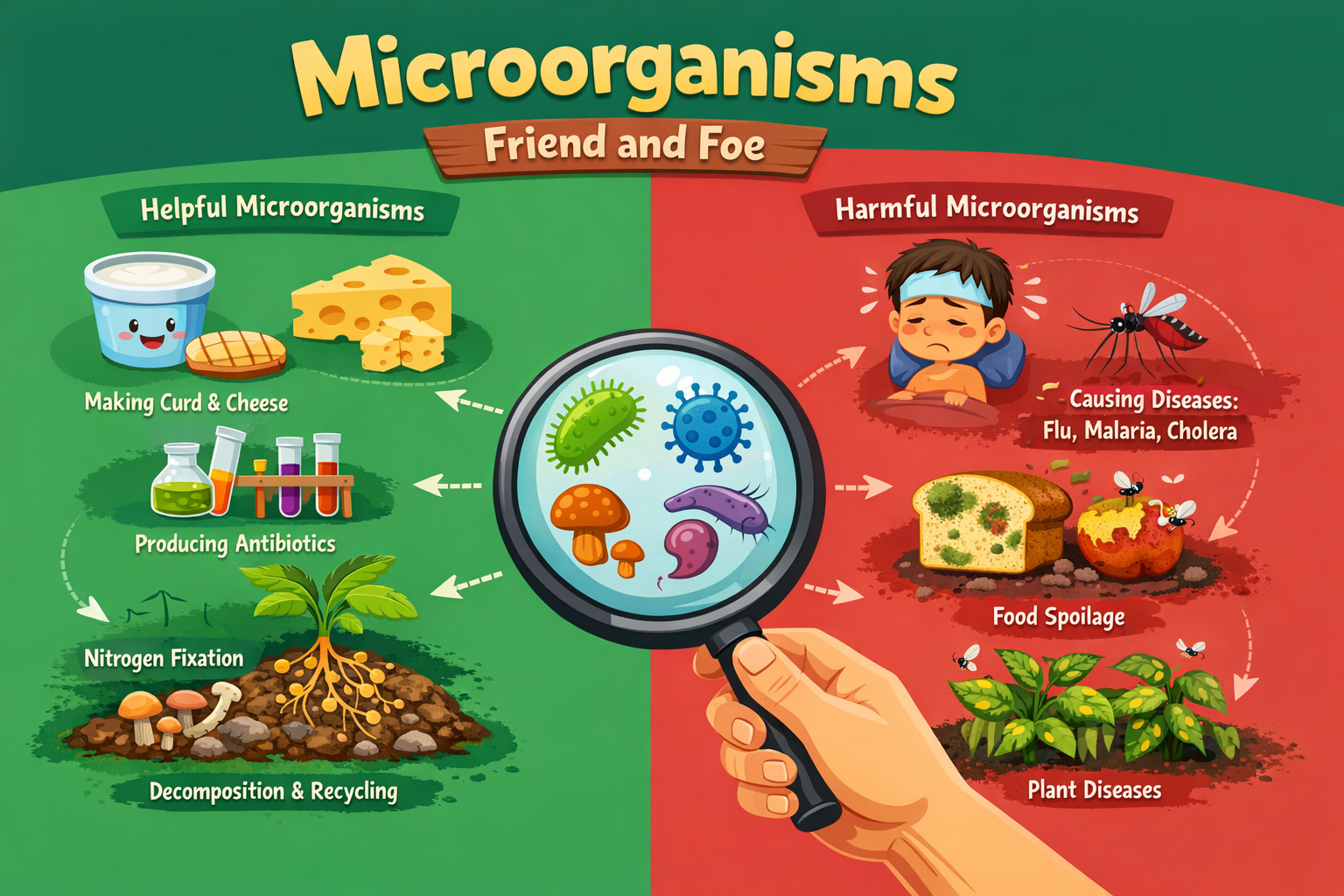

Leave a Reply