


1. Introduction
A disease is a condition in which the normal functioning of the body is disturbed. Diseases affect the health of a person and may cause weakness, pain, or discomfort.
First aid is the immediate care given to a sick or injured person before professional medical help is available.
PART 1: DISEASES
2. Causes of Diseases
Diseases can be caused by several factors such as:
- Microorganisms (bacteria, viruses, fungi, protozoa)
- Poor nutrition
- Unhealthy lifestyle
- Environmental factors
- Genetic causes
3. Types of Diseases
Diseases are mainly divided into two types:
1. Communicable Diseases
Communicable diseases are diseases that spread from one person to another.
Causes
They are caused by microorganisms such as bacteria, viruses, fungi, and protozoa.
Methods of Transmission
Communicable diseases spread through:
- Air (coughing or sneezing)
- Contaminated food or water
- Insect bites
- Direct contact with infected persons
Examples
- Common cold
- Influenza (flu)
- Tuberculosis
- Cholera
- Malaria
- Dengue
2. Non-Communicable Diseases
Non-communicable diseases do not spread from one person to another.
Causes
They may be caused by:
- Poor diet
- Lack of exercise
- Genetic factors
- Environmental conditions
Examples
- Diabetes
- Cancer
- Heart disease
- Asthma
4. Deficiency Diseases
Deficiency diseases occur when the body does not get enough nutrients, especially vitamins and minerals.
Examples
| Disease | Deficiency |
|---|---|
| Scurvy | Vitamin C |
| Rickets | Vitamin D |
| Beriberi | Vitamin B1 |
| Night blindness | Vitamin A |
| Goitre | Iodine |
5. Prevention of Diseases
Diseases can be prevented by:
- Maintaining personal hygiene
- Eating a balanced diet
- Drinking clean water
- Getting vaccinations
- Keeping surroundings clean
- Regular exercise
PART 2: FIRST AID
6. What is First Aid?
First aid is the immediate help given to a person who is injured or suddenly becomes ill before medical treatment is available.
Objectives of First Aid
- Save life
- Prevent the condition from becoming worse
- Promote recovery
7. First Aid Kit
A first aid kit should contain:
- Bandages
- Cotton
- Antiseptic lotion
- Adhesive tape
- Scissors
- Thermometer
- Gauze pads
- Pain relief medicine
8. First Aid for Cuts and Wounds
Steps
- Wash hands before touching the wound.
- Clean the wound with clean water.
- Apply antiseptic lotion.
- Cover with a sterile bandage.
9. First Aid for Burns
Minor Burns
- Cool the burn with cold running water.
- Apply a clean sterile dressing.
- Do not apply oil or butter.
Severe Burns
- Cover with a clean cloth.
- Seek medical help immediately.
10. First Aid for Bleeding
Steps
- Apply direct pressure on the wound using a clean cloth or bandage.
- Raise the injured part above the level of the heart if possible.
- Apply a bandage to stop bleeding.
11. First Aid for Fractures
A fracture is a broken bone.
Signs
- Severe pain
- Swelling
- Difficulty moving the limb
First Aid
- Do not move the injured part.
- Support the limb with a splint or sling.
- Take the person to a doctor immediately.
12. First Aid for Nosebleed
Steps
- Make the person sit upright.
- Lean the head slightly forward.
- Pinch the nostrils gently for 5–10 minutes.
13. First Aid for Fainting
Fainting occurs when the brain temporarily receives less blood supply.
First Aid
- Lay the person down.
- Raise the legs slightly.
- Loosen tight clothing.
- Allow fresh air.
14. First Aid for Insect Bites
Steps
- Wash the area with soap and water.
- Apply antiseptic cream.
- Use a cold compress to reduce swelling.
15. Importance of First Aid
First aid is important because it:
- Saves lives
- Prevents further injury
- Reduces pain and suffering
- Helps the patient recover faster
16. Summary
- A disease is a condition that affects normal body functioning.
- Diseases may be communicable or non-communicable.
- Some diseases occur due to nutrient deficiency.
- First aid is the immediate care given to injured or sick persons.
- Proper first aid can save lives and prevent complications.
If you want, I can also give:
📘 Important ICSE exam questions from Diseases and First Aid
📘 50 MCQs for practice
📘 Very detailed 6000–8000 word notes
📘 Short revision notes for quick study.
Here are clear and complete notes for “Disease and First Aid” (Class 8 ICSE level) to help you study and revise.
Disease and First Aid (Class 8 ICSE Notes)
1. What is a Disease?
A disease is a condition in which the body or any part of the body does not function normally.
Diseases affect the health, comfort, and efficiency of a person.
Causes of Diseases
Diseases may be caused by:
- Microorganisms (bacteria, viruses, fungi, protozoa)
- Poor nutrition
- Unhygienic conditions
- Environmental factors
- Genetic problems
2. Types of Diseases
Diseases are mainly divided into two types.
1. Communicable Diseases
Communicable diseases are diseases that can spread from one person to another.
They are caused by pathogens (disease-causing microorganisms).
Examples:
Ways Communicable Diseases Spread
- Air (coughing or sneezing)
- Contaminated food and water
- Insects such as mosquitoes
- Direct contact with infected person
2. Non-Communicable Diseases
Non-communicable diseases do not spread from person to person.
They may be caused by:
- Nutritional deficiency
- Lifestyle habits
- Genetic factors
Examples:
3. Infectious Diseases
Infectious diseases are diseases caused by microorganisms that enter the body and multiply.
Examples include:
4. Prevention of Diseases
Diseases can be prevented by:
- Maintaining personal hygiene
- Drinking clean water
- Eating nutritious food
- Getting vaccinations
- Keeping surroundings clean
- Protecting from mosquito bites
Vaccines protect against diseases like:
5. What is First Aid?
First aid is the immediate help given to an injured or sick person before professional medical help arrives.
The purpose of first aid is to:
- Save life
- Prevent the condition from worsening
- Promote recovery
6. Principles of First Aid
Important principles include:
- Stay calm and act quickly.
- Ensure safety of the victim.
- Stop bleeding if present.
- Call for medical help if needed.
- Provide comfort and reassurance.
7. First Aid for Common Injuries
1. Cuts and Wounds
Steps:
- Clean the wound with clean water.
- Apply antiseptic.
- Cover with a sterile bandage.
2. Burns
Burns may be caused by heat, chemicals, electricity, or radiation.
First aid steps:
- Cool the burn with cold water.
- Do not break blisters.
- Cover with a clean cloth.
Severe burns require immediate medical attention.
3. Fractures
A fracture is a break in a bone.
Signs:
- Severe pain
- Swelling
- Inability to move the limb
First aid:
- Keep the injured part still.
- Use a splint to support the bone.
- Take the patient to a doctor.
4. Nosebleed
First aid:
- Make the person sit upright.
- Lean the head slightly forward.
- Press the nose gently for a few minutes.
5. Fainting
Fainting occurs when the brain does not receive enough blood.
First aid:
- Lay the person flat.
- Raise the legs slightly.
- Loosen tight clothing.
8. First Aid Kit
A first aid kit contains basic medical supplies.
Common items include:
- Bandages
- Cotton
- Antiseptic solution
- Scissors
- Adhesive tape
- Pain relief medicines
A first aid kit is important at home, school, and workplaces.
9. Importance of Hygiene in Disease Prevention
Good hygiene practices include:
- Washing hands regularly
- Keeping nails clean
- Bathing daily
- Cleaning surroundings
- Proper disposal of waste
These practices reduce the risk of infection and disease spread.
10. Summary
- Diseases affect the normal functioning of the body.
- Diseases may be communicable or non-communicable.
- Good hygiene and vaccination help prevent diseases.
- First aid provides immediate care before medical help arrives.
- Knowing basic first aid can save lives in emergencies.
✅ If you want, I can also give:
- MCQs for Disease and First Aid (Class 8 ICSE)
- Short questions and answers for exams
- Important diagrams for revision
- Very short 1-page revision notes.
Here are more detailed notes for Class 8 ICSE – Disease and First Aid, including extra explanations, examples, and exam-important points.
Disease and First Aid (Extended Notes – Class 8 ICSE)
1. Health and Disease
Health
Health is a state of complete physical, mental, and social well-being, not just absence of disease.
A healthy person:
- Feels energetic
- Has normal body functions
- Is mentally stable
- Can perform daily activities efficiently
Disease
A disease is any condition that disturbs the normal functioning of the body.
2. Pathogens
Pathogens are microorganisms that cause diseases.
Types of pathogens include:
- Bacteria
Example: , - Viruses
Example: , - Fungi
Example: - Protozoa
Example:
3. Vectors
Vectors are organisms that carry disease-causing germs from one person to another.
Common vectors:
- Mosquitoes
- Flies
- Rats
Examples:
- Mosquito spreads
- Houseflies spread and
4. Symptoms and Signs of Diseases
Symptoms
Symptoms are changes in the body felt by the patient.
Examples:
- Headache
- Fever
- Weakness
- Pain
Signs
Signs are changes observed by doctors or others.
Examples:
- Skin rash
- Swelling
- High body temperature
5. Incubation Period
The incubation period is the time between entry of germs into the body and appearance of disease symptoms.
Example:
- In , symptoms appear several days after infection.
6. Modes of Transmission of Diseases
Communicable diseases spread through several ways:
1. Airborne Transmission
Through coughing and sneezing.
Examples:
2. Waterborne Transmission
Through contaminated water.
Examples:
3. Foodborne Transmission
Through contaminated food.
Examples:
4. Vector-borne Transmission
Through insects such as mosquitoes.
Examples:
7. Immunity
Immunity is the body’s ability to resist diseases.
Types of Immunity
Natural Immunity
Immunity present naturally in the body.
Artificial Immunity
Immunity obtained through vaccination.
Vaccines help protect against diseases like:
8. Deficiency Diseases
Deficiency diseases occur due to lack of certain nutrients in the diet.
Examples:
- – caused by lack of vitamin C
- – caused by lack of vitamin D
- – caused by lack of iron
Balanced diet helps prevent these diseases.
9. First Aid for Common Emergencies
1. Cuts and Bleeding
Steps:
- Wash the wound with clean water.
- Apply antiseptic.
- Cover with a sterile bandage.
If bleeding is heavy:
- Press the wound with clean cloth.
2. Burns
First aid steps:
- Pour cold water on the burn.
- Cover with sterile dressing.
- Do not apply oil or cream immediately.
3. Fractures
Signs:
- Severe pain
- Swelling
- Difficulty moving the limb
First aid:
- Keep the injured part still.
- Use a splint for support.
- Take the patient to hospital.
4. Electric Shock
First aid steps:
- Turn off the electric supply.
- Do not touch the person with bare hands if current is flowing.
- Call for medical help.
5. Snake Bite
First aid:
- Keep the patient calm.
- Do not allow movement.
- Tie a band above the bite loosely.
- Take the patient to hospital immediately.
10. Importance of First Aid Knowledge
Knowing first aid is important because it:
- Helps save lives in emergencies
- Prevents injuries from becoming worse
- Provides temporary treatment before medical help arrives
- Helps people remain calm in accidents
11. Safety Measures to Prevent Accidents
Accidents can be prevented by:
- Following road safety rules
- Being careful with electricity
- Keeping sharp objects safely
- Avoiding slippery floors
- Using protective equipment
12. Quick Revision Points
Important points for exams:
- Diseases disturb the normal functioning of the body.
- Communicable diseases spread from person to person.
- Non-communicable diseases do not spread.
- Pathogens include bacteria, viruses, fungi, and protozoa.
- First aid is immediate help given before medical treatment.
✅ If you want, I can also give:
- 50–100 MCQs from Disease and First Aid
- Important ICSE exam questions
- Short answer questions
- Very short revision notes for quick study before exams.
Here are more detailed notes for Class 8 ICSE – Disease and First Aid, including extra explanations, examples, and exam-important points.
Disease and First Aid (Extended Notes – Class 8 ICSE)
1. Health and Disease
Health
Health is a state of complete physical, mental, and social well-being, not just absence of disease.
A healthy person:
- Feels energetic
- Has normal body functions
- Is mentally stable
- Can perform daily activities efficiently
Disease
A disease is any condition that disturbs the normal functioning of the body.
2. Pathogens
Pathogens are microorganisms that cause diseases.
Types of pathogens include:
- Bacteria
Example: , - Viruses
Example: , - Fungi
Example: - Protozoa
Example:
3. Vectors
Vectors are organisms that carry disease-causing germs from one person to another.
Common vectors:
- Mosquitoes
- Flies
- Rats
Examples:
- Mosquito spreads
- Houseflies spread and
4. Symptoms and Signs of Diseases
Symptoms
Symptoms are changes in the body felt by the patient.
Examples:
- Headache
- Fever
- Weakness
- Pain
Signs
Signs are changes observed by doctors or others.
Examples:
- Skin rash
- Swelling
- High body temperature
5. Incubation Period
The incubation period is the time between entry of germs into the body and appearance of disease symptoms.
Example:
- In , symptoms appear several days after infection.
6. Modes of Transmission of Diseases
Communicable diseases spread through several ways:
1. Airborne Transmission
Through coughing and sneezing.
Examples:
2. Waterborne Transmission
Through contaminated water.
Examples:
3. Foodborne Transmission
Through contaminated food.
Examples:
4. Vector-borne Transmission
Through insects such as mosquitoes.
Examples:
7. Immunity
Immunity is the body’s ability to resist diseases.
Types of Immunity
Natural Immunity
Immunity present naturally in the body.
Artificial Immunity
Immunity obtained through vaccination.
Vaccines help protect against diseases like:
8. Deficiency Diseases
Deficiency diseases occur due to lack of certain nutrients in the diet.
Examples:
- – caused by lack of vitamin C
- – caused by lack of vitamin D
- – caused by lack of iron
Balanced diet helps prevent these diseases.
9. First Aid for Common Emergencies
1. Cuts and Bleeding
Steps:
- Wash the wound with clean water.
- Apply antiseptic.
- Cover with a sterile bandage.
If bleeding is heavy:
- Press the wound with clean cloth.
2. Burns
First aid steps:
- Pour cold water on the burn.
- Cover with sterile dressing.
- Do not apply oil or cream immediately.
3. Fractures
Signs:
- Severe pain
- Swelling
- Difficulty moving the limb
First aid:
- Keep the injured part still.
- Use a splint for support.
- Take the patient to hospital.
4. Electric Shock
First aid steps:
- Turn off the electric supply.
- Do not touch the person with bare hands if current is flowing.
- Call for medical help.
5. Snake Bite
First aid:
- Keep the patient calm.
- Do not allow movement.
- Tie a band above the bite loosely.
- Take the patient to hospital immediately.
10. Importance of First Aid Knowledge
Knowing first aid is important because it:
- Helps save lives in emergencies
- Prevents injuries from becoming worse
- Provides temporary treatment before medical help arrives
- Helps people remain calm in accidents
11. Safety Measures to Prevent Accidents
Accidents can be prevented by:
- Following road safety rules
- Being careful with electricity
- Keeping sharp objects safely
- Avoiding slippery floors
- Using protective equipment
12. Quick Revision Points
Important points for exams:
- Diseases disturb the normal functioning of the body.
- Communicable diseases spread from person to person.
- Non-communicable diseases do not spread.
- Pathogens include bacteria, viruses, fungi, and protozoa.
- First aid is immediate help given before medical treatment.
✅ If you want, I can also give:
- 50–100 MCQs from Disease and First Aid
- Important ICSE exam questions
- Short answer questions
- Very short revision notes for quick study before exams.
Here are even more detailed notes for Class 8 ICSE – Disease and First Aid, with extra topics often asked in exams.
Disease and First Aid (Further Extended Notes)
1. Difference Between Infectious and Non-Infectious Diseases
| Infectious Diseases | Non-Infectious Diseases |
|---|---|
| Caused by microorganisms | Not caused by microorganisms |
| Can spread from person to person | Do not spread between people |
| Example: , | Example: , |
2. Epidemic and Pandemic
Epidemic
An epidemic is a disease that spreads rapidly among many people in a particular area.
Example:
- outbreaks in some regions.
Pandemic
A pandemic is a disease that spreads across many countries or continents.
Example:
- .
3. Carriers of Diseases
A carrier is a person or animal that carries germs but may not show symptoms.
Carriers can still spread diseases to others.
Example: A person carrying germs of without showing symptoms.
4. Role of Clean Environment
A clean environment helps prevent diseases.
Important practices include:
- Proper disposal of garbage
- Clean drinking water
- Drainage systems
- Regular cleaning of surroundings
This helps reduce diseases like:
5. Balanced Diet and Disease Prevention
A balanced diet contains all essential nutrients:
- Carbohydrates
- Proteins
- Fats
- Vitamins
- Minerals
- Water
Balanced diet helps:
- Strengthen immunity
- Prevent deficiency diseases
- Maintain overall health
6. First Aid for Specific Emergencies
1. Drowning
Steps:
- Remove the person from water quickly.
- Lay the person on their back.
- Check breathing.
- If necessary, give artificial respiration.
2. Poisoning
Steps:
- Call medical help immediately.
- Do not give food or drink unless instructed.
- Try to identify the poison.
3. Insect Bite or Sting
Steps:
- Wash the area with water.
- Apply antiseptic.
- Apply ice to reduce swelling.
7. Artificial Respiration
Artificial respiration helps a person who is not breathing properly.
It involves:
- Blowing air into the person’s lungs
- Helping restore normal breathing
This method is used in cases such as:
- Drowning
- Electric shock
- Suffocation
8. Safety Rules at Home
Many accidents occur at home.
Safety rules include:
- Do not play with sharp objects.
- Keep medicines away from children.
- Do not touch electrical appliances with wet hands.
- Use gas stoves carefully.
9. Safety Rules in School and Playground
Students should:
- Follow teacher instructions.
- Avoid pushing or running on stairs.
- Use sports equipment carefully.
- Maintain discipline during activities.
10. Role of Hospitals and Doctors
Hospitals provide:
- Diagnosis of diseases
- Medical treatment
- Emergency services
- Vaccinations
- Health education
Doctors help identify diseases and give proper treatment.
11. Public Health Measures
Governments take many steps to control diseases:
- Vaccination programs
- Clean water supply
- Waste management
- Mosquito control
- Health awareness campaigns
These measures help reduce diseases like:
12. Importance of Learning First Aid
Learning first aid is important because it:
- Helps people respond quickly in emergencies
- Saves lives
- Reduces severity of injuries
- Builds confidence in handling accidents
13. Summary of the Chapter
Key points:
- Diseases disturb the body’s normal functioning.
- Communicable diseases spread through air, water, food, or vectors.
- Non-communicable diseases do not spread between people.
- Clean environment and balanced diet help prevent diseases.
- First aid provides immediate care before medical treatment arrives.
✅ If you want, I can also give very useful ICSE exam preparation materials, like:
- 100 MCQs from Disease and First Aid
- Important diagrams teachers ask in exams
- Short questions and answers
- 1-page quick revision notes before exams.
Here are even more detailed notes for Class 8 ICSE – Disease and First Aid, with extra topics often asked in exams.
Disease and First Aid (Further Extended Notes)
1. Difference Between Infectious and Non-Infectious Diseases
| Infectious Diseases | Non-Infectious Diseases |
|---|---|
| Caused by microorganisms | Not caused by microorganisms |
| Can spread from person to person | Do not spread between people |
| Example: , | Example: , |
2. Epidemic and Pandemic
Epidemic
An epidemic is a disease that spreads rapidly among many people in a particular area.
Example:
- outbreaks in some regions.
Pandemic
A pandemic is a disease that spreads across many countries or continents.
Example:
- .
3. Carriers of Diseases
A carrier is a person or animal that carries germs but may not show symptoms.
Carriers can still spread diseases to others.
Example: A person carrying germs of without showing symptoms.
4. Role of Clean Environment
A clean environment helps prevent diseases.
Important practices include:
- Proper disposal of garbage
- Clean drinking water
- Drainage systems
- Regular cleaning of surroundings
This helps reduce diseases like:
5. Balanced Diet and Disease Prevention
A balanced diet contains all essential nutrients:
- Carbohydrates
- Proteins
- Fats
- Vitamins
- Minerals
- Water
Balanced diet helps:
- Strengthen immunity
- Prevent deficiency diseases
- Maintain overall health
6. First Aid for Specific Emergencies
1. Drowning
Steps:
- Remove the person from water quickly.
- Lay the person on their back.
- Check breathing.
- If necessary, give artificial respiration.
2. Poisoning
Steps:
- Call medical help immediately.
- Do not give food or drink unless instructed.
- Try to identify the poison.
3. Insect Bite or Sting
Steps:
- Wash the area with water.
- Apply antiseptic.
- Apply ice to reduce swelling.
7. Artificial Respiration
Artificial respiration helps a person who is not breathing properly.
It involves:
- Blowing air into the person’s lungs
- Helping restore normal breathing
This method is used in cases such as:
- Drowning
- Electric shock
- Suffocation
8. Safety Rules at Home
Many accidents occur at home.
Safety rules include:
- Do not play with sharp objects.
- Keep medicines away from children.
- Do not touch electrical appliances with wet hands.
- Use gas stoves carefully.
9. Safety Rules in School and Playground
Students should:
- Follow teacher instructions.
- Avoid pushing or running on stairs.
- Use sports equipment carefully.
- Maintain discipline during activities.
10. Role of Hospitals and Doctors
Hospitals provide:
- Diagnosis of diseases
- Medical treatment
- Emergency services
- Vaccinations
- Health education
Doctors help identify diseases and give proper treatment.
11. Public Health Measures
Governments take many steps to control diseases:
- Vaccination programs
- Clean water supply
- Waste management
- Mosquito control
- Health awareness campaigns
These measures help reduce diseases like:
12. Importance of Learning First Aid
Learning first aid is important because it:
- Helps people respond quickly in emergencies
- Saves lives
- Reduces severity of injuries
- Builds confidence in handling accidents
13. Summary of the Chapter
Key points:
- Diseases disturb the body’s normal functioning.
- Communicable diseases spread through air, water, food, or vectors.
- Non-communicable diseases do not spread between people.
- Clean environment and balanced diet help prevent diseases.
- First aid provides immediate care before medical treatment arrives.
✅ If you want, I can also give very useful ICSE exam preparation materials, like:
- 100 MCQs from Disease and First Aid
- Important diagrams teachers ask in exams
- Short questions and answers
- 1-page quick revision notes before exams.
Here are more advanced notes for Class 8 ICSE – Disease and First Aid with additional concepts, tables, and explanations useful for exams.
Disease and First Aid (Advanced Extended Notes)
1. Classification of Diseases
Diseases can also be classified in several ways.
1. Acute Diseases
Acute diseases develop suddenly and last for a short time.
Examples:
2. Chronic Diseases
Chronic diseases develop slowly and last for a long time.
Examples:
2. Germ Theory of Disease
The Germ Theory states that many diseases are caused by microorganisms.
These microorganisms enter the body through:
- Air
- Water
- Food
- Cuts in the skin
Once inside the body, they multiply and cause disease.
3. Control of Communicable Diseases
Communicable diseases can be controlled by:
Vaccination
Vaccines stimulate the immune system to fight diseases.
Examples of diseases prevented by vaccines:
Isolation
Keeping infected persons away from healthy people.
Quarantine
Keeping people who may have been exposed to a disease separate for a certain period.
4. Personal Hygiene
Personal hygiene means keeping the body clean to maintain health.
Important habits include:
- Washing hands before eating
- Brushing teeth twice daily
- Wearing clean clothes
- Bathing regularly
- Keeping nails short and clean
These habits prevent infections and diseases.
5. Community Hygiene
Community hygiene involves maintaining clean surroundings in society.
Important measures include:
- Proper waste disposal
- Clean water supply
- Drainage systems
- Mosquito control
Good community hygiene prevents diseases like:
6. Food Hygiene
Food hygiene ensures that food is safe and clean to eat.
Important rules include:
- Washing fruits and vegetables
- Cooking food properly
- Covering food
- Storing food at correct temperatures
Poor food hygiene can lead to diseases like:
7. First Aid for Heat Stroke
Heat stroke occurs when the body temperature becomes too high.
Symptoms:
- High body temperature
- Dizziness
- Weakness
First aid steps:
- Move the person to a cool place.
- Give water if conscious.
- Cool the body with wet cloth.
8. First Aid for Sprain
A sprain occurs when ligaments are stretched or torn.
Symptoms:
- Pain
- Swelling
- Difficulty moving the joint
First aid:
- Rest the injured part.
- Apply ice to reduce swelling.
- Bandage the area.
9. First Aid for Dog Bite
Steps:
- Wash the wound with soap and water.
- Apply antiseptic.
- Seek medical help immediately.
Dog bites may spread diseases like:
10. Role of Health Education
Health education teaches people about:
- Preventing diseases
- Maintaining hygiene
- Proper nutrition
- Healthy lifestyle habits
It helps improve the overall health of society.
11. Importance of Clean Water
Clean drinking water is essential for health.
Contaminated water spreads diseases such as:
Water purification methods include:
- Boiling
- Filtration
- Chlorination
12. Responsibilities of Individuals
Each person should help prevent diseases by:
- Maintaining personal hygiene
- Following vaccination schedules
- Keeping surroundings clean
- Avoiding stagnant water
- Eating nutritious food
13. Key Terms (Important for Exams)
Disease – Condition that disturbs normal body function.
Pathogen – Microorganism that causes disease.
Vector – Organism that spreads diseases.
Immunity – Ability of the body to resist infection.
First Aid – Immediate care given before medical treatment.
14. Quick Exam Revision
Students should remember:
- Difference between communicable and non-communicable diseases
- Causes and prevention of diseases
- Importance of hygiene
- Steps of first aid in common emergencies
- Role of vaccination
✅ If you want, I can also give the most useful exam material for this chapter, such as:
- 100 ICSE MCQs
- 30 short-answer questions
- 10 long-answer questions
- Important labelled diagrams often asked in ICSE exams.
Here are more detailed notes for Class 8 ICSE – Disease and First Aid, including extra topics, examples, and exam-important points.
Disease and First Aid (Additional Detailed Notes)
1. Causes of Diseases
Diseases may occur due to many reasons:
1. Pathogens
Microorganisms that cause diseases are called pathogens.
Types of pathogens include:
- Bacteria
- Viruses
- Fungi
- Protozoa
Examples of diseases caused by pathogens:
2. Poor Nutrition
Lack of nutrients in the diet can lead to deficiency diseases.
Examples:
- – caused by lack of vitamin C
- – caused by lack of vitamin D
- – caused by lack of iron
3. Unhygienic Conditions
Dirty surroundings and contaminated water can spread diseases such as:
2. Methods of Preventing Diseases
1. Vaccination
Vaccines help the body develop immunity.
Vaccines protect against diseases such as:
2. Maintaining Hygiene
Hygiene practices include:
- Washing hands regularly
- Keeping nails trimmed
- Bathing daily
- Wearing clean clothes
These practices reduce the risk of infection.
3. Clean Food and Water
Food and water must be clean to prevent diseases.
Important steps include:
- Boiling drinking water
- Covering food
- Washing fruits and vegetables
These steps help prevent diseases like:
3. First Aid for Bleeding
Bleeding occurs when blood vessels are damaged.
First Aid Steps
- Apply pressure to the wound with a clean cloth.
- Raise the injured part above heart level if possible.
- Cover the wound with a sterile bandage.
- Seek medical help if bleeding is severe.
4. First Aid for Nose Bleeding
Nose bleeding may occur due to injury or high temperature.
First Aid Steps
- Make the person sit upright.
- Tilt the head slightly forward.
- Press the nose gently for a few minutes.
- Apply a cold compress on the nose.
5. First Aid for Fainting
Fainting occurs when the brain receives less oxygen.
First Aid Steps
- Lay the person flat on the ground.
- Raise the legs slightly.
- Loosen tight clothing.
- Allow fresh air.
6. First Aid for Burns
Burns may be caused by heat, fire, electricity, or chemicals.
First Aid Steps
- Cool the burn with cold running water.
- Cover the burn with a clean cloth or sterile dressing.
- Do not apply oil or ointment immediately.
Severe burns require immediate medical attention.
7. First Aid for Fractures
A fracture is a break in a bone.
Signs of Fracture
- Severe pain
- Swelling
- Deformity of limb
First Aid Steps
- Do not move the injured part.
- Use a splint to support the bone.
- Take the patient to a hospital.
8. First Aid Kit
A first aid kit contains basic supplies used in emergencies.
Important items include:
- Sterile bandages
- Cotton and gauze
- Antiseptic lotion
- Scissors
- Adhesive tape
- Thermometer
A first aid kit should be kept at home, school, and workplaces.
9. Importance of Clean Surroundings
Clean surroundings help prevent diseases.
Important measures include:
- Proper garbage disposal
- Clean drainage systems
- Removing stagnant water
- Keeping houses clean
This helps prevent mosquito-borne diseases like:
10. Role of Hospitals and Health Workers
Hospitals and health workers help control diseases by:
- Diagnosing illnesses
- Providing treatment
- Giving vaccinations
- Educating people about hygiene and health
11. Summary of the Chapter
Key points:
- Diseases disturb normal body functions.
- Communicable diseases spread from person to person.
- Non-communicable diseases do not spread.
- Hygiene, vaccination, and clean environment help prevent diseases.
- First aid provides immediate care before professional medical help arrives.
✅ If you want, I can also give extra ICSE exam preparation content, such as:
- 100 MCQs from Disease and First Aid
- Important 1-mark, 2-mark, and 5-mark questions
- Labelled diagrams asked in ICSE exams
- Super-short revision notes (for exam day).
Here are even more complete notes for Class 8 ICSE – Disease and First Aid, including extra concepts that help in exams.
Disease and First Aid (Extra Detailed Notes)
1. Agents that Cause Diseases
The organisms that cause diseases are called disease-causing agents or pathogens.
Types of Disease-causing Agents
1. Bacteria
These are microscopic organisms that reproduce rapidly.
Examples of diseases caused by bacteria:
2. Viruses
Viruses are extremely small infectious agents that grow only inside living cells.
Examples:
3. Fungi
Fungi grow well in warm and moist places.
Example:
4. Protozoa
Protozoa are single-celled organisms.
Example:
2. Life Cycle of a Disease
A disease usually passes through four stages.
1. Incubation Stage
The time between entry of germs and appearance of symptoms.
2. Prodromal Stage
Early symptoms begin to appear.
3. Acute Stage
Disease symptoms become severe and clear.
4. Recovery Stage
The patient gradually recovers from the disease.
3. Body Defenses Against Diseases
The human body has natural ways to fight diseases.
1. Physical Barriers
Examples include:
- Skin
- Tears
- Mucus in the nose
These barriers prevent germs from entering the body.
2. Immune System
The immune system protects the body by destroying harmful microorganisms.
White blood cells help fight infections.
4. Importance of Vaccination
Vaccination helps the body develop immunity against diseases.
Vaccines protect against diseases such as:
Vaccination programs are conducted worldwide.
5. Communicable Disease Control Methods
Communicable diseases can be controlled through:
Isolation
Keeping infected people away from healthy individuals.
Quarantine
Separating people who may have been exposed to disease.
Disinfection
Using chemicals to kill germs.
Sanitation
Maintaining clean surroundings.
6. First Aid for Choking
Choking occurs when food or an object blocks the airway.
First Aid Steps
- Ask the person to cough strongly.
- If breathing is difficult, perform back blows.
- Seek medical help immediately.
7. First Aid for Electric Shock
Electric shock can be dangerous.
First Aid Steps
- Turn off the electricity source.
- Do not touch the victim with bare hands if current is still flowing.
- Move the victim away using a dry object.
- Call medical help.
8. First Aid for Snake Bite
Snake bites may inject venom into the body.
First Aid Steps
- Keep the victim calm.
- Do not allow movement of the bitten limb.
- Tie a loose band above the bite.
- Take the victim to hospital immediately.
9. Importance of First Aid Training
First aid training helps people:
- Handle emergencies effectively
- Save lives
- Reduce the severity of injuries
- Provide immediate care before doctors arrive
Many schools and organizations provide first aid training programs.
10. Role of Government in Disease Control
Governments help control diseases by:
- Providing vaccination programs
- Ensuring clean water supply
- Controlling mosquitoes
- Running health awareness campaigns
These efforts help reduce diseases such as:
11. Importance of Healthy Lifestyle
A healthy lifestyle helps prevent diseases.
Important habits include:
- Eating a balanced diet
- Exercising regularly
- Getting enough sleep
- Maintaining hygiene
These habits keep the body strong and healthy.
12. Final Conclusion
Diseases affect the health of individuals and society.
Maintaining hygiene, vaccination, and proper nutrition helps prevent many diseases.
First aid is very important because it provides immediate assistance during accidents and emergencies, helping save lives before professional medical treatment is available.
✅ If you want, I can also give very useful ICSE exam materials, such as:
- 150 MCQs from Disease and First Aid
- Most important ICSE board questions
- Short answers students must memorize
- Important diagrams from this chapter.
Here are more extended notes for Class 8 ICSE – Disease and First Aid with additional concepts that help for better understanding and exam preparation.
Disease and First Aid (Further Detailed Notes)
1. Sources of Infection
Sources of infection are places or objects from which disease-causing germs spread.
Common sources include:
- Air – germs spread through coughing or sneezing.
- Water – contaminated water spreads diseases like and .
- Food – spoiled or contaminated food may cause infections.
- Animals and insects – mosquitoes spread diseases like and .
2. Reservoirs of Infection
A reservoir is a place where disease-causing organisms live and multiply.
Examples:
- Human body
- Animals
- Contaminated water
- Soil
These reservoirs help germs survive and spread to new hosts.
3. Chain of Infection
The chain of infection explains how diseases spread.
The chain includes:
- Pathogen (germ)
- Reservoir (place where germs live)
- Mode of transmission
- Entry into the body
- New host
Breaking any step in this chain can stop disease spread.
4. Disinfection and Sterilization
Disinfection
Disinfection means killing harmful microorganisms on surfaces using chemicals.
Examples:
- Bleaching powder
- Phenyl
- Dettol
Sterilization
Sterilization means complete destruction of all microorganisms.
It is commonly done in hospitals using:
- High heat
- Steam
- Special chemicals
5. Importance of Waste Management
Improper waste disposal can spread diseases.
Good waste management includes:
- Proper garbage collection
- Recycling waste
- Safe disposal of medical waste
- Keeping surroundings clean
This helps prevent diseases like:
6. Importance of Public Health Programs
Public health programs aim to improve the health of people.
Important activities include:
- Vaccination campaigns
- Clean water supply
- Mosquito control
- Health education
These programs reduce diseases like:
7. First Aid for Shock
Shock occurs when the body does not get enough blood flow.
Symptoms
- Pale skin
- Weak pulse
- Cold sweating
- Dizziness
First Aid
- Lay the person down.
- Raise the legs slightly.
- Keep the person warm.
- Call medical help.
8. First Aid for Heat Exhaustion
Heat exhaustion happens when the body loses too much water due to heat.
Symptoms
- Excessive sweating
- Weakness
- Headache
- Nausea
First Aid
- Move the person to a cool place.
- Give water or electrolyte drinks.
- Allow the person to rest.
9. First Aid for Eye Injury
If dust or a small object enters the eye:
Steps:
- Do not rub the eye.
- Wash the eye with clean water.
- Seek medical help if irritation continues.
10. First Aid for Minor Poisoning
Poisoning may occur from chemicals, spoiled food, or medicines.
First aid steps:
- Call medical help immediately.
- Keep the poison container for identification.
- Do not force the person to vomit unless instructed by a doctor.
11. Importance of Emergency Numbers
Emergency services help people during accidents or medical emergencies.
Important services include:
- Ambulance services
- Hospitals
- Fire services
- Police assistance
Quick access to these services helps save lives.
12. Role of Education in Disease Prevention
Education helps people understand:
- Importance of hygiene
- Proper nutrition
- Vaccination
- Clean environment
Educated communities are better able to prevent diseases.
13. Final Revision Points
Students should remember:
- Diseases may be communicable or non-communicable.
- Pathogens include bacteria, viruses, fungi, and protozoa.
- Clean water, hygiene, and vaccination prevent diseases.
- First aid is the immediate care given before medical treatment.
- Knowledge of first aid helps handle emergencies effectively.
✅ If you want, I can also give the most useful ICSE exam preparation materials, such as:
- 200 MCQs from Disease and First Aid
- Most repeated ICSE exam questions
- Very short revision notes for last-minute study
- Important labelled diagrams from the chapter.
Here are more advanced and deeper notes for Class 8 ICSE – Disease and First Aid to further complete the chapter.
Disease and First Aid (Very Detailed Notes)
1. Endemic, Epidemic and Pandemic Diseases
Endemic Disease
An endemic disease is a disease that regularly occurs in a particular region.
Example:
- is common in many tropical regions.
Epidemic Disease
An epidemic occurs when a disease spreads rapidly among many people in a specific area.
Example:
- outbreaks in certain places.
Pandemic Disease
A pandemic is an epidemic that spreads across many countries or continents.
Example:
- .
2. Role of Nutrition in Preventing Diseases
Proper nutrition helps maintain a strong immune system.
A balanced diet should include:
- Carbohydrates (energy)
- Proteins (growth and repair)
- Fats (energy storage)
- Vitamins (body regulation)
- Minerals (body functions)
Lack of nutrients can cause deficiency diseases like:
3. Water Purification Methods
Safe drinking water is important for preventing diseases.
Boiling
Boiling water kills harmful microorganisms.
Filtration
Filtration removes impurities from water.
Chlorination
Chlorine is added to water to kill germs.
These methods prevent diseases like:
4. Mosquito Control Methods
Mosquitoes spread diseases such as:
Control measures include:
- Removing stagnant water
- Using mosquito nets
- Spraying insecticides
- Keeping surroundings clean
5. First Aid for Cuts and Wounds
Cuts and wounds occur when the skin is damaged.
First Aid Steps
- Wash the wound with clean water.
- Apply antiseptic solution.
- Cover with sterile bandage.
This prevents infection.
6. First Aid for Sprains
A sprain occurs when ligaments are stretched or torn.
Symptoms
- Pain
- Swelling
- Difficulty moving the joint
First Aid
Follow the RICE method:
- R – Rest the injured part
- I – Ice pack to reduce swelling
- C – Compression with bandage
- E – Elevation of the injured limb
7. First Aid for Nosebleed
Nosebleeds may occur due to injury, dry weather, or high blood pressure.
First Aid Steps
- Make the person sit upright.
- Lean the head slightly forward.
- Press the nose gently for several minutes.
- Apply a cold compress.
8. First Aid for Minor Burns
Minor burns can be treated with simple steps.
First Aid Steps
- Cool the burn with cold running water.
- Cover with sterile dressing.
- Do not burst blisters.
Severe burns require immediate medical care.
9. Importance of Clean Water Supply
Access to clean water helps prevent many diseases.
Contaminated water can spread diseases like:
Proper sanitation and water treatment are essential for public health.
10. Importance of Sanitation
Sanitation means maintaining clean living conditions.
Sanitation practices include:
- Proper toilet facilities
- Safe disposal of waste
- Clean drinking water
- Drainage systems
Good sanitation prevents disease spread.
11. Importance of Health Awareness
Health awareness programs teach people about:
- Disease prevention
- Hygiene practices
- Nutrition
- Vaccination
These programs improve the overall health of communities.
12. Final Key Points for Exams
Students should remember:
- Diseases disturb the normal functioning of the body.
- Pathogens include bacteria, viruses, fungi, and protozoa.
- Diseases spread through air, water, food, or vectors.
- Vaccination and hygiene help prevent diseases.
- First aid provides immediate help before professional medical care arrives.
✅ If you want, I can also give very helpful ICSE exam material, like:
- 200 MCQs from Disease and First Aid
- Most repeated ICSE exam questions
- Short answers that teachers expect
- Important labelled diagrams for exams.
Here are more detailed and deeper notes for Class 8 ICSE – Disease and First Aid with additional concepts useful for complete chapter understanding and exam preparation.
Disease and First Aid (Extra Extended Notes)
1. Host and Susceptibility
A host is an organism that can be infected by a disease-causing microorganism.
A person becomes susceptible to disease when:
- The immune system is weak
- Nutrition is poor
- Hygiene is poor
- Exposure to pathogens is high
People with strong immunity are less likely to get infected.
2. Incidence and Prevalence of Disease
Incidence
The number of new cases of a disease occurring in a population during a specific time.
Prevalence
The total number of cases (old + new) of a disease present in a population at a given time.
These measurements help health authorities track diseases.
3. Role of Antibiotics
Antibiotics are medicines used to kill or stop the growth of bacteria.
Examples of bacterial diseases treated with antibiotics include:
Important point:
- Antibiotics do not work against viral diseases such as .
4. Antiseptics and Disinfectants
Antiseptics
Chemicals used on living tissues to kill germs.
Examples:
- Iodine solution
- Dettol
Disinfectants
Chemicals used on non-living surfaces to destroy microorganisms.
Examples:
- Phenyl
- Bleaching powder
5. Role of Nutrition in Recovery from Disease
Nutrition is very important during illness.
Proper nutrition helps:
- Strengthen the immune system
- Repair body tissues
- Restore energy levels
Patients are often advised to eat:
- Fruits
- Vegetables
- Protein-rich foods
- Plenty of fluids
6. First Aid for Bleeding from Nose (Epistaxis)
Causes
- Injury to nose
- Hot weather
- High blood pressure
First Aid
- Make the person sit upright.
- Lean the head slightly forward.
- Pinch the soft part of the nose for about 10 minutes.
- Apply a cold compress.
7. First Aid for Animal Bites
Animal bites can spread dangerous infections.
Example disease:
First Aid Steps
- Wash the wound with soap and water for several minutes.
- Apply antiseptic.
- Seek medical help immediately.
8. First Aid for Choking
Choking occurs when food blocks the airway.
Symptoms
- Difficulty breathing
- Coughing
- Unable to speak
First Aid
- Encourage coughing.
- Give back blows between shoulder blades.
- Call medical help if choking continues.
9. Importance of First Aid Education
First aid education is important because it:
- Helps people respond quickly during emergencies
- Reduces the severity of injuries
- Saves lives before medical help arrives
- Increases public safety awareness
Many schools teach basic first aid training to students.
10. Community Participation in Disease Control
Communities can help prevent diseases by:
- Maintaining cleanliness
- Eliminating stagnant water
- Participating in vaccination programs
- Spreading awareness about hygiene
Community cooperation greatly reduces disease spread.
11. Importance of Early Diagnosis
Early diagnosis means detecting a disease at an early stage.
Benefits include:
- Faster treatment
- Better recovery chances
- Prevention of disease spread
Regular health checkups help detect diseases early.
12. Emergency Preparedness
People should be prepared for emergencies by:
- Keeping a first aid kit at home
- Knowing emergency phone numbers
- Learning basic first aid skills
- Staying calm during accidents
Preparedness helps manage emergencies effectively.
13. Final Conclusion of the Chapter
Diseases affect individuals and communities.
They may be caused by microorganisms, poor nutrition, or environmental factors.
Maintaining hygiene, eating a balanced diet, and following vaccination schedules help prevent diseases.
First aid is essential for providing immediate care during injuries and emergencies, helping protect health and save lives.
✅ If you want, I can also provide extra ICSE exam preparation content, such as:
- 250 MCQs from Disease and First Aid
- Most important 1-mark, 2-mark, and 5-mark questions
- ICSE board-style sample paper for this chapter
- Very short revision notes for quick study before exams.
Here are more complete notes for Class 8 ICSE – Disease and First Aid with additional explanations, examples, and exam-important information.
Disease and First Aid (Additional Detailed Notes)
1. Factors Affecting Health
Health depends on several important factors:
1. Balanced Diet
A balanced diet provides all essential nutrients needed for proper body functioning.
Lack of nutrients can cause deficiency diseases such as:
2. Clean Environment
A clean environment reduces the spread of disease.
Important practices include:
- Proper garbage disposal
- Clean drinking water
- Good drainage systems
- Regular cleaning of surroundings
These practices help prevent diseases like:
3. Personal Hygiene
Personal hygiene helps maintain health and prevent infections.
Important habits:
- Washing hands before eating
- Brushing teeth daily
- Bathing regularly
- Keeping nails clean
2. Common Communicable Diseases
Malaria
Cause: Protozoa transmitted by mosquitoes.
Disease:
Symptoms:
- High fever
- Chills
- Headache
- Sweating
Prevention:
- Mosquito nets
- Removing stagnant water
- Using insect repellents
Typhoid
Cause: Bacteria spread through contaminated food or water.
Disease:
Symptoms:
- High fever
- Weakness
- Stomach pain
- Loss of appetite
Prevention:
- Drinking clean water
- Proper sanitation
- Vaccination
Dengue
Cause: Virus transmitted by mosquitoes.
Disease:
Symptoms:
- High fever
- Severe headache
- Joint and muscle pain
- Skin rash
Prevention:
- Prevent mosquito breeding
- Use mosquito nets
3. Common Non-Communicable Diseases
Diabetes
Disease:
Cause: The body cannot properly regulate blood sugar.
Symptoms:
- Frequent urination
- Excessive thirst
- Fatigue
Anaemia
Disease:
Cause: Lack of iron in the body.
Symptoms:
- Weakness
- Pale skin
- Fatigue
4. First Aid for Bleeding
Bleeding occurs when blood vessels are damaged.
First Aid Steps
- Apply pressure to the wound with a clean cloth.
- Raise the injured part if possible.
- Cover the wound with a sterile bandage.
- Seek medical help if bleeding continues.
5. First Aid for Fractures
A fracture is a break in a bone.
Symptoms
- Severe pain
- Swelling
- Difficulty moving the limb
First Aid
- Keep the injured part still.
- Use a splint to support the limb.
- Take the patient to a hospital.
6. First Aid for Burns
Burns can be caused by heat, chemicals, or electricity.
First Aid Steps
- Cool the burn with cold running water.
- Cover the burn with sterile dressing.
- Do not burst blisters.
7. First Aid for Electric Shock
Electric shock may cause serious injuries.
First Aid Steps
- Turn off the electricity supply.
- Move the victim away using a dry object.
- Check breathing.
- Call for medical help.
8. Importance of a First Aid Kit
A first aid kit should contain basic medical supplies.
Common items include:
- Cotton and gauze
- Sterile bandages
- Antiseptic solution
- Adhesive tape
- Scissors
- Thermometer
A first aid kit should be available at home, school, and workplaces.
9. Importance of Health Awareness
Health awareness helps people understand:
- Disease prevention
- Hygiene practices
- Proper nutrition
- Importance of vaccination
Health education improves the overall health of society.
10. Quick Revision Points (Important for Exams)
- Diseases disturb normal body functions.
- Diseases may be communicable or non-communicable.
- Pathogens include bacteria, viruses, fungi, and protozoa.
- Hygiene and vaccination help prevent diseases.
- First aid provides immediate care before professional medical treatment.
✅ If you want, I can also give:
- 300 MCQs from Disease and First Aid (ICSE level)
- Most repeated ICSE exam questions
- Very short 1-page revision notes
- Important diagrams teachers ask in exams.
Here are more additional notes for Class 8 ICSE – Disease and First Aid to further complete the chapter with deeper concepts.
Disease and First Aid (Additional Extended Notes)
1. How Diseases Spread
Diseases spread through several modes of transmission.
Airborne Transmission
Germs travel through air when an infected person coughs or sneezes.
Examples:
Waterborne Transmission
Diseases spread through contaminated water.
Examples:
Foodborne Transmission
Diseases spread through contaminated food.
Example:
Vector-borne Transmission
Vectors are organisms that carry pathogens.
Example:
- Mosquito spreads and .
2. Importance of Immunization
Immunization is the process of protecting the body from diseases using vaccines.
Vaccines help the immune system produce antibodies to fight pathogens.
Diseases prevented by vaccines include:
Immunization programs are very important for public health.
3. Hygiene and Sanitation
Personal Hygiene
Personal hygiene includes practices that keep the body clean.
Examples:
- Bathing daily
- Washing hands before meals
- Brushing teeth twice a day
Environmental Hygiene
Environmental hygiene means keeping surroundings clean.
Important practices:
- Proper waste disposal
- Clean water supply
- Good drainage systems
These practices reduce disease spread.
4. First Aid for Shock
Shock occurs when the body does not receive enough blood circulation.
Symptoms
- Weak pulse
- Pale skin
- Dizziness
- Cold sweating
First Aid
- Lay the person flat.
- Raise the legs slightly.
- Keep the person warm.
- Call medical help.
5. First Aid for Heat Stroke
Heat stroke occurs when body temperature becomes dangerously high.
Symptoms
- High body temperature
- Headache
- Dizziness
- Confusion
First Aid
- Move the person to a cool place.
- Remove excess clothing.
- Cool the body with wet cloth or water.
- Seek medical help.
6. First Aid for Sprain
A sprain occurs when ligaments are stretched.
Symptoms
- Pain
- Swelling
- Difficulty moving the joint
First Aid
Use the RICE method:
- Rest
- Ice
- Compression
- Elevation
7. First Aid for Fainting
Fainting occurs due to temporary loss of consciousness.
First Aid
- Lay the person on the ground.
- Raise the legs slightly.
- Loosen tight clothing.
- Allow fresh air.
8. Importance of Safety Rules
Following safety rules helps prevent accidents.
Examples:
- Follow traffic rules
- Use electrical appliances carefully
- Handle sharp objects safely
- Avoid playing in dangerous areas
9. Importance of Community Health
Community health refers to the health of people living in a particular area.
Maintaining community health requires:
- Clean environment
- Vaccination programs
- Health education
- Proper sanitation
Community participation helps reduce disease spread.
10. Final Key Points for Students
Students should remember:
- Diseases disturb the normal functioning of the body.
- Pathogens cause many diseases.
- Communicable diseases spread through air, water, food, or vectors.
- Vaccination and hygiene help prevent diseases.
- First aid provides immediate care before medical treatment.
✅ If you want, I can also give extra helpful ICSE study material, like:
- 300 MCQs from Disease and First Aid
- Most important ICSE exam questions
- Very short quick revision notes
- Important labelled diagrams asked in exams.
Here are more additional and deeper notes for Class 8 ICSE – Disease and First Aid to make the chapter fully complete and detailed.
Disease and First Aid (Further Extended Study Notes)
1. Stages of Infectious Diseases
Most infectious diseases develop through several stages.
1. Incubation Stage
The time between entry of germs into the body and the appearance of symptoms.
Example: In symptoms appear after several days.
2. Prodromal Stage
Early mild symptoms appear.
Examples:
- Slight fever
- Weakness
- Headache
3. Acute Stage
The disease reaches its most severe stage.
Symptoms become very noticeable.
Example diseases:
4. Recovery Stage
The body gradually recovers from the disease.
Proper rest and treatment help recovery.
2. Ways to Break the Chain of Infection
The spread of disease can be stopped by breaking the chain of infection.
Important methods include:
- Vaccination
- Proper sanitation
- Isolation of infected persons
- Clean drinking water
- Mosquito control
These steps reduce diseases like:
3. Importance of Clean Water
Clean water is essential for good health.
Unsafe water spreads diseases such as:
Methods of Making Water Safe
- Boiling
- Filtration
- Chlorination
4. Importance of Waste Disposal
Improper waste disposal creates breeding places for insects and microorganisms.
Good waste disposal methods include:
- Using dustbins
- Recycling waste
- Composting organic waste
- Safe disposal of medical waste
Proper waste management prevents diseases.
5. First Aid for Minor Cuts
Cuts are common injuries where the skin is broken.
First Aid
- Wash the wound with clean water.
- Apply antiseptic.
- Cover with sterile bandage.
6. First Aid for Bruises
A bruise occurs when blood vessels under the skin break due to injury.
First Aid
- Apply cold compress.
- Rest the injured area.
- Elevate the injured part if possible.
7. First Aid for Drowning
Drowning occurs when water enters the lungs.
First Aid Steps
- Remove the person from water immediately.
- Check breathing.
- If not breathing, give artificial respiration.
- Call medical help.
8. First Aid for Electric Shock
Electric shock may cause serious injuries.
First Aid Steps
- Turn off electricity supply.
- Use a dry object to separate the victim from the source.
- Check breathing.
- Seek medical help immediately.
9. First Aid for Snake Bite
Snake bites can be dangerous due to venom.
First Aid Steps
- Keep the victim calm.
- Do not allow movement of the affected limb.
- Tie a loose band above the bite.
- Take the victim to hospital quickly.
10. Role of Hospitals in Health Care
Hospitals play an important role in maintaining public health.
Hospitals provide:
- Diagnosis of diseases
- Medical treatment
- Emergency care
- Vaccination services
- Health education
11. Importance of Public Awareness
Public awareness about health helps reduce disease spread.
Awareness programs teach people about:
- Hygiene practices
- Safe drinking water
- Proper nutrition
- Vaccination
12. Final Summary of the Chapter
Key points:
- Diseases disturb the normal functioning of the body.
- Communicable diseases spread through pathogens.
- Non-communicable diseases do not spread from person to person.
- Hygiene, vaccination, and proper nutrition help prevent diseases.
- First aid provides immediate care during accidents and emergencies.
✅ If you want, I can also give extra ICSE exam preparation material, such as:
- 350 MCQs from Disease and First Aid
- Most repeated ICSE board questions
- Short answers students must memorize
- Important labelled diagrams from this chapter.
Here are more detailed and advanced notes for Class 8 ICSE – Disease and First Aid to make the chapter very complete for study and exams.
Disease and First Aid (Further Advanced Notes)
1. Role of the Immune System
The immune system protects the body from harmful microorganisms.
It includes:
- White blood cells
- Antibodies
- Lymph nodes
When pathogens enter the body, the immune system recognizes and destroys them.
Strong immunity helps protect against diseases such as:
2. Antibodies
Antibodies are special proteins produced by the immune system to fight pathogens.
Functions of antibodies:
- Recognize harmful microorganisms
- Destroy pathogens
- Provide immunity against future infections
Vaccination helps the body produce antibodies against diseases like:
3. Role of Antibiotics
Antibiotics are medicines used to kill or stop the growth of bacteria.
Examples of bacterial diseases treated with antibiotics include:
Important fact: Antibiotics do not work against viral diseases such as .
4. Difference Between Antiseptics and Disinfectants
| Antiseptics | Disinfectants |
|---|---|
| Used on living tissues | Used on non-living surfaces |
| Kill germs on skin and wounds | Kill germs on objects and surfaces |
| Example: iodine solution | Example: bleaching powder |
5. Importance of Balanced Diet in Disease Prevention
A balanced diet strengthens the immune system.
Important nutrients include:
- Proteins
- Vitamins
- Minerals
- Carbohydrates
Lack of nutrients can cause deficiency diseases such as:
6. First Aid for Choking
Choking occurs when food blocks the airway.
Symptoms
- Difficulty breathing
- Inability to speak
- Coughing
First Aid
- Encourage the person to cough.
- Give back blows between the shoulder blades.
- Seek medical help if choking continues.
7. First Aid for Poisoning
Poisoning can occur from chemicals, medicines, or spoiled food.
First Aid Steps
- Call medical help immediately.
- Identify the poison if possible.
- Keep the person calm.
- Do not give food or drink unless advised by a doctor.
8. First Aid for Heat Exhaustion
Heat exhaustion occurs due to excessive heat and dehydration.
Symptoms
- Heavy sweating
- Weakness
- Dizziness
- Headache
First Aid
- Move the person to a cool place.
- Give water or electrolyte drinks.
- Allow rest.
9. Importance of Safety Measures
Safety measures help prevent accidents and injuries.
Important safety rules include:
- Following traffic rules
- Using electrical appliances carefully
- Wearing protective equipment
- Avoiding risky activities
10. Community Role in Disease Prevention
Communities help prevent diseases by:
- Maintaining cleanliness
- Participating in vaccination programs
- Eliminating stagnant water
- Promoting health awareness
Community cooperation greatly reduces disease spread.
11. Importance of Emergency Preparedness
People should always be prepared for emergencies.
Important steps include:
- Keeping a first aid kit at home
- Knowing emergency phone numbers
- Learning basic first aid skills
Emergency preparedness helps save lives during accidents.
12. Final Key Points for Exams
Students should remember:
- Diseases disturb normal body functions.
- Pathogens include bacteria, viruses, fungi, and protozoa.
- Vaccination helps prevent many diseases.
- Hygiene and clean environment reduce disease spread.
- First aid provides immediate care before medical treatment.
✅ If you want, I can also give complete ICSE exam preparation material, such as:
- 400 MCQs from Disease and First Aid
- Most repeated ICSE board exam questions
- Short answers students must memorize
- Important labelled diagrams from this chapter.
Here are more detailed notes for Class 8 ICSE – Disease and First Aid, adding some important topics often asked in exams.
Disease and First Aid (More Extended Notes)
1. Types of Immunity
Immunity is the ability of the body to resist diseases.
Natural Immunity
Natural immunity is the protection that the body has naturally from birth.
Example: Some people are naturally resistant to certain infections.
Acquired Immunity
Acquired immunity develops after infection or vaccination.
Vaccines protect against diseases like:
2. Importance of Clean Air
Clean air is essential for maintaining good health.
Air pollution can cause respiratory diseases such as:
Ways to keep air clean include:
- Planting trees
- Reducing smoke and pollution
- Proper waste management
3. Importance of Rest and Exercise
Rest and exercise are important for maintaining health.
Rest
Proper rest allows the body to recover and repair tissues.
Exercise
Regular exercise helps:
- Improve blood circulation
- Strengthen muscles
- Improve immunity
4. First Aid for Minor Eye Injuries
Dust or small particles may enter the eye.
First Aid Steps
- Do not rub the eye.
- Wash the eye gently with clean water.
- Seek medical help if irritation continues.
5. First Aid for Insect Stings
Insect stings can cause pain and swelling.
First Aid
- Remove the sting if present.
- Wash the area with clean water.
- Apply ice to reduce swelling.
Some insect stings may cause severe reactions and require medical attention.
6. First Aid for Dog Bite
Dog bites may spread dangerous diseases such as:
First Aid Steps
- Wash the wound with soap and water.
- Apply antiseptic.
- Seek medical treatment immediately.
7. Importance of Proper Ventilation
Proper ventilation allows fresh air to circulate inside buildings.
Benefits include:
- Reducing spread of germs
- Removing stale air
- Maintaining healthy indoor environment
Poor ventilation increases risk of diseases like:
8. Importance of Early Treatment
Early medical treatment helps:
- Prevent complications
- Reduce severity of disease
- Improve recovery speed
Ignoring symptoms may worsen diseases.
9. Health Services in Society
Health services help maintain public health.
Examples include:
- Hospitals
- Clinics
- Vaccination centers
- Public health departments
Health workers educate people about disease prevention and hygiene.
10. Importance of Health Awareness Campaigns
Health awareness campaigns teach people about:
- Hygiene practices
- Vaccination programs
- Disease prevention
- Healthy lifestyle
These campaigns help reduce the spread of diseases.
11. Final Important Points
Students should remember these key ideas:
- Diseases affect the normal functioning of the body.
- Communicable diseases spread through pathogens.
- Vaccination and hygiene help prevent diseases.
- Balanced diet and clean environment improve health.
- First aid provides immediate help before medical care arrives.
✅ If you want, I can also provide very helpful ICSE exam material, such as:
- Important short questions and answers
- MCQs for quick revision
- Important diagrams teachers ask in exams
- 1-page quick revision sheet for this chapter.
Here are more extended notes for Class 8 ICSE – Disease and First Aid with additional topics useful for exams.
Disease and First Aid (Extra Detailed Notes)
1. Signs and Symptoms of Disease
A sign is something that can be observed by a doctor, while a symptom is what the patient feels.
Common Signs
- Fever
- Swelling
- Skin rash
- Redness
Common Symptoms
- Pain
- Weakness
- Headache
- Nausea
Diseases such as often show symptoms like fever and body ache.
2. Diagnosis of Diseases
Diagnosis means identifying a disease by examining symptoms and tests.
Doctors diagnose diseases using:
- Physical examination
- Laboratory tests
- Medical history
Early diagnosis helps control diseases such as:
3. Role of Doctors and Nurses
Doctors and nurses play an important role in maintaining health.
Doctors
- Diagnose diseases
- Prescribe medicines
- Perform surgeries
Nurses
- Take care of patients
- Give medicines
- Monitor recovery
4. First Aid Kit
A first aid kit contains basic items used to treat minor injuries.
Important Items in a First Aid Kit
- Bandages
- Cotton
- Antiseptic lotion
- Adhesive tape
- Scissors
- Thermometer
Keeping a first aid kit at home, school, and workplaces is important.
5. First Aid for Nosebleed
Nosebleeds can occur due to injury or dry air.
First Aid Steps
- Sit the person upright.
- Tilt the head slightly forward.
- Press the soft part of the nose for a few minutes.
- Apply a cold compress on the nose.
6. First Aid for Fracture
A fracture is a break in the bone.
Symptoms
- Severe pain
- Swelling
- Inability to move the injured part
First Aid
- Do not move the injured part.
- Use a splint to support the bone.
- Take the person to a hospital immediately.
7. First Aid for Bleeding
Bleeding occurs when blood flows out of a wound.
First Aid Steps
- Apply pressure on the wound with clean cloth.
- Raise the injured part if possible.
- Cover with bandage.
Severe bleeding requires immediate medical attention.
8. Importance of Clean Surroundings
Clean surroundings reduce the growth of disease-causing organisms.
Ways to keep surroundings clean:
- Dispose garbage properly
- Avoid stagnant water
- Keep toilets clean
- Maintain drainage systems
These practices prevent diseases like:
9. Role of Government in Public Health
Governments play an important role in protecting public health.
Important actions include:
- Providing hospitals and health centers
- Running vaccination programs
- Ensuring safe drinking water
- Conducting health awareness campaigns
10. Healthy Lifestyle for Disease Prevention
A healthy lifestyle helps prevent many diseases.
Important habits include:
- Eating a balanced diet
- Regular exercise
- Proper sleep
- Maintaining hygiene
- Avoiding junk food and unhealthy habits
11. Quick Revision Points
- Disease is a condition that disturbs normal body functions.
- Pathogens cause many communicable diseases.
- Good hygiene helps prevent infections.
- Vaccination protects against several diseases.
- First aid provides immediate care in emergencies.
✅ If you want, I can also give the final exam preparation for this chapter, including:
- 500 MCQs from Disease and First Aid
- Most important ICSE exam questions
- Very short revision notes (1–2 pages)
- Important labelled diagrams asked in exams.
Here are even more detailed notes for Class 8 ICSE – Disease and First Aid to help you study the chapter thoroughly.
Disease and First Aid (Additional Study Notes)
1. Pathogens
Pathogens are microorganisms that cause diseases in humans.
Types of Pathogens
- Bacteria – Single-celled organisms that can cause diseases.
Example: - Viruses – Very tiny organisms that reproduce only inside living cells.
Example: - Fungi – Organisms that grow in warm and moist places.
They cause skin infections. - Protozoa – Microscopic single-celled organisms.
Example:
2. Carriers of Disease
A carrier is a person who carries pathogens but may not show symptoms of the disease.
Carriers can spread diseases unknowingly.
Example diseases spread through carriers include:
3. Vectors
Vectors are organisms that transmit pathogens from one host to another.
Common vectors include:
- Mosquito
- Housefly
- Ticks
Mosquitoes spread diseases such as:
4. Prevention of Communicable Diseases
Communicable diseases can be prevented by:
- Maintaining personal hygiene
- Drinking clean water
- Eating properly cooked food
- Taking vaccinations
- Controlling insects such as mosquitoes and flies
5. First Aid for Burns
Burns occur when skin is damaged by heat, chemicals, electricity, or radiation.
Types of Burns
- First-degree burns – Affect only the outer skin layer.
- Second-degree burns – Cause blisters and deeper skin damage.
- Third-degree burns – Severe burns damaging deeper tissues.
First Aid
- Cool the burn with cold running water.
- Cover with a clean cloth or sterile dressing.
- Do not apply oil or cream.
- Seek medical help for severe burns.
6. First Aid for Sunburn
Sunburn occurs due to overexposure to sunlight.
Symptoms
- Red skin
- Pain
- Skin irritation
First Aid
- Move to a cool place.
- Apply cold compress.
- Drink plenty of water.
7. First Aid for Frostbite
Frostbite occurs when body tissues freeze due to extremely cold temperatures.
Symptoms
- Numbness
- Pale or bluish skin
- Hard skin
First Aid
- Move the person to a warm place.
- Warm the affected area slowly.
- Do not rub the frozen area.
8. Importance of Health Education
Health education teaches people how to prevent diseases and maintain good health.
It includes learning about:
- Hygiene
- Nutrition
- Disease prevention
- First aid
Health education is important in schools and communities.
9. Role of Vaccination Programs
Vaccination programs protect large populations from infectious diseases.
Vaccines help control diseases such as:
Vaccination helps create community immunity.
10. Importance of Regular Medical Checkups
Regular medical checkups help detect diseases early.
Benefits include:
- Early treatment
- Prevention of complications
- Better health monitoring
11. Quick Summary
- Diseases disturb normal body functioning.
- Pathogens include bacteria, viruses, fungi, and protozoa.
- Hygiene and vaccination help prevent diseases.
- Clean environment reduces disease spread.
- First aid provides immediate care in emergencies.
✅ If you want, I can also prepare the final ICSE exam study package for this chapter, including:
- 600 MCQs (very useful for exams)
- Important short and long questions
- Most repeated ICSE exam questions
- Quick 1-page revision sheet.
Here are more advanced and detailed notes for Class 8 ICSE – Disease and First Aid to continue expanding the chapter.
Disease and First Aid (Further Detailed Notes)
1. Epidemic, Endemic and Pandemic
Epidemic
An epidemic occurs when a disease spreads rapidly among many people in a particular area at the same time.
Example: An outbreak of in a city.
Endemic
A disease that is constantly present in a particular region is called endemic.
Example: is common in some tropical regions.
Pandemic
A pandemic is a disease outbreak that spreads across many countries or continents.
Example: .
2. Quarantine and Isolation
Quarantine
Quarantine means separating people who may have been exposed to a disease to see if they become sick.
Isolation
Isolation means separating infected persons from healthy people to prevent disease spread.
Isolation is often used for diseases such as:
3. First Aid for Fever
Fever is a temporary increase in body temperature.
Symptoms
- High temperature
- Weakness
- Headache
- Body ache
First Aid
- Allow the person to rest.
- Give plenty of fluids.
- Use a wet cloth to reduce temperature.
- Seek medical help if fever is very high.
4. First Aid for Head Injury
Head injuries may occur during accidents or falls.
Symptoms
- Headache
- Dizziness
- Loss of consciousness
- Vomiting
First Aid
- Make the person lie down.
- Keep the head slightly raised.
- Do not allow unnecessary movement.
- Seek medical help immediately.
5. First Aid for Ear Injury
Ear injuries may occur due to foreign objects or loud sounds.
First Aid
- Do not insert sharp objects into the ear.
- If an object is stuck, seek medical help.
- Keep the ear clean and protected.
6. Importance of Safe Drinking Water
Drinking contaminated water can cause serious diseases such as:
Ways to ensure safe water:
- Boiling water
- Using water filters
- Chlorination
7. Importance of Nutrition During Illness
During illness, the body needs proper nutrition for recovery.
Important nutrients include:
- Proteins for tissue repair
- Vitamins to strengthen immunity
- Minerals for body functions
A healthy diet helps the body recover faster.
8. Mental Health and Disease
Mental health is also important for overall health.
Stress and anxiety can weaken the immune system.
Ways to maintain mental health include:
- Proper sleep
- Physical activity
- Relaxation and hobbies
- Talking with family and friends
9. Importance of Health Workers
Health workers help communities stay healthy.
Examples include:
- Doctors
- Nurses
- Pharmacists
- Community health workers
They provide treatment, vaccination, and health education.
10. Quick Revision Facts
Students should remember:
- Diseases are caused by pathogens or unhealthy conditions.
- Communicable diseases spread from person to person.
- Vaccination helps prevent infectious diseases.
- Clean environment reduces disease spread.
- First aid provides immediate help during accidents.
✅ If you want, I can also give the final complete ICSE preparation for this chapter, including:
- 700 MCQs for practice
- Important short questions (1–2 mark)
- Long questions for exams
- Labelled diagrams teachers usually ask in ICSE exams.

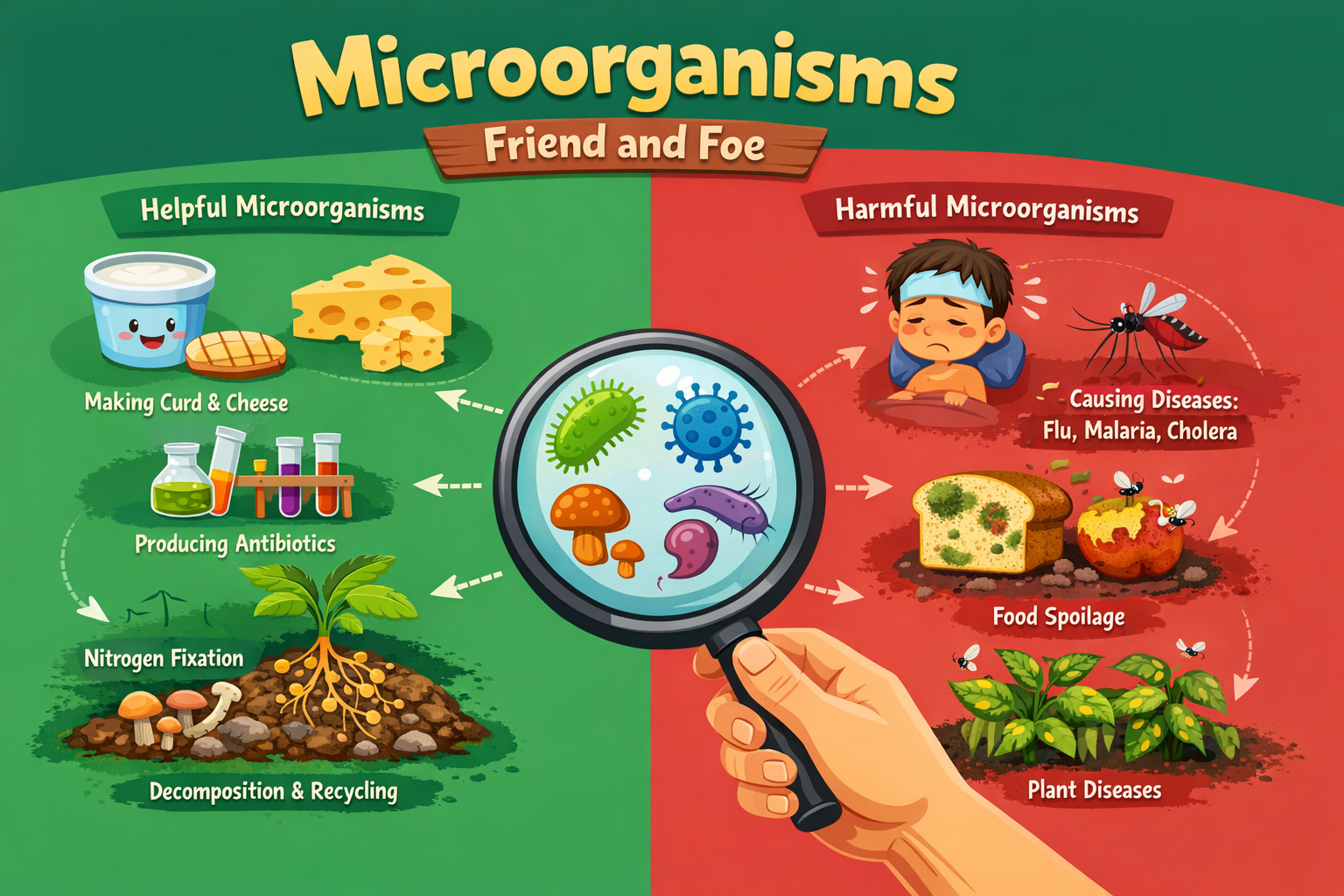

Leave a Reply