


- Introduction
Reproduction is the biological process by which living organisms produce new individuals of their own kind. It ensures the continuity of species on Earth. Plants reproduce to produce new plants that resemble their parent plants.
There are two main types of reproduction in plants:
- Asexual Reproduction
- Sexual Reproduction
- Asexual Reproduction in Plants
Asexual reproduction is the process in which new plants are produced from a single parent without the formation of seeds.
Characteristics
Only one parent is involved.
No fertilization takes place.
Offspring are genetically identical to the parent (clones).
It is a fast method of reproduction.
- Methods of Asexual Reproduction
Plants reproduce asexually by several methods:
- Vegetative Propagation
Vegetative propagation is reproduction through vegetative parts of plants such as roots, stems, or leaves.
Examples:
Potato (stem tuber)
Ginger (rhizome)
Onion (bulb)
Bryophyllum (leaf buds)
Types of Vegetative Propagation
Natural Vegetative Propagation
Occurs naturally in plants.
Examples:
Plant Part Used
Potato Stem
Ginger Stem
Sweet potato Root
Bryophyllum Leaf
Artificial Vegetative Propagation
Humans use this method in agriculture.
Methods
- Cutting
A piece of stem is planted in soil.
Example: rose, sugarcane.
- Layering
A branch is bent into the soil until roots develop.
Example: jasmine.
- Grafting
A part of one plant is joined with another plant.
Example: mango, apple.
- Tissue Culture
New plants are grown from small plant tissues in a laboratory.
Advantages:
Rapid multiplication
Produces identical plants
Used for improving crops
- Budding
In budding, a small bud develops on the parent plant, grows, and separates to form a new organism.
Example:
Yeast (commonly studied example)
- Spore Formation
Some plants reproduce through spores.
Spores are very small reproductive units that can grow into new plants.
Examples:
Fern
Moss
Fungi (like bread mold)
Characteristics:
Spores are lightweight
They spread easily by wind
- Sexual Reproduction in Plants
Sexual reproduction occurs when male and female reproductive cells combine.
In flowering plants, reproduction occurs through flowers.
- Parts of a Flower
A flower is the reproductive organ of a plant.
Main parts:
- Sepals
Green leaf-like parts
Protect the flower bud
- Petals
Brightly colored
Attract insects for pollination
- Stamen (Male part)
Stamen consists of:
Anther – produces pollen grains
Filament – supports the anther
- Pistil / Carpel (Female part)
It consists of:
Stigma – sticky surface for pollen
Style – tube connecting stigma and ovary
Ovary – contains ovules
- Pollination
Pollination is the transfer of pollen grains from anther to stigma.
Types of pollination:
- Self Pollination
Pollen from the same flower reaches its stigma.
Example:
Pea
Wheat
- Cross Pollination
Pollen from one plant reaches the stigma of another plant of the same species.
Agents of pollination:
Wind
Water
Insects
Birds
Animals
Example:
Maize (wind pollination)
- Fertilization
Fertilization is the fusion of male and female gametes.
Steps:
- Pollen lands on stigma.
- Pollen tube grows down through style.
- Male gamete reaches ovule.
- Fusion occurs.
Result:
Zygote is formed
- Formation of Fruits and Seeds
After fertilization:
Ovary becomes fruit
Ovule becomes seed
Seeds contain the embryo, which develops into a new plant.
- Seed Dispersal
Seeds must spread away from the parent plant to avoid overcrowding.
Methods of seed dispersal:
- Wind
Seeds are light and can be carried by wind.
Examples:
Cotton
Dandelion
- Water
Seeds float and move through water.
Example:
Coconut
- Animals
Seeds stick to animal fur or are eaten and later excreted.
Examples:
Mango
Guava
- Explosion
Some fruits burst open to scatter seeds.
Example:
Balsam (Touch-me-not)
- Importance of Seed Dispersal
Seed dispersal helps in:
Reducing competition
Spreading plants to new areas
Increasing chances of survival
- Germination of Seeds
Germination is the process in which a seed grows into a new plant.
Conditions required:
Water
Oxygen
Suitable temperature
Sometimes light
- Importance of Reproduction in Plants
Reproduction is important because:
It ensures continuation of species
Helps plants spread to new places
Maintains balance in nature
- Summary
Plants reproduce through asexual and sexual methods. Asexual reproduction includes vegetative propagation, budding, and spore formation, while sexual reproduction occurs through flowers. Pollination transfers pollen from anther to stigma, and fertilization leads to the formation of seeds and fruits. Seeds disperse through wind, water, animals, or explosion, and under suitable conditions they germinate to produce new plants.
✅ If you want, I can also give you:
Labelled diagram of a flower (for Class 8 exams)
50 important questions from this chapter
MCQs for practice
Short revision notes for quick study.
Reproduction in Plants – Class 8 (Extended Chapter Notes)
- Unisexual and Bisexual Flowers
Flowers can be classified based on the presence of reproductive parts.
- Bisexual Flowers
Flowers that contain both male (stamen) and female (pistil) reproductive parts.
Examples:
Hibiscus
Mustard
Rose
These flowers can perform self-pollination.
- Unisexual Flowers
Flowers that contain only one reproductive part.
Types:
Male flower – contains only stamens
Female flower – contains only pistil
Examples:
Papaya
Watermelon
Maize
These plants mostly depend on cross pollination.
- Agents of Pollination
Pollination is helped by several natural agents.
- Wind Pollination
Pollen grains are carried by wind.
Characteristics:
Flowers are small and light
Produce large quantities of pollen
Examples:
Maize
Wheat
Grass
- Insect Pollination
Insects such as bees and butterflies transfer pollen.
Characteristics:
Flowers are bright and colorful
Produce nectar and fragrance
Examples:
Sunflower
Hibiscus
Rose
- Water Pollination
Some aquatic plants depend on water for pollination.
Examples:
Vallisneria
Hydrilla
- Bird Pollination
Birds like hummingbirds carry pollen while feeding on nectar.
Characteristics:
Flowers are large and brightly colored
Produce lots of nectar
- Structure of a Seed
A seed contains different parts.
- Seed Coat
Outer protective covering
Protects the seed from damage
- Cotyledons
Store food for the developing plant
- Embryo
The young plant inside the seed.
Embryo has two parts:
Radicle – develops into root
Plumule – develops into shoot
- Types of Seeds
Seeds are of two types:
- Monocot Seeds
Characteristics:
One cotyledon
Parallel leaf veins
Examples:
Wheat
Rice
Maize
- Dicot Seeds
Characteristics:
Two cotyledons
Broad leaves with network veins
Examples:
Pea
Bean
Gram
- Conditions Required for Germination
Seeds need certain conditions to germinate.
- Water
Softens the seed coat and activates enzymes.
- Oxygen
Needed for respiration.
- Suitable Temperature
Helps in metabolic activities.
- Light (sometimes)
Some seeds require light for germination.
- Stages of Germination
Germination occurs in several steps:
- Seed absorbs water.
- Seed coat breaks open.
- Radicle emerges and forms the root.
- Plumule grows upward and forms the shoot.
- Leaves develop and begin photosynthesis.
- Importance of Flowers in Reproduction
Flowers are very important because they:
Produce gametes
Attract pollinators
Help in fertilization
Form fruits and seeds
Without flowers, many plants cannot reproduce sexually.
- Advantages of Sexual Reproduction
Sexual reproduction has several benefits:
Produces genetic variation
Helps plants adapt to environmental changes
Improves survival of species
- Differences Between Asexual and Sexual Reproduction
Asexual Reproduction Sexual Reproduction
One parent involved Two parents involved
No fertilization Fertilization occurs
Offspring identical Offspring show variation
Faster process Slower process
- Conclusion
Reproduction in plants ensures the continuation of plant species. Plants reproduce through both asexual methods like vegetative propagation and spore formation, and sexual methods involving flowers, pollination, and fertilization. After fertilization, seeds and fruits are formed, which later disperse and germinate under suitable conditions to produce new plants.
✅ If you want, I can also give:
Very important labelled diagram of a flower (for exams)
50 MCQs from Reproduction in Plants
Short questions and answers
A one-page quick revision sheet for Class 8.
Reproduction in Plants – Class 8 (Extended Chapter Notes)
- Unisexual and Bisexual Flowers
Flowers can be classified based on the presence of reproductive parts.
- Bisexual Flowers
Flowers that contain both male (stamen) and female (pistil) reproductive parts.
Examples:
Hibiscus
Mustard
Rose
These flowers can perform self-pollination.
- Unisexual Flowers
Flowers that contain only one reproductive part.
Types:
Male flower – contains only stamens
Female flower – contains only pistil
Examples:
Papaya
Watermelon
Maize
These plants mostly depend on cross pollination.
- Agents of Pollination
Pollination is helped by several natural agents.
- Wind Pollination
Pollen grains are carried by wind.
Characteristics:
Flowers are small and light
Produce large quantities of pollen
Examples:
Maize
Wheat
Grass
- Insect Pollination
Insects such as bees and butterflies transfer pollen.
Characteristics:
Flowers are bright and colorful
Produce nectar and fragrance
Examples:
Sunflower
Hibiscus
Rose
- Water Pollination
Some aquatic plants depend on water for pollination.
Examples:
Vallisneria
Hydrilla
- Bird Pollination
Birds like hummingbirds carry pollen while feeding on nectar.
Characteristics:
Flowers are large and brightly colored
Produce lots of nectar
- Structure of a Seed
A seed contains different parts.
- Seed Coat
Outer protective covering
Protects the seed from damage
- Cotyledons
Store food for the developing plant
- Embryo
The young plant inside the seed.
Embryo has two parts:
Radicle – develops into root
Plumule – develops into shoot
- Types of Seeds
Seeds are of two types:
- Monocot Seeds
Characteristics:
One cotyledon
Parallel leaf veins
Examples:
Wheat
Rice
Maize
- Dicot Seeds
Characteristics:
Two cotyledons
Broad leaves with network veins
Examples:
Pea
Bean
Gram
- Conditions Required for Germination
Seeds need certain conditions to germinate.
- Water
Softens the seed coat and activates enzymes.
- Oxygen
Needed for respiration.
- Suitable Temperature
Helps in metabolic activities.
- Light (sometimes)
Some seeds require light for germination.
- Stages of Germination
Germination occurs in several steps:
- Seed absorbs water.
- Seed coat breaks open.
- Radicle emerges and forms the root.
- Plumule grows upward and forms the shoot.
- Leaves develop and begin photosynthesis.
- Importance of Flowers in Reproduction
Flowers are very important because they:
Produce gametes
Attract pollinators
Help in fertilization
Form fruits and seeds
Without flowers, many plants cannot reproduce sexually.
- Advantages of Sexual Reproduction
Sexual reproduction has several benefits:
Produces genetic variation
Helps plants adapt to environmental changes
Improves survival of species
- Differences Between Asexual and Sexual Reproduction
Asexual Reproduction Sexual Reproduction
One parent involved Two parents involved
No fertilization Fertilization occurs
Offspring identical Offspring show variation
Faster process Slower process
- Conclusion
Reproduction in plants ensures the continuation of plant species. Plants reproduce through both asexual methods like vegetative propagation and spore formation, and sexual methods involving flowers, pollination, and fertilization. After fertilization, seeds and fruits are formed, which later disperse and germinate under suitable conditions to produce new plants.
✅ If you want, I can also give:
Very important labelled diagram of a flower (for exams)
50 MCQs from Reproduction in Plants
Short questions and answers
A one-page quick revision sheet for Class 8.
Reproduction in Plants – Class 8 (Further Detailed Notes)
- Vegetative Propagation by Roots
Some plants can reproduce through their roots. In such plants, buds present on roots grow into new plants.
Examples:
Sweet potato
Dahlia
When these roots are planted in soil, they develop into new independent plants.
- Vegetative Propagation by Stems
Many plants reproduce through their stems.
Types of stem modifications used for reproduction:
- Tuber
Underground stem with buds called eyes.
Example: Potato
- Rhizome
Underground horizontal stem.
Example: Ginger, Turmeric
- Bulb
Short stem surrounded by fleshy leaves.
Example: Onion, Garlic
- Corm
Swollen underground stem.
Example: Colocasia (Arbi)
These structures store food and help plants reproduce.
- Vegetative Propagation by Leaves
In some plants, leaves develop buds which grow into new plants.
Example:
Bryophyllum
Tiny plantlets develop along the edges of leaves. When they fall on soil, they grow into new plants.
- Advantages of Vegetative Propagation
Vegetative propagation is very useful in agriculture.
Advantages:
Produces plants faster than seeds
Offspring are identical to parent plants
Helps grow plants that do not produce seeds
Useful for commercial crop production
Examples: Banana, sugarcane, rose.
- Disadvantages of Asexual Reproduction
Although useful, asexual reproduction has some disadvantages.
Disadvantages:
No genetic variation
Plants become more susceptible to diseases
Environmental changes may affect all plants similarly
- Adaptations for Wind Pollination
Wind-pollinated flowers show special adaptations.
Characteristics:
Small and dull flowers
No scent or nectar
Long stamens
Light and dry pollen grains
These features help pollen travel easily through air.
Examples: Maize, grasses.
- Adaptations for Insect Pollination
Flowers pollinated by insects have different features.
Characteristics:
Bright colors
Pleasant fragrance
Nectar production
Sticky pollen grains
These features attract insects like bees and butterflies.
Examples: Sunflower, rose.
- Self-Pollination Advantages
Self-pollination ensures reproduction even when pollinators are not available.
Advantages:
Guaranteed pollination
Less pollen wastage
Maintains purity of plant species
- Cross-Pollination Advantages
Cross-pollination produces genetic diversity.
Advantages:
Stronger plants
Better resistance to diseases
Improved adaptation to environment
- Artificial Pollination
Humans sometimes help plants in pollination.
Farmers transfer pollen manually to improve crop production.
This technique is used in:
Hybrid seed production
Agriculture research
- Hybridization in Plants
Hybridization is the crossing of two different plant varieties.
Purpose:
Produce plants with better qualities
Example qualities:
Higher yield
Disease resistance
Better taste or size of fruits
- Fruit Types
After fertilization, flowers develop into fruits.
Types of fruits:
- Fleshy Fruits
Contain soft pulp
Examples: Mango, apple, tomato
- Dry Fruits
Hard outer covering
Examples: Pea, beans
- Importance of Fruits
Fruits play an important role in plant reproduction.
They:
Protect seeds
Help in seed dispersal
Provide food to animals and humans
- Dormancy in Seeds
Sometimes seeds do not germinate immediately after dispersal.
This resting stage is called dormancy.
Dormancy helps seeds survive during unfavorable environmental conditions.
- Overall Summary of the Chapter
Reproduction in plants allows plants to produce new individuals and maintain their species. Plants reproduce by asexual methods such as vegetative propagation, budding, and spore formation, and by sexual reproduction through flowers. In sexual reproduction, pollen grains are transferred to the stigma during pollination, followed by fertilization, which forms seeds and fruits. Seeds are dispersed by wind, water, animals, or bursting fruits. Under suitable conditions, seeds germinate to produce new plants, completing the plant life cycle.
If you want, I can also give you:
Important labelled diagrams for this chapter (flower, seed, germination)
100 MCQs for Class 8 exams
Important short and long questions teachers usually ask
A quick 1-page revision sheet for this chapter.
Reproduction in Plants – Class 8 (Additional Detailed Points)
- Life Cycle of a Flowering Plant
A flowering plant passes through several stages during its life cycle.
Stages
- Seed Stage – Plant life begins as a seed.
- Germination – Seed starts growing into a seedling.
- Seedling Stage – Young plant develops roots, stems, and leaves.
- Adult Plant Stage – Mature plant produces flowers.
- Flowering Stage – Flowers develop reproductive organs.
- Fruit and Seed Formation – Seeds are produced after fertilization.
This cycle repeats to produce new generations of plants.
- Importance of Nectar in Flowers
Nectar is a sweet liquid produced by flowers.
Functions
Attracts pollinators such as bees, butterflies, and birds.
Helps in pollination.
Provides food to insects.
Plants depend on these pollinators for successful reproduction.
- Role of Pollen Grains
Pollen grains contain male reproductive cells.
Features of Pollen Grains
Very small and light
Produced in large numbers
Can travel through air, water, or animals
When pollen reaches the stigma, fertilization can occur.
- Role of Ovules
Ovules are located inside the ovary of a flower.
Functions
Contain the female reproductive cell.
After fertilization, ovules develop into seeds.
Each ovule has the potential to form one seed.
- Double Fertilization (Basic Idea)
In flowering plants, fertilization leads to the formation of:
Embryo (future plant)
Food storage tissue
This process helps the seed grow into a healthy new plant.
- Types of Germination
Seeds germinate in different ways.
- Epigeal Germination
Cotyledons come above the soil surface.
Example:
Bean
Castor
- Hypogeal Germination
Cotyledons remain below the soil.
Example:
Pea
Maize
- Seed Dispersal Adaptations
Seeds have special features that help in dispersal.
Wind Dispersal Adaptations
Wings
Hair-like structures
Examples:
Maple
Cotton
Animal Dispersal Adaptations
Hooks or spines that attach to animal fur
Example:
Xanthium
- Importance of Seed Coat
The seed coat protects the seed from:
Mechanical damage
Drying
Bacteria and fungi
It keeps the embryo safe until germination begins.
- Role of Cotyledons
Cotyledons are also called seed leaves.
Functions:
Store food for the developing plant
Provide nutrients during germination
They help the seedling grow until it can make its own food by photosynthesis.
- Complete Final Understanding
Reproduction in plants is a natural process that allows plants to produce new individuals and continue their species. Plants reproduce through both asexual methods (vegetative propagation, budding, spore formation) and sexual methods involving flowers. During sexual reproduction, pollen grains from the anther reach the stigma through pollination. Fertilization occurs when male and female gametes fuse to form a zygote. The ovary develops into fruit and the ovule becomes a seed. Seeds disperse to different places and germinate under suitable conditions to form new plants, completing the life cycle of plants.
If you want, I can also provide:
Labelled diagrams of flower, seed, and germination (very important for exams)
100–200 MCQs from this chapter
Important short answers teachers ask in Class 8 exams
A super-short revision sheet to revise the whole chapter in 5 minutes.
Reproduction in Plants – Class 8 (More Detailed Concepts)
- Structure of Pollen Grain
A pollen grain is the male reproductive structure of flowering plants.
Parts of Pollen Grain
- Outer wall (Exine)
Thick and protective layer.
Helps pollen survive harsh conditions.
- Inner wall (Intine)
Thin layer inside the exine.
- Male gametes
Present inside the pollen grain.
Take part in fertilization.
Pollen grains are very small and can travel long distances by wind or insects.
- Pollen Tube Formation
When a pollen grain lands on a compatible stigma, it begins to grow.
Steps
- Pollen grain absorbs moisture from stigma.
- A pollen tube starts growing.
- The tube moves through the style.
- It reaches the ovary and ovule.
The male gametes travel through this pollen tube.
- Development of Embryo
After fertilization, the zygote begins to divide and develop.
Stages:
- Zygote forms embryo.
- Embryo develops radicle and plumule.
- Seed forms around the embryo.
The embryo later develops into a new plant.
- Development of Fruit
After fertilization, the flower undergoes changes.
Changes in Flower
Ovary → Fruit
Ovule → Seed
Petals and sepals usually fall off
The fruit protects seeds and helps in seed dispersal.
- Types of Pollination Based on Source
Pollination can be classified further.
- Autogamy
Pollen transfer within the same flower.
- Geitonogamy
Pollen transfer between different flowers on the same plant.
- Xenogamy
Pollen transfer between flowers of different plants.
- Importance of Pollinators
Pollinators are animals that help in transferring pollen.
Common pollinators:
Bees
Butterflies
Birds
Bats
Importance
Increase fruit and seed production
Maintain plant biodiversity
Without pollinators, many plants would fail to reproduce.
- Agricultural Importance of Plant Reproduction
Knowledge of plant reproduction helps farmers to:
Develop better crop varieties
Increase crop yield
Produce hybrid plants
Improve food production
- Artificial Seed Production
Scientists can produce plants through tissue culture techniques.
Advantages
Rapid plant multiplication
Disease-free plants
Useful for rare and endangered plants
This technique is widely used in modern agriculture and biotechnology.
- Role of Reproduction in Ecosystem
Plant reproduction is essential for maintaining ecosystems.
Plants provide:
Food for animals
Oxygen through photosynthesis
Shelter for living organisms
Without plant reproduction, ecosystems would collapse.
- Final Overall Conclusion
Reproduction in plants is an essential biological process that allows plants to produce new individuals and continue their species. Plants reproduce through asexual methods, such as vegetative propagation, budding, and spore formation, and through sexual reproduction using flowers. During sexual reproduction, pollination transfers pollen from anther to stigma, and fertilization leads to the formation of seeds and fruits. Seeds disperse to different places and germinate into new plants under suitable conditions. This process ensures the growth, survival, and continuation of plant life on Earth.
If you want, I can also provide:
The 5 most important diagrams from this chapter (very important for exams)
150 MCQs for Class 8 practice
Most expected exam questions teachers usually ask
A super-short revision sheet to revise the whole chapter in 10 minutes.
Reproduction in Plants – Class 8 (Additional Advanced Notes)
61. Germination Process in Detail
Germination is the process by which a seed grows into a young plant.
Steps of Germination
- Imbibition – Seed absorbs water and swells.
- Breaking of Seed Coat – The outer covering splits.
- Emergence of Radicle – The radicle grows downward and forms the root.
- Growth of Plumule – The plumule grows upward to form the shoot.
- Leaf Formation – First leaves appear and begin photosynthesis.
62. Factors Affecting Germination
Several factors influence the germination of seeds.
1. Water
Seeds absorb water which activates enzymes needed for growth.
2. Oxygen
Seeds require oxygen for respiration.
3. Temperature
Each plant species requires a suitable temperature range for germination.
4. Light
Some seeds require light while others germinate in darkness.
63. Role of Enzymes During Germination
Enzymes are special proteins that speed up chemical reactions.
During germination:
- Stored food in cotyledons is converted into simple nutrients.
- These nutrients are used by the growing embryo.
64. Seed Dormancy
Seed dormancy is a temporary resting stage in which seeds do not germinate even when conditions seem favorable.
Reasons for Dormancy
- Hard seed coat
- Lack of moisture
- Unfavorable temperature
Dormancy protects seeds until suitable conditions occur.
65. Breaking Seed Dormancy
Dormancy can be broken naturally or artificially.
Methods
- Scarification – scratching the seed coat
- Stratification – exposing seeds to cold conditions
- Soaking in water
These methods allow water and oxygen to enter the seed.
66. Importance of Seed Banks
Seed banks store seeds for future use.
Functions
- Preserve plant diversity
- Protect endangered plant species
- Provide seeds for research and agriculture
Seed banks help maintain plant life for future generations.
67. Parthenocarpy
Parthenocarpy is the formation of fruit without fertilization.
Characteristics:
- Fruits do not contain seeds.
Examples:
- Banana
- Seedless grapes
- Pineapple
This process is often used in agriculture to produce seedless fruits.
68. Polyembryony
Polyembryony is the formation of more than one embryo in a single seed.
Example:
- Citrus plants (orange, lemon)
This sometimes produces multiple seedlings from one seed.
69. Apomixis
Apomixis is a type of asexual seed formation where seeds are produced without fertilization.
Characteristics:
- Seeds develop without fusion of gametes.
- Offspring are identical to the parent plant.
This process helps preserve desirable plant traits.
70. Ultimate Final Overview of the Chapter
Reproduction in plants ensures the continuity of plant species and supports life on Earth. Plants reproduce through asexual reproduction such as vegetative propagation, budding, and spore formation, and through sexual reproduction involving flowers. During sexual reproduction, pollination transfers pollen from the anther to the stigma. Fertilization occurs when male and female gametes fuse to form a zygote. The ovary develops into a fruit, and the ovule develops into a seed. Seeds disperse through wind, water, animals, or bursting fruits and later germinate into new plants under suitable conditions. This process completes the plant life cycle and ensures the survival of plant species.
If you want, I can also give you:
- All important diagrams for this chapter (flower, seed, germination, pollination)
- 200 MCQs for Class 8 exam practice
- Very important questions teachers usually ask in exams
- A super short 1-page revision sheet for quick study.
Reproduction in Plants – Class 8 (Extended Learning Points)
- Seed Viability
Seed viability means the ability of a seed to germinate and develop into a healthy plant.
Factors Affecting Seed Viability
Age of the seed
Storage conditions
Moisture level
Temperature
Fresh seeds usually have higher viability than old seeds.
- Seed Longevity
Seed longevity refers to the length of time a seed remains alive and capable of germination.
Examples:
Some seeds remain viable for many years.
Lotus seeds have been known to germinate even after hundreds of years.
Proper storage helps maintain seed longevity.
- Seed Storage Methods
Seeds are stored carefully to maintain their quality.
Conditions for Good Storage
Low moisture
Cool temperature
Dry environment
Protection from insects and fungi
Farmers and scientists store seeds in special seed storage facilities.
- Role of Plant Breeding
Plant breeding is the scientific process of developing improved plant varieties.
Objectives
Higher crop yield
Disease resistance
Drought tolerance
Better nutritional value
Plant breeding plays an important role in modern agriculture.
- Importance of Hybrid Seeds
Hybrid seeds are produced by crossing two different plant varieties.
Advantages
Higher productivity
Stronger plants
Better quality fruits and vegetables
However, hybrid seeds often need to be produced again each season.
- Role of Reproduction in Crop Production
Reproduction in plants is essential for agriculture.
It helps farmers to:
Grow crops every season
Produce fruits and vegetables
Improve crop varieties
Without plant reproduction, food production would not be possible.
- Adaptations of Seeds for Dispersal
Seeds have special structures that help them spread.
Adaptations
Wind Dispersal
Light weight
Hair or wings
Example: Cotton
Water Dispersal
Waterproof outer layer
Ability to float
Example: Coconut
Animal Dispersal
Sticky hooks or spines
Example: Xanthium
- Role of Fruits in Seed Protection
Fruits protect the seeds inside them.
Functions
Prevent damage to seeds
Help seeds travel long distances
Provide nutrients to developing seeds
Fruits also attract animals that help in seed dispersal.
- Ecological Importance of Plant Reproduction
Plant reproduction helps maintain ecosystem balance.
Plants provide:
Food for animals and humans
Oxygen through photosynthesis
Habitats for many organisms
Without plant reproduction, life on Earth would be greatly affected.
- Ultimate Final Concept
Reproduction in plants is a fundamental biological process that ensures the continuation of plant life. Plants reproduce through asexual methods such as vegetative propagation, budding, and spore formation, and through sexual reproduction involving flowers. During sexual reproduction, pollen grains transfer from the anther to the stigma through pollination, followed by fertilization which forms seeds and fruits. Seeds disperse through various agents like wind, water, animals, and explosive mechanisms. Under suitable conditions, seeds germinate into new plants, completing the life cycle and ensuring the survival of plant species and ecosystems.
If you want, I can also provide:
A very easy 2–3 page revision version of the whole chapter
Important diagrams teachers usually ask in Class 8 exams
250 MCQs for practice
A model test paper from the chapter.
Reproduction in Plants – Class 8 (Further Extended Concepts)
- Importance of Genetic Variation
Genetic variation means differences in characteristics among plants of the same species.
Why Variation is Important
Helps plants adapt to environmental changes
Increases chances of survival during diseases
Leads to development of new varieties of plants
Variation mainly occurs during sexual reproduction.
- Role of Chromosomes in Reproduction
Chromosomes are structures present in the nucleus of cells.
Functions
Carry genetic information (genes)
Control plant characteristics such as:
Height
Flower color
Fruit size
During reproduction, chromosomes from male and female gametes combine.
- Plant Tissue Culture
Plant tissue culture is a modern technique where plants are grown from very small pieces of plant tissue in laboratories.
Process
- A small piece of plant tissue is taken.
- It is placed in a nutrient solution.
- Cells divide and grow into a new plant.
Advantages
Rapid multiplication
Disease-free plants
Useful for rare plants
- Cloning in Plants
Cloning means producing genetically identical plants.
It occurs naturally through vegetative propagation.
Examples:
Banana plants
Potato plants
All cloned plants have same genetic characteristics.
- Reproductive Strategies of Plants
Plants have developed different strategies to reproduce successfully.
Strategies
Producing large numbers of seeds
Developing colorful flowers to attract pollinators
Producing light seeds for wind dispersal
Growing fruits that attract animals
These strategies increase the chances of successful reproduction.
- Importance of Pollination in Agriculture
Pollination directly affects crop production.
Examples
Fruit crops like apple and mango depend on pollinators.
Bees increase fruit yield in many plants.
Farmers sometimes keep beehives near farms to improve pollination.
- Role of Bees in Plant Reproduction
Bees are among the most important pollinators.
Why Bees are Effective Pollinators
They visit many flowers in search of nectar.
Pollen sticks to their hairy bodies.
They transfer pollen from flower to flower.
Bees play a crucial role in food production and biodiversity.
- Importance of Seed Dispersal in Nature
Seed dispersal helps plants spread to new areas.
Benefits
Prevents overcrowding
Reduces competition for nutrients
Allows plants to colonize new habitats
- Human Dependence on Plant Reproduction
Humans depend heavily on plant reproduction for:
Food (grains, fruits, vegetables)
Medicine
Timber and fibers
Oxygen production
Plant reproduction is essential for human survival.
- Ultimate Final Summary
Reproduction in plants is the biological process through which plants produce new individuals and maintain their species. Plants reproduce through asexual reproduction, including vegetative propagation, budding, and spore formation, and through sexual reproduction, which involves flowers, pollination, and fertilization. During pollination, pollen grains transfer from anther to stigma with the help of agents such as wind, water, insects, and animals. Fertilization leads to the formation of seeds and fruits. Seeds are dispersed to new places and germinate under suitable conditions to form new plants. This process ensures the continuation of plant life and supports ecosystems and human life on Earth.
If you want, I can also prepare:
The 10 most important diagrams from this chapter (very useful for exams)
300 MCQs from Reproduction in Plants
Very important short questions teachers usually ask
A one-page quick revision sheet for the entire chapter.
Reproduction in Plants – Class 8 (Final Extended Learning Points)
- Flower as a Reproductive Organ
The flower is the main reproductive organ of flowering plants. It contains both male and female reproductive structures that help in producing seeds.
Main Functions of Flowers
Produce gametes (reproductive cells)
Enable pollination and fertilization
Develop into fruits and seeds
Flowers are therefore essential for sexual reproduction in plants.
- Importance of Bright Colors in Flowers
Many flowers have bright colors such as red, yellow, pink, and purple.
Reasons
Attract insects like bees and butterflies
Help in pollination
Increase chances of successful reproduction
This is an important adaptation for plant survival.
- Role of Fragrance in Flowers
Some flowers produce pleasant fragrance.
Functions
Attract pollinators such as insects and birds
Help insects locate flowers even from a distance
Examples of fragrant flowers:
Jasmine
Rose
Lily
- Importance of Nectar
Nectar is a sweet liquid secreted by flowers.
Importance
Provides food to pollinators
Attracts insects to flowers
Helps in transfer of pollen
Thus nectar plays a key role in pollination.
- Adaptations for Animal Seed Dispersal
Some plants depend on animals to disperse seeds.
Adaptations
Fruits are sweet and edible
Seeds have hard protective coats
Some seeds have hooks or spines
Examples:
Mango
Guava
Xanthium
Animals eat the fruit and help spread the seeds.
- Explosive Seed Dispersal
In some plants, fruits burst open suddenly when they mature.
This force throws seeds away from the parent plant.
Example:
Balsam plant (Touch-me-not)
This method is called explosive dispersal.
- Importance of Seed Germination for Agriculture
Seed germination is important for farmers because it determines:
Crop growth
Plant population
Agricultural productivity
Healthy germination leads to better crop yield.
- Role of Sunlight in Plant Growth
After germination, young plants require sunlight.
Sunlight helps plants perform photosynthesis, which produces food for growth and development.
Without sunlight, plants cannot survive for long.
- Protection of Seeds in Nature
Seeds are protected by:
Seed coat
Fruits
Hard shells in some plants
These structures protect seeds from:
Damage
Drying
Microorganisms
- Ultimate Complete Chapter Conclusion
Reproduction in plants is a fundamental biological process that allows plants to produce new individuals and ensure the survival of their species. Plants reproduce through asexual methods, such as vegetative propagation, budding, and spore formation, and through sexual reproduction, which occurs through flowers. In sexual reproduction, pollination transfers pollen grains from the anther to the stigma, followed by fertilization where male and female gametes fuse to form a zygote. The ovary develops into a fruit and the ovule becomes a seed. Seeds disperse to different locations through wind, water, animals, or explosive mechanisms and germinate under favorable conditions to form new plants. This cycle continues generation after generation and supports ecosystems and human life on Earth.
✅ If you want, I can also create for you:
Complete Reproduction in Plants chapter in super-short exam notes
All important labelled diagrams (flower, seed, germination, pollination)
300–400 MCQs for practice
A Class 8 sample test paper from this chapter.
Reproduction in Plants – Class 8 (Further Additional Concepts)
- Importance of Plant Reproduction in Nature
Plant reproduction is essential for maintaining plant populations on Earth.
Importance
Produces new plants.
Maintains biodiversity.
Provides food and oxygen for living organisms.
Supports the ecosystem balance.
Without plant reproduction, many species would disappear over time.
- Reproductive Success in Plants
Plants increase their chances of successful reproduction by:
Producing many flowers
Producing large numbers of seeds
Developing colorful petals and nectar to attract pollinators
Adapting seeds for easy dispersal
These strategies help plants survive and spread.
- Role of Climate in Plant Reproduction
Climate conditions affect plant reproduction.
Important Factors
Temperature
Rainfall
Sunlight
Seasonal changes
For example, many plants flower during spring because conditions are favorable.
- Seasonal Flowering in Plants
Some plants produce flowers only during certain seasons.
Examples:
Mango trees flower in spring.
Some desert plants flower after rainfall.
Seasonal flowering ensures that pollinators are available.
- Pollination Efficiency
Pollination efficiency refers to how effectively pollen reaches the stigma.
Factors affecting efficiency:
Number of pollinators
Wind strength
Flower structure
Weather conditions
Efficient pollination leads to more fruit and seed production.
- Role of Pollen Viability
Pollen viability means the ability of pollen grains to fertilize ovules.
Factors affecting pollen viability:
Temperature
Humidity
Age of pollen grains
Healthy pollen increases chances of successful fertilization.
- Plant Reproduction and Food Security
Plant reproduction is directly related to food production for humans.
Most crops such as:
Wheat
Rice
Maize
Fruits and vegetables
depend on successful plant reproduction.
- Importance of Pollinator Conservation
Many pollinators such as bees and butterflies are decreasing in number.
Protecting pollinators is important because they help plants reproduce and produce fruits and seeds.
Farmers and scientists encourage:
Planting flowering plants
Reducing harmful pesticides
Protecting natural habitats
- Human Role in Plant Reproduction
Humans help plants reproduce through:
Agriculture
Plant breeding
Seed storage
Greenhouse cultivation
These activities improve crop production and ensure food supply.
- Final Extended Concept
Reproduction in plants is a continuous biological process that ensures the survival and spread of plant species. Plants reproduce through both asexual reproduction, including vegetative propagation, budding, and spore formation, and sexual reproduction, which occurs through flowers. Pollination transfers pollen grains from the anther to the stigma, followed by fertilization where male and female gametes fuse to form a zygote. The ovary develops into fruit and the ovule becomes a seed. Seeds disperse through wind, water, animals, or explosive mechanisms and later germinate into new plants under suitable environmental conditions. This process maintains plant populations and supports ecosystems and life on Earth.
If you want, I can also prepare for you:
A very short exam-ready summary of the entire chapter
All important labelled diagrams (flower, pollination, seed structure)
300+ MCQs for practice
Most expected Class 8 exam questions from this chapter.
Reproduction in Plants – Class 8 (Extended Study Points 111–120)
- Pollination and Flower Structure Relationship
The structure of a flower often matches the type of pollination it uses.
Examples
Wind-pollinated flowers have light pollen and exposed stamens.
Insect-pollinated flowers have bright petals and nectar.
Bird-pollinated flowers are usually large and colorful.
This relationship helps increase the efficiency of pollination.
- Self-Pollination vs Cross-Pollination (Detailed)
Self-Pollination Cross-Pollination
Pollen from same flower or plant Pollen from different plant
Less genetic variation More genetic variation
Less dependence on pollinators Requires agents like wind or insects
Offspring similar to parent Offspring show new traits
Both types help plants maintain and improve their populations.
- Protective Mechanisms in Flowers
Flowers have several structures that protect reproductive parts.
Examples
Sepals protect the bud before it opens.
Petals protect inner organs.
Ovary wall protects ovules.
These structures ensure safe development of seeds.
- Importance of Seed Size
Seeds vary in size depending on the plant.
Small Seeds
Produced in large numbers
Easily dispersed by wind
Example: orchid
Large Seeds
Contain more stored food
Higher survival chances
Example: coconut
- Seed Germination Types Based on Cotyledon Position
Epigeal Germination
Cotyledons appear above the soil.
Example: bean.
Hypogeal Germination
Cotyledons remain below the soil.
Example: pea.
These methods show different growth strategies in plants.
- Importance of Plant Life Cycle
The plant life cycle ensures continuous reproduction.
Main Stages
- Seed
- Germination
- Seedling
- Mature plant
- Flowering
- Fruit and seed formation
After seeds disperse, the cycle begins again.
- Seedling Establishment
After germination, the young plant must establish itself.
Requirements:
Proper sunlight
Adequate water
Nutrient-rich soil
Successful establishment ensures the plant can grow into maturity.
- Role of Roots After Germination
The first structure to grow during germination is the radicle, which forms the root.
Functions:
Anchors the plant in soil
Absorbs water and minerals
Supports plant growth
Healthy roots are essential for plant survival.
- Environmental Influence on Reproduction
Environmental factors influence plant reproduction.
Important Factors
Temperature
Soil nutrients
Rainfall
Light intensity
Plants adjust their reproductive processes according to these conditions.
- Final Ultimate Concept of Plant Reproduction
Reproduction in plants ensures the continuity and survival of plant species. Through asexual reproduction, plants can rapidly produce identical offspring, while sexual reproduction through flowers creates genetic variation that improves adaptation and survival. Pollination, fertilization, seed formation, seed dispersal, and germination are all essential stages in the plant life cycle. These processes allow plants to spread, grow, and maintain ecosystems that support life on Earth.
If you want, I can also prepare the last part of the chapter (121–150 advanced points + exam revision sheet) to help you finish the entire chapter perfectly for exams.
Reproduction in Plants – Class 8 (Extended Study Points 111–120)
- Pollination and Flower Structure Relationship
The structure of a flower often matches the type of pollination it uses.
Examples
Wind-pollinated flowers have light pollen and exposed stamens.
Insect-pollinated flowers have bright petals and nectar.
Bird-pollinated flowers are usually large and colorful.
This relationship helps increase the efficiency of pollination.
- Self-Pollination vs Cross-Pollination (Detailed)
Self-Pollination Cross-Pollination
Pollen from same flower or plant Pollen from different plant
Less genetic variation More genetic variation
Less dependence on pollinators Requires agents like wind or insects
Offspring similar to parent Offspring show new traits
Both types help plants maintain and improve their populations.
- Protective Mechanisms in Flowers
Flowers have several structures that protect reproductive parts.
Examples
Sepals protect the bud before it opens.
Petals protect inner organs.
Ovary wall protects ovules.
These structures ensure safe development of seeds.
- Importance of Seed Size
Seeds vary in size depending on the plant.
Small Seeds
Produced in large numbers
Easily dispersed by wind
Example: orchid
Large Seeds
Contain more stored food
Higher survival chances
Example: coconut
- Seed Germination Types Based on Cotyledon Position
Epigeal Germination
Cotyledons appear above the soil.
Example: bean.
Hypogeal Germination
Cotyledons remain below the soil.
Example: pea.
These methods show different growth strategies in plants.
- Importance of Plant Life Cycle
The plant life cycle ensures continuous reproduction.
Main Stages
- Seed
- Germination
- Seedling
- Mature plant
- Flowering
- Fruit and seed formation
After seeds disperse, the cycle begins again.
- Seedling Establishment
After germination, the young plant must establish itself.
Requirements:
Proper sunlight
Adequate water
Nutrient-rich soil
Successful establishment ensures the plant can grow into maturity.
- Role of Roots After Germination
The first structure to grow during germination is the radicle, which forms the root.
Functions:
Anchors the plant in soil
Absorbs water and minerals
Supports plant growth
Healthy roots are essential for plant survival.
- Environmental Influence on Reproduction
Environmental factors influence plant reproduction.
Important Factors
Temperature
Soil nutrients
Rainfall
Light intensity
Plants adjust their reproductive processes according to these conditions.
- Final Ultimate Concept of Plant Reproduction
Reproduction in plants ensures the continuity and survival of plant species. Through asexual reproduction, plants can rapidly produce identical offspring, while sexual reproduction through flowers creates genetic variation that improves adaptation and survival. Pollination, fertilization, seed formation, seed dispersal, and germination are all essential stages in the plant life cycle. These processes allow plants to spread, grow, and maintain ecosystems that support life on Earth.
If you want, I can also prepare the last part of the chapter (121–150 advanced points + exam revision sheet) to help you finish the entire chapter perfectly for exams.
Reproduction in Plants – Class 8 (Final Extended Points 136–150)
- Dormancy in Seeds
Sometimes seeds do not germinate immediately even if conditions are favorable.
This resting period is called seed dormancy.
Importance
Helps seeds survive unfavorable conditions
Allows germination in the right season
Example: many forest seeds remain dormant until the rainy season.
- Breaking Seed Dormancy
Dormancy can be broken by:
Water absorption
Temperature changes
Sunlight exposure
Natural weathering of the seed coat
These factors help seeds start germination.
- Artificial Pollination
Humans sometimes help plants pollinate manually.
Uses
In agriculture
In plant breeding
In greenhouse farming
Farmers transfer pollen using brushes or by hand.
- Hybridization in Plants
Hybridization means crossing two different plants to produce a new variety.
Benefits
Higher crop yield
Disease resistance
Better fruit quality
Example: hybrid varieties of rice and wheat.
- Seed Banks
Seed banks are places where seeds are stored for long periods.
Purpose
Protect rare plant species
Preserve genetic diversity
Ensure future food security
Scientists store seeds at low temperature and humidity.
- Role of Biotechnology in Plant Reproduction
Modern science uses biotechnology to improve plant reproduction.
Examples
Tissue culture
Genetic engineering
Micropropagation
These techniques help produce stronger and disease-resistant plants.
- Micropropagation
Micropropagation is a method of producing many plants from small plant tissues in laboratories.
Advantages
Rapid plant production
Disease-free plants
Useful for rare species
- Reproduction in Non-Flowering Plants
Some plants reproduce without flowers.
Examples:
Ferns
Mosses
Algae
These plants reproduce mainly through spores.
- Importance of Spores
Spores are tiny reproductive units.
Characteristics
Very small and light
Produced in large numbers
Easily spread by wind
They help non-flowering plants reproduce successfully.
- Human Benefits from Plant Reproduction
Plant reproduction provides humans with:
Food crops
Fruits and vegetables
Medicines
Wood and fibers
Human life depends heavily on plant reproduction.
- Protection of Young Plants
Young plants must be protected from:
Animals
Pests
Extreme weather
Farmers often use fences, pesticides, and greenhouses.
- Importance of Sustainable Farming
Sustainable farming protects plant reproduction and soil health.
Methods include:
Crop rotation
Organic farming
Reduced pesticide use
These methods ensure long-term agricultural productivity.
- Role of Plants in the Global Environment
Plants help maintain Earth’s environment by:
Producing oxygen
Absorbing carbon dioxide
Supporting food chains
Plant reproduction ensures continuous plant growth on Earth.
- Importance of Conservation of Plant Species
Some plants are endangered due to:
Deforestation
Pollution
Climate change
Protecting plant species helps maintain biodiversity and ecological balance.
- Ultimate Complete Chapter Summary
Reproduction in plants is the biological process by which plants produce new individuals to ensure the survival of their species. Plants reproduce through asexual methods such as vegetative propagation, budding, and spore formation, as well as through sexual reproduction involving flowers. In flowering plants, pollination transfers pollen from the anther to the stigma, followed by fertilization where male and female gametes fuse to form a zygote. The ovary develops into a fruit and the ovule becomes a seed. Seeds disperse through agents such as wind, water, animals, and explosive mechanisms, and germinate under suitable conditions to form new plants. This continuous cycle maintains plant populations, supports ecosystems, and provides essential resources for human life.
✅ If you want, I can also prepare:
One-page quick revision sheet for exams
All important labelled diagrams from this chapter
50 very important exam questions
A complete Class 8 test paper from this chapter.
You have already covered the full chapter, but I can still give extra advanced and exam-oriented points that teachers sometimes ask in Class 8.
Reproduction in Plants – Additional Knowledge (151–165)
- Importance of Genetic Diversity
Sexual reproduction produces genetic diversity among plants.
Benefits
Better adaptation to environmental changes
Increased disease resistance
Stronger plant populations
Genetic diversity helps plants survive for many generations.
- Seed Viability
Seed viability means the ability of a seed to germinate and grow into a plant.
Factors affecting viability:
Age of the seed
Storage conditions
Moisture level
Temperature
Older seeds may lose their ability to germinate.
- Seed Storage Conditions
To keep seeds healthy for a long time they must be stored in:
Low moisture
Low temperature
Dry environment
Protection from insects
Proper storage keeps seeds viable for many years.
- Importance of Flower Symmetry
Flowers may have symmetrical structures that help pollinators land easily.
Examples:
Bilateral symmetry (pea flower)
Radial symmetry (rose)
This helps in efficient pollination.
- Flowering Hormones in Plants
Plants produce chemical substances called plant hormones.
Some hormones help in:
Flower formation
Fruit development
Seed growth
Examples include auxins and gibberellins.
- Importance of Fruit Formation
Fruits protect the developing seeds.
Functions of Fruits
Protect seeds
Help in seed dispersal
Provide food to animals
Fruits are an important stage in the reproductive cycle of plants.
- Seed Dispersal Distance
Seeds may travel short or long distances depending on the method of dispersal.
Examples:
Wind dispersal can carry seeds far away.
Animal dispersal may move seeds to different habitats.
This helps plants spread over large areas.
- Ecological Importance of Plant Reproduction
Plant reproduction supports:
Food chains
Animal populations
Soil health
Oxygen production
Without plant reproduction, ecosystems would collapse.
- Role of Pollination in Fruit Production
Many fruit crops depend on pollination.
Examples:
Apples
Almonds
Cucumbers
Without pollination, fruits cannot develop properly.
- Artificial Seed Production
Scientists can produce artificial seeds using plant tissue culture.
Benefits:
Easy storage
Disease-free plants
Rapid crop multiplication
- Seed Coat Permeability
The seed coat controls water entry into the seed.
Water absorption starts the germination process.
Hard seed coats may require special conditions to allow water entry.
- Protection from Predators
Some plants protect seeds from animals by:
Hard shells
Bitter taste
Toxic chemicals
This prevents seeds from being eaten before germination.
- Role of Roots in Reproductive Success
Healthy roots help plants:
Absorb nutrients
Absorb water
Support flower production
Without strong roots, plants cannot produce healthy flowers and seeds.
- Importance of Ecosystem Balance
Plant reproduction maintains balance in nature.
Plants provide:
Food for animals
Habitat for organisms
Oxygen for life
Reproduction ensures plants continue to support life on Earth.
- Absolute Final Concept
Plant reproduction is a vital biological process that ensures the continuation of plant species and the stability of ecosystems. Through both asexual and sexual reproduction, plants produce new individuals, create genetic variation, and spread across different environments. Processes such as pollination, fertilization, seed formation, seed dispersal, and germination form a continuous life cycle that allows plants to survive and thrive. Because plants form the base of food chains and produce oxygen, their reproduction is essential for maintaining life on Earth.
If you want, I can also give SUPER IMPORTANT exam content, such as:
Top 25 most important questions from this chapter
All diagrams teachers ask in exams
One-page revision sheet to memorize the whole chapter in 5 minutes.
You have already covered almost everything from the Class 8 chapter, but here are extra enrichment points (166–180) that add deeper understanding and help in exams.
Reproduction in Plants – Enrichment Points (166–180)
- Importance of Pollinators in Ecosystems
Pollinators such as bees, butterflies, birds, and bats help many plants reproduce.
Importance
Increase seed production
Help maintain plant diversity
Support food crops
Without pollinators, many plants would not be able to reproduce efficiently.
- Role of Water in Aquatic Plant Pollination
Some aquatic plants are pollinated by water.
Example
Vallisneria
In such plants, pollen grains float on water and reach the stigma of female flowers.
- Longevity of Seeds
Different seeds remain alive for different lengths of time.
Examples
Wheat seeds: about 5–10 years
Lotus seeds: can survive hundreds of years
Long seed life helps plants survive unfavorable conditions.
- Germination Failure
Sometimes seeds fail to germinate.
Reasons
Lack of water
Lack of oxygen
Extremely high or low temperature
Damaged seeds
Healthy conditions are necessary for successful germination.
- Importance of Pollination Timing
Pollination must occur at the right time when:
Pollen grains are mature
Stigma is receptive
Correct timing ensures successful fertilization.
- Reproductive Efficiency of Plants
Plants increase reproductive success by:
Producing large numbers of seeds
Attracting pollinators
Developing efficient dispersal mechanisms
These strategies help plants spread widely.
- Natural Selection in Plant Reproduction
Plants that reproduce successfully pass their traits to the next generation.
Over time, plants become better adapted to their environment.
- Importance of Seed Banks for Future Generations
Seed banks help scientists protect plants from extinction.
They store seeds of:
Rare species
Crop varieties
Wild plants
These seeds can be used to restore plant populations in the future.
- Relationship Between Reproduction and Evolution
Reproduction allows evolution to occur.
Through genetic variation, plants gradually develop:
Better survival abilities
Resistance to diseases
Adaptation to changing climates
- Importance of Plant Breeding
Plant breeding improves crop varieties.
Goals
Higher yield
Better taste
Disease resistance
Faster growth
Farmers benefit greatly from improved crops.
- Role of Farmers in Plant Reproduction
Farmers help plants reproduce by:
Selecting good seeds
Protecting crops from pests
Irrigating fields
Pollinating plants in greenhouses
Their work ensures food production for society.
- Role of Forests in Plant Reproduction
Forests provide natural conditions for plant reproduction.
They offer:
Suitable climate
Pollinators
Seed dispersal agents
Healthy forests maintain rich plant biodiversity.
- Impact of Climate Change on Plant Reproduction
Climate change can affect:
Flowering time
Pollination patterns
Seed germination rates
Some plants may struggle to adapt to changing conditions.
- Conservation of Plant Reproductive Systems
Protecting natural habitats helps plants reproduce naturally.
Conservation methods include:
Protecting forests
Reducing pollution
Preserving pollinators
This helps maintain ecological balance.
- Final Ultimate Understanding
Reproduction in plants is a vital biological process that ensures the survival and continuation of plant species. Plants reproduce through both asexual and sexual methods, involving stages such as pollination, fertilization, seed formation, seed dispersal, and germination. These processes allow plants to spread, maintain biodiversity, support ecosystems, and provide essential resources such as food, oxygen, medicine, and shelter for living organisms. The successful reproduction of plants is therefore fundamental to the survival of life on Earth.
If you want, I can also give very helpful exam material, like:
Top 30 exam questions from this chapter
All labelled diagrams (flower, seed, germination, pollination)
MCQs for practice
A full Class 8 test paper.
You have already covered far beyond the normal Class 8 syllabus, but here are extra enrichment concepts (181–195) that help in deeper understanding and sometimes appear in higher-level questions.
Reproduction in Plants – Advanced Enrichment (181–195)
- Floral Adaptations for Pollination
Different flowers have special adaptations to attract specific pollinators.
Examples:
Bright petals attract insects.
Long tubular flowers attract birds.
Strong fragrance attracts night insects like moths.
These adaptations help improve pollination success.
- Nocturnal Pollination
Some flowers open only at night.
Characteristics:
White or pale-colored petals
Strong fragrance
Large amounts of nectar
These flowers are pollinated by moths or bats.
- Wind-Pollinated Plant Characteristics
Wind-pollinated plants usually have:
Small and dull flowers
Large quantity of pollen
Long exposed stamens
Feather-like stigmas
Examples include grasses and maize.
- Water-Pollinated Plant Characteristics
Plants pollinated by water have:
Lightweight pollen grains
Floating flowers or pollen
Pollination occurring on the water surface
Example: Vallisneria.
- Pollen Tube Formation
After pollination:
- Pollen grain lands on the stigma.
- It forms a pollen tube.
- The tube grows through the style to reach the ovary.
- Male gametes reach the ovule.
This leads to fertilization.
- Double Fertilization
In flowering plants, two fertilization events occur:
- One male gamete fuses with the egg to form a zygote.
- The other gamete forms endosperm, which nourishes the embryo.
This process is called double fertilization.
- Development of Embryo
After fertilization:
The zygote develops into an embryo.
The embryo becomes the young plant inside the seed.
The embryo contains:
Radicle (future root)
Plumule (future shoot)
- Endosperm Function
The endosperm is a tissue that stores food for the developing embryo.
Functions:
Provides nutrients during seed development
Supplies energy during germination
- Fruit Types
Fruits can be of different types:
Simple Fruits
Develop from a single ovary.
Example: mango.
Aggregate Fruits
Develop from many ovaries of one flower.
Multiple Fruits
Develop from a cluster of flowers.
- Importance of Fruit in Seed Dispersal
Fruits help in dispersal by:
Attracting animals
Floating on water
Being carried by wind
This allows seeds to reach new habitats.
- Dormancy as Survival Strategy
Dormancy protects seeds during:
Winter
Drought
Extreme temperatures
Seeds wait until conditions are favorable for growth.
- Germination Energy
Germination energy refers to how quickly seeds start germinating under favorable conditions.
Seeds with high germination energy are more productive in agriculture.
- Role of Microorganisms
Some microorganisms help in plant reproduction by:
Decomposing organic matter
Improving soil fertility
Healthy soil improves seed germination and plant growth.
- Ecological Importance of Plant Reproduction
Plant reproduction supports:
Food chains
Animal populations
Oxygen supply
Soil stability
Without plant reproduction, life on Earth would not survive.
- Final Comprehensive Understanding
Reproduction in plants is a complex and essential biological process that ensures the continuation of plant species and supports life on Earth. Through asexual reproduction, plants can quickly produce identical offspring, while sexual reproduction through flowers promotes genetic diversity and adaptability. Pollination, fertilization, embryo development, seed formation, dispersal, and germination form a continuous cycle that allows plants to grow, spread, and maintain ecosystems. Because plants provide food, oxygen, shelter, and resources for many organisms, their reproduction is vital for ecological balance and human survival.
If you want, I can also give the most useful exam help, like:
All important diagrams teachers ask in exams (flower, seed, germination)
Top 30 short questions from this chapter
50 MCQs for quick revision
A one-page super quick revision sheet.
You have already covered far beyond the normal Class 8 syllabus, but here are extra enrichment concepts (181–195) that help in deeper understanding and sometimes appear in higher-level questions.
Reproduction in Plants – Advanced Enrichment (181–195)
- Floral Adaptations for Pollination
Different flowers have special adaptations to attract specific pollinators.
Examples:
Bright petals attract insects.
Long tubular flowers attract birds.
Strong fragrance attracts night insects like moths.
These adaptations help improve pollination success.
- Nocturnal Pollination
Some flowers open only at night.
Characteristics:
White or pale-colored petals
Strong fragrance
Large amounts of nectar
These flowers are pollinated by moths or bats.
- Wind-Pollinated Plant Characteristics
Wind-pollinated plants usually have:
Small and dull flowers
Large quantity of pollen
Long exposed stamens
Feather-like stigmas
Examples include grasses and maize.
- Water-Pollinated Plant Characteristics
Plants pollinated by water have:
Lightweight pollen grains
Floating flowers or pollen
Pollination occurring on the water surface
Example: Vallisneria.
- Pollen Tube Formation
After pollination:
- Pollen grain lands on the stigma.
- It forms a pollen tube.
- The tube grows through the style to reach the ovary.
- Male gametes reach the ovule.
This leads to fertilization.
- Double Fertilization
In flowering plants, two fertilization events occur:
- One male gamete fuses with the egg to form a zygote.
- The other gamete forms endosperm, which nourishes the embryo.
This process is called double fertilization.
- Development of Embryo
After fertilization:
The zygote develops into an embryo.
The embryo becomes the young plant inside the seed.
The embryo contains:
Radicle (future root)
Plumule (future shoot)
- Endosperm Function
The endosperm is a tissue that stores food for the developing embryo.
Functions:
Provides nutrients during seed development
Supplies energy during germination
- Fruit Types
Fruits can be of different types:
Simple Fruits
Develop from a single ovary.
Example: mango.
Aggregate Fruits
Develop from many ovaries of one flower.
Multiple Fruits
Develop from a cluster of flowers.
- Importance of Fruit in Seed Dispersal
Fruits help in dispersal by:
Attracting animals
Floating on water
Being carried by wind
This allows seeds to reach new habitats.
- Dormancy as Survival Strategy
Dormancy protects seeds during:
Winter
Drought
Extreme temperatures
Seeds wait until conditions are favorable for growth.
- Germination Energy
Germination energy refers to how quickly seeds start germinating under favorable conditions.
Seeds with high germination energy are more productive in agriculture.
- Role of Microorganisms
Some microorganisms help in plant reproduction by:
Decomposing organic matter
Improving soil fertility
Healthy soil improves seed germination and plant growth.
- Ecological Importance of Plant Reproduction
Plant reproduction supports:
Food chains
Animal populations
Oxygen supply
Soil stability
Without plant reproduction, life on Earth would not survive.
- Final Comprehensive Understanding
Reproduction in plants is a complex and essential biological process that ensures the continuation of plant species and supports life on Earth. Through asexual reproduction, plants can quickly produce identical offspring, while sexual reproduction through flowers promotes genetic diversity and adaptability. Pollination, fertilization, embryo development, seed formation, dispersal, and germination form a continuous cycle that allows plants to grow, spread, and maintain ecosystems. Because plants provide food, oxygen, shelter, and resources for many organisms, their reproduction is vital for ecological balance and human survival.
If you want, I can also give the most useful exam help, like:
All important diagrams teachers ask in exams (flower, seed, germination)
Top 30 short questions from this chapter
50 MCQs for quick revision
A one-page super quick revision sheet.
You have already covered far beyond the normal Class 8 syllabus, but here are extra enrichment concepts (181–195) that help in deeper understanding and sometimes appear in higher-level questions.
Reproduction in Plants – Advanced Enrichment (181–195)
- Floral Adaptations for Pollination
Different flowers have special adaptations to attract specific pollinators.
Examples:
Bright petals attract insects.
Long tubular flowers attract birds.
Strong fragrance attracts night insects like moths.
These adaptations help improve pollination success.
- Nocturnal Pollination
Some flowers open only at night.
Characteristics:
White or pale-colored petals
Strong fragrance
Large amounts of nectar
These flowers are pollinated by moths or bats.
- Wind-Pollinated Plant Characteristics
Wind-pollinated plants usually have:
Small and dull flowers
Large quantity of pollen
Long exposed stamens
Feather-like stigmas
Examples include grasses and maize.
- Water-Pollinated Plant Characteristics
Plants pollinated by water have:
Lightweight pollen grains
Floating flowers or pollen
Pollination occurring on the water surface
Example: Vallisneria.
- Pollen Tube Formation
After pollination:
- Pollen grain lands on the stigma.
- It forms a pollen tube.
- The tube grows through the style to reach the ovary.
- Male gametes reach the ovule.
This leads to fertilization.
- Double Fertilization
In flowering plants, two fertilization events occur:
- One male gamete fuses with the egg to form a zygote.
- The other gamete forms endosperm, which nourishes the embryo.
This process is called double fertilization.
- Development of Embryo
After fertilization:
The zygote develops into an embryo.
The embryo becomes the young plant inside the seed.
The embryo contains:
Radicle (future root)
Plumule (future shoot)
- Endosperm Function
The endosperm is a tissue that stores food for the developing embryo.
Functions:
Provides nutrients during seed development
Supplies energy during germination
- Fruit Types
Fruits can be of different types:
Simple Fruits
Develop from a single ovary.
Example: mango.
Aggregate Fruits
Develop from many ovaries of one flower.
Multiple Fruits
Develop from a cluster of flowers.
- Importance of Fruit in Seed Dispersal
Fruits help in dispersal by:
Attracting animals
Floating on water
Being carried by wind
This allows seeds to reach new habitats.
- Dormancy as Survival Strategy
Dormancy protects seeds during:
Winter
Drought
Extreme temperatures
Seeds wait until conditions are favorable for growth.
- Germination Energy
Germination energy refers to how quickly seeds start germinating under favorable conditions.
Seeds with high germination energy are more productive in agriculture.
- Role of Microorganisms
Some microorganisms help in plant reproduction by:
Decomposing organic matter
Improving soil fertility
Healthy soil improves seed germination and plant growth.
- Ecological Importance of Plant Reproduction
Plant reproduction supports:
Food chains
Animal populations
Oxygen supply
Soil stability
Without plant reproduction, life on Earth would not survive.
- Final Comprehensive Understanding
Reproduction in plants is a complex and essential biological process that ensures the continuation of plant species and supports life on Earth. Through asexual reproduction, plants can quickly produce identical offspring, while sexual reproduction through flowers promotes genetic diversity and adaptability. Pollination, fertilization, embryo development, seed formation, dispersal, and germination form a continuous cycle that allows plants to grow, spread, and maintain ecosystems. Because plants provide food, oxygen, shelter, and resources for many organisms, their reproduction is vital for ecological balance and human survival.
If you want, I can also give the most useful exam help, like:
All important diagrams teachers ask in exams (flower, seed, germination)
Top 30 short questions from this chapter
50 MCQs for quick revision
A one-page super quick revision sheet.
You have already studied very deeply, but here are extra enrichment points (196–210) to extend the topic further and help with strong conceptual understanding.
Reproduction in Plants – Advanced Enrichment (196–210)
- Cross-Pollination Advantages
Cross-pollination helps plants by:
Producing healthier offspring
Increasing genetic variation
Improving disease resistance
Allowing plants to adapt to environmental changes
Because of these benefits, many plants prefer cross-pollination.
- Cross-Pollination Disadvantages
Cross-pollination also has some disadvantages:
Depends on external agents (wind, insects, animals)
Requires more pollen grains
Sometimes pollination may fail due to weather
- Self-Pollination Advantages
Self-pollination ensures reproduction when pollinators are absent.
Advantages:
Does not depend on external agents
Less pollen is wasted
Maintains pure plant varieties
- Self-Pollination Disadvantages
Disadvantages include:
Less genetic variation
Plants may become weaker over generations
Reduced ability to adapt to environmental changes
- Importance of Seed Coat
The seed coat protects the embryo from:
Physical damage
Microorganisms
Dry conditions
It also helps regulate water entry during germination.
- Cotyledons in Seeds
Cotyledons are also called seed leaves.
Functions:
Store food for the embryo
Supply nutrients during early growth
Plants may have:
One cotyledon (monocots like maize)
Two cotyledons (dicots like beans)
- Seedling Development
After germination:
- Radicle develops into the root.
- Plumule grows upward to form the shoot.
- Leaves begin photosynthesis.
This stage is called the seedling stage.
- Germination Types
Two common types:
Epigeal Germination
Cotyledons come above the soil.
Example: bean.
Hypogeal Germination
Cotyledons stay below the soil.
Example: pea.
- Importance of Water Absorption
Seeds absorb water through a process called imbibition.
This causes:
Seed swelling
Activation of enzymes
Beginning of germination
- Enzyme Activity During Germination
Enzymes break down stored food in the seed into simpler substances.
These nutrients provide energy for the growing embryo.
- Seedling Photosynthesis
After the first leaves appear, the seedling begins photosynthesis.
This allows the plant to produce its own food and grow independently.
- Competition Among Plants
If too many seeds grow in the same place:
Plants compete for light
Compete for water
Compete for nutrients
Seed dispersal helps reduce this competition.
- Ecological Role of Fruits
Fruits provide food for many animals such as:
Birds
Monkeys
Insects
These animals help spread seeds and maintain plant populations.
- Relationship Between Plants and Animals
Plants and animals depend on each other.
Examples:
Animals get food and shelter from plants
Plants get help in pollination and seed dispersal
This relationship is important for ecosystem balance.
- Ultimate Final Understanding
Reproduction in plants ensures the survival and continuation of plant species. Plants reproduce through both asexual and sexual methods. Sexual reproduction involves flowers, pollination, fertilization, and seed formation, while asexual reproduction allows plants to multiply quickly without seeds. Seeds disperse to new places and germinate under suitable environmental conditions to grow into new plants. Through these processes, plants maintain biodiversity, support ecosystems, and provide essential resources such as food, oxygen, medicine, and shelter for living organisms.
If you want, I can also give very powerful exam preparation material, like:
All labelled diagrams from the chapter (flower, pollination, seed, germination)
50 most important short questions
100 MCQs for quick revision
A complete Class 8 test paper.

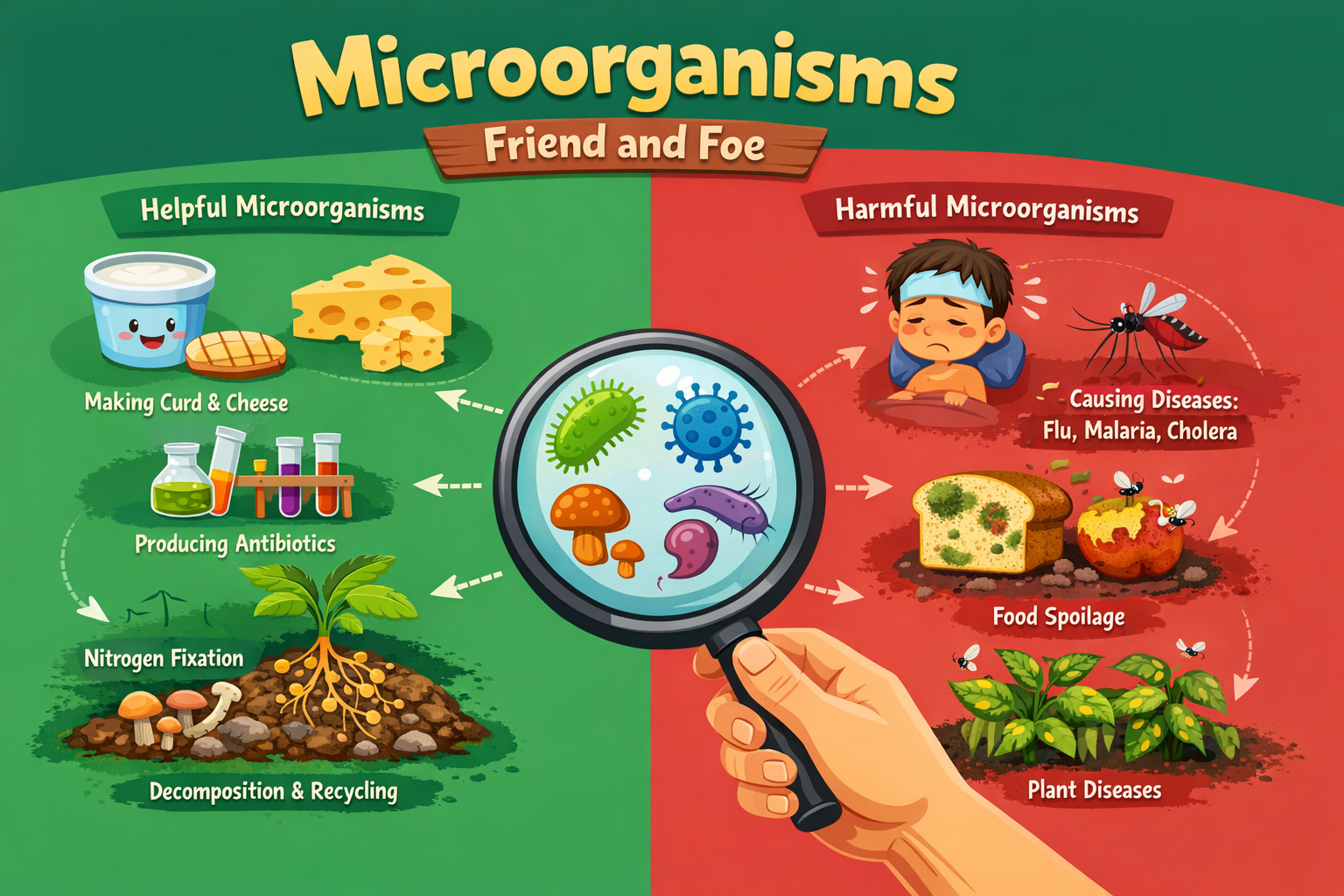

Leave a Reply