


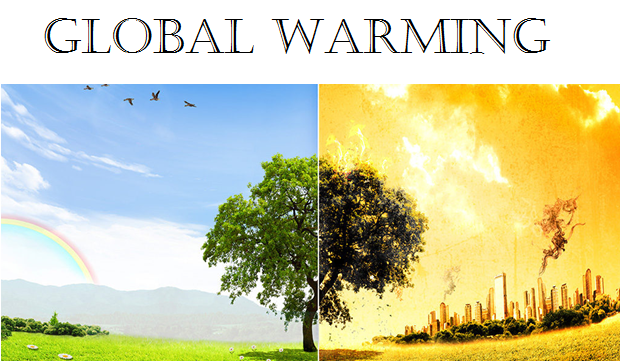
🌍 Global Warming
Introduction
Global warming refers to the long-term rise in the Earth’s average surface temperature due to human activities, especially the burning of fossil fuels and deforestation. It is one of the most serious environmental challenges of the 21st century. Scientists across the world have observed that the planet is warming at an unprecedented rate, largely because of increased greenhouse gases in the atmosphere.
Global warming is closely linked with climate change, which includes broader changes such as shifting rainfall patterns, extreme weather events, melting glaciers, and rising sea levels. Organizations like the Intergovernmental Panel on Climate Change have repeatedly warned that urgent action is needed to prevent severe environmental, economic, and social consequences.
Understanding the Greenhouse Effect
The Earth receives energy from the Sun in the form of sunlight. Some of this energy is absorbed by the Earth’s surface, while the rest is reflected back into space. Greenhouse gases in the atmosphere trap part of this outgoing heat, keeping the planet warm enough to support life. This natural process is called the greenhouse effect.
However, human activities have increased the concentration of greenhouse gases such as:
- Carbon dioxide (CO₂)
- Methane (CH₄)
- Nitrous oxide (N₂O)
- Water vapor
The excessive accumulation of these gases strengthens the greenhouse effect, leading to a gradual increase in global temperatures.
Major Causes of Global Warming
1. Burning of Fossil Fuels
Coal, petroleum, and natural gas are burned to generate electricity, power vehicles, and run industries. This releases large amounts of carbon dioxide into the atmosphere. Industrialization and modernization have significantly increased fossil fuel consumption worldwide.
2. Deforestation
Forests act as carbon sinks by absorbing carbon dioxide from the atmosphere. Large-scale cutting of trees for agriculture, urbanization, and industrial purposes reduces the Earth’s capacity to absorb CO₂. As a result, more carbon dioxide remains trapped in the atmosphere.
3. Industrial Emissions
Factories release harmful gases and pollutants into the air. Manufacturing processes, cement production, and chemical industries contribute heavily to greenhouse gas emissions.
4. Agriculture and Livestock
Agricultural activities release methane and nitrous oxide. Livestock such as cows and sheep produce methane during digestion. The use of chemical fertilizers also contributes to greenhouse gas emissions.
5. Waste Management
Landfills produce methane as organic waste decomposes. Improper waste disposal adds to environmental pollution and global warming.
Evidence of Global Warming
Scientists have gathered strong evidence proving that global warming is real and accelerating:
1. Rising Global Temperatures
Average global temperatures have increased significantly over the past century. The last few decades have been the warmest in recorded history.
2. Melting Glaciers and Ice Caps
Ice sheets in regions like Antarctica and Greenland are melting at alarming rates. Mountain glaciers worldwide are shrinking.
3. Rising Sea Levels
As glaciers melt, water flows into oceans, causing sea levels to rise. Coastal cities and small island nations face the threat of flooding.
4. Extreme Weather Events
Heatwaves, droughts, heavy rainfall, hurricanes, and wildfires have become more frequent and intense.
5. Ocean Warming
Oceans absorb much of the excess heat from global warming. Warmer oceans affect marine ecosystems and coral reefs.
Effects of Global Warming
Global warming has wide-ranging impacts on the environment, human health, and the economy.
1. Environmental Impact
- Loss of biodiversity
- Extinction of species
- Coral reef bleaching
- Desertification
Many plants and animals struggle to adapt to rapid temperature changes, leading to ecosystem imbalance.
2. Impact on Human Health
Rising temperatures increase the risk of heat strokes and dehydration. Climate change also spreads diseases such as malaria and dengue, as mosquitoes thrive in warmer climates. Air pollution linked to fossil fuels causes respiratory diseases.
3. Impact on Agriculture
Irregular rainfall and prolonged droughts reduce crop yields. Farmers face losses due to unpredictable weather conditions. Food security becomes a major concern.
4. Economic Consequences
Natural disasters damage infrastructure, homes, and businesses. Governments must spend billions on disaster relief and recovery efforts.
Global Efforts to Combat Global Warming
Countries around the world have recognized the seriousness of global warming and have taken steps to address it.
1. The Paris Agreement
The Paris Agreement is a global treaty adopted in 2015. It aims to limit global temperature rise to well below 2°C above pre-industrial levels and pursue efforts to limit it to 1.5°C.
2. United Nations Framework Convention on Climate Change (UNFCCC)
The United Nations Framework Convention on Climate Change provides a framework for international cooperation in reducing greenhouse gas emissions.
3. Renewable Energy Promotion
Countries are investing in solar, wind, hydro, and geothermal energy to reduce dependence on fossil fuels.
4. Carbon Pricing and Policies
Some nations have introduced carbon taxes and emission trading systems to limit industrial pollution.
Role of Individuals in Preventing Global Warming
While governments and industries play a major role, individuals can also contribute significantly.
1. Energy Conservation
Switch off lights and electrical appliances when not in use. Use energy-efficient LED bulbs.
2. Sustainable Transportation
Use public transport, carpooling, cycling, or electric vehicles.
3. Tree Plantation
Planting trees increases carbon absorption and improves air quality.
4. Waste Reduction
Follow the principles of Reduce, Reuse, and Recycle.
5. Awareness and Education
Spreading awareness encourages responsible environmental behavior.
Future Challenges
Despite global efforts, many challenges remain:
- Rapid industrial growth
- Population increase
- Political disagreements between nations
- Economic dependence on fossil fuels
Developing countries argue that developed nations, which historically emitted more greenhouse gases, should take greater responsibility. Balancing economic growth and environmental protection remains a complex issue.
Conclusion
Global warming is not just an environmental issue; it is a global crisis affecting ecosystems, economies, and human lives. Scientific evidence clearly shows that human activities are the primary cause of rising global temperatures. If immediate action is not taken, the consequences may become irreversible.
However, there is still hope. Through international cooperation, technological innovation, renewable energy adoption, and responsible individual actions, global warming can be slowed and managed. Protecting the Earth is a shared responsibility. Sustainable development is the key to ensuring a safe and healthy planet for present and future generations
Global warming has emerged as one of the most urgent and complex challenges confronting humanity in the modern era. It is not merely an environmental issue but a multidimensional crisis affecting ecosystems, economies, public health, and global stability. The steady rise in Earth’s average temperature, driven largely by human activities, has disrupted natural systems that have remained balanced for thousands of years. Scientific evidence clearly indicates that the excessive emission of greenhouse gases from burning fossil fuels, deforestation, industrial processes, and unsustainable agricultural practices is accelerating climate change at an alarming pace.
The consequences of global warming are already visible across the planet. Glaciers are retreating, polar ice sheets are shrinking, and sea levels are rising, threatening coastal communities and small island nations. Extreme weather events such as hurricanes, floods, droughts, and heatwaves are becoming more frequent and severe. These changes not only endanger human lives but also damage infrastructure, disrupt economies, and strain disaster management systems. Ecosystems are under immense stress, with many plant and animal species struggling to adapt to rapidly changing conditions. Biodiversity loss weakens ecological balance and reduces nature’s ability to support life.
Global warming also poses serious risks to food security and water availability. Changes in rainfall patterns, prolonged droughts, and soil degradation reduce agricultural productivity. Farmers face unpredictable growing seasons, crop failures, and economic losses. In many regions, freshwater resources are diminishing due to melting glaciers and altered precipitation patterns. As populations continue to grow, competition for essential resources may intensify, increasing the likelihood of conflict and migration.
On Human health
Human health is another critical area impacted by rising temperatures. Heat-related illnesses, respiratory problems caused by pollution, and the spread of vector-borne diseases such as malaria and dengue are increasing. Warmer climates create favorable conditions for disease-carrying insects, expanding their geographic range. Vulnerable populations, including children, the elderly, and low-income communities, are disproportionately affected. Thus, global warming is not only an environmental crisis but also a social justice issue.
Despite the severity of the problem, global awareness and action have grown significantly over the past few decades. International cooperation has become a reminder that climate change transcends national boundaries and requires collective responsibility. Agreements such as the Paris Agreement demonstrate a shared commitment to limiting global temperature rise and reducing greenhouse gas emissions. While progress varies among nations, these collaborative frameworks represent an important step toward a sustainable future.
Technological Advancements
Technological advancements provide hope in the fight against global warming. The rapid development of renewable energy sources such as solar, wind, and hydropower offers viable alternatives to fossil fuels. Energy-efficient technologies, green building designs, and sustainable transportation systems can significantly reduce carbon footprints. Innovations in agriculture, including climate-resilient crops and improved irrigation techniques, can help ensure food security under changing climatic conditions. Investing in clean technology and sustainable infrastructure is essential for long-term environmental and economic resilience.
However, government policies and technological solutions alone are not enough. Individual actions play a crucial role in addressing global warming. Simple lifestyle changes—such as conserving energy, reducing waste, using public transportation, planting trees, and adopting sustainable consumption habits—collectively make a significant difference. Public awareness and environmental education empower communities to make informed choices and advocate for responsible environmental practices.
Challenges 💫
One of the greatest challenges in combating global warming is balancing economic development with environmental sustainability. Many developing nations rely heavily on fossil fuels for growth and poverty reduction. Therefore, equitable solutions must consider historical emissions, economic disparities, and the need for sustainable development. Developed nations, having contributed significantly to historical greenhouse gas emissions, bear a greater responsibility to support developing countries through technology transfer, financial assistance, and capacity-building initiatives.
Looking ahead, the future of our planet depends on the decisions made today. If greenhouse gas emissions continue to rise unchecked, the world may face irreversible environmental damage and increasingly severe climate disruptions. Conversely, decisive action can slow global warming, protect ecosystems, and create a more sustainable and equitable world. Transitioning to renewable energy, protecting forests, promoting sustainable agriculture, and strengthening environmental policies are essential steps toward climate stability.
Ultimately, global warming reminds humanity of its deep connection with nature. The Earth’s resources are finite, and their misuse threatens the survival of future generations. Sustainable living is no longer an option but a necessity. Each nation, community, and individual shares responsibility for protecting the environment.
In conclusion, global warming is a defining challenge of our time, but it is also an opportunity to reshape our relationship with the planet. Through international cooperation, scientific innovation, responsible governance, and conscious lifestyle choices, humanity can mitigate its impacts and safeguard the Earth. The path forward requires commitment, unity, and urgency. Protecting the planet today ensures a healthier, safer, and more sustainable world for future generations.
🌍 Global Warming: 20 Important Questions with Answers
1. What is global warming?
Global warming is the long-term rise in Earth’s average temperature caused mainly by increased greenhouse gases due to human activities.
2. What is the greenhouse effect?
The greenhouse effect is a natural process where gases in the atmosphere trap heat from the Sun, keeping Earth warm enough to support life.
3. Name the major greenhouse gases.
The main greenhouse gases are:
- Carbon dioxide (CO₂)
- Methane (CH₄)
- Nitrous oxide (N₂O)
- Water vapor
4. What are the main causes of global warming?
Major causes include burning fossil fuels, deforestation, industrial pollution, agriculture, and improper waste management.
5. How does burning fossil fuels contribute to global warming?
Burning coal, oil, and gas releases carbon dioxide, which traps heat in the atmosphere and raises global temperatures.
6. Why is deforestation a cause of global warming?
Trees absorb carbon dioxide. Cutting forests reduces this absorption, increasing CO₂ levels in the atmosphere.
7. What evidence shows that global warming is happening?
Evidence includes rising global temperatures, melting glaciers, rising sea levels, and increased extreme weather events.
8. How does global warming affect sea levels?
Melting glaciers and thermal expansion of seawater cause sea levels to rise, threatening coastal regions.
9. How does global warming impact weather patterns?
It increases extreme weather events such as heatwaves, floods, storms, and droughts.
10. What is climate change?
Climate change refers to long-term changes in temperature, rainfall, and weather patterns. Global warming is a major cause of climate change.
11. How does global warming affect biodiversity?
Rising temperatures destroy habitats and force species to migrate or face extinction.
12. What are the effects of global warming on human health?
It increases heat-related illnesses, respiratory diseases, and the spread of vector-borne diseases like malaria and dengue.
13. How does global warming affect agriculture?
Irregular rainfall, droughts, and heat stress reduce crop productivity and threaten food security.
14. What international agreement aims to control global warming?
The Paris Agreement aims to limit global temperature rise and reduce greenhouse gas emissions worldwide.
15. What role do renewable energy sources play in reducing global warming?
Solar, wind, and hydro energy reduce reliance on fossil fuels and lower greenhouse gas emissions.
16. How can individuals help reduce global warming?
Individuals can conserve energy, use public transport, plant trees, reduce waste, and adopt sustainable lifestyles.
17. What is the role of forests in controlling global warming?
Forests act as carbon sinks by absorbing carbon dioxide and releasing oxygen, helping regulate climate.
18. What are the economic impacts of global warming?
Natural disasters, crop losses, and infrastructure damage lead to economic losses and increased government spending.
19. Why is global warming considered a global problem?
Greenhouse gases spread globally, affecting all countries regardless of where emissions originate.
20. What can happen if global warming is not controlled?
Uncontrolled global warming may cause severe climate disasters, food shortages, species extinction, and threats to human survival.
🌍 Global Warming: Multiple Choice Questions (MCQs)
1. Global warming refers to:
A. Increase in rainfall
B. Rise in Earth’s average temperature
C. Cooling of oceans
D. Increase in wind speed
Answer: B
2. The main cause of global warming is:
A. Earth’s rotation
B. Human activities
C. Moonlight
D. Soil erosion
Answer: B
3. Which gas contributes most to global warming?
A. Oxygen
B. Nitrogen
C. Carbon dioxide
D. Hydrogen
Answer: C
4. The greenhouse effect is:
A. Cooling of Earth
B. Trapping of heat by gases
C. Increase in rainfall
D. Formation of clouds
Answer: B
5. Which activity releases carbon dioxide?
A. Planting trees
B. Burning coal
C. Recycling
D. Rainfall
Answer: B
6. Which gas is released by vehicles?
A. Oxygen
B. Carbon dioxide
C. Helium
D. Neon
Answer: B
7. Deforestation leads to:
A. More oxygen
B. Less carbon dioxide
C. Increased global warming
D. Lower temperatures
Answer: C
8. Which of the following is a greenhouse gas?
A. Nitrogen
B. Oxygen
C. Methane
D. Helium
Answer: C
9. Global warming leads to melting of:
A. Sand dunes
B. Glaciers
C. Rocks
D. Soil
Answer: B
10. Which region is most affected by melting ice?
A. Desert
B. Polar regions
C. Grasslands
D. Plains
Answer: B
11. Rising sea levels are caused by:
A. Earthquakes
B. Melting glaciers
C. Wind
D. Soil erosion
Answer: B
12. Which energy source reduces global warming?
A. Coal
B. Diesel
C. Solar energy
D. Petrol
Answer: C
13. Methane is produced by:
A. Cars
B. Livestock
C. Computers
D. Rivers
Answer: B
14. Global warming affects:
A. Only animals
B. Only humans
C. Only plants
D. Entire ecosystem
Answer: D
15. Which agreement aims to reduce global warming?
A. Kyoto Treaty
B. Paris Agreement
C. Geneva Pact
D. Montreal Law
Answer: B
16. The main source of energy causing warming is:
A. Wind
B. Fossil fuels
C. Water
D. Sunlight
Answer: B
17. Cutting trees increases:
A. Oxygen
B. Carbon dioxide
C. Rainfall
D. Soil fertility
Answer: B
18. Which sector contributes methane gas?
A. Agriculture
B. Banking
C. Education
D. Tourism
Answer: A
19. Which of the following is NOT a greenhouse gas?
A. Carbon dioxide
B. Methane
C. Nitrous oxide
D. Oxygen
Answer: D
20. Global warming increases:
A. Ice formation
B. Sea level
C. Snowfall everywhere
D. Soil nutrients
Answer: B
21. Which is a renewable energy source?
A. Coal
B. Petrol
C. Wind energy
D. Diesel
Answer: C
22. Heat trapped by greenhouse gases causes:
A. Cooling
B. Temperature rise
C. Rainfall decrease only
D. Soil erosion
Answer: B
23. Coral reefs are threatened by:
A. Cold water
B. Global warming
C. Moonlight
D. Sandstorms
Answer: B
24. Which natural area is shrinking due to warming?
A. Forests
B. Glaciers
C. Rivers
D. Mountains
Answer: B
25. Which gas comes from landfills?
A. Methane
B. Oxygen
C. Nitrogen
D. Hydrogen
Answer: A
26. Global warming causes more:
A. Stable climate
B. Extreme weather
C. Balanced rainfall
D. Ice formation
Answer: B
27. Which transport method helps reduce warming?
A. Cycling
B. Private car use
C. Diesel engines
D. Burning fuel
Answer: A
28. Which activity helps control warming?
A. Burning plastic
B. Planting trees
C. Cutting forests
D. Using coal
Answer: B
29. Rising temperatures affect:
A. Agriculture
B. Oceans
C. Weather
D. All of these
Answer: D
30. Global warming is a:
A. Local issue
B. Regional issue
C. Global issue
D. Personal issue
Answer: C
31. The largest contributor to greenhouse gases is:
A. Transport and industry
B. Birds
C. Rivers
D. Mountains
Answer: A
32. Which country type suffers most from sea level rise?
A. Landlocked
B. Island nations
C. Mountain regions
D. Desert areas
Answer: B
33. Which practice reduces carbon footprint?
A. Using plastic bags
B. Recycling
C. Burning waste
D. Wasting electricity
Answer: B
34. Which layer traps heat?
A. Atmosphere
B. Soil
C. Ocean floor
D. Rocks
Answer: A
35. The increase in Earth’s temperature mainly affects:
A. Only cities
B. Only villages
C. Whole planet
D. Only forests
Answer: C
36. Which gas is released during decomposition of waste?
A. Oxygen
B. Methane
C. Nitrogen
D. Helium
Answer: B
37. Which is a major result of global warming?
A. Decreased storms
B. Stable climate
C. Habitat loss
D. Increased glaciers
Answer: C
38. Global warming increases the risk of:
A. Heatwaves
B. Cold waves only
C. Snowfall everywhere
D. Earth shrinking
Answer: A
39. Which human action worsens warming?
A. Saving electricity
B. Using renewable energy
C. Burning fossil fuels
D. Planting trees
Answer: C
40. Which sector uses most fossil fuels?
A. Transportation
B. Fishing
C. Sports
D. Libraries
Answer: A
41. Which is an eco-friendly habit?
A. Wasting water
B. Turning off lights
C. Burning garbage
D. Excess fuel use
Answer: B
42. Oceans absorb excess:
A. Heat
B. Sand
C. Soil
D. Oxygen
Answer: A
43. Which of the following helps slow warming?
A. Using LED bulbs
B. Cutting trees
C. Burning coal
D. Throwing waste
Answer: A
44. Which phenomenon causes glaciers to melt?
A. Global warming
B. Moonlight
C. Soil erosion
D. Wind pressure
Answer: A
45. What happens to wildlife due to warming?
A. Habitat destruction
B. Increased shelter
C. Stable conditions
D. Unlimited food
Answer: A
46. Which farming practice contributes to warming?
A. Organic farming
B. Excess fertilizer use
C. Tree planting
D. Rainwater harvesting
Answer: B
47. Which gas comes from fertilizers?
A. Nitrous oxide
B. Oxygen
C. Hydrogen
D. Helium
Answer: A
48. Which step reduces vehicle emissions?
A. Carpooling
B. Driving alone
C. Burning diesel
D. Increasing traffic
Answer: A
49. Which of the following protects the environment?
A. Recycling waste
B. Burning plastic
C. Cutting forests
D. Wasting energy
Answer: A
50. Global warming can be reduced by:
A. Increasing fossil fuel use
B. Using renewable energy
C. Cutting forests
D. Burning waste
Answer: B
🌍 Global Warming: Assertion–Reason Questions (10)
Directions:
Each question has two statements:
- Assertion (A)
- Reason (R)
Choose the correct option:
A. Both A and R are true and R is the correct explanation of A.
B. Both A and R are true but R is not the correct explanation of A.
C. A is true but R is false.
D. A is false but R is true.
1.
Assertion (A): Global warming leads to rising sea levels.
Reason (R): Melting glaciers add water to the oceans.
Answer: A
2.
Assertion (A): Deforestation increases global warming.
Reason (R): Trees absorb carbon dioxide from the atmosphere.
Answer: A
3.
Assertion (A): Carbon dioxide contributes to global warming.
Reason (R): Carbon dioxide traps heat in the atmosphere.
Answer: A
4.
Assertion (A): Renewable energy helps reduce global warming.
Reason (R): Renewable sources produce little or no greenhouse gases.
Answer: A
5.
Assertion (A): Global warming increases extreme weather events.
Reason (R): Rising temperatures disturb weather patterns.
Answer: A
6.
Assertion (A): Methane is a greenhouse gas.
Reason (R): Methane is produced by livestock and landfills.
Answer: B
(Both are true, but production sources do not explain why it is a greenhouse gas.)
7.
Assertion (A): Planting trees helps control global warming.
Reason (R): Trees release carbon dioxide during photosynthesis.
Answer: C
(Trees absorb CO₂, not release it.)
8.
Assertion (A): Global warming affects biodiversity.
Reason (R): Many species cannot adapt to rapid climate change.
Answer: A
9.
Assertion (A): Burning fossil fuels increases global warming.
Reason (R): Fossil fuels release greenhouse gases when burned.
Answer: A
10.
Assertion (A): The Paris Agreement aims to limit global temperature rise.
Reason (R): Countries agreed to reduce greenhouse gas emissions.
Answer: A
🌍 Global Warming: Case-Based Questions
Read each case carefully and answer the questions that follow.
Case Study 1: Melting Glaciers and Rising Seas
Scientists have observed that glaciers and polar ice sheets in regions such as Greenland are melting rapidly due to rising global temperatures. As the ice melts, seawater levels rise, threatening coastal cities and small island nations. Many communities are already experiencing frequent flooding and saltwater intrusion into freshwater supplies.
Questions
- What is the main cause of glacier melting?
- How does melting ice contribute to rising sea levels?
- Name one danger faced by coastal communities.
- How can global warming be slowed to protect polar regions?
Case Study 2: Impact on Agriculture
A farming village has experienced irregular rainfall patterns over the past decade. Summers have become hotter, while rainfall arrives late and in short bursts. Crop yields have decreased, and farmers are struggling to maintain food production.
Questions
- How is global warming affecting rainfall patterns?
- Why are crop yields decreasing?
- Suggest two measures farmers can adopt to cope with climate change.
- How does reduced crop production affect food security?
Case Study 3: Urban Pollution and Heat
In a rapidly growing city, increasing vehicles, industries, and concrete buildings have raised temperatures significantly. Residents face severe heatwaves, poor air quality, and rising electricity demand due to air-conditioning use.
Questions
- Why do cities experience higher temperatures than rural areas?
- How do vehicles contribute to global warming?
- Suggest two ways cities can reduce heat and pollution.
- What health problems may result from heatwaves and pollution?
Case Study 4: Loss of Biodiversity
A forest region once rich in wildlife has seen declining animal populations. Rising temperatures and changing rainfall patterns have altered habitats, forcing many species to migrate while others face extinction.
Questions
- How does global warming affect wildlife habitats?
- Why are some species unable to survive climate changes?
- What is biodiversity loss?
- Suggest two ways to protect ecosystems.
Case Study 5: Global Efforts to Combat Climate Change
Nations around the world are working together to reduce greenhouse gas emissions. Under the Paris Agreement, countries have committed to limiting global temperature rise and promoting clean energy solutions.
Questions
- What is the goal of the Paris Agreement?
- Why is international cooperation necessary to fight global warming?
- How can renewable energy help achieve climate goals?
- What role can individuals play in supporting global efforts?
🌍 Global Warming – Test Paper
Class: IX–X
Time: 2 Hours
Maximum Marks: 50
Section A – Multiple Choice Questions (1 × 10 = 10 Marks)
Attempt all questions.
- Global warming refers to:
a) Increase in rainfall
b) Rise in Earth’s average temperature
c) Decrease in sea level
d) Soil erosion - The main greenhouse gas responsible for global warming is:
a) Oxygen
b) Nitrogen
c) Carbon dioxide
d) Helium - Burning fossil fuels releases:
a) Oxygen
b) Carbon dioxide
c) Hydrogen
d) Neon - Which of the following is a renewable source of energy?
a) Coal
b) Diesel
c) Solar energy
d) Petrol - Deforestation leads to:
a) Decrease in CO₂
b) Increase in CO₂
c) More oxygen production
d) Cooling of Earth - Methane gas is mainly produced by:
a) Vehicles
b) Livestock
c) Computers
d) Rivers - Global warming causes:
a) Stable climate
b) Extreme weather events
c) Increase in glaciers
d) Reduced sea level - Rising sea levels are mainly due to:
a) Earthquakes
b) Melting glaciers
c) Windstorms
d) Soil erosion - The greenhouse effect is:
a) Cooling of Earth
b) Trapping of heat by gases
c) Increase in oxygen
d) Formation of clouds - The Paris Agreement aims to:
a) Increase fossil fuel use
b) Limit global temperature rise
c) Cut forests
d) Increase pollution
Section B – Very Short Answer Questions (2 × 5 = 10 Marks)
Answer any five questions.
- Define global warming.
- What are greenhouse gases?
- Name any two causes of global warming.
- Mention two effects of global warming.
- What is renewable energy? Give one example.
- How does deforestation contribute to global warming?
Section C – Short Answer Questions (4 × 5 = 20 Marks)
Answer any five questions.
- Explain the greenhouse effect.
- Describe the causes of global warming.
- Discuss the effects of global warming on agriculture.
- Explain the impact of global warming on human health.
- How does global warming affect biodiversity?
- What steps can individuals take to reduce global warming?
Section D – Long Answer Questions (10 × 1 = 10 Marks)
Answer any one question.
- Discuss the causes, effects, and preventive measures of global warming in detail.
OR
- Explain global warming as a global problem and describe international efforts to control it.
🌍 Global Warming – Test Paper Solutions
Maximum Marks: 50
Section A – Multiple Choice Answers
- b) Rise in Earth’s average temperature
- c) Carbon dioxide
- b) Carbon dioxide
- c) Solar energy
- b) Increase in CO₂
- b) Livestock
- b) Extreme weather events
- b) Melting glaciers
- b) Trapping of heat by gases
- b) Limit global temperature rise (as agreed in the Paris Agreement)
Section B – Very Short Answers
- Global warming is the gradual increase in Earth’s average temperature due to greenhouse gases.
- Greenhouse gases are gases that trap heat in the atmosphere, such as carbon dioxide and methane.
- Two causes:
- Burning fossil fuels
- Deforestation
- Two effects:
- Rising sea levels
- Extreme weather events
- Renewable energy is energy from natural sources that do not get exhausted.
Example: Solar energy. - Deforestation reduces the number of trees that absorb carbon dioxide, increasing greenhouse gases in the atmosphere.
Section C – Short Answer Solutions
17. Explain the greenhouse effect.
The greenhouse effect is a natural process in which gases like carbon dioxide and methane trap heat from the Sun in the Earth’s atmosphere. This keeps the planet warm enough for life. However, excess greenhouse gases increase heat trapping, causing global warming.
18. Describe the causes of global warming.
Major causes include:
- Burning fossil fuels releasing CO₂
- Deforestation reducing carbon absorption
- Industrial pollution
- Agriculture producing methane
- Waste decomposition releasing greenhouse gases
19. Discuss the effects of global warming on agriculture.
Global warming affects agriculture by altering rainfall patterns, increasing droughts, and raising temperatures. Crops may fail due to heat stress and water shortages, reducing food production and threatening food security.
20. Explain the impact of global warming on human health.
Rising temperatures increase heatstroke and dehydration risks. Air pollution causes respiratory diseases. Warner climates also spread diseases like malaria and dengue.
21. How does global warming affect biodiversity?
Climate change alters habitats, forcing species to migrate or face extinction. Coral reefs bleach due to warmer oceans, and ecosystem balance is disturbed.
22. What steps can individuals take to reduce global warming?
Individuals can:
- Save electricity
- Use public transport
- Plant trees
- Reduce waste and recycle
- Use renewable energy
Section D – Long Answer Solution
23. Causes, Effects, and Prevention of Global Warming
Causes: Global warming is mainly caused by human activities such as burning fossil fuels, deforestation, industrial emissions, and agricultural practices that release greenhouse gases.
Effects:
- Rising global temperatures
- Melting glaciers and rising sea levels
- Extreme weather events
- Loss of biodiversity
- Health risks and food shortages
Preventive Measures:
- Use renewable energy
- Plant more trees
- Reduce fossil fuel use
- Promote energy conservation
- Follow sustainable lifestyles
24. Global Warming as a Global Problem & International Efforts
Global warming affects all countries by causing climate changes, natural disasters, and environmental damage. Since greenhouse gases spread globally, international cooperation is essential.
Global efforts include agreements like the Paris Agreement, which aims to limit temperature rise. Countries are promoting renewable energy, reducing emissions, and encouraging sustainable development.
🌍 Global Warming – Quick Revision Sheet
Definition:
Global warming is the gradual increase in Earth’s average temperature caused mainly by excessive greenhouse gases in the atmosphere due to human activities.
1. Causes of Global Warming
- Burning Fossil Fuels: Coal, petrol, diesel, and natural gas release carbon dioxide.
- Deforestation: Cutting trees reduces absorption of CO₂.
- Industrial Emissions: Factories release CO₂ and other greenhouse gases.
- Agriculture: Livestock produce methane; fertilizers release nitrous oxide.
- Waste Decomposition: Organic waste in landfills produces methane.
Key Greenhouse Gases: Carbon dioxide (CO₂), Methane (CH₄), Nitrous oxide (N₂O), Water vapor.
2. Evidence of Global Warming
- Rising global temperatures.
- Melting glaciers and ice sheets (e.g., Greenland, Antarctica).
- Rising sea levels threatening coastal regions.
- Extreme weather: heatwaves, floods, droughts, storms.
- Ocean warming affecting marine ecosystems and coral reefs.
3. Effects of Global Warming
Environmental Effects:
- Loss of biodiversity and species extinction.
- Coral reef bleaching.
- Desertification and soil degradation.
- Glacier retreat and sea level rise.
Human Health Effects:
- Heatstroke, dehydration, respiratory diseases.
- Spread of vector-borne diseases like malaria and dengue.
Agricultural Effects:
- Reduced crop productivity due to irregular rainfall and heat.
- Food insecurity in vulnerable regions.
Economic Effects:
- Damage to infrastructure and property due to extreme weather.
- Increased disaster relief costs.
- Loss of income from agriculture, fisheries, and tourism.
4. Solutions to Global Warming
Global Measures:
- International Agreements:
- Paris Agreement – Limit global temperature rise.
- UNFCCC – Framework for global cooperation.
- Shift to renewable energy: solar, wind, hydro, geothermal.
- Carbon pricing, emission limits, and green technologies.
Individual Actions:
- Conserve electricity; use energy-efficient appliances.
- Use public transport, cycling, or electric vehicles.
- Reduce, reuse, recycle waste.
- Plant trees and protect forests.
- Spread awareness and adopt sustainable lifestyles.
5. Key Terms to Remember
- Greenhouse Effect: Trapping of heat by gases in the atmosphere.
- Carbon Footprint: Total greenhouse gas emissions caused by an individual or activity.
- Climate Change: Long-term changes in temperature and weather patterns caused partly by global warming.
- Renewable Energy: Energy from sources that do not run out, e.g., solar, wind.
- Biodiversity Loss: Decline in the number and variety of species due to environmental changes.
6. Quick Tips for Exams
- Remember main causes, effects, and solutions.
- Learn examples like Greenland and Antarctica for ice melting.
- Link human activities → greenhouse gases → global warming → effects.
- Use diagrams for the greenhouse effect and melting glaciers/sea level rise.
- Focus on international agreements and individual actions for solutions.
Summary:
Global warming is a serious global issue caused by human activities. It leads to rising temperatures, extreme weather, melting ice, sea-level rise, and biodiversity loss. Controlling it requires international cooperation, renewable energy adoption, conservation, and responsible behavior at the individual level. Immediate action is essential to ensure a sustainable planet for future generations.











Leave a Reply