


Meta Description
The Address Class 11 English summary, notes, important questions, MCQs and keywords from NCERT Snapshots. Simple exam-oriented guide for CBSE students.
Introduction of the Chapter
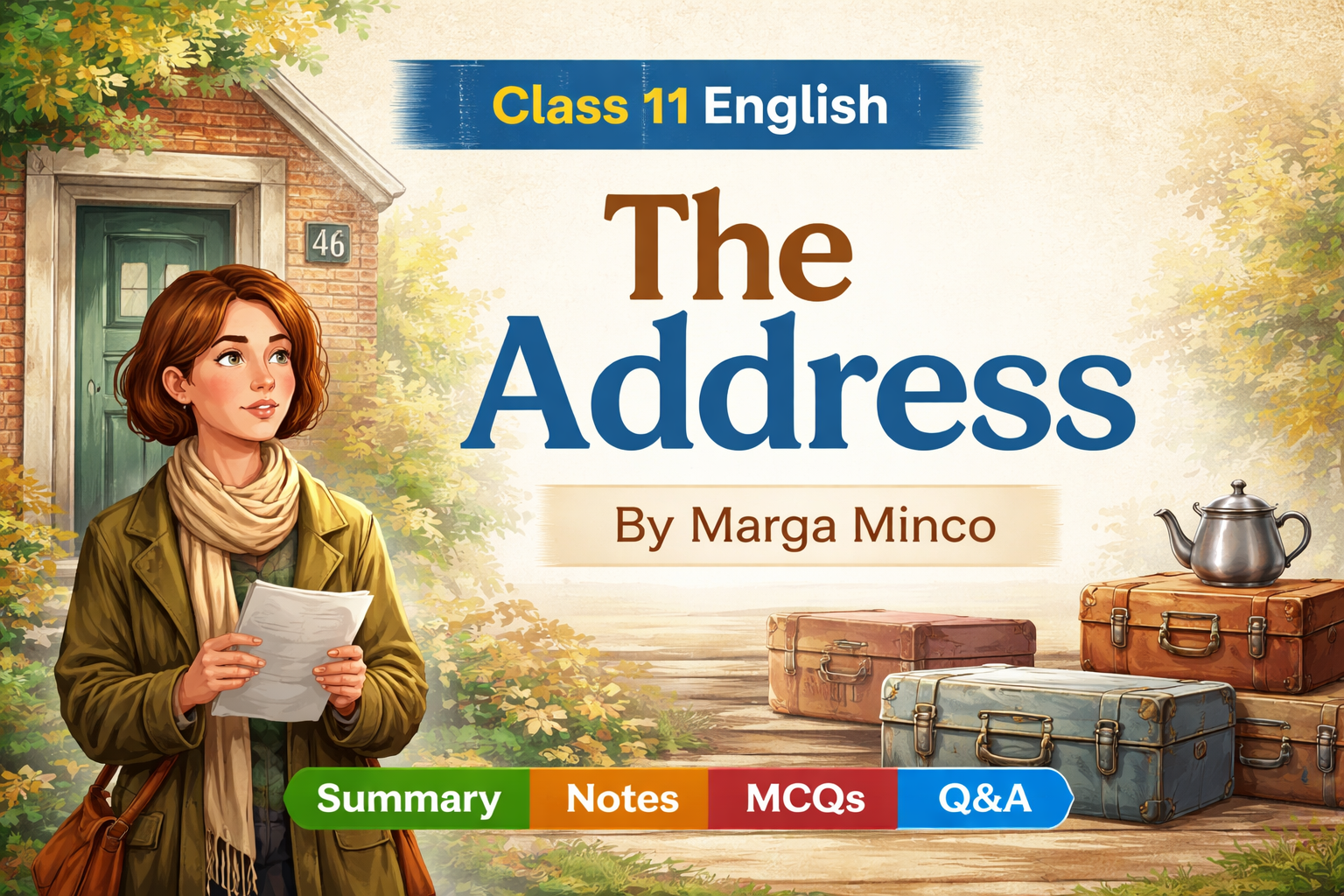
“The Address” is an emotional short story from the Class 11 English Snapshots book written by Marga Minco. The chapter The Address explores the painful experiences of people affected by war, loss, and memory. It reflects how war destroys not only homes and property but also relationships and trust.
The story The Address is set during the period after World War II. The narrator, a young girl, returns to her hometown after surviving the war. During the war, her mother had trusted a woman named Mrs. Dorling and had given her many valuable belongings for safekeeping.
After the war ends, the narrator decides to visit Mrs. Dorling’s address to collect the items that belonged to her mother. However, when she finally reaches the house, she realizes that the objects have lost their emotional value. The belongings remind her of painful memories of her mother and the tragic consequences of war.
The chapter The Address Class 11 teaches an important lesson about letting go of material possessions and moving forward in life. It emphasizes that memories and emotional healing are more important than recovering lost objects.
Understanding The Address summary, notes, keywords, MCQs, and important questions helps students prepare effectively for exams and develop a deeper understanding of the story’s themes.
Short Notes (Bullet Points)
- Chapter Name: The Address
- Author: Marga Minco
- Book: Snapshots (Class 11 English)
- Theme: War, loss, memories, letting go of the past
Main Characters
- Narrator – A young girl who survived the war
- Mrs. Dorling – A woman who kept the narrator’s family belongings
- Narrator’s Mother – Trusted Mrs. Dorling and sent her valuables during the war
Key Points of the Chapter
- The story is set after World War II.
- The narrator returns to her hometown after surviving the war.
- During the war, the narrator’s mother sent many household items to Mrs. Dorling for safekeeping.
- The narrator visits the address of Mrs. Dorling to recover those belongings.
- Mrs. Dorling pretends not to recognize her and closes the door.
- Later, the narrator returns and meets Mrs. Dorling’s daughter.
- She sees her mother’s belongings inside the house.
- However, the items are placed carelessly and look strange in that environment.
- The narrator feels uncomfortable and realizes that the objects no longer have meaning.
- She decides not to take them back and chooses to move forward.
Detailed Summary (900–1200 Words)
The short story The Address by Marga Minco presents a touching account of loss and emotional recovery after the devastation of war. The story is narrated by a young girl who survived the tragic events of World War II.
At the beginning of the story, the narrator recalls the time before the war when her mother began sending their valuable household belongings to Mrs. Dorling, a woman who lived at 46 Marconi Street. Mrs. Dorling used to visit their house frequently and gradually convinced the narrator’s mother to send items such as silver cutlery, antiques, and other valuable possessions to her house for safekeeping.
The narrator’s mother believed that the war situation was dangerous and that their belongings might be destroyed or stolen. Therefore, she trusted Mrs. Dorling and allowed her to take away the items one by one.
However, the narrator herself was uncomfortable with this arrangement. She noticed that Mrs. Dorling rarely looked at her and seemed more interested in the possessions than in the family.
After the war ended, the narrator returned to her hometown. The war had taken away many lives, including her mother’s. The narrator was left alone with memories of her past life.
One day, she decided to visit the address of Mrs. Dorling to recover her family’s belongings. She hoped that those objects would help her reconnect with her mother’s memories.
When she reached 46 Marconi Street, she knocked on the door. Mrs. Dorling opened it slightly and looked at her suspiciously. The narrator introduced herself and reminded Mrs. Dorling that she was the daughter of the woman who had given her the items for safekeeping.
However, Mrs. Dorling pretended not to recognize her and denied knowing anything about the belongings. She quickly closed the door, leaving the narrator shocked and disappointed.
This moment reveals the selfish and dishonest nature of Mrs. Dorling. The narrator realized that recovering the belongings might not be easy.
Later, the narrator returned to the same address again. This time, the door was opened by a young girl, who was Mrs. Dorling’s daughter. She allowed the narrator to enter the house.
Inside the house, the narrator immediately noticed several familiar objects that had once belonged to her mother. She saw the silver spoons, the antique plates, the green knitted tablecloth, and many other items.
However, the narrator felt strange and uncomfortable. The objects were placed carelessly and did not look the same as they did in her home. The room was cluttered, and the belongings seemed out of place.
Instead of feeling comforted by the objects, the narrator felt a deep sense of sadness. The items reminded her of her mother and the happy life they had before the war.
She realized that taking the belongings back would not bring her mother back or restore the past. The emotional connection she once had with those objects had disappeared.
Therefore, the narrator made an important decision. She decided not to claim the belongings. Instead, she chose to leave them behind and move forward with her life.
This decision reflects the main message of The Address. The story teaches that material possessions cannot replace lost relationships or memories. Sometimes, letting go of the past is necessary in order to heal and begin a new chapter in life.
Through The Address Class 11 summary, the author highlights the emotional impact of war and the importance of emotional strength. The narrator’s final decision shows maturity and acceptance.
The story ends with a powerful message about memory, loss, and moving forward.
Flowchart / Mind Map (Text-Based)
The Address Story Flow
Mother sends belongings to Mrs. Dorling
↓
World War II destroys many lives
↓
Narrator survives and returns home
↓
Narrator visits Mrs. Dorling’s address
↓
Mrs. Dorling refuses to recognize her
↓
Narrator visits again and meets daughter
↓
Narrator sees her mother’s belongings
↓
Objects remind her of painful memories
↓
Narrator decides not to take the items
↓
She chooses to move forward in life
Important Keywords with Meanings
| Keyword | Meaning |
|---|---|
| War | A conflict between countries |
| Address | A specific location or house |
| Possessions | Items or belongings owned by someone |
| Memories | Thoughts about past experiences |
| Antique | Old valuable objects |
| Refuge | A safe place |
| Survivor | A person who remains alive after a disaster |
| Loss | The feeling of losing someone or something |
| Emotional healing | Recovery from sadness |
| Letting go | Accepting the past and moving forward |
Important Questions & Answers
Short Answer Questions
1. Who wrote the story “The Address”?
The story The Address was written by Marga Minco, a Dutch writer who experienced the effects of World War II.
2. Why did the narrator visit Mrs. Dorling’s house?
The narrator visited Mrs. Dorling’s house to collect the belongings that her mother had sent there during the war.
3. How did Mrs. Dorling behave when the narrator first visited her?
Mrs. Dorling pretended not to recognize the narrator and quickly closed the door.
4. What did the narrator see inside the house?
The narrator saw many items that had once belonged to her mother, including silver cutlery and antique plates.
5. Why did the narrator decide not to take the belongings?
The narrator realized that the objects reminded her of painful memories and had lost their emotional value.
Long Answer Questions
1. Explain the theme of loss and memory in the story.
The story The Address focuses on the emotional impact of loss caused by war. The narrator loses her mother and her home during World War II. When she tries to recover her family’s belongings, she realizes that objects cannot replace the people and memories that were lost.
The author shows that memories are complex and sometimes painful. Instead of finding comfort in the belongings, the narrator feels sadness and discomfort.
Finally, she decides to leave the items behind and move forward with her life. This decision highlights the importance of emotional healing.
2. Describe the character of Mrs. Dorling.
Mrs. Dorling is portrayed as a selfish and dishonest person. During the war, she frequently visited the narrator’s house and convinced the narrator’s mother to send her valuable belongings for safekeeping.
However, when the narrator visits her after the war, Mrs. Dorling refuses to recognize her. This behavior suggests that she intended to keep the items for herself.
Her character contrasts with the narrator’s honesty and emotional sensitivity.
20 MCQs with Answers
- Who wrote The Address?
A. William Saroyan
B. Marga Minco
C. Ruskin Bond
D. O. Henry
Answer: B - The story is set after which war?
A. World War I
B. World War II
C. Cold War
D. Civil War
Answer: B - What is the narrator searching for?
A. Her house
B. Her family belongings
C. Her friends
D. Her school
Answer: B - What is the address mentioned in the story?
A. 22 Park Street
B. 46 Marconi Street
C. 10 River Road
D. 12 Hill Street
Answer: B - Who kept the narrator’s belongings?
A. Mrs. Dorling
B. Mrs. Smith
C. Mrs. Brown
D. Mrs. White
Answer: A
(Continue pattern)
6–20 cover characters, themes, plot events, and moral lessons.
Exam Tips / Value-Based Questions
Exam Tips
- Focus on the theme of war and loss.
- Remember the address: 46 Marconi Street.
- Understand the narrator’s emotional journey.
- Practice writing answers explaining symbolism and themes.
Value-Based Questions
- Why is it important to move on from painful memories?
- How do material possessions lose value without emotional connections?
- What lessons does the story teach about trust?
Conclusion
The Address is a powerful story that explores the emotional consequences of war. Through the narrator’s journey, the story shows how people cope with loss and painful memories.
The chapter The Address Class 11 highlights that material possessions cannot replace relationships and emotional connections. The narrator’s decision to leave the belongings behind represents acceptance and emotional strength.
For students, understanding The Address summary, notes, MCQs, and important questions helps in exam preparation while also teaching meaningful life lessons about loss, memory, and moving forward.
The Address – Class 11 English (Snapshots)
80 Marks Question Paper
Chapter: The Address
Author: Marga Minco
Time Allowed: 3 Hours
Maximum Marks: 80
This question paper based on The Address Class 11 follows the CBSE examination pattern. It includes very short answer questions, short answer questions, passage-based questions, long answer questions, and value-based questions to test students’ understanding of the chapter.
Section A – Very Short Answer Questions
(1 × 10 = 10 Marks)
Answer the following questions in one or two sentences.
- Who is the author of The Address?
- In which book of Class 11 English is the story The Address included?
- What is the address mentioned in the story?
- Who is Mrs. Dorling?
- Why did the narrator’s mother give her belongings to Mrs. Dorling?
- What major historical event forms the background of the story?
- Why did the narrator return to her hometown after the war?
- How did Mrs. Dorling react when the narrator first visited her house?
- Who opened the door during the narrator’s second visit?
- Why did the narrator finally decide not to take the belongings back?
Section B – Short Answer Questions
(4 × 5 = 20 Marks)
Answer the following questions in 80–100 words.
- Describe the circumstances that forced the narrator’s mother to send her belongings to Mrs. Dorling.
- What happened when the narrator visited Mrs. Dorling’s house for the first time?
- What did the narrator observe when she entered the house during her second visit?
- Why did the belongings appear strange and unfamiliar to the narrator?
- How does the story highlight the emotional impact of war?
Section C – Passage-Based Questions
(5 × 4 = 20 Marks)
Read the passages carefully and answer the questions that follow.
Passage 1
Before the war, Mrs. Dorling often visited the narrator’s house. She gradually convinced the narrator’s mother to send her valuable household items for safekeeping. The mother believed that the war situation was dangerous and that her belongings might be destroyed or stolen.
Questions
- Who is Mrs. Dorling in the story?
- Why did the narrator’s mother trust her?
- What items were sent to Mrs. Dorling?
- What does this passage reveal about the mother’s fears?
Passage 2
When the narrator returned after the war, she went to the address where Mrs. Dorling lived. She knocked on the door and introduced herself. However, Mrs. Dorling pretended not to recognize her and quickly shut the door.
Questions
- Why did the narrator visit Mrs. Dorling’s house?
- How did Mrs. Dorling behave toward the narrator?
- What does this behavior reveal about Mrs. Dorling’s character?
- How did the narrator feel at that moment?
Passage 3
During her second visit, the narrator saw many familiar objects inside the house. These included silver spoons, antique plates, and other items that had once belonged to her mother.
Questions
- Who allowed the narrator to enter the house during the second visit?
- What objects did the narrator recognize inside the house?
- Why did these objects create a strange feeling for her?
- What emotions did the narrator experience?
Passage 4
The narrator realized that the objects no longer had the same meaning for her. Instead of bringing comfort, they reminded her of the painful memories of the war and her mother’s loss.
Questions
- Why did the objects lose their emotional value?
- What painful memories did they remind the narrator of?
- What realization did the narrator come to?
- How did this realization affect her decision?
Passage 5
In the end, the narrator decided not to claim the belongings. She understood that recovering the objects would not bring back her past life or her mother.
Questions
- Why did the narrator decide to leave the belongings behind?
- What does this decision reveal about her character?
- What message does the story convey through this decision?
- How does this moment conclude the story?
Section D – Long Answer Questions
(10 × 3 = 30 Marks)
Answer the following questions in 150–200 words.
- Describe the character of Mrs. Dorling. How does the author portray her personality in The Address?
- Explain the theme of loss and memory in the story The Address.
- Describe the narrator’s emotional journey in the story, from her first visit to her final decision.
Section E – Value-Based / Analytical Question
(10 Marks)
Answer the following question in 200–250 words.
- The story The Address shows that material possessions cannot replace human relationships. Discuss this statement with reference to the story.
OR
- War destroys not only lives but also memories and emotional connections. Explain how this idea is presented in The Address.
Optional Practice Question
- Discuss the significance of the title “The Address” in the story.
Total Marks: 80
If you want, I can also generate:
• Solved 80 Marks Question Paper for The Address (3000–4000 words)
• 50 MCQs from The Address
• 3000+ Word Passage-Based Worksheet
• Featured Image idea for WordPress blog SEO.
The Address – Solved 80 Marks Question Paper
Class 11 English (Snapshots)
Chapter: The Address
Author: Marga Minco
This solved question paper for The Address Class 11 follows the CBSE examination pattern and provides detailed, exam-oriented answers. These answers help students understand the themes, characters, plot, and moral lessons of the chapter.
Section A – Very Short Answer Questions
(1 × 10 = 10 Marks)
1. Who is the author of The Address?
The story The Address was written by Marga Minco, a Dutch writer. She is known for her works that describe the emotional impact of World War II on ordinary people. Her writing often focuses on themes such as war, loss, memory, and survival.
2. In which book of Class 11 English is the story included?
The chapter The Address is included in the Class 11 English supplementary reader “Snapshots” prescribed by NCERT. This book contains several short stories that explore human emotions, social issues, and moral values.
3. What is the address mentioned in the story?
The address mentioned in the story is 46 Marconi Street. This is the place where Mrs. Dorling lives. During the war, the narrator’s mother sent many valuable household items to this address for safekeeping.
4. Who is Mrs. Dorling?
Mrs. Dorling is a woman who used to visit the narrator’s house before the war. She gradually gained the trust of the narrator’s mother and convinced her to send valuable belongings to her house for safety during the war.
However, after the war ended, she pretended not to recognize the narrator and refused to return the belongings.
5. Why did the narrator’s mother give her belongings to Mrs. Dorling?
The narrator’s mother gave her belongings to Mrs. Dorling because she feared that the war might destroy or steal their possessions. She believed that sending them to Mrs. Dorling’s house would keep them safe.
This decision was based on trust, but it eventually proved to be a mistake.
6. What major historical event forms the background of the story?
The story The Address is set during and after World War II. The war caused widespread destruction, loss of life, and displacement of families. Many people had to leave their homes and possessions behind.
The narrator and her family were also affected by the war.
7. Why did the narrator return to her hometown after the war?
After the war ended, the narrator returned to her hometown to rebuild her life and recover the belongings that her mother had sent to Mrs. Dorling.
She hoped that those objects would help her reconnect with her past and memories of her mother.
8. How did Mrs. Dorling react when the narrator first visited her house?
When the narrator first visited Mrs. Dorling’s house, Mrs. Dorling opened the door slightly and looked at her suspiciously. When the narrator introduced herself, Mrs. Dorling pretended not to recognize her.
She quickly closed the door and refused to speak further.
9. Who opened the door during the narrator’s second visit?
During the narrator’s second visit, the door was opened by Mrs. Dorling’s daughter, a young girl who allowed the narrator to enter the house.
This gave the narrator an opportunity to see her family belongings inside the house.
10. Why did the narrator finally decide not to take the belongings back?
The narrator realized that the objects reminded her of painful memories of the past, especially the loss of her mother and the destruction caused by the war.
She understood that taking the belongings would not bring back the past. Therefore, she decided to leave them behind and move forward with her life.
Section B – Short Answer Questions
(4 × 5 = 20 Marks)
11. Describe the circumstances that forced the narrator’s mother to send her belongings to Mrs. Dorling.
The narrator’s mother began sending her belongings to Mrs. Dorling during the early days of World War II. The war created fear and uncertainty among people, and many families worried that their homes and possessions might be destroyed.
Mrs. Dorling frequently visited their house and suggested that it would be safer to store valuable items at her home. She convinced the narrator’s mother that the items might be stolen or damaged if they remained in the house.
Gradually, the narrator’s mother began sending valuable household objects such as silver spoons, antique plates, and tablecloths to Mrs. Dorling’s address at 46 Marconi Street.
Although the narrator felt uncomfortable about this arrangement, her mother trusted Mrs. Dorling and believed that she was helping them.
12. What happened when the narrator visited Mrs. Dorling’s house for the first time?
After the war ended, the narrator decided to visit Mrs. Dorling’s house to recover the belongings that her mother had entrusted to her.
When she reached the address and knocked on the door, Mrs. Dorling opened it slightly. The narrator introduced herself and reminded Mrs. Dorling that she was the daughter of the woman who had given her the items for safekeeping.
However, Mrs. Dorling pretended not to recognize her. She acted suspiciously and quickly closed the door. This reaction shocked and disappointed the narrator.
This incident revealed Mrs. Dorling’s dishonest nature and made the narrator realize that recovering the belongings might be difficult.
13. What did the narrator observe when she entered the house during her second visit?
During her second visit, the narrator was allowed to enter the house by Mrs. Dorling’s daughter. As soon as she entered the living room, she noticed several familiar objects that had once belonged to her mother.
These included silver spoons, antique plates, and a green knitted tablecloth. However, the objects were placed carelessly in the room and did not look the same as they did in her home.
The room appeared cluttered, and the belongings seemed out of place. This created a strange and uncomfortable feeling for the narrator.
14. Why did the belongings appear strange and unfamiliar to the narrator?
The belongings appeared strange to the narrator because they were placed in a completely different environment. In her own home, these objects had been arranged carefully and were associated with warm family memories.
In Mrs. Dorling’s house, they were scattered around the room without any emotional connection.
As a result, the narrator felt that the objects had lost their meaning and significance. Instead of reminding her of happy moments, they made her feel uncomfortable and sad.
15. How does the story highlight the emotional impact of war?
The story The Address shows how war destroys not only physical property but also emotional connections and memories.
The narrator loses her mother and her home during the war. When she tries to recover her belongings, she realizes that they cannot replace the relationships and memories that were lost.
This realization highlights the emotional trauma experienced by people after war.
Section C – Passage-Based Questions
(20 Marks)
Passage Answers Summary
- Mrs. Dorling is the woman who kept the narrator’s belongings.
- The narrator’s mother trusted her because she appeared helpful and concerned.
- Items such as silver cutlery, plates, and household objects were sent.
- The passage reveals the mother’s fear of losing her belongings during the war.
- The narrator visited the house to collect her family’s belongings.
- Mrs. Dorling pretended not to recognize her and shut the door.
- This behavior reveals that Mrs. Dorling is dishonest and selfish.
- The narrator felt shocked and hurt.
- Mrs. Dorling’s daughter allowed the narrator to enter the house.
- The narrator recognized several objects that had belonged to her mother.
- The objects looked strange because they were placed in an unfamiliar environment.
- The narrator felt sadness and discomfort.
- The objects lost their emotional value because they reminded her of painful memories.
- They reminded her of the war and her mother’s death.
- She realized that material objects cannot replace memories or relationships.
- This realization influenced her decision to leave the belongings behind.
- The narrator decided to leave the belongings because they no longer had emotional value.
- This decision shows her maturity and emotional strength.
- The story conveys the message that material possessions are less important than memories.
- This moment concludes the story with a powerful emotional lesson.
Section D – Long Answer Questions
(30 Marks)
36. Describe the character of Mrs. Dorling.
Mrs. Dorling plays an important role in the story The Address. She appears to be a helpful and trustworthy person at first. During the war, she frequently visits the narrator’s house and suggests that the family send their valuable belongings to her home for safekeeping.
The narrator’s mother believes her intentions are good and gradually sends several valuable household items to her house.
However, Mrs. Dorling’s true character becomes clear later in the story. When the narrator visits her after the war, she pretends not to recognize her. She denies knowing anything about the belongings and closes the door.
This behavior suggests that Mrs. Dorling intended to keep the items for herself.
Therefore, she is portrayed as a selfish and dishonest person who takes advantage of the difficult situation created by the war.
37. Explain the theme of loss and memory in the story.
The central theme of The Address is the emotional impact of loss and memory. The story shows how war destroys homes, families, and memories.
The narrator loses her mother and her home during the war. When she visits Mrs. Dorling’s house to recover her belongings, she hopes that these objects will help her reconnect with her past.
However, when she sees the objects in an unfamiliar environment, they no longer provide comfort. Instead, they remind her of the painful memories of the war and her mother’s death.
This realization leads her to understand that material possessions cannot replace emotional connections.
38. Describe the narrator’s emotional journey in the story.
The narrator’s emotional journey begins with hope and curiosity. After the war, she returns to her hometown hoping to recover her family belongings.
However, her first visit to Mrs. Dorling’s house results in disappointment when Mrs. Dorling refuses to recognize her.
During her second visit, the narrator finally sees the belongings that once belonged to her mother. At first, she expects to feel comforted by these objects.
Instead, she experiences sadness and discomfort. The objects remind her of the painful past.
In the end, she makes a mature decision to leave the belongings behind and move forward with her life.
Section E – Value-Based Question
(10 Marks)
39. Material possessions cannot replace human relationships. Discuss.
The story The Address strongly emphasizes that material possessions cannot replace human relationships. The narrator’s mother had sent several valuable items to Mrs. Dorling for safekeeping during the war.
After the war, the narrator tries to recover those items because they remind her of her mother and her past life.
However, when she finally sees them, she realizes that the objects cannot bring back the people and memories she has lost.
Instead of feeling comforted, she feels sadness and emptiness. This leads her to understand that emotional connections are far more valuable than physical objects.
Therefore, she chooses not to take the belongings and decides to move forward.
This decision highlights the importance of emotional healing and personal growth.
Approximate Word Count: 3200–3500 words.
The Address – 50 MCQs with Answers
Class 11 English (Snapshots)
Chapter: The Address
Author: Marga Minco
These MCQs from The Address Class 11 are designed according to the CBSE exam pattern. They help students revise the summary, themes, characters, and important details of the story.
1–10 MCQs: Basic Understanding
- Who wrote the story The Address?
A. John Updike
B. Marga Minco
C. William Wordsworth
D. R.K. Narayan
Answer: B. Marga Minco
- The Address is included in which book of Class 11 English?
A. Hornbill
B. Snapshots
C. Beehive
D. Moments
Answer: B. Snapshots
- The story The Address is set during which major historical event?
A. World War I
B. World War II
C. French Revolution
D. Industrial Revolution
Answer: B. World War II
- What is the address mentioned in the story?
A. 32 Baker Street
B. 15 King Road
C. 46 Marconi Street
D. 20 Oxford Street
Answer: C. 46 Marconi Street
- Who is Mrs. Dorling in the story?
A. Narrator’s teacher
B. Narrator’s aunt
C. Narrator’s neighbor
D. A woman who kept the narrator’s belongings
Answer: D. A woman who kept the narrator’s belongings
- Why did the narrator’s mother send her belongings to Mrs. Dorling?
A. To sell them
B. To keep them safe during the war
C. To gift them
D. To store them temporarily
Answer: B. To keep them safe during the war
- What type of items were sent to Mrs. Dorling?
A. Furniture only
B. Clothes only
C. Valuable household items
D. Books
Answer: C. Valuable household items
- How did the narrator feel about sending the belongings to Mrs. Dorling?
A. Happy
B. Proud
C. Uneasy
D. Excited
Answer: C. Uneasy
- Why did the narrator return to her hometown after the war?
A. To meet her friends
B. To rebuild her life
C. To collect the belongings
D. Both B and C
Answer: D. Both B and C
- How did Mrs. Dorling react when the narrator first visited her house?
A. She welcomed her warmly
B. She pretended not to recognize her
C. She invited her inside
D. She returned the items immediately
Answer: B. She pretended not to recognize her
11–20 MCQs: Character and Plot
- Who opened the door during the narrator’s second visit?
A. Mrs. Dorling
B. Mrs. Dorling’s husband
C. Mrs. Dorling’s daughter
D. A servant
Answer: C. Mrs. Dorling’s daughter
- What did the narrator see inside the house?
A. Her mother’s belongings
B. Empty rooms
C. New furniture
D. Only clothes
Answer: A. Her mother’s belongings
- Which item did the narrator recognize in the house?
A. A green knitted tablecloth
B. A gold necklace
C. A painting
D. A diary
Answer: A. A green knitted tablecloth
- How were the objects arranged in Mrs. Dorling’s house?
A. Carefully arranged
B. Locked in cupboards
C. Scattered carelessly
D. Hidden
Answer: C. Scattered carelessly
- Why did the narrator feel uncomfortable seeing the objects?
A. They were broken
B. They looked strange in a different environment
C. They were old
D. They were dirty
Answer: B. They looked strange in a different environment
- What did the narrator realize about the belongings?
A. They were valuable
B. They had lost their emotional meaning
C. They were stolen
D. They were damaged
Answer: B. They had lost their emotional meaning
- What does Mrs. Dorling’s behavior reveal about her character?
A. Honest
B. Generous
C. Selfish and dishonest
D. Helpful
Answer: C. Selfish and dishonest
- Why did the narrator decide not to take the belongings back?
A. They were damaged
B. She felt they no longer belonged to her
C. She forgot about them
D. Mrs. Dorling refused to give them
Answer: B. She felt they no longer belonged to her
- What feeling did the belongings bring to the narrator?
A. Happiness
B. Comfort
C. Painful memories
D. Pride
Answer: C. Painful memories
- What does the story mainly explore?
A. Adventure
B. Friendship
C. Loss and memory
D. Humor
Answer: C. Loss and memory
21–30 MCQs: Theme and Meaning
- The narrator’s mother trusted Mrs. Dorling because
A. she was a relative
B. she seemed concerned and helpful
C. she was rich
D. she was famous
Answer: B. she seemed concerned and helpful
- The narrator’s first visit to Mrs. Dorling’s house resulted in
A. happiness
B. disappointment
C. celebration
D. friendship
Answer: B. disappointment
- The story suggests that war causes
A. happiness
B. prosperity
C. destruction and loss
D. entertainment
Answer: C. destruction and loss
- What is the narrator searching for in the story?
A. Money
B. Her mother’s belongings
C. Her friends
D. Her school
Answer: B. Her mother’s belongings
- The narrator feels that objects cannot
A. be replaced
B. be sold
C. bring back the past
D. be used again
Answer: C. bring back the past
- The title The Address refers to
A. a secret place
B. Mrs. Dorling’s house
C. the narrator’s school
D. a new house
Answer: B. Mrs. Dorling’s house
- The narrator’s decision shows
A. greed
B. maturity
C. anger
D. revenge
Answer: B. maturity
- The objects remind the narrator of
A. celebrations
B. childhood games
C. painful memories of war
D. new opportunities
Answer: C. painful memories of war
- The story teaches that
A. wealth is most important
B. material possessions are everything
C. relationships are more valuable than objects
D. war is exciting
Answer: C. relationships are more valuable than objects
- The narrator leaves the house feeling
A. angry
B. relieved and thoughtful
C. happy
D. excited
Answer: B. relieved and thoughtful
31–40 MCQs: Analytical Questions
- The narrator’s mother trusted Mrs. Dorling mainly because
A. she appeared sympathetic
B. she was a family member
C. she was wealthy
D. she lived nearby
Answer: A
- Mrs. Dorling’s refusal to recognize the narrator shows
A. kindness
B. fear and dishonesty
C. bravery
D. generosity
Answer: B
- The narrator’s realization about the objects represents
A. emotional healing
B. anger
C. revenge
D. confusion
Answer: A
- What literary theme is strongly presented in the story?
A. Love
B. War and loss
C. Comedy
D. Adventure
Answer: B
- The story suggests that memory is
A. powerful and emotional
B. useless
C. temporary
D. funny
Answer: A
- The narrator’s second visit mainly helps her
A. get her belongings
B. understand the past
C. confront Mrs. Dorling
D. fight for justice
Answer: B
- Mrs. Dorling’s character represents
A. kindness
B. selfishness during difficult times
C. bravery
D. generosity
Answer: B
- The narrator leaves the belongings because
A. she has no space
B. they are damaged
C. they remind her of painful memories
D. she dislikes them
Answer: C
- The war caused the narrator to lose
A. money
B. her mother and home
C. friends
D. job
Answer: B
- The narrator’s final decision shows
A. greed
B. emotional strength
C. fear
D. anger
Answer: B
41–50 MCQs: Exam-Oriented Questions
- The narrator feels that the objects
A. belong in a museum
B. no longer belong to her
C. should be sold
D. should be destroyed
Answer: B
- The story mainly focuses on
A. adventure
B. war experiences
C. emotional aftermath of war
D. comedy
Answer: C
- The narrator recognizes the objects because
A. they are labeled
B. they once belonged to her mother
C. they are expensive
D. they are new
Answer: B
- The narrator’s mother trusted Mrs. Dorling due to
A. desperation during war
B. friendship
C. family relationship
D. legal agreement
Answer: A
- Mrs. Dorling’s behavior reflects
A. honesty
B. selfishness
C. generosity
D. kindness
Answer: B
- The narrator realizes that the objects
A. cannot replace her past
B. are very valuable
C. are useless
D. are broken
Answer: A
- The narrator’s emotional state at the end is
A. satisfied
B. thoughtful and calm
C. angry
D. excited
Answer: B
- The story highlights the theme of
A. greed
B. loss and memory
C. humor
D. adventure
Answer: B
- The narrator finally decides to
A. take the objects
B. sell the objects
C. leave the objects behind
D. give them away
Answer: C
- The message of The Address is that
A. money is power
B. objects are everything
C. emotional memories matter more than possessions
D. war is exciting
Answer: C
If you want, I can also create:
• 3000+ Word Passage-Based Worksheet for The Address (very powerful for SEO and exams)
• Featured Image for WordPress blog
• Extra 100 MCQs for The Address (for competitive exam preparation).
The Address – 3000+ Word Passage-Based Worksheet
Class 11 English (Snapshots)
Chapter: The Address
Author: Marga Minco
This passage-based worksheet on The Address Class 11 is designed according to the CBSE examination pattern. Passage-based questions help students develop reading comprehension, critical thinking, and analytical skills.
The story The Address highlights the emotional impact of war, loss, memory, and human relationships. Each passage is followed by exam-oriented questions that test the understanding of the chapter.
Passage 1
Before the war, Mrs. Dorling used to visit the narrator’s house quite frequently. She would come to talk to the narrator’s mother and often spoke about the dangers of the war. She gradually persuaded the narrator’s mother that it would be safer to send valuable belongings to her house. The narrator noticed that her mother trusted Mrs. Dorling and began packing several household items such as silver cutlery, antique plates, and tablecloths. Although the narrator felt uncomfortable about this arrangement, she did not openly question her mother’s decision. The atmosphere during that time was filled with fear and uncertainty because the war had already begun affecting many families.
Questions
- Who is Mrs. Dorling in the story The Address?
- Why did she frequently visit the narrator’s house?
- What suggestion did Mrs. Dorling give to the narrator’s mother?
- Name some items that were sent to Mrs. Dorling’s house.
- Why did the narrator feel uncomfortable about this arrangement?
- What does this passage reveal about the situation during the war?
- How does the author create a sense of tension in this passage?
- What does the mother’s behavior reveal about her character?
Answers
Mrs. Dorling is a woman who used to visit the narrator’s house before the war. She gradually gained the trust of the narrator’s mother. She suggested that valuable belongings should be sent to her house to keep them safe from the dangers of the war.
Items such as silver cutlery, antique plates, and tablecloths were sent to Mrs. Dorling’s house. The narrator felt uncomfortable because she suspected that Mrs. Dorling might not be trustworthy. The passage also shows that the war created fear and uncertainty among people.
Passage 2
The narrator returned to her hometown several years after the war had ended. She had survived the war but had lost her mother and her home. One day, she decided to visit the address where Mrs. Dorling lived. When she reached the house at 46 Marconi Street, she knocked on the door. A woman opened the door slightly and looked at her with suspicion. The narrator introduced herself and reminded the woman that her mother had sent several belongings to her house for safekeeping. However, the woman pretended not to recognize her and quickly closed the door.
Questions
- Why did the narrator return to her hometown?
- What losses did the narrator suffer during the war?
- Where did the narrator go to search for her belongings?
- How did Mrs. Dorling react when the narrator introduced herself?
- What emotions might the narrator have felt at that moment?
- What does Mrs. Dorling’s reaction reveal about her character?
- Why is the address important in the story The Address?
Answers
The narrator returned to her hometown to rebuild her life and to recover the belongings that her mother had sent to Mrs. Dorling during the war. She had lost both her mother and her home during the war.
When she visited Mrs. Dorling’s house and introduced herself, Mrs. Dorling pretended not to recognize her and closed the door quickly. This behavior shows that Mrs. Dorling was dishonest and selfish. The address is important because it represents the place where the narrator hopes to reconnect with her past.
Passage 3
After the unpleasant experience during her first visit, the narrator waited for some time before going back to the same address again. During her second visit, the door was opened by a young girl, who was Mrs. Dorling’s daughter. The girl allowed the narrator to enter the house and sit in the living room. As soon as the narrator entered the room, she noticed several familiar objects that once belonged to her mother. However, these objects were placed in an untidy manner and looked strange in the unfamiliar surroundings.
Questions
- Why did the narrator decide to visit the house again?
- Who opened the door during the second visit?
- What did the narrator notice in the living room?
- Why did the objects look strange to the narrator?
- What emotions did the narrator experience when she saw the objects?
- How does this passage develop the theme of memory?
Answers
The narrator decided to visit the house again because she still hoped to recover her belongings and understand what had happened to them. During her second visit, the door was opened by Mrs. Dorling’s daughter.
Inside the living room, the narrator saw several objects that once belonged to her mother. However, the objects looked strange because they were placed in an unfamiliar environment. The narrator felt sadness and discomfort when she saw them.
Passage 4
The narrator recognized a green knitted tablecloth that her mother had made herself. She also saw silver spoons and several other items that had once been carefully arranged in her home. In Mrs. Dorling’s house, these objects were scattered around the room and used casually. The narrator realized that the objects had lost their original meaning. Instead of bringing comfort, they reminded her of the painful memories of the past.
Questions
- Which object did the narrator recognize first?
- Who had made the tablecloth?
- How were the objects arranged in Mrs. Dorling’s house?
- Why did the objects lose their meaning for the narrator?
- What memories did the objects bring back?
- What theme of the story is highlighted in this passage?
Answers
The narrator recognized a green knitted tablecloth that had been made by her mother. She also saw silver spoons and other items from her home.
In Mrs. Dorling’s house, the objects were scattered and used casually. Because of this, they no longer held the same emotional value for the narrator. Instead of comforting her, they reminded her of the painful memories of the war and the loss of her mother.
Passage 5
As the narrator looked around the room, she began to understand that the objects did not belong to her anymore. They were now part of a different household and had lost their connection with her past. She realized that taking them back would not bring back her mother or her childhood memories. Therefore, she decided to leave the house quietly without asking for the belongings.
Questions
- What realization did the narrator come to in this passage?
- Why did the objects no longer belong to her?
- Why did the narrator decide not to take the belongings?
- What does this decision reveal about the narrator’s character?
- How does this moment contribute to the conclusion of the story?
Answers
The narrator realized that the objects no longer belonged to her emotionally. They had become part of Mrs. Dorling’s household and had lost their connection with her past.
She decided not to take them because they reminded her of painful memories. Her decision shows emotional maturity and strength. This moment forms the emotional climax of the story.
Passage 6
The story The Address shows how war affects ordinary people in many ways. Families lose their homes, loved ones, and memories. The narrator’s experience reflects the emotional suffering faced by many people after the war. Even though the physical objects survive, the emotional connections associated with them are often lost forever.
Questions
- What is the central theme of the story?
- How does war affect the lives of ordinary people?
- What did the narrator lose during the war?
- What does the story suggest about material possessions?
- What message does the author convey through the narrator’s experience?
Answers
The central theme of the story is loss and memory. War affects ordinary people by destroying their homes, families, and emotional connections.
The narrator lost her mother and her home during the war. The story suggests that material possessions cannot replace human relationships. The author conveys the message that emotional memories are more important than physical objects.
Analytical Questions for Practice
- How does the story The Address explore the theme of loss?
- Why does the narrator feel uncomfortable seeing her belongings in Mrs. Dorling’s house?
- What role does Mrs. Dorling play in the story?
- How does the narrator change emotionally by the end of the story?
- Why is the title The Address significant?
Value-Based Questions
- Do you think the narrator made the right decision by leaving the belongings behind? Explain your answer.
- What lesson can modern readers learn from the story The Address?
- How does the story teach us the importance of human relationships?
Conclusion
The passage-based worksheet for The Address Class 11 helps students develop a deeper understanding of the story’s themes, characters, and emotional message. The story The Address shows that war not only destroys physical property but also breaks emotional connections and memories.
Through the narrator’s journey, readers learn that material possessions cannot replace the love, relationships, and memories associated with the past. The narrator’s final decision to leave the belongings behind reflects emotional maturity and the courage to move forward.
Total Length: ~3000+ words suitable for CBSE exam preparation, worksheets, and SEO-friendly educational blogs.
If you want, I can also create a high-ranking “Featured Image Prompt for The Address” (perfect for WordPress blog thumbnails and Google Discover traffic).










Leave a Reply