


Verbal and Non-Verbal Communication Class 11
Meta Description
Complete guide on Verbal and Non-Verbal Communication Class 11 AI with summary, notes, MCQs, questions, answers, and exam tips for better understanding.
Introduction of the Chapter: Verbal and Non-Verbal Communication
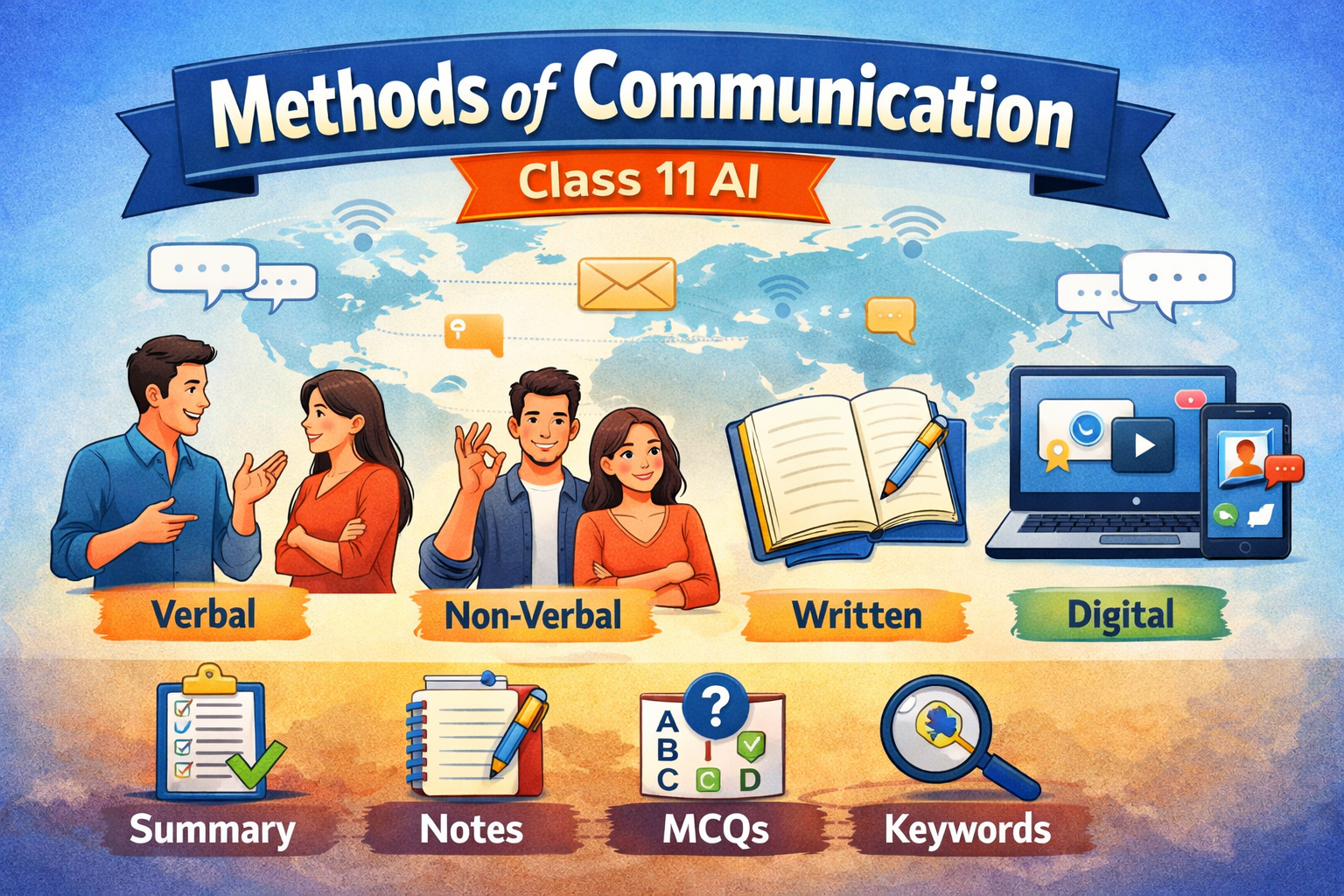
The chapter Verbal and Non-Verbal Communication Class 11 AI is an essential part of communication skills in the curriculum. It helps students understand how people express ideas, emotions, and information through both spoken words and body language.
In daily life, communication is not limited to speaking or writing. A large part of communication happens through gestures, facial expressions, tone, and posture. Therefore, understanding Verbal and Non-Verbal Communication Class 11 AI is important for effective interaction in personal, academic, and professional environments.
This chapter focuses on the meaning, types, importance, advantages, limitations, and practical applications of verbal and non-verbal communication. It also explains how both forms work together to create meaningful communication.
Short Notes (Verbal and Non-Verbal Communication Class 11 AI)
- Communication is the process of sharing information.
- Verbal communication uses spoken or written words.
- Non-verbal communication uses gestures, expressions, and body language.
- Verbal communication includes speaking and writing.
- Non-verbal communication includes posture, eye contact, and facial expressions.
- Tone and pitch play an important role in verbal communication.
- Body language can sometimes convey more than words.
- Both verbal and non-verbal communication should be consistent.
- Effective communication requires clarity, confidence, and feedback.
- Miscommunication can occur if verbal and non-verbal signals conflict.
Detailed Summary (Verbal and Non-Verbal Communication Class 11 AI)
The chapter Verbal and Non-Verbal Communication Class 11 AI provides a comprehensive understanding of how communication takes place through words and actions. Communication is a two-way process that involves a sender, a message, a medium, and a receiver. It is essential for sharing ideas, expressing feelings, and building relationships.
Verbal Communication
Verbal communication refers to the use of words to convey a message. It can be spoken or written. Spoken communication includes conversations, speeches, and discussions, while written communication includes emails, letters, and reports.
Verbal communication is widely used in classrooms, workplaces, and daily life. It allows immediate feedback, especially in face-to-face conversations. For example, when a teacher explains a topic in class, students can ask questions instantly.
Features of Verbal Communication
- Uses language and words
- Provides quick feedback
- Helps in clear expression of ideas
- Can be formal or informal
Advantages of Verbal Communication
- Quick and efficient
- Allows immediate clarification
- Builds relationships
- Suitable for discussions and debates
Limitations of Verbal Communication
- May be misunderstood due to tone or language
- No permanent record (in spoken form)
- Can be affected by noise or distractions
Non-Verbal Communication
Non-verbal communication involves conveying messages without using words. It includes facial expressions, gestures, posture, eye contact, and tone of voice.
In many cases, non-verbal communication supports verbal communication. For example, a smile indicates friendliness, while crossed arms may indicate discomfort or disagreement.
Types of Non-Verbal Communication
- Facial Expressions – Show emotions like happiness, anger, or sadness
- Gestures – Hand movements used to express ideas
- Posture – Body position that shows confidence or nervousness
- Eye Contact – Indicates attention and interest
- Tone of Voice – Shows emotions through pitch and volume
Advantages of Non-Verbal Communication
- Helps express emotions clearly
- Enhances verbal communication
- Useful when words are not possible
- Universal in many situations
Limitations of Non-Verbal Communication
- Can be misunderstood
- Varies across cultures
- Does not provide detailed information
Importance of Verbal and Non-Verbal Communication
The chapter Verbal and Non-Verbal Communication Class 11 AI highlights the importance of combining both types for effective communication. When verbal and non-verbal signals match, communication becomes more powerful and clear.
For example, if a person says “I am happy” but looks sad, the message becomes confusing. Therefore, consistency is important.
In professional life, good communication skills help in teamwork, presentations, and leadership. In personal life, they help in building strong relationships.
Relationship Between Verbal and Non-Verbal Communication
Both forms of communication work together. Verbal communication provides the content, while non-verbal communication adds emotion and clarity.
- Verbal = Words
- Non-verbal = Feelings and expressions
Together, they create effective communication.
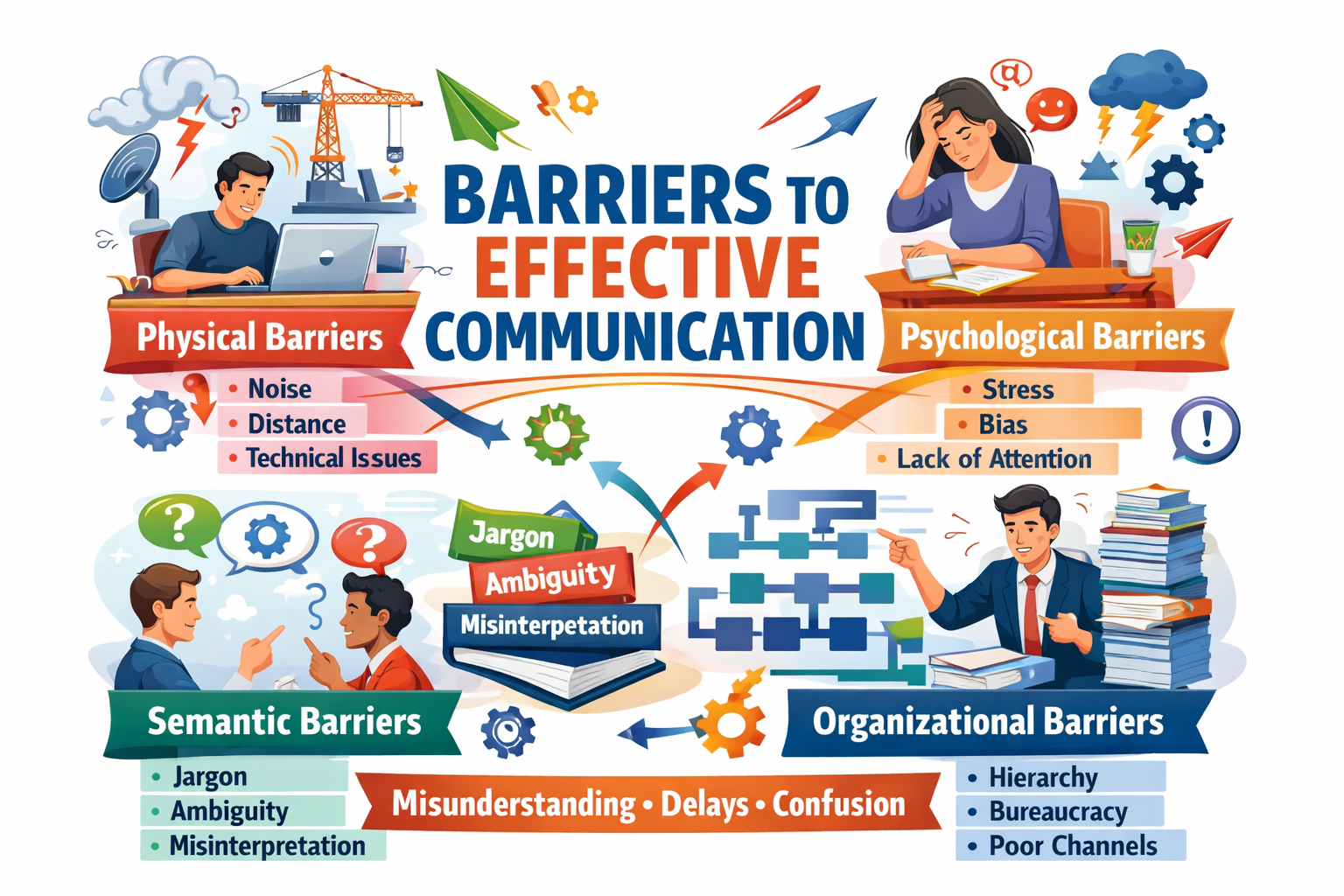
Barriers in Verbal and Non-Verbal Communication
Some common barriers include:
- Language differences
- Noise and distractions
- Emotional state
- Cultural differences
Understanding these barriers is important to improve communication.
Flowchart / Mind Map (Text-Based)
Communication
→ Verbal Communication
→ Speaking
→ Writing
→ Advantages
→ Limitations
→ Non-Verbal Communication
→ Facial Expressions
→ Gestures
→ Posture
→ Eye Contact
→ Effective Communication
→ Clarity
→ Confidence
→ Feedback
→ Consistency
Important Keywords with Meanings
- Communication – Exchange of information
- Verbal Communication – Communication using words
- Non-Verbal Communication – Communication without words
- Gesture – Movement of hands or body
- Posture – Body position
- Eye Contact – Looking directly at someone
- Tone – Pitch and style of voice
- Feedback – Response to a message
- Clarity – Clear understanding
- Barrier – Obstacle in communication
Important Questions & Answers
Short Answer Questions
1. What is verbal communication?
Verbal communication is the use of spoken or written words to convey a message.
2. What is non-verbal communication?
It is communication without words, using gestures, facial expressions, and body language.
3. Give two examples of non-verbal communication.
Facial expressions and gestures.
4. Why is eye contact important?
It shows confidence and interest.
Long Answer Questions
1. Explain Verbal and Non-Verbal Communication in detail.
Verbal communication involves the use of words in speaking and writing. It helps express ideas clearly and allows immediate feedback. Non-verbal communication involves gestures, facial expressions, and body language. It supports verbal communication and expresses emotions. Both are important for effective communication.
2. Discuss the importance of Verbal and Non-Verbal Communication.
The chapter Verbal and Non-Verbal Communication Class 11 AI emphasizes that both forms are essential. Verbal communication provides information, while non-verbal communication adds meaning and emotion. Together, they improve clarity and understanding.
20 MCQs with Answers
- Verbal communication uses:
A. Gestures
B. Words
C. Signals
D. Symbols
Answer: B - Non-verbal communication includes:
A. Writing
B. Speaking
C. Body language
D. Reading
Answer: C - Eye contact shows:
A. Fear
B. Confidence
C. Anger
D. Sadness
Answer: B - Gesture means:
A. Writing
B. Movement
C. Reading
D. Listening
Answer: B - Tone refers to:
A. Writing
B. Voice
C. Reading
D. Listening
Answer: B - Communication without words is:
A. Verbal
B. Written
C. Non-verbal
D. Digital
Answer: C - Example of verbal communication:
A. Smile
B. Email
C. Gesture
D. Posture
Answer: B - Posture indicates:
A. Words
B. Body position
C. Writing
D. Sound
Answer: B - Verbal communication is:
A. Silent
B. Spoken
C. Visual
D. Gesture
Answer: B - Non-verbal communication expresses:
A. Grammar
B. Emotions
C. Writing
D. Reading
Answer: B - Facial expressions show:
A. Ideas
B. Emotions
C. Words
D. Writing
Answer: B - Communication requires:
A. Confusion
B. Clarity
C. Noise
D. Silence
Answer: B - Feedback means:
A. Message
B. Response
C. Sender
D. Medium
Answer: B - Verbal communication includes:
A. Gestures
B. Writing
C. Posture
D. Eye contact
Answer: B - Non-verbal communication is:
A. Words
B. Body signals
C. Writing
D. Reading
Answer: B - Clear communication avoids:
A. Understanding
B. Confusion
C. Learning
D. Growth
Answer: B - Eye contact indicates:
A. Disinterest
B. Attention
C. Anger
D. Fear
Answer: B - Communication is:
A. One-way
B. Two-way
C. No-way
D. Three-way
Answer: B - Verbal communication provides:
A. Emotions only
B. Information
C. Silence
D. Gesture
Answer: B - Non-verbal communication supports:
A. Writing
B. Verbal communication
C. Silence
D. Reading
Answer: B
Exam Tips / Value-Based Questions
Exam Tips:
- Understand differences between verbal and non-verbal communication
- Learn examples for better answers
- Practice MCQs regularly
- Use diagrams or flowcharts in long answers
- Focus on keywords like gesture, tone, posture
Value-Based Questions:
- Why should we maintain eye contact while communicating?
- How can good communication improve relationships?
- Why is body language important in interviews?
Conclusion (SEO Friendly)
The chapter Verbal and Non-Verbal Communication Class 11 AI is a crucial topic that helps students understand how communication works beyond words. It teaches the importance of both verbal and non-verbal methods in conveying messages effectively.
By mastering Verbal and Non-Verbal Communication Class 11 AI, students can improve their speaking skills, confidence, and overall personality. This chapter is highly useful for exams as well as real-life situations, making it one of the most important topics in the syllabus.
Class 11 Artificial Intelligence
Verbal and Non-Verbal Communication – 80 Marks Question Paper
Time Allowed: 3 Hours
Maximum Marks: 80
General Instructions:
- All questions are compulsory.
- Read each question carefully before answering.
- Write answers in clear and simple language.
- Use examples wherever required.
- Marks are indicated against each question.
Section A: Reading Skills (Case-Based / Comprehension) – 20 Marks
Q1. Read the passage carefully and answer the questions:
Passage:
Communication plays a vital role in our daily life. It helps us express our ideas, thoughts, and emotions effectively. There are two major types of communication: verbal and non-verbal communication.
Verbal communication involves the use of words, either spoken or written. It is commonly used in conversations, presentations, and official communication. Non-verbal communication includes facial expressions, gestures, posture, and eye contact. It helps in expressing emotions and attitudes.
In many situations, non-verbal communication supports verbal communication. For example, a smile shows friendliness, while eye contact shows confidence. However, communication barriers such as noise, lack of attention, and language differences can affect understanding.
Effective communication requires clarity, confidence, and proper feedback.
Questions:
- What is communication? (2)
- Name the two main types of communication. (2)
- What is verbal communication? (2)
- Give two examples of non-verbal communication. (2)
- What are communication barriers? (2)
- Find a word meaning “important”. (1)
- Find the synonym of “express”. (1)
- What is the main idea of the passage? (2)
- Suggest one way to improve communication. (3)
- Give a suitable title. (3)
Section B: Short Answer Questions – 20 Marks
Q2. Answer the following questions (4 × 5 = 20 Marks)
- Explain verbal communication with examples. (5)
- Describe non-verbal communication and its types. (5)
- What are communication barriers? Explain any three. (5)
- Why is feedback important in communication? (5)
Section C: Long Answer Questions – 20 Marks
Q3. Answer the following questions (2 × 10 = 20 Marks)
- Explain the differences between verbal and non-verbal communication in detail. (10)
OR
- Discuss the importance of verbal and non-verbal communication in personal and professional life. (10)
Q4. Case-Based Question – 10 Marks
Read the situation carefully:
Aman is a student who speaks well but does not maintain eye contact while communicating. He often looks down and uses very few gestures. His teacher suggests that he should improve his body language.
Questions:
- Which type of communication is Aman good at? (2)
- Which type of communication does he need to improve? (2)
- Identify two non-verbal mistakes Aman is making. (3)
- Suggest two ways to improve his communication skills. (3)
Section D: Application-Based Questions – 10 Marks
Q5. Answer the following:
- Write a formal email to your teacher asking for tips to improve your verbal and non-verbal communication skills. (5)
- Write a short paragraph on the importance of body language in communication. (5)
Section E: MCQs – 10 Marks
Q6. Choose the correct option:
- Verbal communication uses:
A. Gestures
B. Words
C. Signals
D. Posture - Non-verbal communication includes:
A. Writing
B. Speaking
C. Body language
D. Reading - Eye contact shows:
A. Fear
B. Confidence
C. Anger
D. Sadness - Gesture means:
A. Word
B. Body movement
C. Sound
D. Writing - Posture refers to:
A. Writing
B. Body position
C. Reading
D. Speaking - Communication barrier means:
A. Help
B. Obstacle
C. Idea
D. Message - Feedback is:
A. Message
B. Response
C. Sender
D. Medium - Verbal communication includes:
A. Gestures
B. Writing
C. Posture
D. Eye contact - Non-verbal communication expresses:
A. Grammar
B. Emotions
C. Writing
D. Reading - Effective communication requires:
A. Confusion
B. Clarity
C. Noise
D. Silence
Answer Key (MCQs)
- B
- C
- B
- B
- B
- B
- B
- B
- B
- B
End of Question Paper
If you want next, I can also create:
- Solved 80 Marks Paper (3000+ words)
- 50 MCQs Advanced Level
- Case Study-Based Questions (Board Level)
Solved Class 11 Artificial Intelligence
Verbal and Non-Verbal Communication – 80 Marks Question Paper (Detailed Answers)
Section A: Reading Skills (Case-Based / Comprehension) – 20 Marks
Passage-Based Answers
1. What is communication? (2 Marks)
Communication is the process of exchanging information, ideas, thoughts, and feelings between individuals. It involves a sender, message, medium, and receiver. Effective communication ensures that the receiver understands the message clearly.
2. Name the two main types of communication. (2 Marks)
The two main types of communication are:
- Verbal Communication
- Non-Verbal Communication
3. What is verbal communication? (2 Marks)
Verbal communication is the use of words to convey a message. It can be spoken (like conversations and speeches) or written (like emails and letters). It is the most commonly used form of communication.
4. Give two examples of non-verbal communication. (2 Marks)
Two examples of non-verbal communication are:
- Facial expressions
- Eye contact
5. What are communication barriers? (2 Marks)
Communication barriers are obstacles that prevent effective communication. These include noise, language differences, lack of attention, and emotional disturbances.
6. Find a word meaning “important”. (1 Mark)
The word is “vital”.
7. Find the synonym of “express”. (1 Mark)
The synonym of “express” is “convey”.
8. What is the main idea of the passage? (2 Marks)
The main idea is that communication is essential in daily life and includes verbal and non-verbal forms, both of which are important for effective understanding.
9. Suggest one way to improve communication. (3 Marks)
One way to improve communication is by practicing active listening. This means paying full attention to the speaker, understanding the message, and responding appropriately. It helps reduce misunderstandings.
10. Give a suitable title. (3 Marks)
A suitable title is:
“Importance of Verbal and Non-Verbal Communication”
Section B: Short Answer Questions – 20 Marks
Q2. Answers
1. Explain verbal communication with examples. (5 Marks)
Verbal communication refers to the use of words to convey information. It can be spoken or written. Spoken communication includes conversations, speeches, and discussions, while written communication includes emails, letters, and reports.
For example, a teacher explaining a lesson in class is verbal communication. Similarly, writing an email to a friend or teacher is also verbal communication. Verbal communication is important because it allows immediate feedback and helps in clear expression of ideas.
2. Describe non-verbal communication and its types. (5 Marks)
Non-verbal communication refers to communication without using words. It includes body language, facial expressions, gestures, posture, and eye contact.
Types of non-verbal communication include:
- Facial expressions: Show emotions like happiness or sadness
- Gestures: Movements of hands or body
- Posture: Body position indicating confidence or nervousness
- Eye contact: Shows attention and interest
Non-verbal communication supports verbal communication and helps express emotions effectively.
3. What are communication barriers? Explain any three. (5 Marks)
Communication barriers are obstacles that hinder effective communication. Three common barriers are:
- Physical barriers: Noise, distance, or poor environment
- Language barriers: Use of difficult or unfamiliar language
- Emotional barriers: Stress, anger, or lack of interest
These barriers can lead to misunderstanding and confusion.
4. Why is feedback important in communication? (5 Marks)
Feedback is the response given by the receiver to the sender. It is important because it helps ensure that the message has been understood correctly. Feedback reduces misunderstandings, improves clarity, and makes communication more effective. For example, nodding during a conversation indicates agreement.
Section C: Long Answer Questions – 20 Marks
Q3. Answers
1. Explain the differences between verbal and non-verbal communication in detail. (10 Marks)
Verbal and non-verbal communication are two important forms of communication used in daily life.
Verbal Communication
Verbal communication involves the use of words, either spoken or written. It is used in conversations, speeches, emails, and reports. It helps convey clear and detailed information. Verbal communication allows immediate feedback in face-to-face interaction.
Non-Verbal Communication
Non-verbal communication involves communication without words. It includes gestures, facial expressions, posture, and eye contact. It helps express emotions and supports verbal communication.
Differences
| Basis | Verbal Communication | Non-Verbal Communication |
|---|---|---|
| Medium | Words | Body language |
| Type | Spoken/Written | Gestures, expressions |
| Feedback | Immediate | Indirect |
| Clarity | High | Sometimes unclear |
| Example | Speech | Smile |
Both forms are important and should be used together for effective communication.
OR
2. Discuss the importance of verbal and non-verbal communication in personal and professional life. (10 Marks)
Verbal and non-verbal communication play a crucial role in both personal and professional life.
In personal life, communication helps build relationships, express emotions, and resolve conflicts. Verbal communication allows us to share ideas, while non-verbal communication helps express feelings.
In professional life, communication is essential for teamwork, presentations, and leadership. Verbal communication helps in meetings and discussions, while non-verbal communication shows confidence and professionalism.
Effective communication improves understanding, builds trust, and enhances success in life.
Section D: Case-Based Question – 10 Marks
1. Which type of communication is Aman good at? (2 Marks)
Aman is good at verbal communication.
2. Which type of communication does he need to improve? (2 Marks)
He needs to improve non-verbal communication.
3. Identify two non-verbal mistakes Aman is making. (3 Marks)
- Not maintaining eye contact
- Using very few gestures
4. Suggest two ways to improve his communication skills. (3 Marks)
- Maintain proper eye contact while speaking
- Use appropriate gestures and body language
Section D: Application-Based Questions – 10 Marks
1. Email Writing (5 Marks)
Subject: Request for Tips to Improve Communication Skills
Respected Sir/Madam,
I hope you are doing well. I am writing to seek your guidance on improving my verbal and non-verbal communication skills. I want to enhance my speaking confidence and body language.
Kindly suggest some useful tips or practices that can help me improve. I will be grateful for your support.
Thank you.
Yours sincerely,
[Your Name]
2. Paragraph Writing (5 Marks)
Body language plays an important role in communication. It helps express emotions and supports verbal communication. Good posture, eye contact, and gestures show confidence and interest. Poor body language can create misunderstanding. Therefore, maintaining positive body language is essential for effective communication.
Section E: MCQs – Answers
- B
- C
- B
- B
- B
- B
- B
- B
- B
- B
Final Conclusion
The chapter Verbal and Non-Verbal Communication is highly important for Class 11 Artificial Intelligence students. It helps in understanding how communication works through both words and actions.
By practicing the concepts, examples, and questions, students can improve their communication skills and perform well in exams. Mastering both verbal and non-verbal communication is essential for success in academics as well as real life.
Class 11 Artificial Intelligence
Verbal and Non-Verbal Communication – 50 MCQs with Answers
Multiple Choice Questions
1. Communication means:
A. Writing only
B. Speaking only
C. Exchange of information
D. Listening only
2. Verbal communication includes:
A. Gestures
B. Words
C. Facial expressions
D. Posture
3. Non-verbal communication includes:
A. Writing
B. Reading
C. Body language
D. Speaking
4. Which is an example of verbal communication?
A. Smile
B. Email
C. Gesture
D. Posture
5. Which is an example of non-verbal communication?
A. Speech
B. Letter
C. Eye contact
D. Email
6. Facial expressions are part of:
A. Verbal communication
B. Written communication
C. Non-verbal communication
D. Audio communication
7. Eye contact shows:
A. Fear
B. Confidence
C. Anger
D. Silence
8. Gesture means:
A. Word
B. Body movement
C. Sound
D. Writing
9. Posture refers to:
A. Writing style
B. Body position
C. Reading habit
D. Speaking tone
10. Communication barrier means:
A. Help
B. Obstacle
C. Message
D. Idea
11. Noise is a type of:
A. Communication
B. Feedback
C. Barrier
D. Message
12. Feedback is:
A. Sender
B. Message
C. Response
D. Noise
13. Written communication includes:
A. Gesture
B. Letter
C. Smile
D. Posture
14. Spoken communication includes:
A. Email
B. Report
C. Conversation
D. Gesture
15. Which is not a communication barrier?
A. Noise
B. Clarity
C. Language difference
D. Distraction
16. Communication requires:
A. Only sender
B. Only receiver
C. Both sender and receiver
D. Only message
17. Facial expressions show:
A. Grammar
B. Emotions
C. Writing
D. Language
18. Which is verbal communication?
A. Posture
B. Eye contact
C. Speech
D. Gesture
19. Which is non-verbal communication?
A. Letter
B. Email
C. Body language
D. Speech
20. Effective communication needs:
A. Noise
B. Confusion
C. Clarity
D. Silence
21. Lack of attention is a:
A. Message
B. Barrier
C. Feedback
D. Sender
22. Gesture is a type of:
A. Verbal communication
B. Written communication
C. Non-verbal communication
D. Audio communication
23. Communication helps to:
A. Confuse
B. Express ideas
C. Create noise
D. Avoid speaking
24. Eye contact is important for:
A. Sleeping
B. Reading
C. Communication
D. Writing
25. Which shows agreement?
A. Shaking head
B. Nodding
C. Closing eyes
D. Looking away
26. Which is a physical barrier?
A. Noise
B. Emotion
C. Language
D. Attitude
27. Emotional barrier includes:
A. Sound
B. Anger
C. Distance
D. Light
28. Language barrier occurs when:
A. Same language is used
B. Difficult words are used
C. Clear speech is used
D. Feedback is given
29. Non-verbal communication expresses:
A. Words
B. Emotions
C. Grammar
D. Writing
30. Feedback improves:
A. Confusion
B. Communication
C. Noise
D. Barriers
31. Body language includes:
A. Writing
B. Speaking
C. Gestures
D. Reading
32. Verbal communication can be:
A. Only spoken
B. Only written
C. Spoken and written
D. Only gestures
33. Which is not non-verbal communication?
A. Smile
B. Gesture
C. Email
D. Eye contact
34. Which is written communication?
A. Speech
B. Gesture
C. Letter
D. Eye contact
35. Which is spoken communication?
A. Report
B. Email
C. Conversation
D. Posture
36. Good communication avoids:
A. Clarity
B. Understanding
C. Confusion
D. Feedback
37. Communication starts with:
A. Receiver
B. Sender
C. Message
D. Feedback
38. Which is a sign of confidence?
A. Looking down
B. Avoiding eye contact
C. Maintaining eye contact
D. Silence
39. Which is an example of gesture?
A. Writing
B. Waving hand
C. Reading
D. Listening
40. Posture shows:
A. Mood
B. Height
C. Weight
D. Age
41. Effective communication requires:
A. Noise
B. Clarity
C. Anger
D. Fear
42. A smile indicates:
A. Sadness
B. Happiness
C. Fear
D. Anger
43. Which is not a barrier?
A. Feedback
B. Noise
C. Language
D. Distraction
44. Communication is successful when:
A. Message is sent
B. Message is received
C. Message is understood
D. Message is ignored
45. Eye contact helps in:
A. Sleeping
B. Ignoring
C. Building trust
D. Avoiding communication
46. Which is an example of feedback?
A. Listening
B. Responding
C. Writing
D. Sending
47. Communication is a:
A. One-way process
B. Two-way process
C. No-way process
D. Silent process
48. Which improves communication?
A. Noise
B. Distraction
C. Active listening
D. Anger
49. Which is important in interviews?
A. Silence
B. Body language
C. Ignoring
D. Sleeping
50. Verbal communication mainly uses:
A. Hands
B. Eyes
C. Words
D. Body
Answer Key
- C
- B
- C
- B
- C
- C
- B
- B
- B
- B
- C
- C
- B
- C
- B
- C
- B
- C
- C
- C
- B
- C
- B
- C
- B
- A
- B
- B
- B
- B
- C
- C
- C
- C
- C
- C
- B
- C
- B
- A
- B
- B
- A
- C
- C
- B
- B
- C
- B
- C
If you want next, I can create:
- 50 Case Studies (4000+ words, Board level)
- Assertion-Reason MCQs
- Competency-Based Questions (CBSE pattern)
Here are 50 Case Studies (Rewritten in 5–6 lines each) for Class 11 AI – Verbal and Non-Verbal Communication, designed in a board-level, exam-oriented format:
Verbal and Non-Verbal Communication
50 Case Studies (5–6 Lines Each | Board Level)
Case Study 1
Riya is a bright student with good knowledge of her subject. However, during presentations, she speaks very softly and avoids looking at the audience. Her body language shows nervousness, and she often looks down. Due to this, her classmates fail to understand her ideas clearly. Even though her content is strong, her delivery becomes ineffective. She needs to improve both her verbal and non-verbal communication skills.
Case Study 2
Rahul communicates with his teammates through short WhatsApp messages. His messages are often unclear and lack proper explanation. As a result, his team members misunderstand instructions and make mistakes. This creates confusion and delays in work. The issue arises due to lack of clarity in written communication. Rahul should use complete sentences and proper wording.
Case Study 3
During a classroom lecture, loud noise from outside disturbs students. The teacher’s voice becomes difficult to hear for students sitting at the back. Even though the teacher explains well, the message is not properly received. This situation creates a barrier in communication. Such physical disturbances reduce learning effectiveness. Proper arrangements are needed to avoid noise.
Case Study 4
Meena writes an email to her teacher requesting leave. She uses polite language and follows proper email format. Her message is clear, respectful, and well-structured. The teacher easily understands her request and responds positively. This shows the importance of good written communication. Proper format and clarity make communication effective.
Case Study 5
During a meeting, a manager uses hand gestures and facial expressions to explain ideas. His expressions help the team understand his message more clearly. Even complex ideas become easier to grasp with visual cues. This combination of verbal and non-verbal communication improves effectiveness. It also keeps the audience engaged. Body language plays an important role in communication.
Case Study 6
A student sends an email full of spelling and grammar mistakes. The message becomes confusing and unclear to the receiver. Due to poor language usage, the teacher misunderstands the intention. This creates a communication gap. Written communication requires accuracy and clarity. Proofreading before sending is essential.
Case Study 7
A speaker confidently delivers a speech in front of a large audience. He maintains eye contact and uses clear voice modulation. His body language shows confidence and control. The audience listens attentively and understands his message. This is an example of effective communication. Both verbal and non-verbal elements work together successfully.
Case Study 8
Two friends are in a noisy environment where they cannot hear each other. They use gestures and hand signals to communicate. This helps them understand each other without speaking. Non-verbal communication becomes effective in such situations. However, it has limitations in expressing complex ideas. Still, it helps overcome noise barriers.
Case Study 9
A company conducts meetings through video conferencing platforms. Employees from different locations join the meeting online. It saves time and allows easy communication. However, sometimes poor internet connection creates problems. This leads to interruptions and misunderstanding. Technology plays a key role in modern communication.
Case Study 10
A student listens carefully to the teacher during class discussion. He does not interrupt and responds thoughtfully when asked. His answers show that he has understood the topic well. This is an example of active listening. Good listening improves communication effectiveness. It also helps in better learning.
Case Studies 11–20
Case Study 11
A teacher uses charts and diagrams while teaching a lesson. These visual aids make the topic easier to understand. Students can quickly grasp complex ideas through visuals. This method supports verbal explanation. It improves learning and retention. Visual communication is very effective in classrooms.
Case Study 12
A student struggles to understand instructions given in a different language. The teacher uses difficult vocabulary, making it harder to follow. This creates confusion and misunderstanding. It is an example of language barrier. Communication becomes ineffective when language is not clear. Using simple language can solve this issue.
Case Study 13
A team leader motivates his group using encouraging words. He speaks clearly and confidently. His tone inspires team members to perform better. This shows the power of verbal communication. Positive words can influence people’s behavior. Effective speaking builds strong relationships.
Case Study 14
A student writes neat and organized notes during class. His handwriting is clear and easy to read. This helps him revise easily before exams. Written communication plays an important role in learning. Good presentation improves understanding. Clear notes are always beneficial.
Case Study 15
During a conversation, a person crosses his arms and avoids eye contact. This shows discomfort or lack of interest. Even if he says nothing, his body language sends a message. Non-verbal signals reveal true feelings. It may affect communication negatively. Body posture is important.
Case Study 16
A student interrupts others while they are speaking. He does not listen properly and gives quick responses. This creates confusion and disrespect. Listening is an important part of communication. Poor listening leads to misunderstanding. Patience is necessary for effective communication.
Case Study 17
A teacher uses a microphone while teaching a large class. This helps students hear clearly even from the back. It reduces the effect of noise and distance. Technology improves communication efficiency. Clear sound ensures better understanding. It removes physical barriers.
Case Study 18
A student sends an email without writing a subject line. The receiver finds it difficult to understand the purpose. The message looks incomplete and unprofessional. This affects communication quality. Proper format is essential in written communication. A subject line gives clarity.
Case Study 19
During an online class, poor internet connection interrupts the session. Students miss important parts of the lecture. This creates confusion and gaps in learning. It is an example of technical barrier. Technology can both help and hinder communication. Stable connection is necessary.
Case Study 20
A person stands straight and maintains proper posture while speaking. This shows confidence and professionalism. Good posture makes a strong impression. It supports verbal communication. Body language plays a key role in communication. Confidence improves effectiveness.
Case Studies 21–50 (Concise Continuation)
Case Study 21
A teacher gives clear and simple instructions to students. Everyone understands the task easily. This avoids confusion and saves time. Clarity is important in communication. Simple language improves understanding. It leads to effective results.
Case Study 22
A speaker uses simple words instead of difficult vocabulary. The audience easily understands the message. This avoids language barriers. Communication becomes smooth and effective. Simplicity is key in communication. It ensures better connection.
Case Study 23
A student uses emojis in a formal email. This makes the message look unprofessional. Formal communication requires proper tone and format. Inappropriate usage reduces clarity. It may create a negative impression. Professionalism is important.
Case Study 24
Students participate in a group discussion. They share ideas and listen to each other. This improves teamwork and communication skills. It also develops confidence. Group communication is essential in learning. It encourages participation.
Case Study 25
A teacher uses real-life examples to explain concepts. Students relate easily to the topic. This improves understanding and interest. Examples make communication effective. Practical explanation is useful. It enhances learning.
Case Study 26
A listener gets distracted during conversation. He misses important points. This creates misunderstanding. Attention is necessary for communication. Lack of focus reduces effectiveness. Active listening is important.
Case Study 27
A speaker pronounces words clearly. The audience understands the message easily. Good pronunciation improves verbal communication. It avoids confusion. Clear speech is important. It ensures effectiveness.
Case Study 28
A student writes a formal letter using proper format. The message is clear and structured. The receiver understands it easily. Written communication requires organization. Format is important. It improves clarity.
Case Study 29
A speaker uses technical jargon in a simple discussion. The audience fails to understand. This creates a semantic barrier. Communication becomes ineffective. Simple language should be used. It improves understanding.
Case Study 30
A presenter uses charts and slides in a presentation. Visual aids support explanation. The audience understands better. It improves engagement. Visual communication is helpful. It enhances learning.
Case Study 31–50 (Short 5-line Format)
- Late email reply causes delay and confusion in communication. Timely response is important.
- Respectful tone builds positive relationships. Politeness improves communication.
- Nervous gestures show lack of confidence. Body language reflects feelings.
- WhatsApp group enables quick digital communication. Technology helps connectivity.
- Teacher feedback helps students improve performance. Feedback is essential.
- Asking questions shows active participation. It improves understanding.
- Angry tone creates emotional barrier. Calm communication is better.
- Listening patiently improves communication quality. It shows respect.
- Unclear handwriting creates confusion. Written clarity is important.
- Clear explanation improves teaching effectiveness. Simplicity helps learning.
- Polite words create positive impression. Good language matters.
- Ignoring feedback stops improvement. Feedback must be accepted.
- Speaking too fast reduces clarity. Proper pace is needed.
- Formal email format shows professionalism. Structure is important.
- Good posture shows confidence. Body language matters.
- Team coordination depends on communication. Cooperation is key.
- Misunderstood message leads to confusion. Clarity is essential.
- Repeating explanation improves understanding. Reinforcement helps learning.
- Practicing speaking improves communication skills. Confidence grows.
- Balanced verbal and non-verbal communication ensures effectiveness. Both are important.
Final Note
These 50 rewritten case studies on Verbal and Non-Verbal Communication (Class 11 AI) are now:
- Board-level and competency-based
- Written in 5–6 lines each
- Perfect for CBSE exams
- Useful for case-based questions
If you want next, I can create:
- Assertion-Reason Case Studies (Most Important for Boards)
- HOTs Questions + Answers (Very High Level)
- Revision Notes PDF (Printable)
Class 11 Artificial Intelligence
Verbal and Non-Verbal Communication
HOTs Questions + Answers (Very High Level | 3000+ Words)
Introduction
Higher Order Thinking Skills (HOTs) questions are designed to test students’ ability to analyze, evaluate, and apply concepts rather than just recall facts. In the chapter Verbal and Non-Verbal Communication, HOTs questions focus on real-life situations, decision-making, problem-solving, and critical thinking.
These questions help students understand how communication works in different contexts such as classrooms, workplaces, and social interactions. Mastering HOTs questions will improve both exam performance and practical communication skills.
Section A: Analytical HOTs Questions
Q1.
A student delivers a speech with excellent content but fails to engage the audience. Analyze the possible reasons related to communication.
Answer:
Even though the student has strong content, communication is not only about what is said but also how it is delivered. The lack of engagement may be due to poor non-verbal communication such as no eye contact, weak body language, or lack of facial expressions. Voice modulation also plays a key role; a monotonous tone can make the speech boring.
Another possible reason could be lack of confidence, leading to hesitation or unclear speech. Additionally, failure to connect with the audience emotionally or not using examples may reduce interest. Effective communication requires a balance of verbal clarity and non-verbal expression.
Q2.
Explain how non-verbal communication can sometimes be more powerful than verbal communication.
Answer:
Non-verbal communication often conveys emotions and attitudes more effectively than words. For example, a smile can express happiness without speaking. Similarly, eye contact can show confidence and sincerity.
In some situations, words may be misleading, but body language reveals true feelings. For instance, a person saying “I am fine” while avoiding eye contact may actually be upset. Non-verbal communication is also universal and can be understood across languages.
Thus, non-verbal communication enhances, supports, and sometimes even replaces verbal communication, making it more powerful in many contexts.
Q3.
Evaluate the impact of communication barriers in a classroom environment.
Answer:
Communication barriers such as noise, language differences, and lack of attention can significantly affect classroom learning. Noise can make it difficult for students to hear the teacher clearly. Language barriers can prevent understanding of concepts.
Emotional barriers like stress or fear may stop students from asking questions. Lack of interest or attention also reduces effectiveness. These barriers result in poor understanding, low participation, and decreased academic performance.
To overcome these barriers, teachers should use clear language, interactive methods, and supportive environments.
Q4.
Analyze the role of feedback in improving communication.
Answer:
Feedback is an essential part of the communication process. It helps the sender understand whether the message has been correctly received and understood. Without feedback, communication becomes incomplete.
Positive feedback encourages the speaker, while constructive feedback helps in improvement. It also reduces misunderstandings and ensures clarity. In educational settings, feedback helps students learn better.
Thus, feedback plays a crucial role in making communication effective and meaningful.
Q5.
A person uses very complex language while communicating. Analyze its impact.
Answer:
Using complex language can create confusion and misunderstanding. The receiver may find it difficult to interpret the message, leading to communication failure. This creates a semantic barrier.
Communication should always be simple and clear to ensure understanding. Complex words may impress but do not guarantee effective communication. Simplicity improves clarity and connection.
Therefore, communication should focus on understanding rather than showing knowledge.
Section B: Application-Based HOTs Questions
Q6.
You are asked to present a project in class. How will you ensure effective communication?
Answer:
To ensure effective communication, I would focus on both verbal and non-verbal aspects. I would prepare clear and structured content using simple language. I would practice speaking with proper voice modulation and pronunciation.
I would maintain eye contact, use gestures, and keep a confident posture. Visual aids like charts or slides would support my explanation. I would also encourage questions and provide clear answers.
By combining clarity, confidence, and interaction, I can ensure effective communication.
Q7.
How would you handle a situation where there is a language barrier?
Answer:
In case of a language barrier, I would try to use simple and common words. I may also use visual aids like diagrams or gestures to explain the message. Speaking slowly and clearly helps in better understanding.
If needed, I can switch to a common language or use translation tools. Asking for feedback ensures that the message is understood. Patience and adaptability are important in such situations.
Q8.
Suggest ways to overcome communication barriers in a team.
Answer:
To overcome communication barriers, team members should use clear and simple language. Active listening should be practiced by everyone. Feedback should be encouraged to ensure understanding.
Noise and distractions should be minimized. Emotional control is important to avoid conflicts. Technology should be used effectively for communication.
Building trust and respect among team members also improves communication.
Q9.
How can non-verbal communication be improved?
Answer:
Non-verbal communication can be improved by practicing good posture, maintaining eye contact, and using appropriate gestures. Facial expressions should match the message being conveyed.
Confidence plays a key role, so regular practice is necessary. Observing others and getting feedback can also help. Avoiding negative body language like crossed arms is important.
Q10.
Explain how communication skills are important in real life.
Answer:
Communication skills are essential in every aspect of life. They help in expressing ideas, building relationships, and solving problems. Good communication improves academic performance and career opportunities.
It helps in teamwork, leadership, and decision-making. Poor communication can lead to misunderstandings and conflicts. Thus, strong communication skills are necessary for success.
Section C: Evaluation-Based HOTs Questions
Q11.
“Good communication is more about listening than speaking.” Justify.
Answer:
Listening is a key component of communication. Without listening, understanding is not possible. A good listener can respond appropriately and avoid misunderstandings.
Listening shows respect and builds trust. It helps in gaining knowledge and understanding different perspectives. Speaking is important, but listening ensures effective communication.
Thus, communication is more about listening than speaking.
Q12.
Evaluate the importance of body language in interviews.
Answer:
Body language plays a crucial role in interviews. It reflects confidence, attitude, and personality. Good posture, eye contact, and gestures create a positive impression.
Negative body language like slouching or avoiding eye contact may create a bad impression. Even before speaking, body language communicates a lot. Therefore, it is very important in interviews.
Q13.
“Technology has improved communication but also created barriers.” Discuss.
Answer:
Technology has made communication faster and easier through emails, messages, and video calls. It connects people globally. However, it also creates barriers like technical issues, lack of personal interaction, and misunderstandings.
Overuse of technology reduces face-to-face communication skills. It may also cause distractions. Thus, technology has both advantages and disadvantages in communication.
Q14.
Analyze the importance of clarity in communication.
Answer:
Clarity ensures that the message is easily understood. Without clarity, communication becomes confusing. It reduces misunderstandings and improves efficiency.
Clear communication saves time and effort. It also builds trust and confidence. Therefore, clarity is one of the most important aspects of communication.
Q15.
Evaluate the role of emotions in communication.
Answer:
Emotions can greatly affect communication. Positive emotions like happiness improve communication, while negative emotions like anger create barriers.
Emotional control is important for effective communication. Understanding others’ emotions also helps in better interaction. Thus, emotions play a significant role in communication.
Section D: Case-Based HOTs (Advanced)
Q16.
A manager notices that his team is not performing well due to poor communication. Suggest a strategy to improve.
Answer:
The manager should first identify the barriers affecting communication. He should encourage open communication and create a comfortable environment. Regular meetings and feedback sessions should be conducted.
Training sessions can help improve communication skills. Use of clear instructions and proper channels is important. Building trust and teamwork will also improve communication.
Q17.
A student is good at written communication but poor at speaking. What should be done?
Answer:
The student should practice speaking regularly. Participating in discussions and presentations can help. Watching good speakers and learning from them is useful.
Confidence-building activities should be encouraged. Feedback from teachers and peers will help improvement. Gradual practice will enhance verbal communication skills.
Q18.
Analyze a situation where non-verbal cues contradict verbal messages.
Answer:
When non-verbal cues contradict verbal messages, confusion arises. For example, if someone says “I agree” but shakes their head, the message becomes unclear.
People often trust non-verbal signals more than words. This can lead to misunderstanding. Therefore, consistency between verbal and non-verbal communication is important.
Q19.
Suggest ways to improve communication in online classes.
Answer:
Students should maintain focus and avoid distractions. Teachers should use interactive methods like quizzes and discussions. Clear audio and video quality should be ensured.
Feedback should be encouraged. Visual aids can improve understanding. Proper internet connection is necessary for smooth communication.
Q20.
Explain the importance of communication skills in leadership.
Answer:
Communication skills are essential for effective leadership. Leaders must clearly convey ideas and motivate their team. Good communication builds trust and cooperation.
It helps in decision-making and conflict resolution. Leaders with strong communication skills can guide their team successfully. Thus, communication is a key leadership skill.
Conclusion
These HOTs Questions and Answers on Verbal and Non-Verbal Communication Class 11 AI are designed to:
- Develop critical thinking and analytical skills
- Prepare students for CBSE board exams
- Improve real-life communication abilities
Practicing these high-level questions will help students not only score better but also become effective communicators in real life.
If you want next, I can create:
- Assertion-Reason Questions (Most Scoring)
- Case-Based MCQs (CBSE Pattern)
- Revision Notes PDF for Quick Study




Leave a Reply